




Free Shipping FREE Shipping Over $491

Terrasil vs. Lamisil AT: Two Different Antifungals and Only One Formula Built to Help Your Skin Recover 

terrasil silver accent terrasil silver accent
Terrasil antifungal wins against the competition

Medically reviewed for informational accuracy  |  Last updated: May 2026

The short answer

Most antifungal comparisons come down to one question: same active or different? With Terrasil and Lamisil AT, the answer is different. Terrasil uses clotrimazole 1%. Lamisil AT uses terbinafine hydrochloride 1%. They work through distinct mechanisms, cover slightly different conditions, and have meaningfully different treatment profiles. 

But here’s what Lamisil does significantly different, as well: it has a synthetic base with nothing in it designed to support your skin. 

Lamisil AT is a cream built around a single goal — eliminating the fungus. It does that effectively. What it doesn’t do is address the itch, the dryness, the cracking, the slow recovery, or the damaged skin barrier left behind. That’s not a failure of the active ingredient. It’s a failure of the formulation around it. 

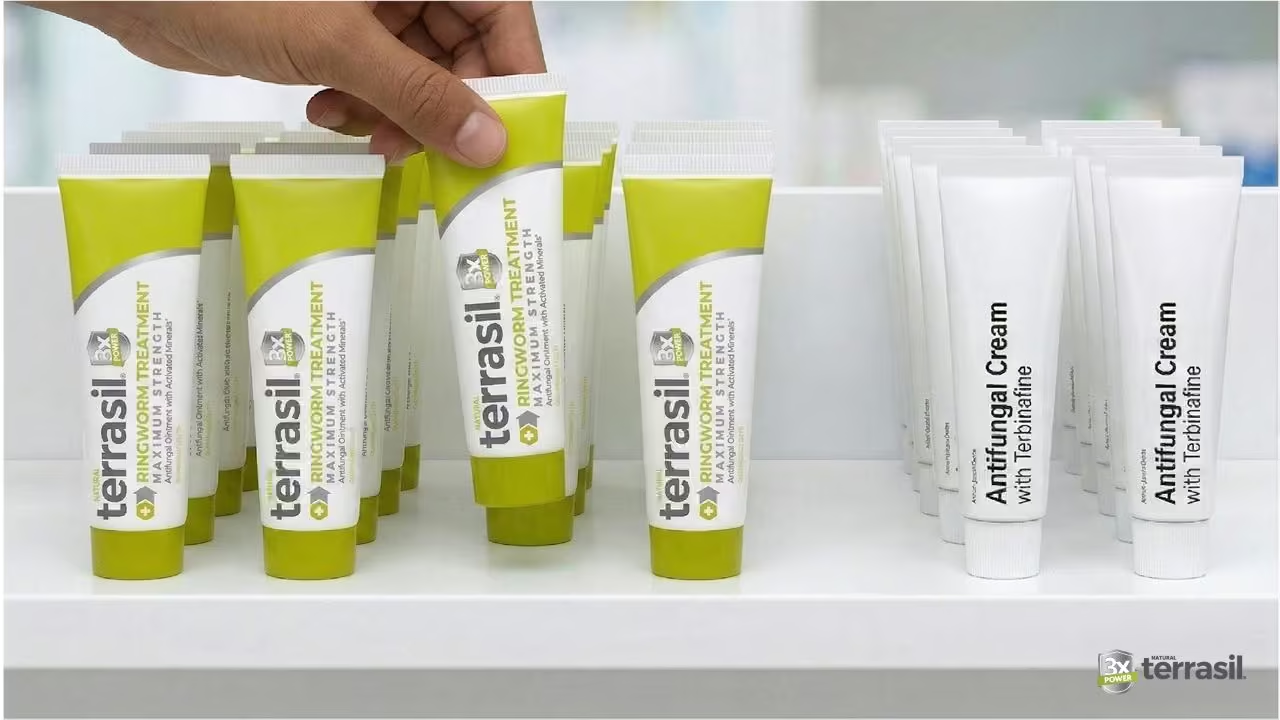
Terrasil, on the other hand, is an ointment built around a different philosophy entirely. Same category of treatment, completely different support system — clotrimizole 1% as the clinically proven active ingredient, formulated with high-quality natural botanicals, no synthetic fillers, and patented Activated Minerals® technology formulated to help your skin recover from the infection, not just survive it. 

At a glance: Terrasil vs. Lamisil AT 
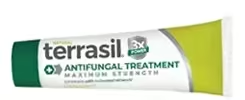
terrasil antifungal
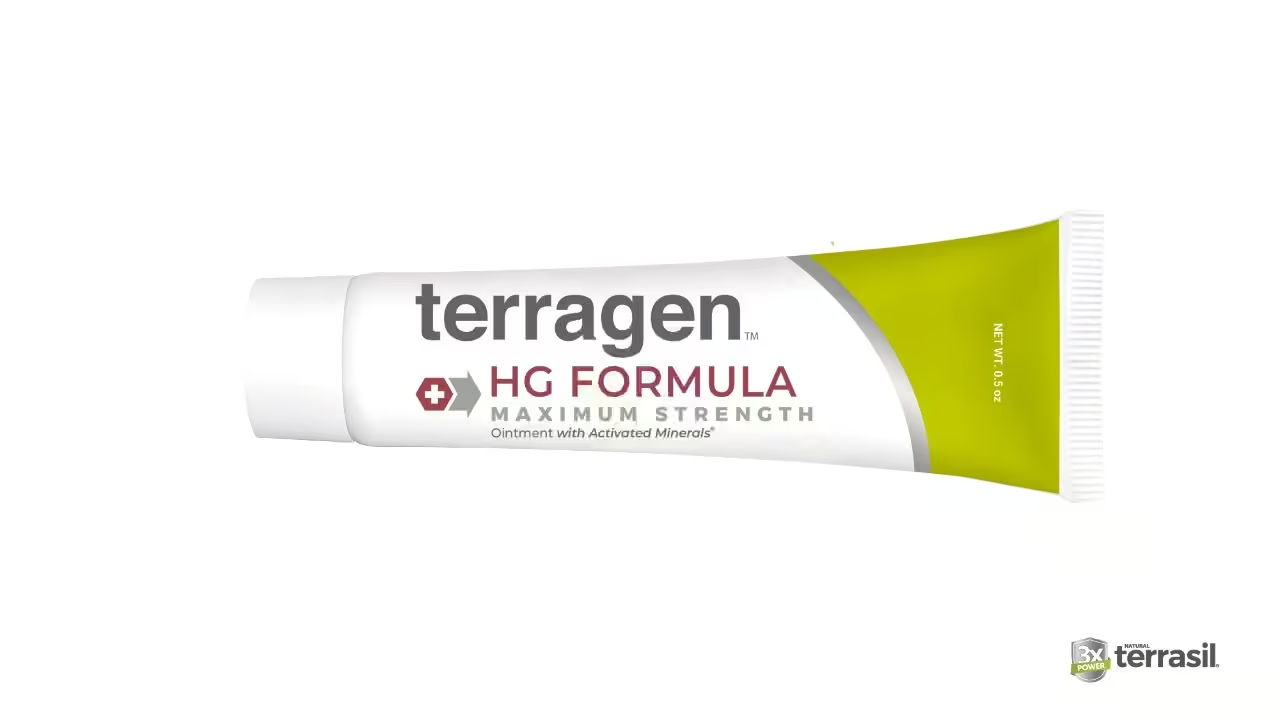
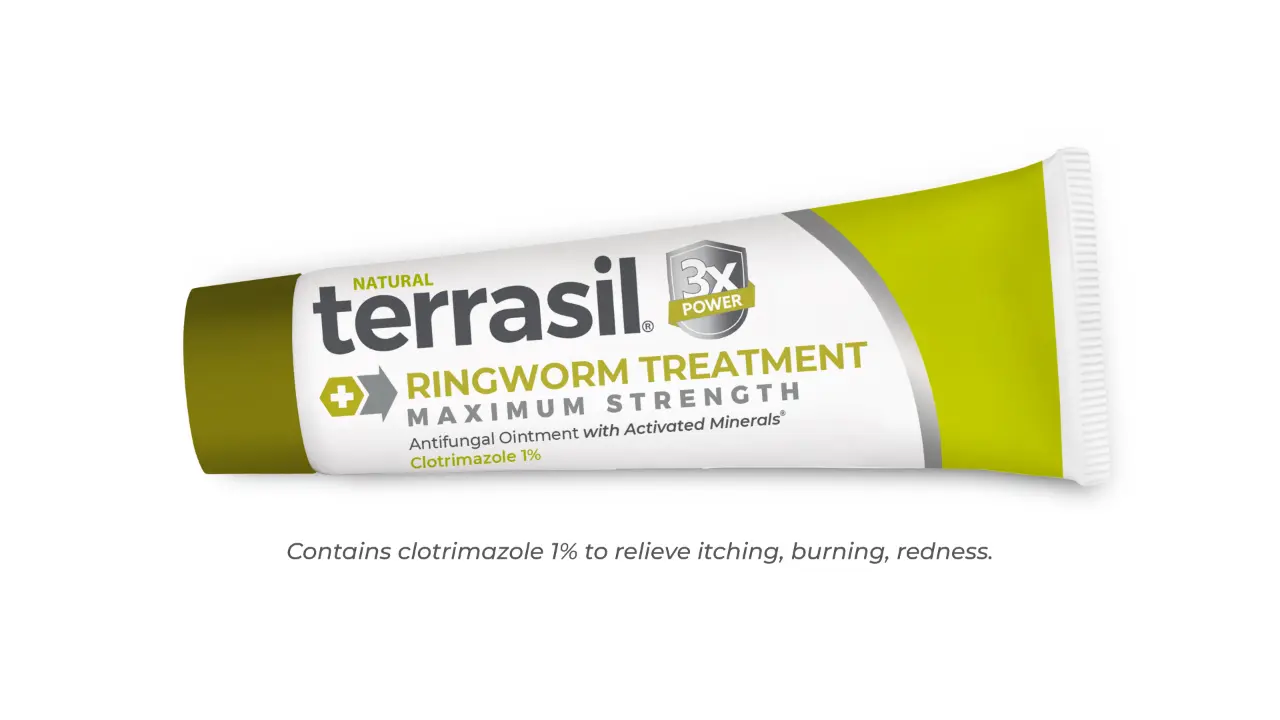
Terrasil® Antifungal Treatment MAX
lamisil AT
Lamisil® AT
Active Ingredient
Clotrimazole 1% 
Terbinafine hydrochloride 1%
How it works
Inhibits ergosterol synthesis — disrupts the fungal cell membrane 
Inhibits squalene epoxidase — causes toxic squalene buildup that kills the fungus
Action type
Fungistatic / fungicidal depending on concentration and organism 
Fungicidal
Forumulation type
Ointment — a little goes a long way 
Cream — may require more product use
Skin contact duration
Longer-lasting — less re-application. Ointment base forms a protective layer that stays on skin
Shorter — cream base absorbs and disperses faster
Conditions covered
Athlete’s foot, jock itch, ringworm, various tinea skin infections (excluding nails), external yeast infections
Athlete’s foot, jock itch, ringworm
Yeast infection coverage
Yes — effective against Candida (external use)
No
Application
As directed
As directed (athlete’s foot: twice daily 1–2 weeks; jock itch/ringworm: once daily 1 week)
Inactive base
Natural botanicals: beeswax, organic coconut oil, jojoba oil, MCT oil, peppermint oil, sage oil, tea tree oil, witch hazel
Synthetic fillers: benzyl alcohol, cetyl alcohol, cetyl palmitate, isopropyl myristate, polysorbate 60, sodium hydroxide, stearyl alcohol, water
Skin-soothing support
High-quality natural botanicals formulated to soothe, moisturize, and protect skin during recovery
None beyond the antifungal active
Proprietary healing tech
Patented Activated Minerals® — formulated to support skin’s natural healing process
None
Parabens / preservatives
Free of parabens and harmful preservatives
Contains synthetic preservatives including benzyl alcohol
Skin support approach
Skin recovery support formulated to help restore healthy skin
“Prevents recurrence for up to 3 months” (marketing claim)

Both products have different antifungal active ingredients, and different formulation around it — hence, what it does for your skin is where they part ways. 

Athlete’s foot, jock itch, ringworm, and more — one family of fungi, multiple addresses

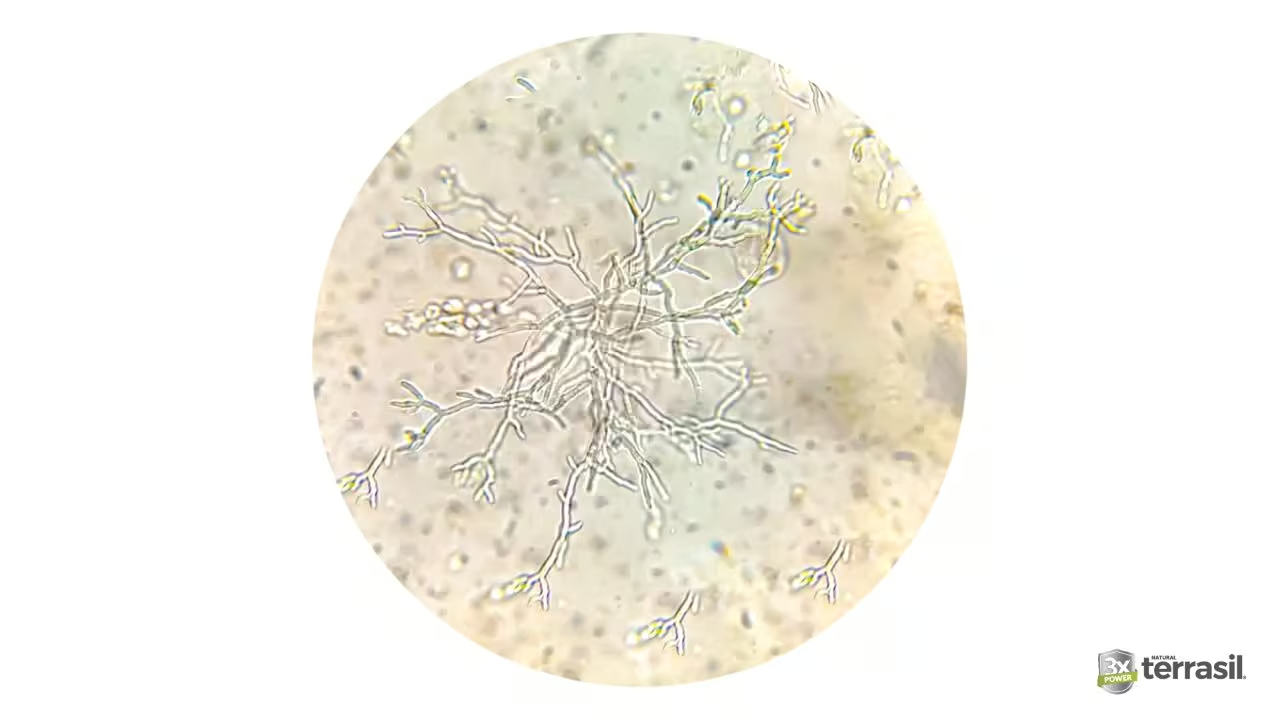
Before comparing the products, it helps to understand what they’re both targeting. Athlete’s foot, jock itch, and ringworm aren’t three distinct diseases. They’re the same family of fungal infection — dermatophytosis — presenting in different locations on the body.1 The organisms responsible are dermatophytes: fungi that thrive in warm, moist environments and feed on keratin, the protein in your skin, hair, and nails. 

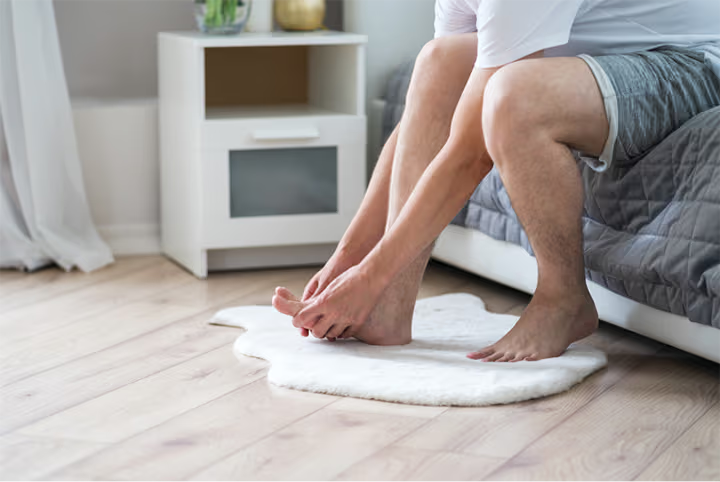
  • Athlete’s foot (tinea pedis) — between the toes and on the soles 
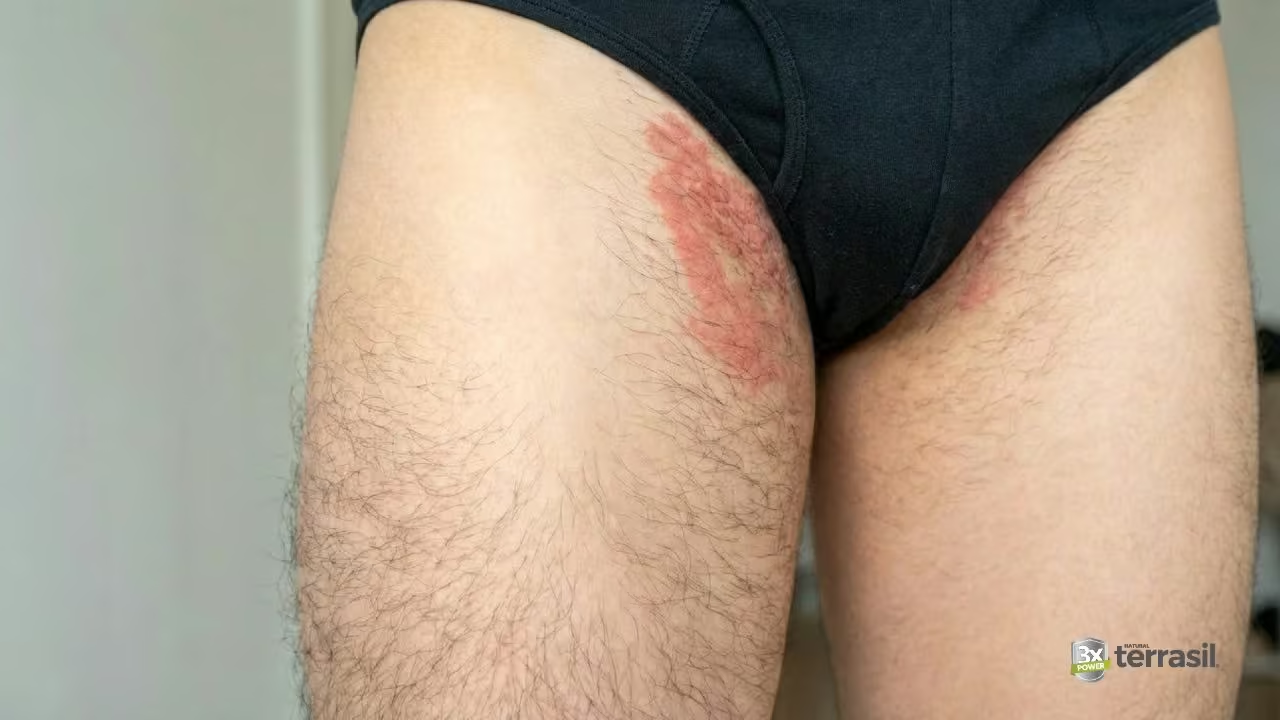
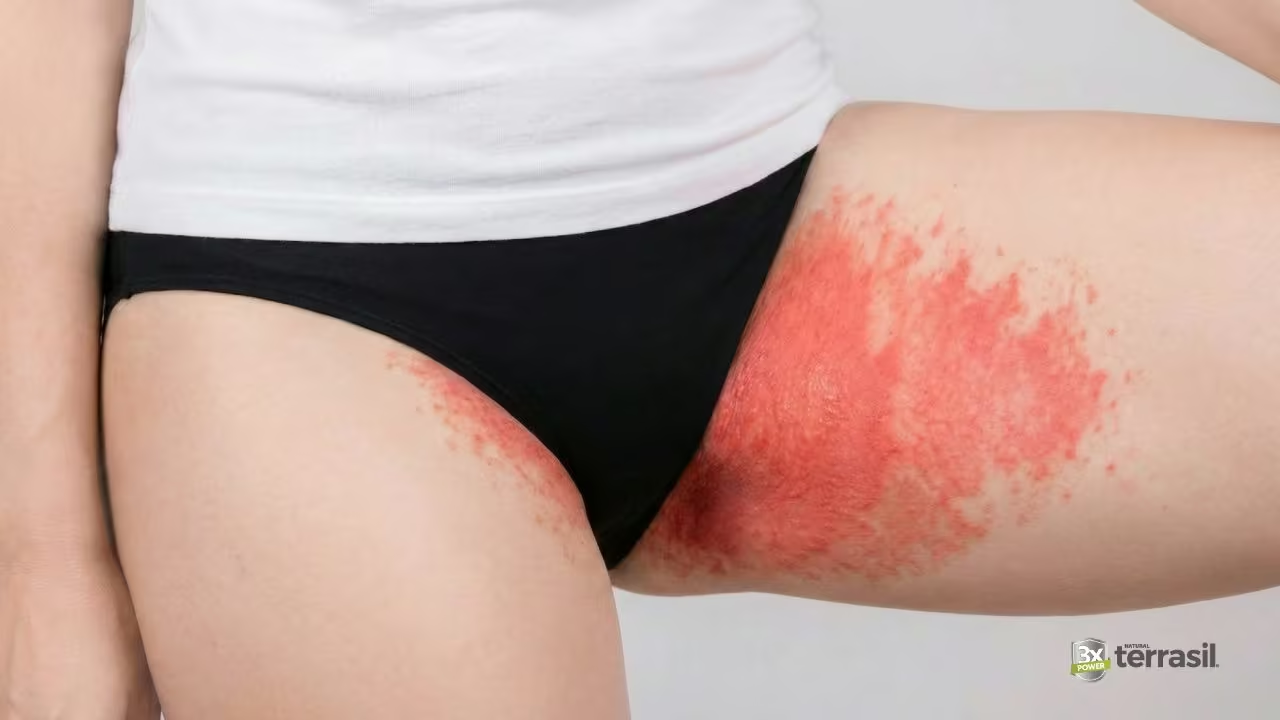
  • Jock itch (tinea cruris) — groin, inner thighs, buttocks 
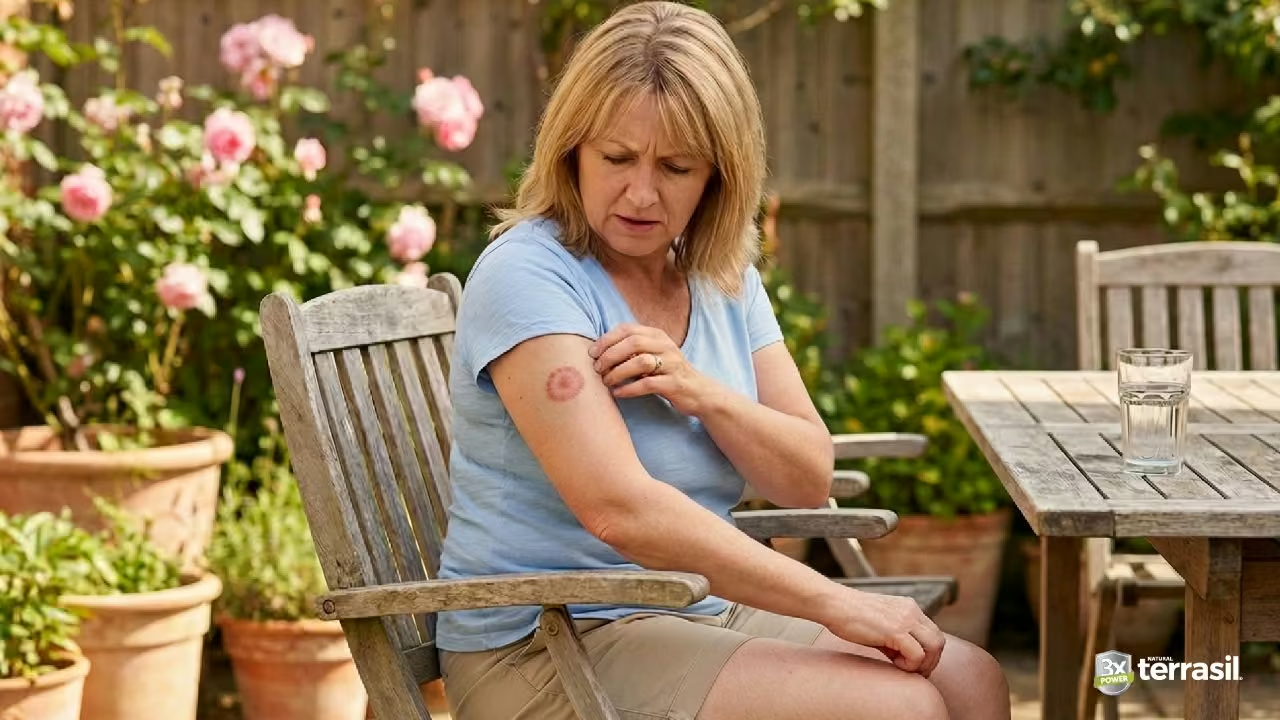
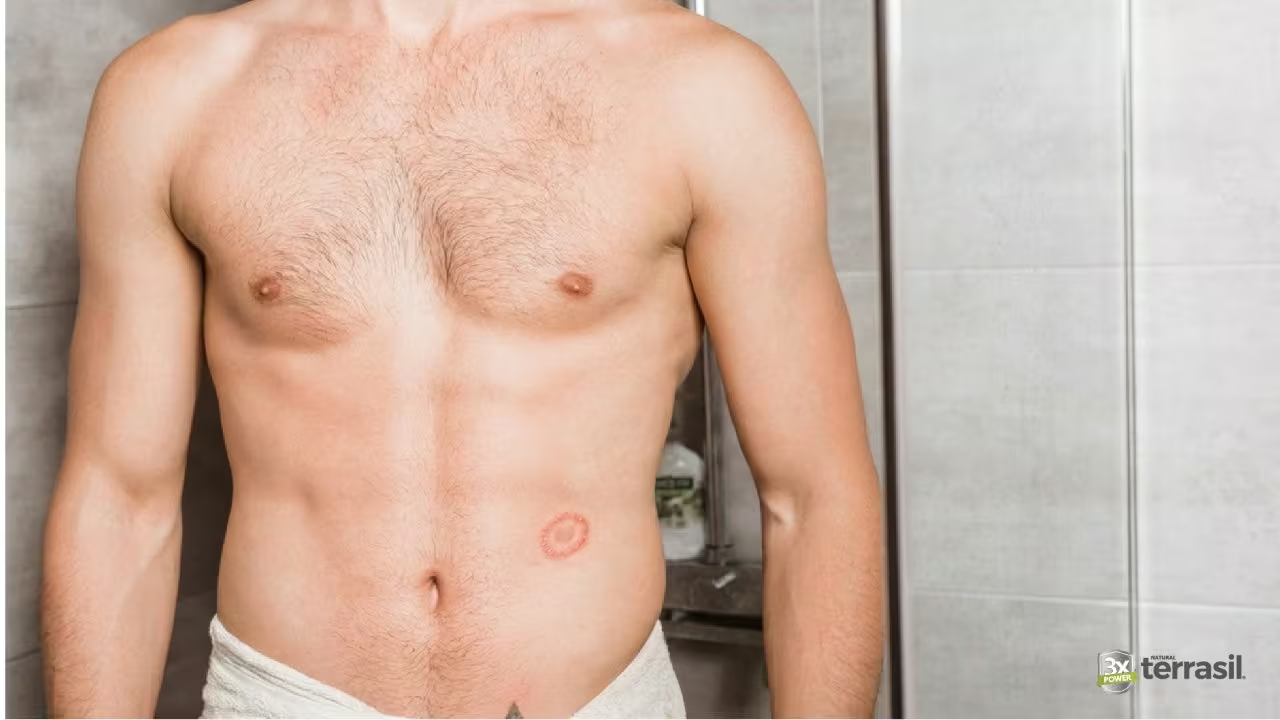
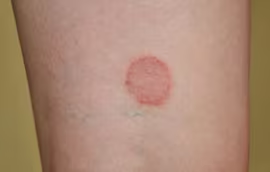
  • Ringworm (tinea corporis) — torso, arms, legs 
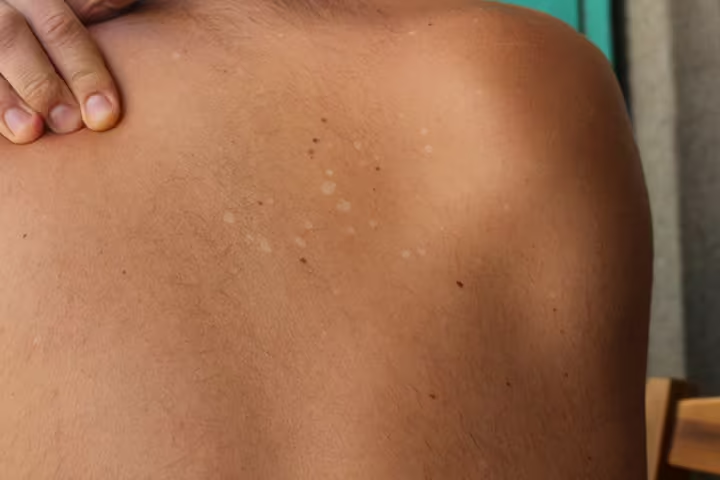
  • Tinea Versicolor (tinea versicolor) — patches of skin that become lighter or darker than the surrounding area, most commonly on the chest, back, shoulders, and upper arms
    • Unlike ringworm and athlete’s foot, tinea versicolor often presents as changes in skin pigmentation rather than a circular rash.

Both Terrasil and Lamisil AT are designed to treat this same family of organisms. The difference in active ingredient isn’t about which infection you have — it’s about which antifungal mechanism you’re delivering, and what else arrives with it. 

For a full breakdown of how these conditions present and how to tell them apart, see: Jock Itch vs. Ringworm vs. Yeast Infection: How to Tell the Difference and How to Identify Tinea Infections

Terbinafine vs. clotrimazole: how they’re different and what that means for you 

This is the part most comparison articles skip. It’s worth understanding. 
 
In the most simplistic terms, think of the fungus like an unwanted guest who keeps growing and spreading.  

Terbinafine poisons the guest directly — it stops the fungus from making something it needs to survive, causing a toxic buildup that kills it outright.  

Clotrimazole takes a different approach — it breaks down the fungus’s protective outer wall, leaving it exposed and unable to grow or spread until your body clears it out.  

Two different ways of dealing with the same problem. Both work.  

In scientific terms, read exactly how each active ingredient works below. 

How terbinafine works 

Terbinafine is an allylamine antifungal.2 It works by inhibiting squalene epoxidase, an enzyme the fungus needs to produce ergosterol — the structural component of its cell membrane. When squalene epoxidase is blocked, squalene builds up inside the fungal cell to toxic levels. That buildup is what kills the organism. Terbinafine is fungicidal — it kills the fungus directly. 

How clotrimazole works 

Clotrimazole is an azole antifungal.3 It works further along the same pathway — inhibiting lanosterol 14α-demethylase, another enzyme required for ergosterol production. Without ergosterol, the fungal cell membrane becomes permeable and the cell can no longer function. At standard 1% OTC concentrations, clotrimazole is fungistatic against most dermatophytes — meaning it halts fungal growth and reproduction, allowing the body’s own immune response to clear the infection. 

Does fungicidal vs. fungistatic matter in practice? 

It’s a reasonable question. Lamisil’s marketing leans on terbinafine’s fungicidal action — the implication being that killing the fungus directly is superior to inhibiting its growth. In a clinical setting, the distinction is more nuanced. 

For the dermatophyte infections most people are treating — athlete’s foot, jock itch, ringworm — both mechanisms are well-established and clinically effective.4 Treatment outcomes depend far more on consistent application and proper skin prep than on which mechanism is used. A fungistatic agent applied correctly, to a clean dry surface, every day, will outperform a fungicidal agent applied inconsistently to unprepared skin. 

What the fungicidal vs. fungistatic debate doesn’t address at all is what happens to your skin in the process. Neither mechanism does anything for the cracked, irritated, moisture-stripped skin that a fungal infection leaves behind. That’s a formulation question — and it’s where the real difference between these two products lives. 

What Lamisil AT claims — and what those claims actually mean 

“#1 doctor recommended athlete’s foot brand” 

This is a survey-based marketing claim. When healthcare providers are asked which athlete’s foot brand they recommend most, Lamisil comes out on top. That reflects the brand’s market presence and the clinical familiarity of terbinafine — not an evaluation of what’s in the formula beyond the active ingredient. 

Terrasil is doctor recommended and dermatologist tested — a clinical testing designation based on actual application to human subjects, evaluated for adverse reactions and tolerability. Those are substantiated safety and efficacy claims, not survey results. They reflect the same standard that doctors apply when recommending any topical treatment: does it work, and is it safe for the skin. 

“Prevents recurrence for up to 3 months” 

This claim refers to terbinafine’s pharmacological persistence in the stratum corneum — the outermost layer of skin.5 After treatment ends, residual terbinafine remains in the skin at concentrations that may continue to inhibit fungal regrowth. It’s a genuine pharmacological property, not pure marketing. 

What it doesn’t address is the condition of the skin itself during and after treatment. Recurrence prevention is meaningful. But if your skin is still dry, cracked, and stripped of its natural barrier at the end of treatment, it remains vulnerable regardless of residual antifungal activity. Healthy, intact skin is its own best defense against reinfection. Terrasil’s formulation is built around restoring that. 

Cream vs. ointment: the formulation type difference that most people overlook 
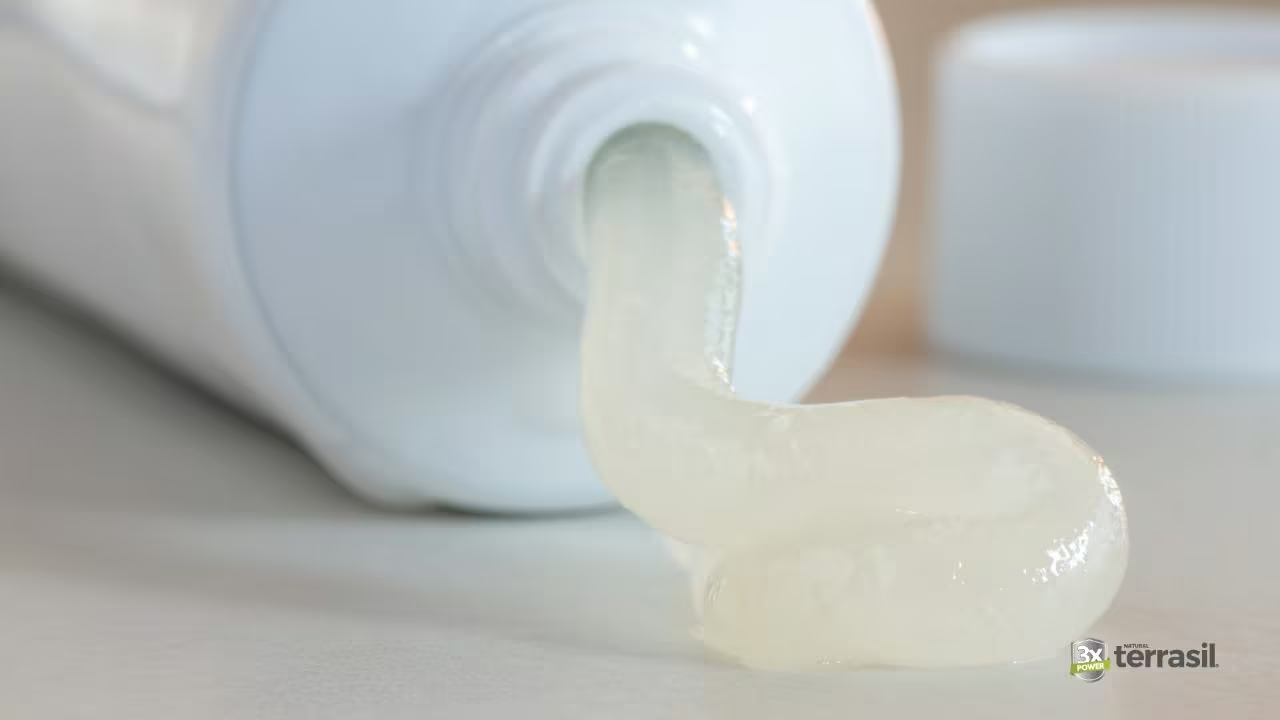
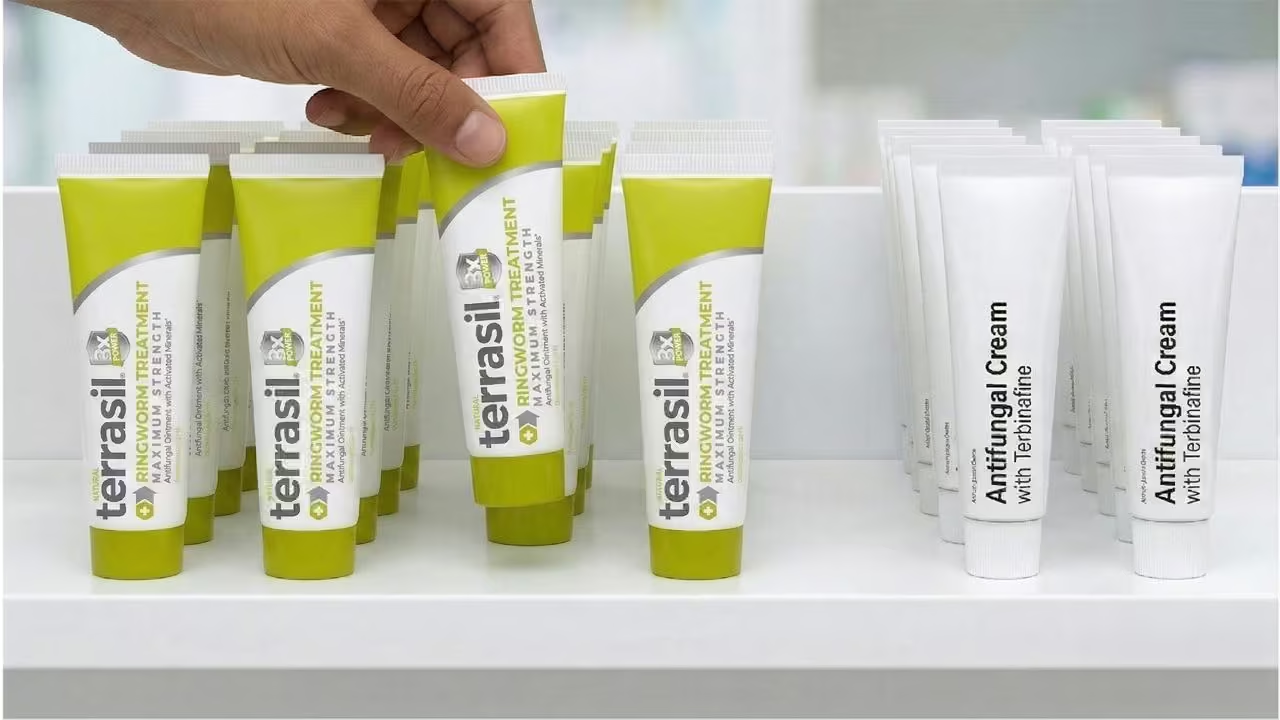
Ointment being squeezed from tube

Lamisil AT only comes as a cream. Terrasil is an ointment. For many people this feels like a cosmetic distinction — a matter of texture preference. It isn’t. 

Creams are water-based emulsions. They absorb quickly, feel light on the skin, and disperse relatively fast after application.6 That fast absorption is often marketed as a benefit — “non-greasy,” “quick-drying.” But for a medicated product, faster absorption also means less time in active contact with the skin surface. 

Ointments are oil-based. They form an occlusive layer on the skin that stays in place, slows water loss, and keeps the formula — active ingredient, botanicals, and all — in sustained contact with the affected area.7 Dermatology research consistently supports ointments as more effective than creams at maintaining skin barrier function and water retention, particularly when skin is already compromised.8 

For a fungal infection that has left skin dry, cracked, and irritated, an ointment isn’t just more comfortable — it’s doing more work. Every application of Terrasil delivers the antifungal active in a formula that simultaneously seals in moisture, keeps the skin protected, and maintains sustained coverage. Lamisil’s cream absorbs, disperses, and moves on. 

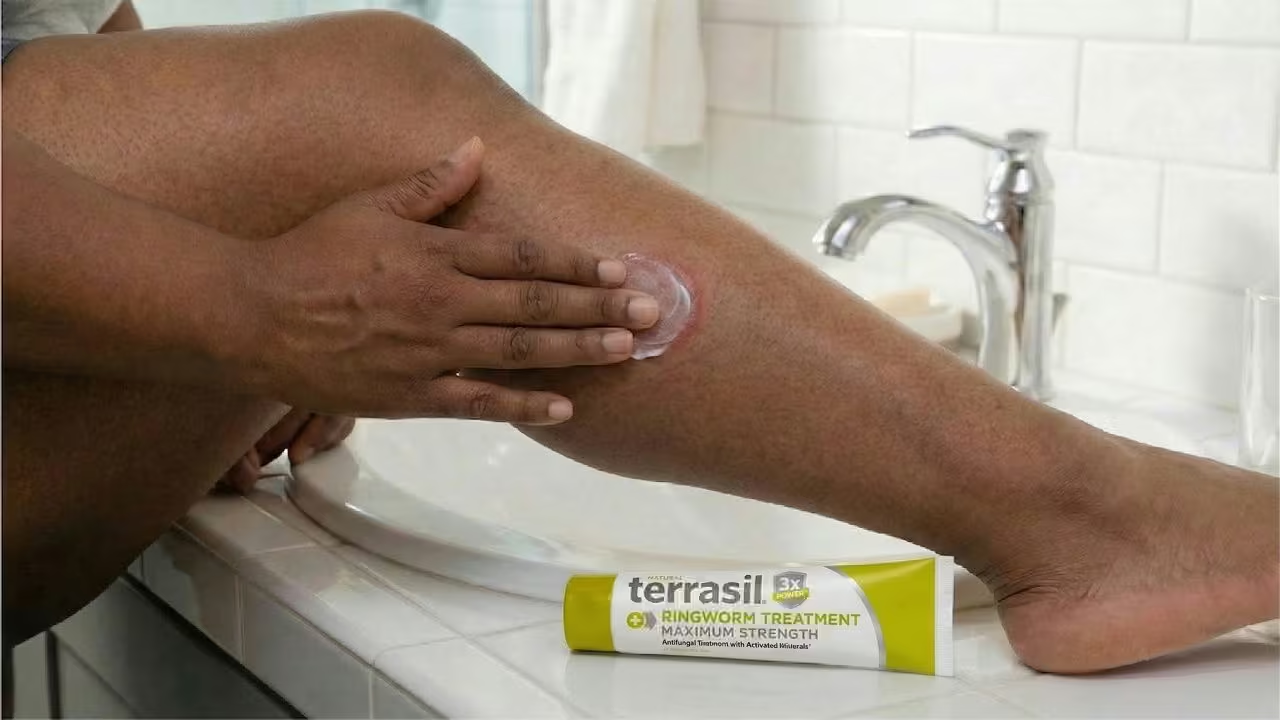
A small amount of ointment goes a long way. Apply a thin, even coat to the affected area and surrounding skin, let it settle for two to three minutes before dressing, and allow the area to breathe. Loose, breathable cotton clothing over the treated area — never an airtight bandage, which traps the moisture and warmth that fungi thrive in. 

What’s actually in the formula: natural botanicals vs. synthetic fillers 

Assortment of natural ingredients

The active ingredient is a fraction of any topical product. The rest of the formula — the inactive ingredients — determines how that active is delivered, how the product feels, and what it does or doesn’t do for the skin beyond killing the fungus. 

Terrasil® MAX — Inactive ingredients
(natural botanicals) 
Lotrimin® AF — Inactive ingredients
(synthetic base) 
Beeswax
Benzyl alcohol
Organic coconut oil
Cetyl alcohol
Jojoba oil
Cetyl palmitate
MCT oil
Isopropyl myristate
Cottonseed oil
Polysorbate 60
Peppermint oil
Purified water
Sage oil 
Soldium hydroxide
Tea tree oil 
Sorbitan monostearate
Witch hazel
Stearyl alcohol
Patented Activated Minerals® 

Lamisil AT’s base is a standard synthetic pharmaceutical cream. Terrasil’s is a curated profile of natural botanicals chosen for what they do for skin.

Lamisil AT: a functional synthetic base, nothing more 

Lamisil AT’s inactive ingredients are a conventional pharmaceutical cream formulation. Benzyl alcohol, cetyl alcohol, cetyl palmitate, isopropyl myristate, polysorbate 60, stearyl alcohol — these are emulsifiers, stabilizers, and penetration enhancers. They hold the formula together and carry terbinafine to the skin. That is their entire purpose. 

None of them soothe. None of them moisturize. None of them support skin recovery. Benzyl alcohol is a preservative that can cause irritation in sensitive skin. The rest are there for formulation stability, not skin benefit. When the antifungal work is done, Lamisil’s formula has nothing left to offer. 

Terrasil: a botanical support system built around the antifungal 

Every inactive ingredient in Terrasil was chosen for a reason beyond formula stability: 

  • Moisture restoration. Organic coconut oil and jojoba oil 
    • Deeply nourishing oils that help rebuild the skin barrier fungal infections disrupt, restoring flexibility and softness to cracked, dry skin 
  • Protective coverage. Beeswax and MCT oil 
    • Create the occlusive layer that keeps active ingredients working and prevents moisture loss between applications 
  • Natural antimicrobial and anti-inflammatory support. Tea tree oil 
    • Well-studied for its role in supporting skin health during and after infection 
  • Cooling relief. Peppermint oil 
    • Addresses the itch and burning sensation directly, providing comfort while the antifungal does its work 
  • Anti-inflammatory and astringent. Sage oil and witch hazel 
    • Calm redness, irritation, and surface inflammation — the visible aftermath of fungal infection that the active ingredient alone doesn’t address 

This isn’t a luxury formulation. These are functional ingredients addressing the real-world symptoms of fungal infection — the discomfort, the irritation, the slow and incomplete recovery that a synthetic base simply cannot touch.

What Lamisil doesn’t have: Terrasil’s patented Activated Minerals® 

There is one element of Terrasil’s formulation that has no parallel in any Lamisil product — or in any other OTC antifungal on the market. 

Terrasil’s patented Activated Minerals® technology is a proprietary blend developed through over a decade of formulation research.9 These nutrient-rich minerals are designed to work alongside the antifungal active to support the skin’s own regenerative process — supports skin repair, and helping reduce the discoloration and scarring that stubborn or prolonged fungal infections can leave behind. 

Lamisil kills the fungus and relies on your skin to do the rest. Activated Minerals® is formulated to actively support that recovery — not wait for it. 

No Lamisil product contains a comparable technology. Their formula ends at the active ingredient and a synthetic delivery base.

Try Terrasil® Antifungal Treatment MAX 

A proven antifungal active in an ointment formulation built to do more than kill fungus — natural botanicals, patented Activated Minerals® technology, and no synthetic fillers. Formulated to soothe, protect, and support your skin’s natural recovery.

Doctor recommended. Dermatologist tested. Hypoallergenic approved. Free of parabens and harmful preservatives.

Available at: Walgreens, CVS, Amazon, Walmart.com, and iHerb.com, and directly at aidanceproducts.com 

Shop Terrasil Antifungal Treatment MAX →

Which should you choose? 

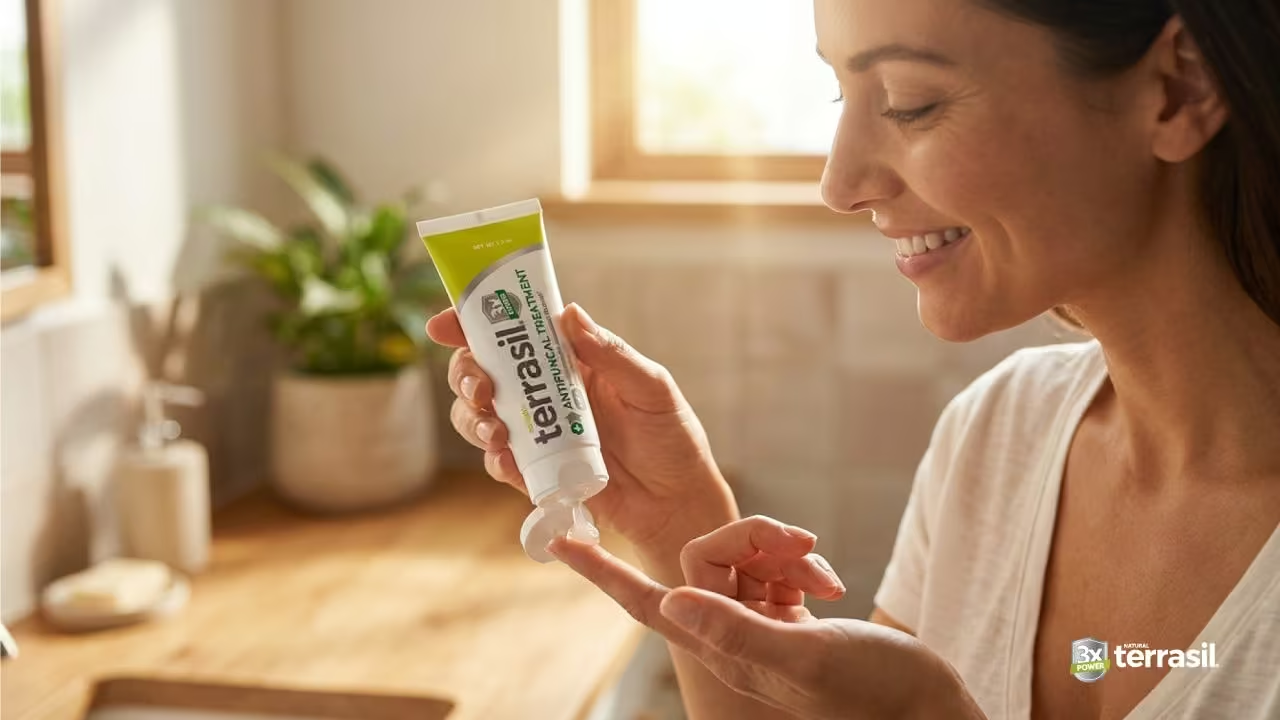
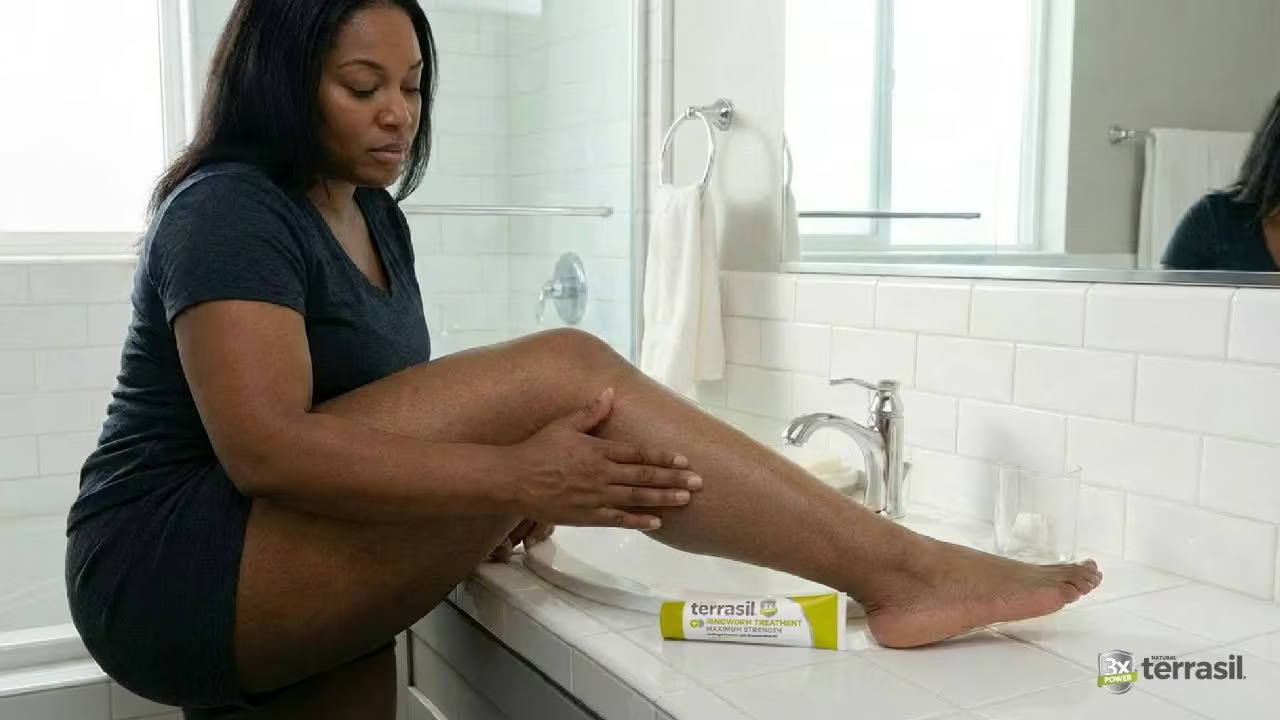
Image of a woman applying terrasil antifungal

Both products will address the fungal infection. The question is what you want from the formula beyond that. 

Consider Lamisil AT if…

  • You are treating a mild, short-duration infection and want a fast-absorbing, non-greasy cream texture 
  • You have used terbinafine before and responded well to it 
  • You have no sensitivities to synthetic preservatives or standard cream bases 

Consider Terrasil if…

  • You want an antifungal that also actively works to soothe, restore, and protect your skin — not just eliminate the infection 
  • Your infection is stubborn, recurring, or has left your skin dry, cracked, discolored, or slow to recover 
  • You want an ointment formulation that stays on skin longer, requires less re-application, and provides sustained protective coverage 
  • You prefer a formula free of synthetic fillers, parabens, and harsh preservatives 
  • You need coverage for external yeast infections in addition to dermatophyte infections — something Lamisil AT does not provide 
  • You want a product backed by patented healing technology with no equivalent in any competing OTC antifungal 
  • You want a 90-day money-back guarantee and no-risk trial 
  • You want the convenience of shopping where you already shop — Terrasil is available at Walgreens, CVS, Amazon, Walmart.com, and iHerb.com, and directly at aidanceproducts.com  

Lamisil AT is a well-formulated antifungal. But a well-formulated antifungal is only half the job. Fungal infections don’t just colonize your skin — they damage it. The formula that helps you recover from that damage, not just survive it, is the one worth reaching for. 

Getting the most out of Terrasil: the complete antifungal routine

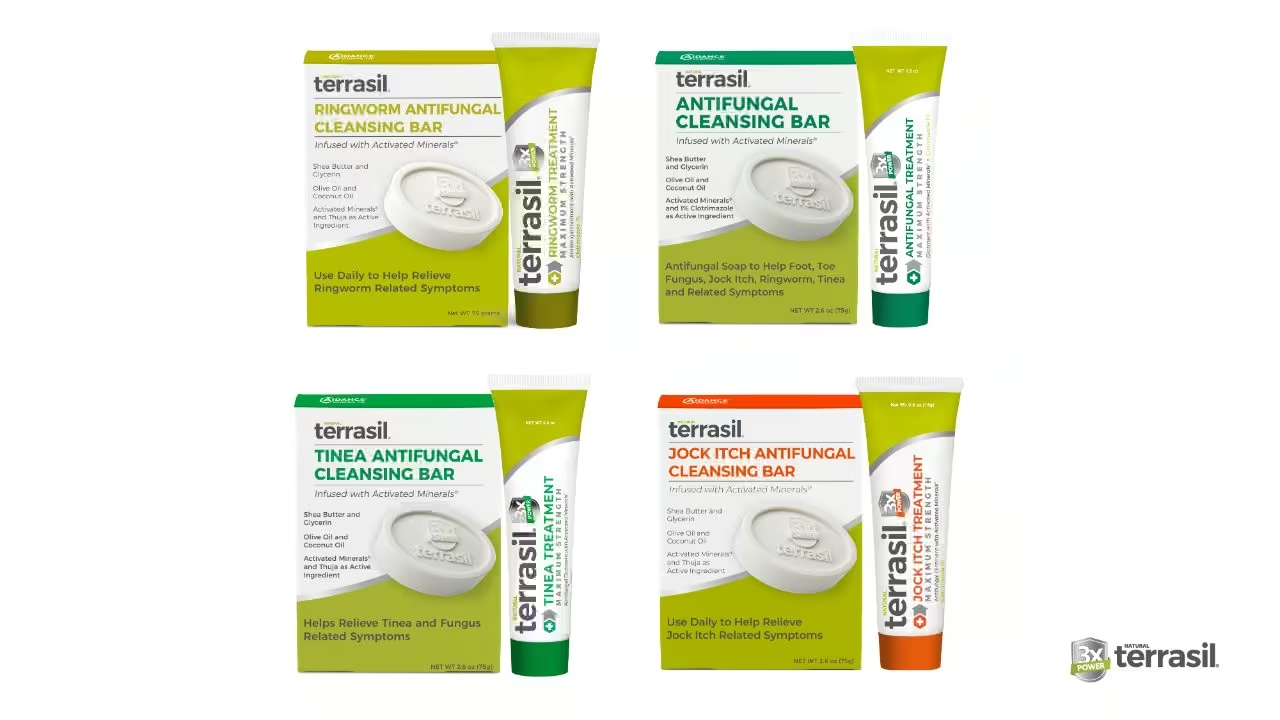
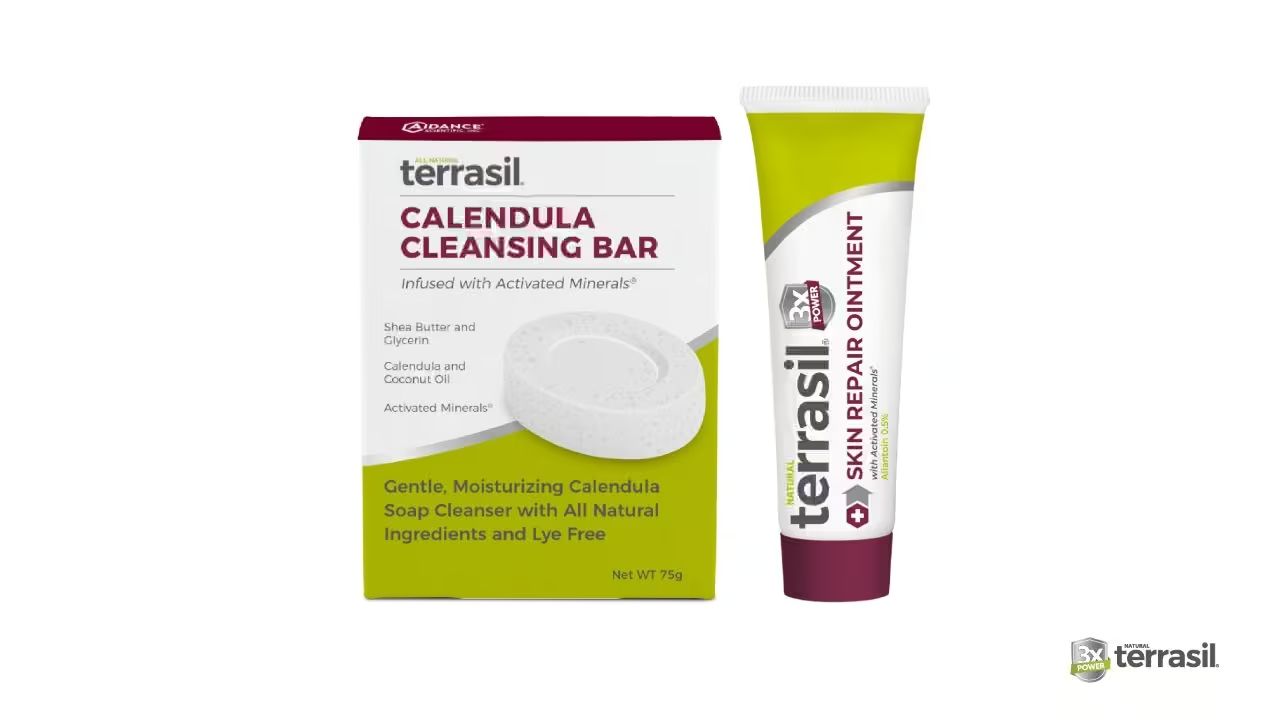
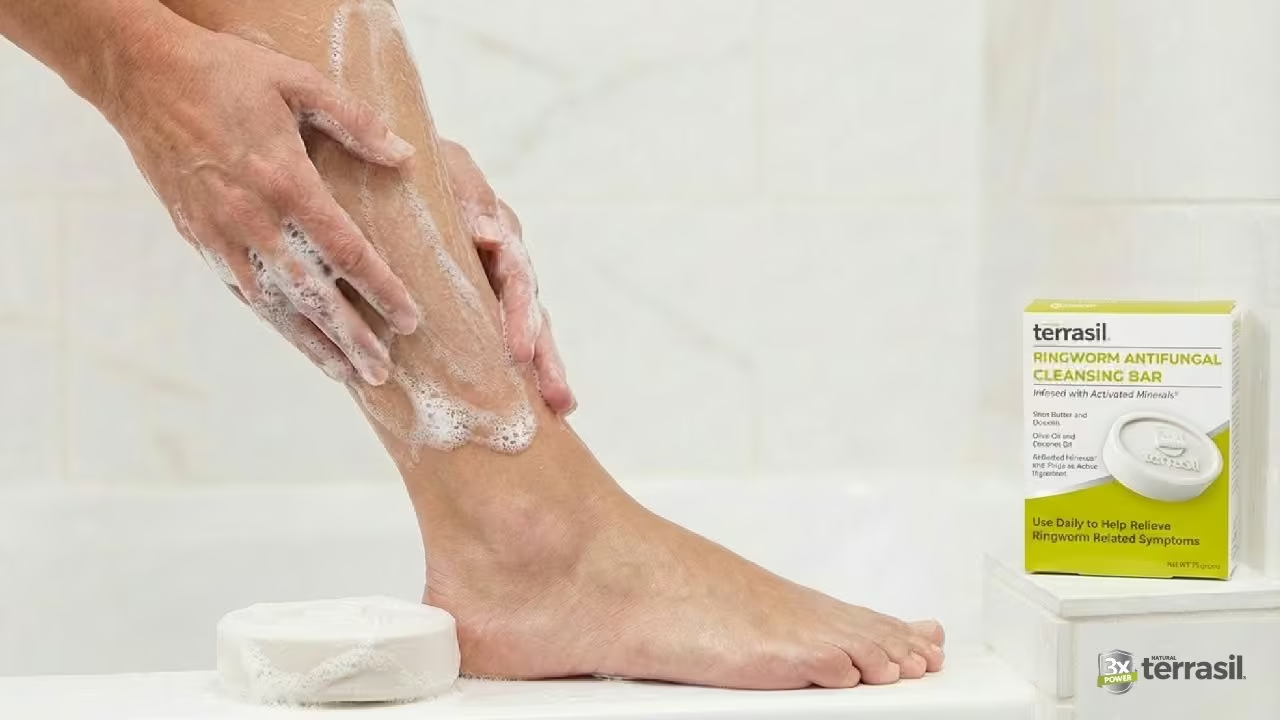
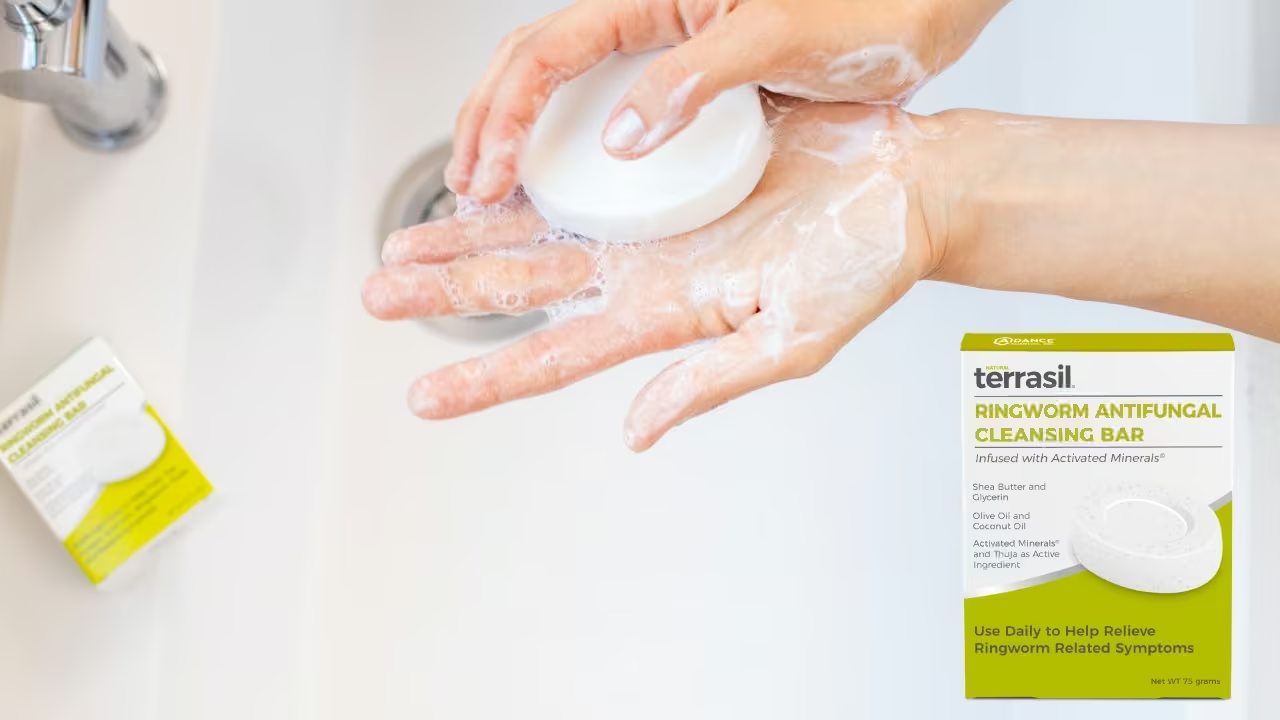
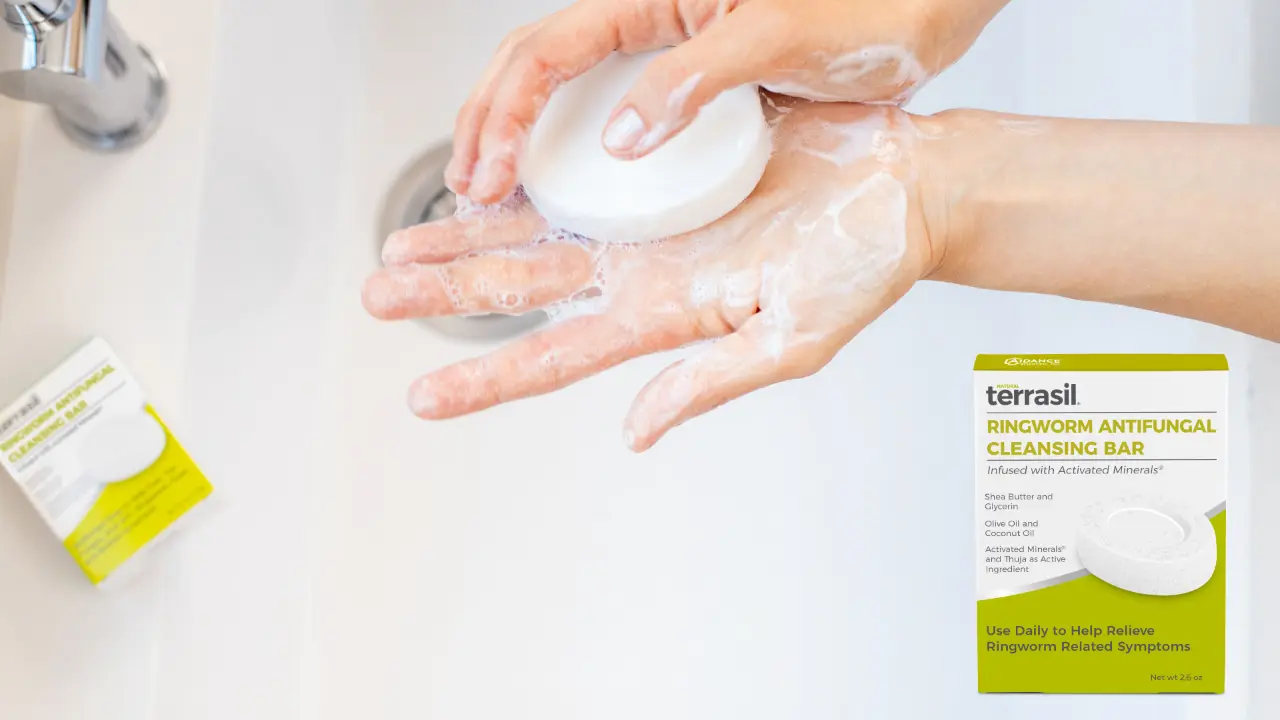
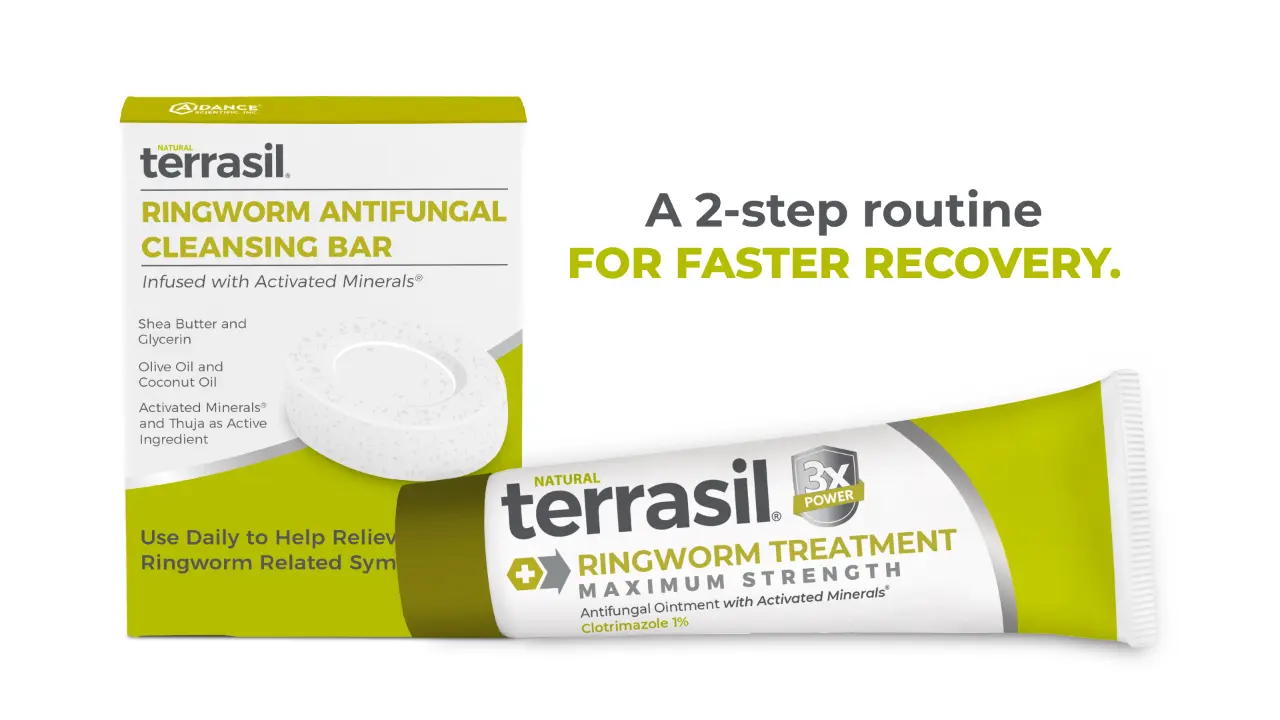
Terrasil Antifungal Treatment MAX is effective on its own. For stubborn, recurring, or particularly uncomfortable infections, pairing it with the Terrasil® Antifungal Cleansing Bar turns a good routine into a complete one. 

Step 1 — Cleanse with Terrasil® Antifungal Cleansing Bar 

Wash the affected area with Terrasil® Antifungal Cleansing Bar before applying the ointment. Unlike a standard soap, this bar contains clotrimazole 1% as its active ingredient — the same proven antifungal active in the ointment — alongside patented Activated Minerals® and high-quality natural botanicals including olive oil, shea butter, coconut oil, jojoba oil, tea tree oil, and peppermint oil. It gently cleanses while helping maintain a healthy skin environment, so every application of ointment starts on the best possible surface. Many customers report noticeable improvement within a few days of consistent use.‡ 

Step 2 — Dry thoroughly 

Pat the area completely dry before applying the ointment. Do not rush this step. Fungal organisms thrive in moisture — a dry surface gives the active ingredients the conditions they need to work effectively. 

Step 3 — Apply a thin coat of Terrasil® Antifungal Treatment MAX 

Apply a thin, even layer to the affected area and a small margin of surrounding skin. You don’t need much — Terrasil is an ointment, and a little goes a long way. The ointment base spreads easily and maintains contact with the skin without needing a heavy application. Once applied, allow two to three minutes for the ointment to settle before getting dressed. 

Step 4 — Let it breathe. No bandages. 

Do not cover the treated area with an adhesive bandage or airtight dressing. Fungal organisms thrive in warm, sealed, moist environments.10 Covering the area recreates exactly those conditions. Instead, wear loose-fitting, breathable cotton clothing over the treated area. For jock itch, avoid tight synthetic underwear. For athlete’s foot, wear clean cotton socks and well-ventilated shoes. If the area is subject to constant friction from clothing, a breathable — not airtight — dressing may be appropriate. When in doubt, consult your healthcare provider. 

Consistency is what resolves fungal infections. A thin coat, applied correctly, to a clean dry surface, every day — paired with the cleansing bar — will deliver better results than an occasional heavy application. 

‡ Out of customers who reported improvement within 1 to 7 days, the average time of improvement was 3.7 days. Results may vary. 

Frequently Asked Questions 

Related Reading

Sources 

  1. Centers for Disease Control and Prevention. Fungal Diseases — Ringworm. Retrieved May 2026 from https://www.cdc.gov/fungal/diseases/ringworm/index.html 
  2. Ryder, N.S. (1992). Terbinafine: mode of action and properties of the squalene epoxidase inhibition. British Journal of Dermatology, 126(Suppl 39), 2–7. Retrieved May 2026 from https://pubmed.ncbi.nlm.nih.gov/1390114/ 
  3. MedlinePlus. Clotrimazole Topical. U.S. National Library of Medicine. Retrieved May 2026 from https://medlineplus.gov/druginfo/meds/a601027.html 
  4. Gupta, A.K. & Foley, K.A. (2015). Antifungal treatment for pityriasis versicolor. Journal of Fungi, 1(1), 13–29. Retrieved May 2026 from https://pmc.ncbi.nlm.nih.gov/articles/PMC5770015/ 
  5. Faergemann, J. et al. (1994). Pharmacokinetics of terbinafine in the stratum corneum after a single oral dose. British Journal of Dermatology, 130(Suppl 43), 7–11. Retrieved May 2026 from https://pubmed.ncbi.nlm.nih.gov/8186136/ 
  6. SkinKraft. Ointment vs Cream: What Makes Them Different? Retrieved May 2026 from https://skinkraft.com/blogs/articles/ointment-vs-cream 
  7. WeDerm. Lotion vs. Cream vs. Ointment: Which to Use When. Retrieved May 2026 from https://www.wederm.com/blog/lotion-vs-cream-vs-ointment-which-to-use-when/ 
  8. Lodén, M. (2018). The Role of Moisturizers in Addressing Various Kinds of Dermatitis: A Review. PMC/NCBI. Retrieved May 2026 from https://pmc.ncbi.nlm.nih.gov/articles/PMC5849435/ 
  9. Aidance Scientific. Terrasil® Antifungal Treatment MAX — Product Information. Retrieved May 2026 from https://www.aidanceproducts.com/terrasil-max-anti-fungal-treatment 
  10. 1ScienceInsights. Should You Cover Up Ringworm With a Bandage? Retrieved May 2026 from https://scienceinsights.org/should-you-cover-up-ringworm-with-a-bandage/ 
  11. DermNet NZ. Tinea Infections. Retrieved May 2026 from https://dermnetnz.org/topics/tinea 
  12. Mayo Clinic. Ringworm (tinea corporis). Retrieved May 2026 from https://www.mayoclinic.org/diseases-conditions/ringworm-body/symptoms-causes/syc-20353780 

Disclaimer: This article is for informational purposes only and does not constitute medical advice. Terrasil® Antifungal Treatment MAX is intended for external use only. If your symptoms persist beyond four weeks, worsen, or involve the face, nails, or scalp, consult a licensed healthcare provider. These statements have not been evaluated by the Food and Drug Administration. This product is not intended to diagnose, treat, cure, or prevent any disease. 

Yeast Infection Symptoms on the Skin: Signs, Causes, and What May Help

terrasil silver accent terrasil silver accent
Legs in a bathtub full of bubbles

Last Updated: April 2026
Reviewed periodically to reflect current dermatology and women’s health information

Anyone who’s had a vaginal yeast infection knows exactly what it feels like — and “uncomfortable” doesn’t begin to cover it. The burning is constant. The itch is relentless. You can’t sit still, you can’t focus, and if you’ve ever stood in a cold shower just to get a few seconds of relief, you’re not being dramatic — that’s exactly how bad it can get. In severe cases it’s genuinely debilitating: walking hurts, clothing hurts, sleeping hurts. 

And although yeast infections are not only found in women and their vagina, it counts among the most common intimate skin conditions — up to 75% of women will have at least one infection in their lifetime, and nearly half will have two or more.1 And yet they’re frequently misidentified, mistreated, and confused with bacterial vaginosis, contact dermatitis, and other conditions that look and feel similar but aren’t the same. 

This guide covers everything: what a yeast infection looks and feels like, where on the body it can appear, what causes it, how men can get it too, whether it can spread to other parts of your body, natural approaches that may help, and which ones are myths. Because when you’re that uncomfortable, you deserve real information — not vague reassurance. 

At a Glance

Yeast infection symptoms on the skin usually include intense itching, redness, swelling, burning, and irritation in warm or moist areas of the body. While most people associate yeast infections with the vagina, Candida can also affect skin folds, the groin, under the breasts, and even men.

A yeast infection is caused by an overgrowth of Candida yeast — most commonly Candida albicans — on the skin and mucous membranes. The external skin symptoms most commonly include: 

  • Intense, relentless itching of the vulva, labia, and surrounding skin 
  • Redness and swelling of the vulva and labia 
  • A burning sensation, especially during urination or sex 
  • Thick, white, odorless discharge that may resemble cottage cheese 
  • Soreness and rawness of the external intimate skin 
  • Small fissures or cracks in the skin in more severe cases 

These symptoms can range from mild and manageable to genuinely disruptive. They also appear in other conditions — which is why identifying the full picture matters.1,2

Key Takeaways

  • Yeast infections affect external intimate skin — the vulva, labia, and surrounding area — not just the inside of the vagina 
  • Candida can cause infections anywhere on the body: mouth, skin folds, under the breasts, nails — not just the intimate area 
  • Men can get yeast infections too — including from sexual contact with an infected partner 
  • Discharge from a yeast infection is typically thick, white, and odorless — unlike BV, which has a distinctive fishy smell 
  • Natural approaches like probiotics and diet changes may support prevention, but they don’t replace antifungal care for an active infection 
  • Gentle external intimate cleansing supports skin comfort during and after a yeast infection — harsh products make symptoms worse 
  • Recurring yeast infections may signal an underlying factor worth discussing with a healthcare provider 

Our commitment to accurate, evidence-based information: This article draws on peer-reviewed research and trusted health organizations, including the CDC, WHO, Cleveland Clinic, Mayo Clinic, MedlinePlus, NCBI/StatPearls, and the Office on Women’s Health. All sources are numbered and linked in the references section below.

Where Can a Yeast Infection Appear on the Body?

Yeast Molecule

Candida is not just a vaginal problem. It’s a yeast that lives naturally on the skin and inside the body — in the mouth, digestive tract, skin folds, and vagina — and it can overgrow in any warm, moist environment on or inside your body. Most people associate yeast infections exclusively with the vagina, but the same organism is responsible for infections in all of these locations.11

Vagina & Vulva

The most common site. Intense itching, burning, redness, cottage-cheese discharge.

Under the Breasts

Bright red, moist rash in the inframammary fold. Satellite pustules at the edges.

Abdominal Skin Folds

Common in people with higher BMI or diabetes. Red, shiny, irritated skin deep in folds.

Armpits

Warm, moist — a prime location. Red rash that may itch and burn.

Groin & Inner Thighs

Can look similar to jock itch. Redness and moisture in skin fold area. Read about how ringworm differs from yeast infections.

Mouth (Thrush)

White raised patches on tongue or inside cheeks. Often follows antibiotic use.

Nails & Nail Folds

Redness, swelling around nails. Nail may thicken, discolor, or separate from bed.

Between Toes

Less common than tinea pedis but possible. Moist, red, itchy skin between toes.

For most healthy people, a yeast infection stays localized — it affects one area rather than spreading throughout the body. Systemic or invasive candidiasis, where Candida enters the bloodstream and spreads to internal organs, is a serious medical condition that occurs almost exclusively in people who are critically ill, hospitalized, or have severely weakened immune systems — not in otherwise healthy individuals.12 

External vs. Internal Symptoms: Why the Distinction Matters 

When most people think of a yeast infection, they think of internal symptoms — discharge and internal discomfort. But a significant part of a yeast infection’s impact is external, happening right on the surface of the intimate skin. This distinction matters for two reasons. 

First, the external symptoms are often what you notice first and feel most acutely. The itching, redness, and swelling of the vulva and labia are visible and felt directly on the surface. Second, external care — gentle cleansing, soothing the skin — is a meaningful part of comfort management that often goes unaddressed when people focus only on internal treatments. 

A yeast infection affects both. The vaginal lining is involved internally, and the vulva, labia majora, labia minora, and surrounding skin are involved externally. Candida thrives in warm, moist skin folds, which is why the external intimate area is particularly vulnerable.4 

External Skin Symptoms: What You Can Actually See and Feel 

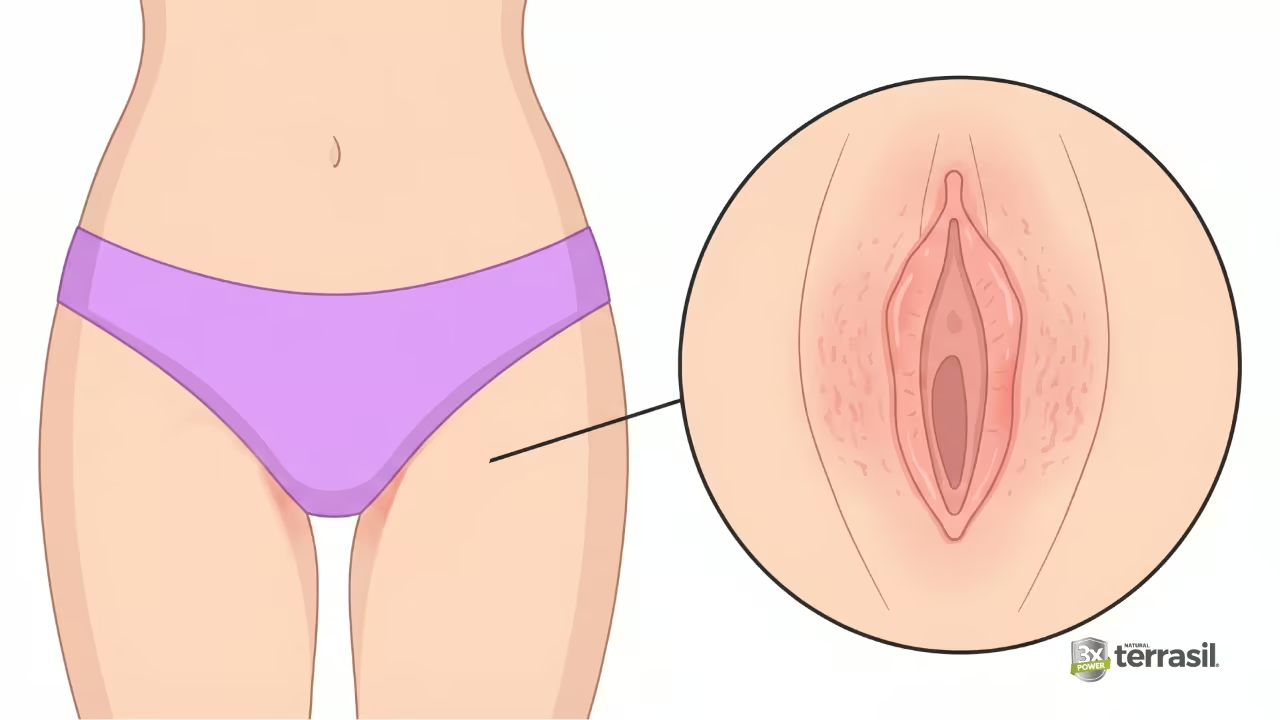
vagina medical drawing

These are the symptoms that show up on the outside — on the vulva, labia, and surrounding skin. They’re the ones that cause the most day-to-day discomfort and the ones that a good external care routine can most directly address. 

Intense itching 

The itching associated with a yeast infection isn’t subtle. It tends to be persistent, often worsening at night, and can range from a nagging irritation to a genuinely disruptive sensation that makes it hard to focus on anything else. The itching is caused by the inflammatory response to Candida overgrowth — your immune system reacting to the fungus on the skin’s surface.1 

Scratching may momentarily relieve the sensation, but it worsens the underlying inflammation, damages the skin barrier further, and can introduce bacteria into already irritated tissue. It also spreads the yeast to surrounding skin. Resisting the urge to scratch — easier said than done — is one of the most protective things you can do for the skin while it heals. 

Redness and swelling of the vulva and labia 

The external intimate skin becomes visibly inflamed. The vulva — which includes the labia majora (outer folds), labia minora (inner lips), and clitoral hood — may appear red, swollen, and irritated. In some cases the labia look noticeably puffy. This redness and swelling is the skin’s inflammatory response to the Candida overgrowth, and it can extend slightly beyond the vulva into the surrounding groin folds.1,4 

The CDC’s clinical guidelines specifically note that severe cases may present with extensive vulvar redness, swelling, and excoriation — meaning the skin may appear scratched or broken from irritation alone, even without direct scratching.2 

Burning sensation 

Burning is one of the most reported external symptoms. It tends to intensify in two specific situations: during urination, when urine contacts the already-inflamed vulvar skin, and during or after sexual intercourse, when friction aggravates the irritated tissue. Neither of these is a sign that the infection is spreading — they’re a reflection of how inflamed and sensitive the external skin has become.1 

If urination is particularly painful, it’s worth ruling out a urinary tract infection (UTI) with a healthcare provider, as UTIs can occur alongside yeast infections and have overlapping symptoms. 

Discharge 

The discharge associated with a yeast infection is a reliable distinguishing feature. It’s typically thick, white, and odorless — often described as resembling cottage cheese in texture, though it can also be watery in milder cases. The absence of odor is significant: a strong or fishy smell points away from a yeast infection and toward bacterial vaginosis.3,5 

The discharge itself doesn’t cause damage, but its presence on the external skin can increase moisture, which further irritates already-inflamed tissue. Gentle cleansing of the external area to remove discharge without disrupting the skin barrier is a practical comfort measure. 

Soreness, rawness, and skin fissures 

In more significant cases, the external skin may feel genuinely raw — sore to the touch, sensitive to clothing, and uncomfortable with movement. Small fissures or cracks can develop in the skin of the vulva and labia, particularly where the skin folds meet. These fissures are painful and increase vulnerability to secondary infection if left unaddressed.2 

The CDC classifies yeast infections with extensive vulvar redness, swelling, excoriation, and fissure formation as “severe VVC” — these cases typically need a longer course of care and benefit most from prompt evaluation by a healthcare provider. 

Yeast Infections in Skin Folds: Under the Breasts and Beyond 

woman checking breasts

That persistent red rash under the breasts, in abdominal folds, or between the inner thighs is often dismissed as heat rash or sweat irritation. But in many cases, it’s a Candida yeast infection — the same organism, the same overgrowth mechanism, just a different address on the body. 

The medical term is cutaneous candidiasis or candidal intertrigo when it occurs in skin folds. Typical areas affected include the inframammary fold (under the breasts), abdominal folds, the groin, the armpits, and between the fingers and toes.13 The reason skin folds are so vulnerable is straightforward: warmth, moisture, and limited airflow create exactly the environment Candida needs. 

What it looks like 

The rash is bright red — more intensely red than a typical heat rash — and the skin looks wet or shiny rather than dry. It sits deep in the fold and may extend slightly beyond it. One of the most characteristic features is the presence of satellite pustules: small red bumps scattered just beyond the main rash border. The area may itch, burn, or feel sore, and in more significant cases, the skin may look white and softened from prolonged moisture exposure — a state called maceration. 4 

How to tell it apart from heat rash 

Heat rash produces tiny, uniform pink or clear bumps and typically clears on its own once the skin cools and dries. A candidal skin fold rash doesn’t clear with cooling alone. It persists, may slowly worsen, and has that characteristic intensely red, wet appearance with satellite pustules at the edges. If a skin fold rash has been present for more than a few days without improvement, Candida is worth considering. 

Who is more susceptible 

People with larger or pendulous breasts, higher BMI, diabetes, those who sweat heavily, and those in hot or humid climates are all at elevated risk. This isn’t about hygiene — it’s about anatomy and the conditions the skin creates in certain fold areas, regardless of care habits.4 

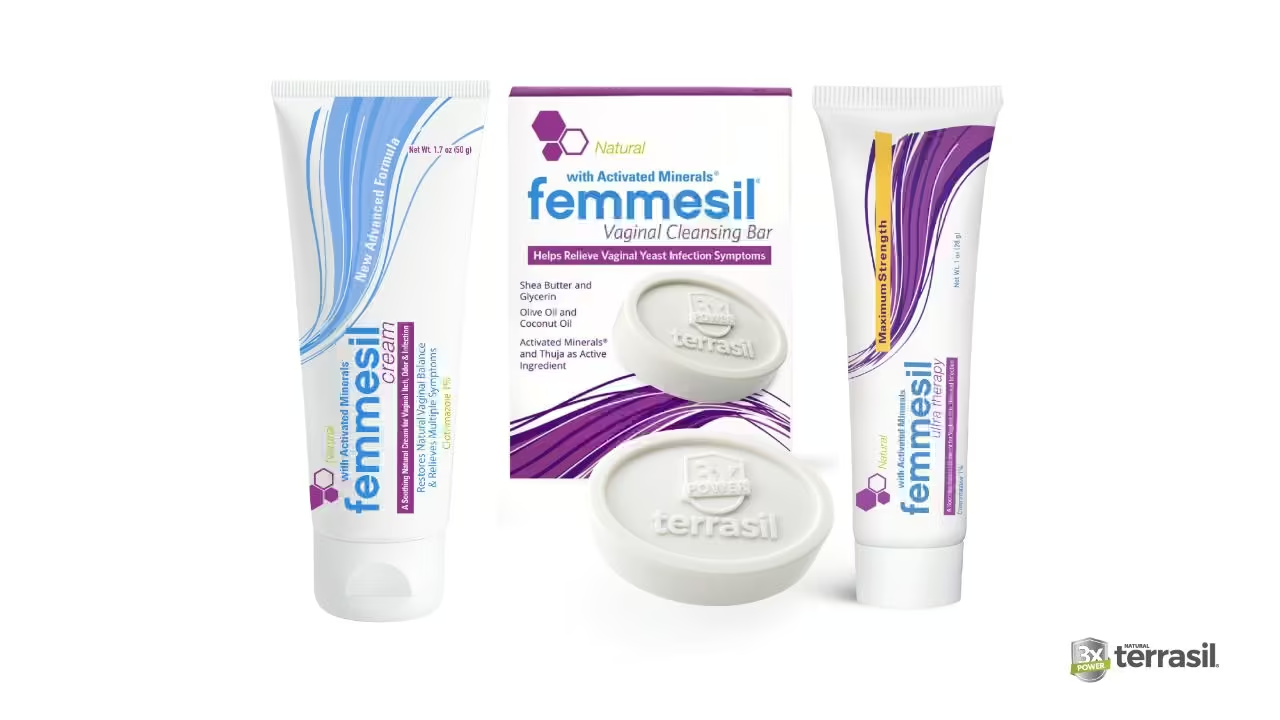
For external intimate skin folds, FEMMESIL® Cream and FEMMESIL® Ultra Therapy Ointment are formulated to support soothing comfort for sensitive external skin. For non-intimate skin fold locations — under the breasts or in abdominal folds — TERRASIL® Antifungal Treatment MAX may be relevant as an antifungal support option.

Can Men Get a Yeast Infection? 

reaching for terrasil balanitis relief

Yes — absolutely. Candida doesn’t care about gender. Men can and do develop yeast infections, typically presenting as candidal balanitis: inflammation of the head of the penis and, in uncircumcised men, the foreskin. It’s less commonly discussed than vaginal yeast infections, but it’s far from rare. Estimates suggest that 3–11% of men will develop a yeast infection at some point in their lifetime.14  
 
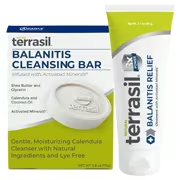
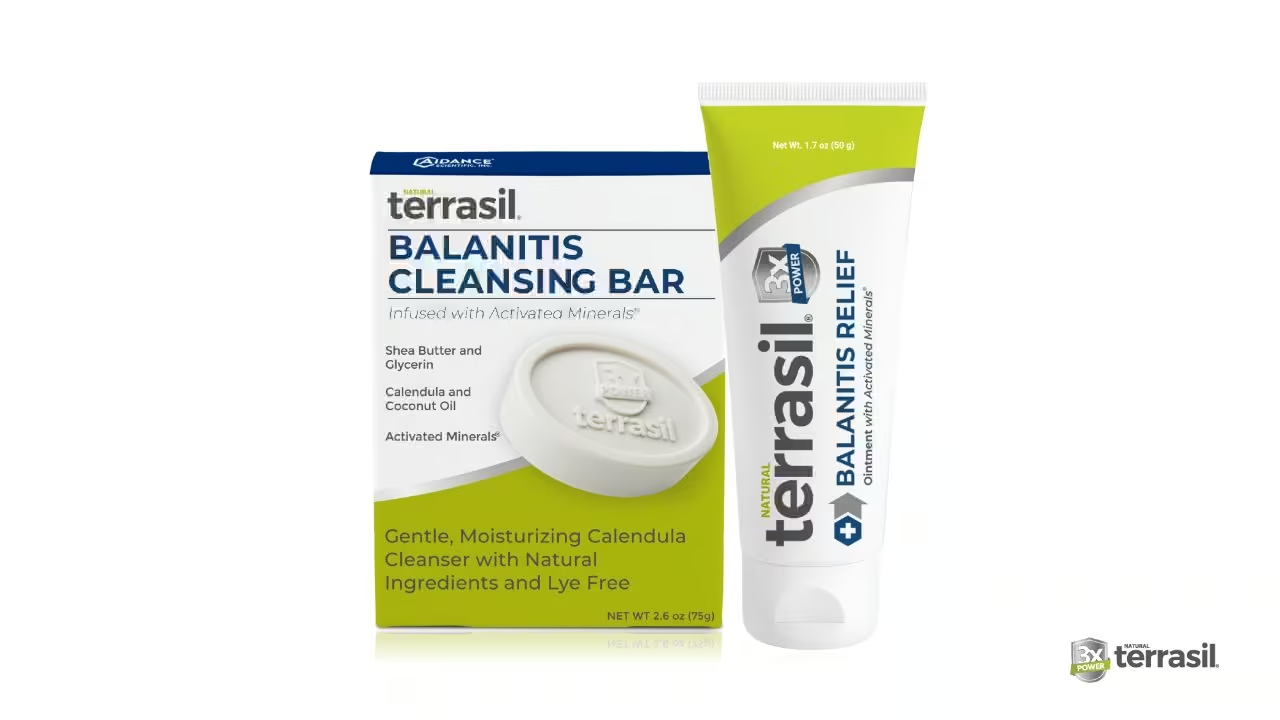
If you or someone you know is dealing with balanitis, TERRASIL® Balanitis Relief Ointment is formulated specifically for the redness, irritation, and discomfort associated with genital skin inflammation. For a more complete care approach, the Serious Balanitis Relief System pairs the ointment with the TERRASIL® Balanitis CleansingBar — because keeping the area gently cleansed is just as important as topical care when it comes to managing balanitis and reducing the likelihood of it coming back. The cleansing bar is formulated to clean the sensitive skin of the glans and foreskin without the harsh ingredients that commonly aggravate already-inflamed tissue.

To learn more about balanitis, read our full guide: What Causes Balanitis? A Complete Breakdown of Triggers and Risk Factors.

Can a man get a yeast infection from an infected woman during sex? 

Yes, though it’s not common, and yeast infections are not classified as sexually transmitted infections. When a male partner has unprotected sex with a woman who has an active yeast infection, Candida can be transferred. Studies suggest that around 15% of male partners of women with a yeast infection may develop penile symptoms following exposure.8 This is one reason that avoiding sexual activity during an active infection and waiting until symptoms have fully cleared is recommended for both partners. 

What do men experience? 

Male yeast infection symptoms typically appear on the head (glans) of the penis and the foreskin. The signs include:

  • Redness and swelling of the glans 
  • Itching and burning under the foreskin 
  • A shiny, glazed, or white appearance to the skin of the glans 
  • White discharge under the foreskin 
  • Tightness or difficulty retracting the foreskin in uncircumcised men 
  • Pain or burning during urination or sex in more significant cases8

How else can men get a yeast infection? 

Sexual contact isn’t the only route. Men develop yeast infections through the same mechanisms as anyone else: 

  • Antibiotic use — depletes the bacteria that keep Candida in check across the body 
  • Diabetes or high blood sugar — elevated glucose in body fluids creates favorable conditions for Candida to overgrow, particularly under the foreskin where sugar-rich urine can accumulate8 
  • Being uncircumcised — the warm, moist environment under the foreskin is inherently more hospitable to yeast 
  • A weakened immune system — from illness, HIV, corticosteroid medications, or other immunosuppressive conditions 
  • Poor hygiene under the foreskin — not cleaning thoroughly allows debris and moisture to accumulate 
  • Wearing tight, non-breathable clothing — traps heat and moisture in the groin 

Recurring balanitis in men: If a man keeps developing yeast infections and doesn’t have an obvious trigger like recent antibiotics, it’s worth checking blood sugar. Recurring candidal balanitis is sometimes among the first signs of undiagnosed pre-diabetes or poorly managed diabetes.8

Can a Yeast Infection Travel to Other Parts of Your Body? 

illustrative diagram of internal organs

This is a question a lot of people have and don’t always get a clear answer to. The short answer: in healthy people, a vaginal or skin yeast infection very rarely “travels” internally to other organs. But Candida can and does appear at multiple sites on the body — sometimes at the same time — and the direction of spread matters. 

Surface-to-surface spread 

Candida can spread from one warm, moist area of the skin to another through direct contact. Scratching an infected area and then touching another part of the body can transfer the yeast. A vaginal yeast infection can potentially spread to the surrounding perianal skin, inner thighs, and groin folds if the area remains moist and hygiene practices allow cross-contamination. Oral thrush can spread to the throat and esophagus in people with weakened immune systems. Handwashing after touching any infected area is a practical protective measure.13 

Can it come from the gut? 

Candida naturally lives in the gut as well as on the skin. There is some evidence suggesting that gut Candida overgrowth may contribute to the likelihood of vaginal yeast infections by increasing the overall load of Candida in the body — particularly in people who have recently taken antibiotics that disrupted gut flora. This is part of why probiotic research focuses on both oral and vaginal administration routes.15 

Systemic spread — serious but rare in healthy people 

In people with severely compromised immune systems — those undergoing chemotherapy, with advanced HIV, in intensive care, or on immunosuppressive medications — Candida can enter the bloodstream and spread to internal organs including the kidneys, heart, eyes, and brain. This is called invasive or systemic candidiasis, and it is a medical emergency requiring urgent treatment. For otherwise healthy people, this scenario is extremely unlikely.12 

The practical takeaway: don’t panic about “spreading,” but do practice good hygiene, address active infections promptly, and if you notice Candida symptoms in multiple body areas simultaneously — for example, thrush plus a vaginal infection plus a skin fold rash — it’s worth discussing with a healthcare provider, as that pattern sometimes indicates an underlying immune or blood sugar issue worth investigating.12 

What Causes Yeast to Overgrow? 

antibiotics pill bottle on teal background

Candida is already there. The question is always what tips the balance. These are the most common factors that allow it to overgrow. 

Antibiotic use 

The most common trigger. Antibiotics kill bacteria — including the beneficial Lactobacillus bacteria that normally keep Candida in check in the vagina. When those protective bacteria are depleted, Candida has the opportunity to multiply rapidly. If a yeast infection starts within days of finishing antibiotics, that’s why.3 

Hormonal changes 

Estrogen influences the vaginal environment, and fluctuations affect the balance of bacteria and yeast. Pregnancy significantly raises estrogen — which is why pregnant people are at considerably higher risk. Oral contraceptives, hormone therapy, and the days before a menstrual period when estrogen drops are all common triggers.5,6 

Diabetes and blood sugar 

Elevated blood sugar creates an environment that favors Candida growth. People with uncontrolled or poorly managed diabetes are significantly more susceptible, and recurring infections can sometimes be an early indicator that blood sugar levels need attention.4 

A weakened immune system 

A healthy immune system keeps Candida populations regulated. When immunity is compromised — through illness, certain medications like corticosteroids, or conditions such as HIV — the body’s ability to keep yeast in balance decreases.3 

Warmth, moisture, and tight clothing 

Wearing tight synthetic underwear, staying in wet swimwear or sweaty workout clothes, and high-humidity environments all create exactly the environment yeast prefers.6 

Intimate products and douching 

Scented soaps, vaginal deodorants, douches, and scented intimate washes disrupt the natural pH and microbial balance of the vagina and vulvar skin. The vagina is self-cleaning and doesn’t need any of these products. Using them removes the beneficial bacteria that protect against yeast overgrowth, making infections more likely rather than less.6 

How External Yeast Infection Symptoms Differ from Other Conditions 

Doctor sitting with female patient

Several conditions produce symptoms similar enough to a yeast infection that they’re regularly mistaken for one — and treated incorrectly as a result. 

Feature 
Yeast Infection 
Bacterial Vaginosis (BV) 
Contact Dermatitis 
Trichomoniasis 
Main symptom 
Intense itching, burning, redness 
Discharge with fishy odor — itching less prominent 
Itching, redness, rawness at point of contact 
Itching, burning, frothy discharge 
Discharge 
Thick, white, odorless — cottage cheese texture 
Thin, gray or white, strong fishy odor 
None typically 
Frothy, yellow-green, foul-smelling 
Odor 
None or very mild yeasty smell 
Pronounced fishy odor, especially after sex 
None 
Strong, unpleasant odor 
External skin 
Red, swollen vulva and labia — may have fissures 
Minimal external changes 
Redness exactly where irritant contacted 
Redness, swelling, irritation 
Cause 
Candida yeast overgrowth 
Bacterial imbalance in vaginal microbiome 
Allergic or irritant reaction to a product 
Parasite — sexually transmitted 
Contagious? 
Not typically — can transfer between partners 
Not an STI but linked to sexual activity 
No 
Yes — sexually transmitted 

Yeast infection vs. bacterial vaginosis 

BV is the most common vaginal condition in people ages 15 to 44 — and also the most frequently confused with a yeast infection.5 The key distinguishing feature is discharge and odor. A yeast infection produces thick, white, odorless discharge. BV produces thin, gray or white discharge with a pronounced fishy smell. Itching dominates with yeast; odor dominates with BV. The treatments are completely different — BV requires antibiotics, not antifungal care.5

Yeast infection vs. contact dermatitis 

Scented soaps, laundry detergents, wet wipes, latex condoms, lubricants, and intimate hygiene products can all trigger contact dermatitis of the vulvar skin — a reaction that looks and feels very similar to a yeast infection. The difference: contact dermatitis has no discharge, no odor, and the irritation appears right where the product contacted the skin. Remove the offending product and improvement follows. A yeast infection won’t improve without antifungal care.7

Yeast infection vs. trichomoniasis 

Trichomoniasis causes genital itching and burning similar to a yeast infection, but the distinction is in the discharge — frothy, yellow-green, and foul-smelling. Trichomoniasis requires specific antibiotic treatment, and both partners need to address it simultaneously.3

First time having these symptoms? Seeing a healthcare provider is the most reliable next step. Studies show that up to two-thirds of women who self-diagnose a yeast infection actually have a different condition — so getting a confirmed identification before self-treating is always the safer call.1

Symptoms in Women vs. Men 

The yeast infection conversation is heavily female-skewed — but Candida can cause external intimate skin symptoms in men too, typically as candidal balanitis (inflammation of the head of the penis). Men who are uncircumcised, have diabetes, or have recently taken antibiotics are at higher risk. 

In men, the external symptoms include redness and swelling of the glans, itching and burning under the foreskin, a shiny or glazed appearance to the skin, and sometimes a white discharge under the foreskin. The sensation is similar — the warm, moist environment under the foreskin is as hospitable to Candida as vulvar skin folds.8 

If you’ve read our related article on jock itch vs. yeast infection, you’ll recognize this as candidal balanitis — we cover it in depth there, including how it differs from jock itch in the inner thigh and groin. 

Recurring Yeast Infections: When It Keeps Coming Back

woman visibly frustrated

Having four or more yeast infections in a year is classified as recurrent vulvovaginal candidiasis (RVVC), and it affects approximately 10–20% of people who get yeast infections.2 If this sounds familiar, it’s worth taking seriously rather than just managing each episode in isolation. 

Recurring infections often point to an underlying factor that isn’t being addressed — uncontrolled blood sugar, a less common Candida species that doesn’t respond to standard care, hormonal fluctuations, ongoing antibiotic use, or a partner who may be reintroducing yeast. Sometimes the vaginal microbiome is simply more susceptible to imbalance than average.2

A healthcare provider can assess what’s driving the pattern — including taking a culture to identify the specific Candida species involved — and may recommend a longer or different course of care, or strategies to reduce recurrence over time.

Recurring infections and blood sugar: If you’re having frequent yeast infections and haven’t had your blood sugar checked recently, it’s worth mentioning to a provider. Recurring yeast infections are sometimes among the first recognizable signs of pre-diabetes or poorly managed diabetes.4

Natural Approaches That May Help

breakfast fruit

When you’re in the thick of a yeast infection, it’s natural to want to try anything. Before you reach for whatever TikTok suggested, here’s what the evidence actually says about natural approaches — what may genuinely help, what’s a waste of time, and what could make things worse. 

Probiotics — the most evidence-based natural option 

Probiotics, specifically Lactobacillus strains, are the most researched natural approach for yeast infections. The vaginal microbiome is normally dominated by Lactobacillus bacteria, which keep Candida in check by producing lactic acid and competing for adhesion sites. When that balance is disrupted — by antibiotics, hormones, or illness — Candida can fill the gap. 

Research published in 2024 in the Journal of Clinical Medicine reviewed 25 clinical studies and seven systematic reviews and found that probiotics offer “a generally positive yet inconsistent” picture for managing yeast infections — promising as a supportive or preventive strategy, but not consistently effective as a standalone treatment.15 The strains most studied include Lactobacillus rhamnosus GR-1 and Lactobacillus reuteri RC-14, which have shown particular promise for vaginal health. 

Importantly, oral probiotics can actually reach the vagina — research has confirmed that specific Lactobacillus strains taken by mouth were recovered from vaginal samples within one week of oral intake.16 Look for probiotics specifically formulated for vaginal health rather than general gut health formulas, and discuss with a healthcare provider if you’re prone to recurring infections. 

Natural approaches may support comfort or prevention, but they should not replace antifungal treatment for an active infection.

Cutting sugar and refined carbohydrates 

Candida feeds on sugar — this is well established in laboratory settings and clinically meaningful for people with diabetes, where elevated blood sugar is one of the strongest risk factors for yeast infections. For people without diabetes, the direct evidence that dietary sugar causes vaginal yeast infections is less definitive, but the relationship is plausible. Diets consistently high in refined sugars and processed foods may raise blood glucose and disrupt the microbial balance that keeps Candida in check. 

Reducing added sugar, refined carbohydrates, and alcohol — which metabolizes similarly to sugar — may support a healthier internal environment. This isn’t going to clear an active infection on its own, but it’s a reasonable supportive habit, especially for people with recurrent infections. Plain Greek yogurt (with live cultures, no added sugar) is a practical food choice that adds Lactobacillus to your diet without feeding yeast.17 

Eating yogurt (the right kind, the right way) 

Eating plain, unsweetened yogurt with live active cultures adds beneficial Lactobacillus bacteria to your gut — which may support the overall microbial balance that influences vaginal health. Some studies have found an association between regular yogurt consumption and reduced yeast infection frequency, though the evidence is mixed.17 

The key: it must be plain, unsweetened yogurt with confirmed live cultures. Flavored yogurts and those with added sugar don’t offer the same benefit — and the added sugar may actually feed Candida

Cold water relief 

Running cold water over the external vulvar area — in a shower or with a gentle spray — can provide temporary, immediate relief from the burning and itching of a yeast infection. It reduces local inflammation momentarily. It doesn’t treat the infection, but there’s nothing wrong with using it for short-term comfort while you address the underlying cause. Just make sure to dry the area thoroughly afterward — residual moisture is counterproductive. 

The Role of Gentle Cleansing in External Intimate Skin Care 

reaching for femmesil soap in shower

One of the most overlooked aspects of managing yeast infection symptoms is how the external skin is cleansed — before, during, and after an infection. This matters more than most people realize. 

The vulva and surrounding skin are among the most sensitive on the body. The vagina itself is self-cleaning and requires nothing other than the natural processes already happening inside it. The external vulvar skin benefits from gentle, plain cleansing — but harsh soaps, scented products, and excessive washing do more harm than good.6 

During an active yeast infection, the skin is already inflamed and compromised. Using scented soaps, medicated wipes, or heavily fragranced products on irritated vulvar skin can intensify the burning and discomfort. The goal during an infection is to keep the external area clean, remove discharge gently, and avoid anything that further disrupts the skin barrier. 

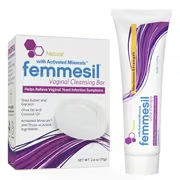
FEMMESIL® Vaginal Cleansing Soap Bar is formulated for gentle external intimate cleansing, free from harsh ingredients that commonly irritate sensitive vulvar skin. The FEMMESIL® Ultra Therapy Vaginal Ointment & Cleansing Bar Kit pairs this gentle cleansing step with topical comfort support as part of a complete external intimate care routine.

What May Help External Yeast Infection Symptoms

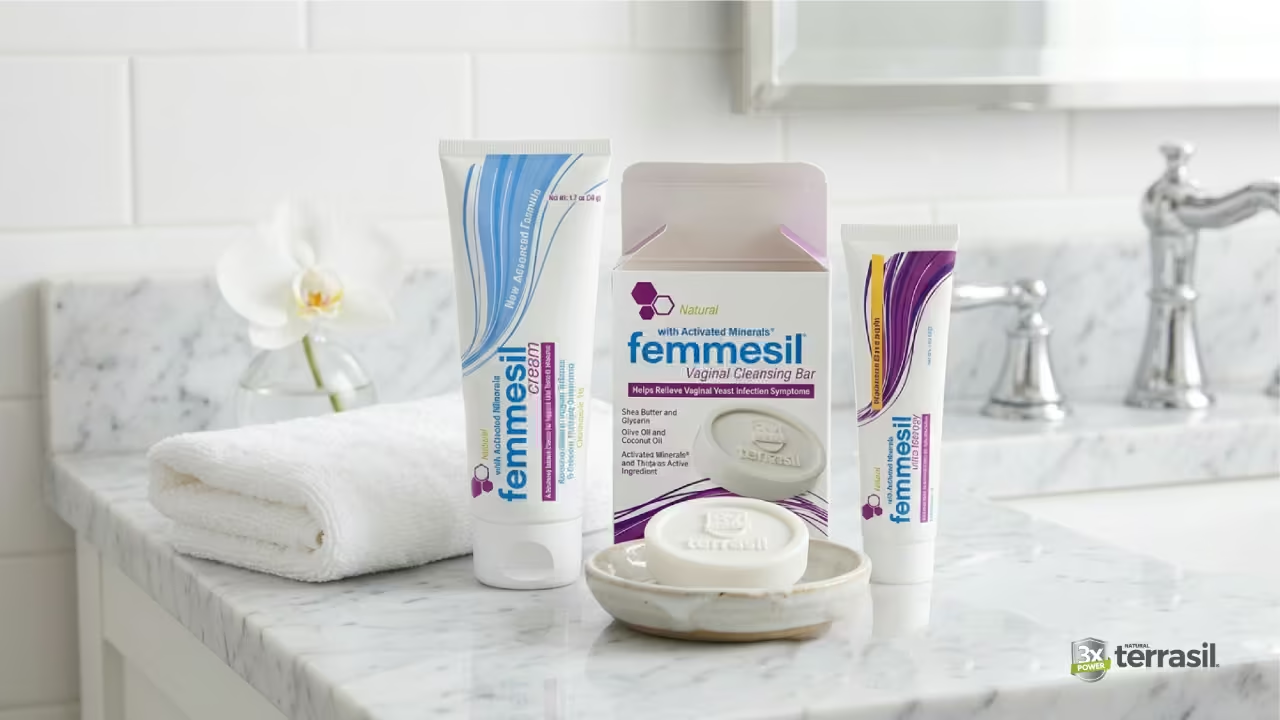
femmesil products shown in bathroom

External symptoms — the itching, burning, redness, and swelling of the vulvar skin — may benefit from targeted external care while antifungal treatment addresses the underlying infection. 

Antifungal care 

Topical antifungal medications — containing ingredients like clotrimazole, miconazole, or terconazole — are the standard approach for addressing the underlying yeast overgrowth. They are available over the counter. Completing the full course of care, even when symptoms improve early, is important to prevent recurrence.2 

External intimate skin comfort 

While antifungal care addresses the infection, the external skin also benefits from specific support. Gentle cleansing, avoiding scratching, wearing breathable cotton underwear, and applying a soothing external formulation can help manage the discomfort of inflamed vulvar skin while recovery takes place. 

FEMMESIL® Cream is formulated to provide comfort support for external intimate skin concerns, including the redness, irritation, and sensitivity associated with intimate skin discomfort. FEMMESIL® Ultra Therapy Ointment is a richer formulation for more significant external intimate skin irritation, designed to soothe and support the skin barrier of the vulvar area for longer periods of time. Both are formulated with sensitive, intimate skin in mind and are intended for external use only.

Keeping the area dry and cool 

Moisture is what Candida thrives on. During an active infection, keeping the external intimate area as dry and cool as possible helps limit conditions favorable to further yeast growth. Change out of damp clothing promptly, dry the area gently but thoroughly after bathing, wear breathable cotton underwear, and sleep without underwear if comfortable to allow airflow. 

Avoiding irritants 

During a yeast infection, the external skin barrier is compromised and particularly vulnerable. Avoid scented products, douches, intimate sprays, latex condoms if sensitive to latex, fragranced lubrication, and any new skincare products in the area until the skin has fully recovered.6 

Myths vs. Truths About Yeast Infections 

myths and facts graphic decoration

There is a remarkable amount of misinformation circulating about yeast infections — from well-meaning advice passed down through generations to outright dangerous TikTok trends. Here’s what’s true, what’s false, and what you should never, ever do.

Myth: Putting yogurt inside your vagina treats a yeast infection. 

Truth: This is one of the most persistent myths in women’s health. The Lactobacillus acidophilus in store-bought yogurt is a different species from the Lactobacillus strains that naturally populate the healthy vagina — and inserting it vaginally doesn’t produce the beneficial effect people hope for. Worse, even unsweetened yogurt contains natural sugars that can actually feed Candida. Eat yogurt with live cultures as part of a healthy diet. Don’t put it in your vagina.18

Myth: Only women who are sexually active get yeast infections.

Truth: Yeast infections are not an STI and are not caused by sexual activity. They can develop in anyone — including people who have never been sexually active. The causes are internal: antibiotic use, hormonal changes, blood sugar levels, tight clothing, moisture. Sexual activity can occasionally influence the vaginal environment, but it’s not a prerequisite for infection.3

Myth: Garlic inserted vaginally will kill the yeast.

Truth: There is no credible clinical evidence that inserting garlic vaginally treats a yeast infection. Garlic can cause significant burning and irritation on already-inflamed tissue, and introduces bacteria into the vaginal environment — the opposite of helpful. Do not put garlic in your vagina.18

Myth: If you’ve had a yeast infection before, you can always self-diagnose accurately.

Truth: Studies show that up to two-thirds of women who believe they have a yeast infection based on symptoms — including those who’ve been previously diagnosed — actually have a different condition. BV, contact dermatitis, and other infections can produce near-identical symptoms. Self-treating the wrong condition delays appropriate care. If symptoms don’t improve after standard antifungal care, or if you’re unsure, see a provider.1

Myth: Apple cider vinegar douches or baths cure yeast infections.

Truth: There is little to no clinical evidence that apple cider vinegar treats yeast infections. Applying it directly to already-inflamed intimate skin causes burning and irritation. Douching with any substance — including vinegar — disrupts the vaginal microbiome and consistently increases the risk of further infection rather than reducing it.18

Myth: Men can’t get yeast infections.

Truth: Men can and do get yeast infections, typically as candidal balanitis affecting the head of the penis and foreskin. They can develop one through sexual contact with an infected partner, through antibiotic use, high blood sugar, or being uncircumcised. It’s less common in men but far from impossible.8

Myth: A yeast infection always causes thick white discharge. 

Truth: Not always. In milder cases, the discharge may be watery or absent entirely. Some yeast infections are primarily external — burning, itching, and redness without significant discharge. The absence of thick white discharge doesn’t rule out a yeast infection, just as its presence doesn’t confirm one.1,2

Prevention: Reducing the Risk of Future Infections 

example of women's underwear neatly folded

Many yeast infections are genuinely preventable with consistent habits. These aren’t complicated — they’re mostly about supporting the natural environment of the intimate skin rather than disrupting it. 

  • Wear breathable cotton underwear — synthetic fabrics trap heat and moisture; cotton allows airflow and keeps the vulvar area drier 
  • Change out of wet or sweaty clothing promptly — wet swimwear and sweaty workout clothes create exactly the warm, moist conditions Candida prefers 
  • Avoid scented intimate products — scented soaps, wipes, douches, and sprays disrupt the natural pH and bacterial balance of the vulvar area 
  • Never douche — the vagina self-regulates; douching removes protective bacteria and consistently increases the risk of both yeast infections and BV6 
  • Be mindful after antibiotics — if you’re prone to yeast infections after antibiotic courses, mention this to your provider before starting a new course 
  • Manage blood sugar — for people with diabetes or pre-diabetes, keeping blood sugar controlled is one of the most impactful preventive steps4 
  • Consider targeted probiotics — probiotic supplements containing Lactobacillus rhamnosus GR-1 and Lactobacillus reuteri RC-14 have the most supporting research for vaginal health specifically; discuss with a healthcare provider if you experience frequent infections15,16 
  • Wipe front to back — prevents transfer of bacteria from the rectal area to the vaginal opening 
  • Choose gentle, unscented lubricants — flavored or scented lubricants can feed yeast and alter vaginal pH 
  • Reduce added sugar and processed foods — particularly relevant for those with recurring infections or pre-diabetes 

Frequently Asked Questions

Conclusion

A yeast infection isn’t just an internal condition, and it isn’t just a woman’s problem. The external skin symptoms — the burning, itching, redness, and swelling that make it genuinely hard to function — deserve as much attention as what’s happening internally. And Candida itself can appear anywhere on the body where conditions allow, not just the vaginal area. 

Understanding what those symptoms look and feel like, what causes them, how men can be affected, how the infection behaves across the body, and which natural approaches have real evidence behind them makes it significantly easier to respond appropriately — and to recognize when something you’ve read on the internet is actually going to make things worse. 

Pair any antifungal care with a gentle, supportive external intimate skin routine. Eat well. Support your microbiome. And if symptoms are severe, persist after care, or keep returning, a healthcare provider is always the right next step. You don’t have to just keep managing it — you can get to the bottom of it.

This article is intended for informational and educational purposes only and does not constitute medical advice. Always read and follow product label directions. If you are uncertain about a skin condition, a diagnosis, or the appropriate care approach for your situation, consult a qualified healthcare professional. Femmesil® products are intended for external use only.

References

1 Cleveland Clinic – Vaginal Yeast Infection — May 2025 
https://my.clevelandclinic.org/health/diseases/5019-vaginal-yeast-infection 

2 CDC – Vulvovaginal Candidiasis (VVC) STI Treatment Guidelines 
https://www.cdc.gov/std/treatment-guidelines/candidiasis.htm 

3 MedlinePlus – Vaginitis (Vulvovaginitis) 
https://medlineplus.gov/vaginitis.html 

4 DermNet NZ – Candidal Intertrigo — January 2025 
https://dermnetnz.org/topics/candidiasis-of-skin-folds 

5 MedlinePlus – Vulvovaginitis 
https://medlineplus.gov/ency/article/000897.htm 

6 Mayo Clinic – Vaginitis: Symptoms and Causes 
https://www.mayoclinic.org/diseases-conditions/vaginitis/symptoms-causes/syc-20354707 

7 WebMD – Do I Have a Yeast Infection or Something Else? 
https://www.webmd.com/women/do-i-have-a-yeast-infection 

8 Cleveland Clinic – Male Yeast Infection (Candida Balanitis) 
https://my.clevelandclinic.org/health/diseases/23199-male-yeast-infection 

9 NCBI / InformedHealth.org – Vaginal Yeast Infection (Thrush) Overview — April 2022 
https://www.ncbi.nlm.nih.gov/books/NBK543220/ 

10 Office on Women’s Health – Vaginal Yeast Infections — October 2025 
https://www.womenshealth.gov/a-z-topics/vaginal-yeast-infections 

11 Merck Manual – Candidiasis (Yeast Infection) Skin Disorders — October 2025 
https://www.merckmanuals.com/home/skin-disorders/fungal-skin-infections/candidiasis-yeast-infection 

12 Cleveland Clinic – Invasive Candidiasis — November 2025 
https://my.clevelandclinic.org/health/diseases/22308-invasive-candidiasis 

13 MedlinePlus – Candida Infection of the Skin 
https://medlineplus.gov/ency/article/000880.htm 

14 WebMD – Symptoms of a Yeast Infection — April 2024 
https://www.webmd.com/women/common-symptoms-of-a-yeast-infection 

15 Journal of Clinical Medicine – Probiotics in the Management of Vulvovaginal Candidosis — August 2024 
https://pmc.ncbi.nlm.nih.gov/articles/PMC11396221/ 

16 Frontiers in Cellular and Infection Microbiology – Use of Probiotic Lactobacilli in the Treatment of Vaginal Infections 
https://pmc.ncbi.nlm.nih.gov/articles/PMC10106725/ 

17 Healthline – Can You Treat a Yeast Infection with Yogurt? 
https://www.healthline.com/health/yogurt-for-yeast-infection 

18 Cleveland Clinic – Do Home Remedies Actually Work for Yeast Infections? — May 2025 
https://health.clevelandclinic.org/do-home-remedies-actually-work-for-yeast-infections 

Jock Itch, Ringworm, or Yeast Infection? How to Tell the Difference

terrasil silver accent terrasil silver accent
Younger couple on couch seemingly itchy

Last Updated: April 2026
This article is reviewed periodically to reflect current dermatology information and treatment approaches.
WARNING: Some images may be slightly graphic in nature due to the conditions described.

Jock itch, ringworm, yeast infection, chafing — they all show up in the same place, they all itch, and they all look vaguely similar when you’re stressed and staring at a rash. Here’s how to actually tell them apart.

The distinction matters because the care is different. Antifungal treatment addresses a fungal infection. A skin repair ointment handles friction damage. A yeast infection responds to a different antifungal approach than jock itch does. Getting it wrong doesn’t just waste time — it can occasionally make things worse. So a few minutes spent reading this is worth it.

At a Glance

Jock itch, ringworm, and yeast infections can look similar—but differ in cause, appearance, and treatment, which is why accurate identification is critical for effective care.

All five conditions covered in this guide can cause itching and redness in the groin area — but they have meaningfully different causes, appearances, and care approaches:

  • Jock itch (tinea cruris) — a fungal infection; ring-shaped, dry, scaly rash with a defined border; contagious
  • Ringworm (tinea corporis) — same family of fungus as jock itch; circular rash with a clearer center; appears on the body
  • Yeast infection (candidal intertrigo) — caused by Candida yeast; bright red, wet-looking rash; often has small satellite pustules at the edges
  • Balanitis — inflammation of the head of the penis; caused by yeast, bacteria, or irritation; redness, swelling, and sometimes discharge — men only
  • Chafing — not an infection at all; caused purely by friction; raw, stinging, no defined border, no advancing edge
  • Herpes (genital HSV) — a viral infection; painful, fluid-filled blisters that crust over; recurs in outbreaks

Key Takeaways

  • Jock itch and ringworm are caused by the same type of fungus — location on the body is what distinguishes them
  • A yeast infection looks wetter and redder than a fungal tinea rash — and it often behaves differently too
  • Balanitis affects the head of the penis specifically — it’s a different condition from jock itch, even though both involve the groin area
  • Chafing has no defined border and improves with rest and friction reduction — a fungal rash won’t do either of those things
  • Herpes causes painful blisters that crust over — jock itch causes an itchy rash, not painful sores
  • When something doesn’t add up or isn’t improving, a healthcare provider can confirm what’s going on quickly

Our commitment to accurate, evidence-based information: This article draws on peer-reviewed research and trusted health organizations including the Cleveland Clinic, Merck Manual, Harvard Health Publishing, StatPearls/NCBI, DermNet NZ, and the CDC. All sources are numbered and linked in the references section below.

The Full Comparison at a Glance

Before we go into each condition in depth, here’s a side-by-side overview. You can use this as a quick reference, or come back to it after reading each section once you have a better sense of what you’re looking for.

Feature
Jock Itch
Ringworm
Yeast Infection
Balanitis
Chafing
Herpes
Cause
Dermatophyte fungus (tinea)
Candida yeast overgrowth
Candida yeast, bacteria, or skin irritation
Friction — skin on skin or fabric
Herpes simplex virus (HSV-1 or HSV-2)
Appearance
Red, ring-shaped, scaly with a defined raised border
Circular rash, raised border, center clears as it spreads
Bright red, moist, “beefy” — satellite pustules at edges
Redness, swelling, shiny or white patches on the head of the penis — may have discharge
Red, raw, uniform — no distinct edge or border
Clusters of small fluid-filled blisters that break and crust over
Texture
Dry, flaky, scaly
Dry, scaly, raised ring edge
Moist, shiny, may weep slightly
Shiny, swollen, sometimes glazed-looking skin on glans
Raw, hot to the touch
Wet blisters, then painful crusted sores
Location
Groin crease, inner thighs, buttocks — usually spares the scrotum
Anywhere on the body: arms, legs, torso
Skin folds, groin — often involves scrotum or vulva
Head (glans) of the penis and foreskin only — men only
Inner thighs, groin, any area with repeated friction
Genitals, thighs, buttocks, around the anus
Main sensation
Intense itching, sometimes burning
Itching, occasionally mild burning
Burning, itching, soreness — often rawer than jock itch
Itching, tenderness, burning — pain during urination in some cases
Stinging, raw, hot — more painful than itchy
Pain and tenderness, tingling before blisters appear
Contagious?
Yes — skin contact, shared towels or clothing
Yes — skin contact, contaminated surfaces
Not in the same way as tinea
Can transfer between partners when caused by yeast
No
Yes — primarily through sexual or close skin contact
Worsened by
Heat, sweat, tight clothing
Heat, moisture, prolonged skin contact
Antibiotic use, heat, moisture, high blood sugar
Poor hygiene under foreskin, diabetes, tight foreskin
Physical activity, moisture, repetitive movement
Stress, illness, immune system changes
Prevention
Keep area dry, breathable underwear, socks before underwear, treat athlete’s foot
Keep area dry, avoid sharing towels or clothing, treat athlete’s foot
Keep area dry, breathable underwear, change promptly after sweating, mindful after antibiotics
Clean under foreskin daily, keep area dry, manage blood sugar, use gentle cleansing products
Breathable fabrics, moisture-wicking clothing, reduce friction sources, dry skin thoroughly
Avoid sharing towels or clothing, practice safe sex, regular STI screening
Treatment

What Is Jock Itch?

Jock Itch Example

Jock itch — medically known as tinea cruris — is a fungal skin infection that develops in the groin area. The “jock” part of the name is a bit misleading, because you absolutely don’t need to be an athlete to get it. Anyone who sweats regularly, wears tight clothing, or spends time in warm and humid conditions can develop jock itch. It’s more common than most people realize, and it’s nothing to be embarrassed about.1

The cause is a group of fungi called dermatophytes — the same organisms responsible for athlete’s foot and ringworm. In fact, jock itch is technically a form of ringworm: tinea in the groin. Dermatophytes thrive in warm, moist, dark environments, which makes the groin a near-ideal location for them to grow, especially when clothing traps heat and sweat against the skin.2

Men tend to develop jock itch more often than women, largely because moisture can get trapped between the scrotum and the inner thigh. People with diabetes, obesity, or a weakened immune system are also at higher risk, because their skin folds may stay damp for extended periods.3

What jock itch actually looks like

The rash typically starts near the crease of the groin, high on the inner thigh, and slowly spreads outward. As it does, it often takes on a ring-like or half-moon shape — the outer edges are redder, raised, scaly, and more active, while the center of the rash may partially clear. That defined, advancing border is one of the most reliable signs that you’re looking at a fungal infection rather than something else.4

It itches — often intensely. Physical activity tends to make it worse because sweat and heat feed the fungus. The scrotum is usually spared or only mildly involved, which is a useful detail when comparing jock itch to a yeast infection. The rash is predominantly dry and flaky rather than wet or shiny.5

How it spreads — including to yourself

Jock itch is contagious. It can spread through direct skin contact or through shared towels, underwear, or clothing. One route that catches people off guard: the fungus can travel from an active athlete’s foot infection to the groin through clothing when you get dressed. Pulling underwear over feet that carry the fungus is enough to transfer it. Putting socks on before underwear is a simple habit that breaks that cycle.1

TERRASIL® Jock Itch Treatment MAX is formulated with clotrimazole, an FDA-recognized antifungal ingredient, combined with patented Activated Minerals® technology to support skin comfort during the clearing process. For a more complete approach, the Serious Jock Itch Cure 2-Product System pairs the ointment with an antifungal cleansing step.

What Is Ringworm — and Is It the Same as Jock Itch?

Woman inspecting ringworm infection

This is one of the most common questions people have, and the answer might surprise you: they’re caused by exactly the same type of fungus. Ringworm (tinea corporis) and jock itch (tinea cruris) are both dermatophyte infections — the only real difference is where on the body they appear. Ringworm is the name used when tinea shows up on the arms, legs, torso, or trunk. Jock itch is the same infection in the groin. If you want a deeper breakdown of treatment options, see what actually works for ringworm treatment.

And just to clear something up: ringworm has nothing to do with worms. The name comes from the shape the rash tends to form — a ring. That’s it. Entirely a fungal infection.6

What ringworm looks like

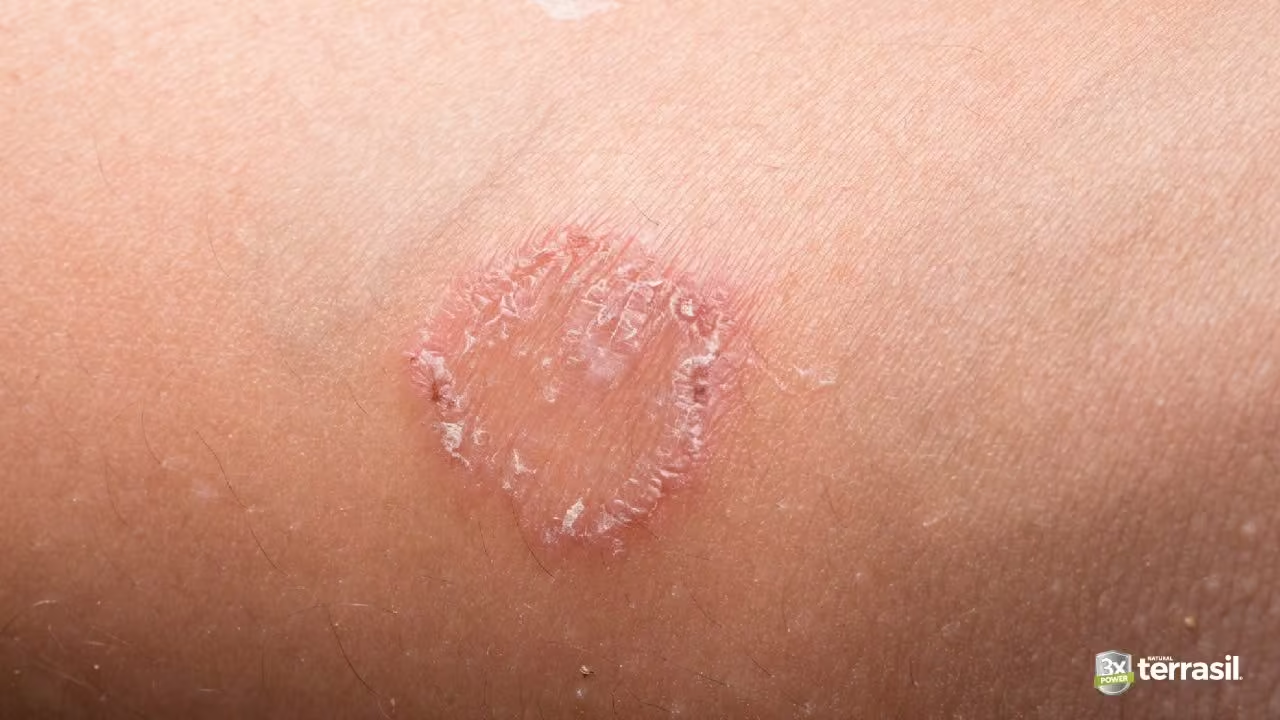
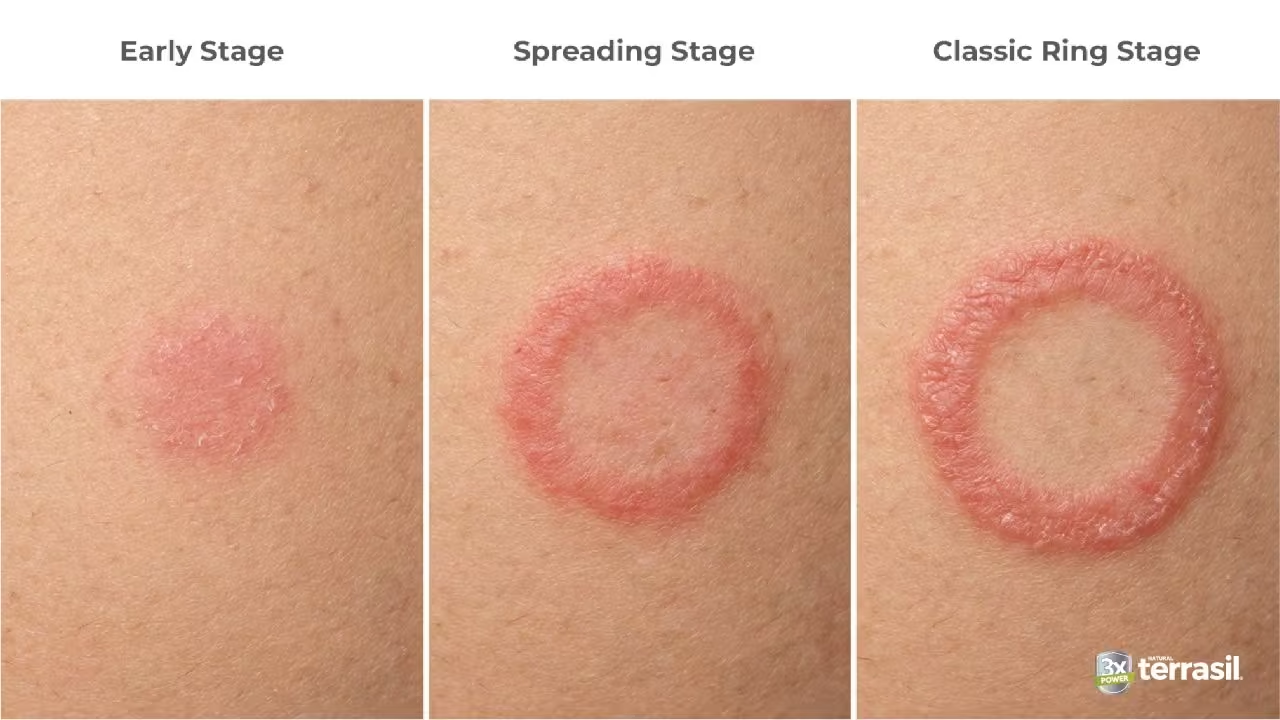
The classic ringworm rash is circular or oval, with a raised, scaly, reddish border and a center that looks relatively clear or less inflamed. The outer ring is where the active fungal growth is happening — it’s redder, slightly elevated, and may feel rough. Over time, the ring may expand outward while the center continues to flatten and clear, making that ring shape increasingly distinct.6

It’s itchy, occasionally accompanied by a mild burning sensation, and it can appear virtually anywhere on the body. That flexibility in location is what separates it from jock itch in practical terms.

Can you use jock itch treatment for ringworm?

Yes — because they’re caused by the same fungus, antifungal ingredients that address jock itch work through the same mechanism against ringworm. Clotrimazole, for example, disrupts the fungal cell membrane regardless of which part of the body the infection has settled on.7

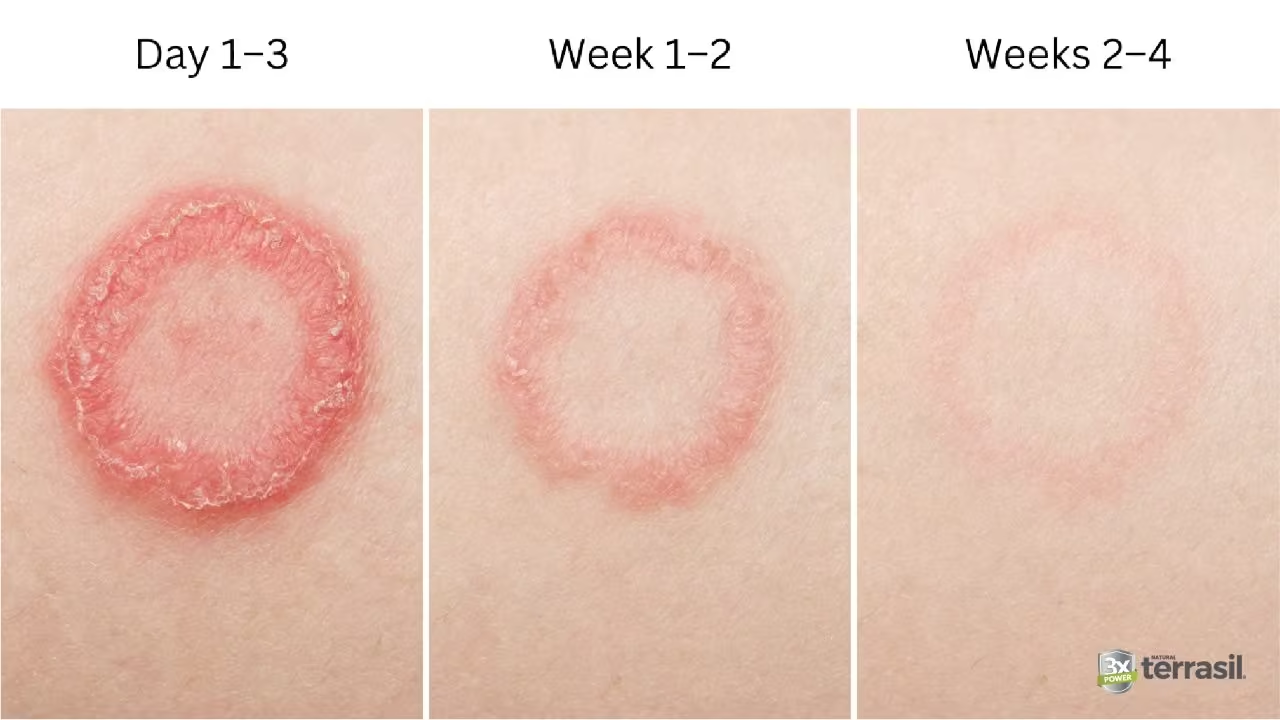
TERRASIL® Ringworm Treatment MAX Ointment combines clotrimazole with Activated Minerals® and botanical ingredients formulated to support skin comfort during recovery from tinea infections on the body. TERRASIL® Antifungal Treatment MAX is a broader option that may also be relevant for both jock itch and ringworm depending on the situation.

What Is a Groin Yeast Infection?

Groin yeast infection example

A groin yeast infection is caused by a completely different organism than jock itch — Candida, most commonly Candida albicans. This yeast naturally lives on the skin in small amounts without causing any problems. Under certain conditions, though, it can overgrow and trigger an infection. When that happens in the skin folds, the condition is called candidal intertrigo.8

It’s worth knowing what conditions tend to set the stage for this. Recent antibiotic use is a big one — antibiotics disrupt the natural balance of bacteria and yeast on the skin, and Candida takes advantage. Diabetes, obesity, a weakened immune system, and prolonged exposure to heat and moisture are also common contributing factors.9 If you’ve recently finished a round of antibiotics and now have a groin rash, that context matters.

What a groin yeast infection looks like — and how it differs from jock itch

This is where the distinction becomes most useful. A candidal rash looks different from jock itch in ways you can actually see. It tends to appear brighter red — more intensely colored, sometimes described as “beefy” — and it looks wet rather than dry. Where jock itch is scaly and flaky, a yeast rash is more shiny and moist, and may even weep slightly. One of the most characteristic features is the presence of satellite pustules: small red bumps that appear just beyond the main rash border, scattered outward like satellites around a central mass.10

Unlike jock itch, which typically spares the scrotum, a candidal infection more often involves the scrotum directly. In women, it commonly affects the vulva and surrounding skin. The sensation tends to feel more raw and burning than the deep, persistent itch of jock itch.8

A quick pattern to remember: Dry and scaly with a ring border pointing toward jock itch (fungal tinea). Wet, intensely red, with satellite pustules pointing toward yeast (Candida). These two are frequently confused, and they respond to different types of care — so the distinction is worth making.

For external intimate skin discomfort, FEMMESIL® Cream and FEMMESIL® Ultra Therapy Ointment are formulated with sensitive intimate skin in mind. The FEMMESIL® Ultra Therapy Vaginal Ointment & Cleansing Bar Kit pairs a cleansing step with topical care for a more complete routine.

Can Men Get a Yeast Infection? Can Women Get Jock Itch?

Two women and a man running in a park

Yes to both — and this is genuinely one of the most underappreciated points when it comes to groin rashes. These conditions are not gender-exclusive, even though they’re often talked about as if they are.

Men and yeast infections

Men can absolutely develop a groin yeast infection, and it’s more common than most people realize. Candida yeast lives naturally on everyone’s skin — it doesn’t discriminate. When the conditions are right (heat, moisture, antibiotic use, high blood sugar, or a disrupted skin barrier), it can overgrow on male skin just as it does elsewhere.9

In men, a candidal groin infection often presents as a bright red, moist rash that involves the scrotum — which is one of the clearest ways to distinguish it from jock itch, since jock itch typically spares the scrotum. The rash may have that characteristic “beefy” appearance, and small satellite pustules scattered just beyond the rash border are another telling sign that Candida is involved rather than a dermatophyte fungus.10

Men with diabetes are particularly susceptible, as elevated blood sugar creates favorable conditions for yeast overgrowth. Recent antibiotic use is another common trigger. If a groin rash appears shortly after finishing antibiotics, a yeast infection is worth considering — even in men who’ve never had one before.

Women and jock itch

Jock itch is far more common in men, but women do get it — and the same fungus is responsible. Trichophyton rubrum, the dermatophyte most often associated with tinea cruris, doesn’t distinguish between genders. Women who sweat heavily, wear tight synthetic clothing during exercise, or have athlete’s foot are all at risk of developing jock itch in the groin or inner thigh.5

The rash looks the same in women as it does in men: a red, scaly, ring-shaped rash with a defined border that spreads outward from the groin crease. It tends to affect the upper inner thighs and the skin folds around the groin rather than the genitals directly. Because women are less commonly diagnosed with jock itch, it sometimes goes misidentified as a yeast infection — but the two look meaningfully different once you know what to look for.

The key takeaway: If you’re a man with a bright red, wet-looking rash that involves the scrotum — don’t automatically assume jock itch. If you’re a woman with a dry, scaly, ring-shaped rash on the inner thigh — don’t automatically assume it isn’t jock itch. The appearance tells you more than the gender does.

For women dealing with external intimate skin discomfort — whether from a yeast infection or general irritation —  FEMMESIL® Cream and FEMMESIL® Ultra Therapy Ointment are formulated with sensitive intimate skin in mind. For jock itch specifically, TERRASIL® Jock Itch Treatment MAX may be relevant regardless of gender.

What Is Balanitis — and How Is It Different from Jock Itch?

man sitting on exam table looking very uncomfortable

Balanitis is inflammation of the glans — the head of the penis. It’s a condition that only men can develop, and it’s more common than most people talk about. Estimates suggest that up to 10% of men will experience balanitis at some point in their lifetime, with uncircumcised men being at significantly higher risk.15

It comes up in this guide because it’s genuinely easy to confuse with jock itch, a groin yeast infection, or even herpes — especially for someone who hasn’t experienced it before. The redness, irritation, and discomfort are real, and the location is close enough to jock itch territory that the confusion is understandable. But balanitis is its own condition, with its own causes, and it responds to care differently.

What causes balanitis

Candida yeast is the most common cause — accounting for roughly 25 to 50% of cases. This is why balanitis is sometimes called candidal balanitis, or informally referred to as a penile yeast infection. The warm, moist environment under the foreskin in uncircumcised men creates ideal conditions for Candida to overgrow. But balanitis can also be caused by bacterial infections, skin irritation from harsh soaps or detergents, certain skin conditions like psoriasis or eczema, and occasionally by sexually transmitted infections.15,16

Diabetes is a significant risk factor. High blood sugar means sugar-rich urine can accumulate under the foreskin, creating a hospitable environment for yeast and bacteria. Recurring balanitis in an adult man is sometimes one of the first signals that blood sugar may not be well controlled.16

What balanitis looks like

Balanitis presents specifically on the head of the penis and, in uncircumcised men, the foreskin. The skin appears red, swollen, and may look shiny or glazed. There may be white or yellowish patches, a thick or foul-smelling discharge under the foreskin, and pain or burning during urination. The foreskin may feel tight or difficult to retract. In some cases, small papules or erosions appear on the glans.15

This is what distinguishes it clearly from jock itch: jock itch is a rash that spreads across the inner thigh and groin crease in a ring-shaped pattern — it doesn’t typically involve the head of the penis. Balanitis, on the other hand, is localized to the glans and foreskin. The location alone tells you something important.

Can balanitis spread between partners?

When balanitis is caused by Candida yeast, it can transfer back and forth between sexual partners — particularly if a female partner has a vaginal yeast infection. This is one of the reasons recurring balanitis is worth discussing with a healthcare provider, since both partners may need care simultaneously to break the cycle.16

The practical difference: Jock itch is a spreading rash on the inner thigh and groin. Balanitis is localized redness, swelling, and irritation on the head of the penis itself. If the discomfort is concentrated there rather than in the crease of the groin, balanitis is the more likely explanation — and it warrants a different approach to care.

TERRASIL® Balanitis Relief Ointment is formulated to support comfort and skin recovery for balanitis-related irritation and inflammation of the genital skin. The Serious Balanitis Relief System pairs the ointment with the Balanitis Cleansing Bar for a complete cleansing and care routine — keeping the area clean is a core part of managing and preventing balanitis recurrence.

Jock Itch and Athlete’s Foot: More Connected Than You’d Think

Athlete's foot example close up

If you have jock itch and athlete’s foot at the same time, that’s not a coincidence — it’s actually quite common. Both are caused by the same dermatophyte fungi, and the two infections regularly appear together or fuel each other’s recurrence.

The connection works like this: the fungus living on infected feet can transfer to the groin through clothing. If you pull underwear over bare, infected feet before putting on socks, you’ve just given the fungus a ride to a warm, dark, moist new location. That’s one of the most common ways jock itch develops or keeps coming back despite treatment. The fix is simple — put socks on before underwear — but it’s something most people have never thought about.1

If you’re dealing with recurrent jock itch and also have athlete’s foot, addressing both at the same time is important. Treating the groin while leaving the feet untreated is a bit like mopping the floor with the tap still running. Using an athlete’s foot antifungal treatment alongside groin care helps break the cycle

TERRASIL® Athlete’s Foot Antifungal Ointment is formulated for tinea pedis to support clearing the fungal infection at the source. Treating athlete’s foot alongside jock itch may help break the cycle of reinfection between the two sites.

Jock Itch vs. Chafing: Friction or Fungus?

Runner examining leg chafing

Chafing is probably the most frequently mistaken condition when it comes to jock itch. Both cause redness and irritation in the inner thigh and groin area, and both tend to flare with physical activity and sweating. If you’ve been assuming the two are basically the same thing, you’re not alone — but the causes are completely different, and so is the right approach to care.

Chafing is not an infection. Nothing is growing, nothing is spreading. It’s a purely mechanical reaction — skin rubbing against skin or fabric, wearing away the protective outer surface and leaving the area raw, red, and stinging. The discomfort is a direct response to friction. It doesn’t require antifungal treatment because there’s no fungus involved.11

The clearest way to tell them apart

Look at the border — or rather, the absence of one. Jock itch has a clearly defined, raised, scaly edge that advances as the fungus spreads. Chafing has no such border. The redness fades gradually and evenly, following the exact path where skin has been rubbing. There’s no ring, no advancing edge, no defined shape — just uniform irritation that matches the friction pattern.12

Timing also tells you something. Chafing tends to appear and resolve in direct relation to activity. A long run, a hot day in tight jeans, an intense workout — the skin gets irritated, and with rest and reduced friction, it starts to settle within a day or two. Jock itch doesn’t work that way. Rest doesn’t make it better. It lingers, and if the fungus isn’t addressed, it tends to slowly spread.

Worth knowing: Chafing that damages the skin’s surface can actually make the area more vulnerable to a fungal infection. If you’ve had persistent chafing and notice the rash starting to develop a more defined edge or ring-like shape, it’s worth considering whether a secondary fungal infection has developed on top of the original irritation.11

Understanding how friction and everyday irritants affect your skin barrier helps explain why antifungal products don’t work here.

For skin that’s been rubbed raw or irritated by friction, TERRASIL® Anti-Bacterial Skin Repair Ointment is formulated to support recovery of damaged skin and help protect the disrupted skin barrier while the area heals.

Jock Itch vs. Herpes: Addressing the Anxiety Directly

woman sitting in bed looking concerned

Let’s be honest about something: for a lot of people, noticing something unusual in the groin area immediately triggers anxiety about sexually transmitted infections — herpes in particular. That reaction is completely understandable. But it’s also worth knowing that jock itch and genital herpes look and behave quite differently, and once you understand the key differences, the two are easier to distinguish than the initial panic might suggest. 

Jock itch is a fungal infection. Herpes is a viral infection caused by the herpes simplex virus (HSV-1 or HSV-2). They are fundamentally different in cause, appearance, sensation, and behavior — and they require entirely different approaches to care.13 

What each one looks and feels like 

Jock itch presents as a broad, spreading rash — ring-shaped, scaly, with that characteristic raised border spreading across the inner thigh and groin crease. The dominant sensation is itching. It may burn somewhat, especially after sweating, but pain is not its defining feature. 

Herpes presents very differently. Instead of a rash, it produces clusters of small, fluid-filled blisters in a localized area. Those blisters are painful — sometimes significantly so. They eventually break open, leaving raw ulcers that crust over as they heal. The pain and tenderness are often the most prominent symptoms, and many people notice a tingling or burning sensation in the area before the blisters even appear.13 

Herpes recurs. Jock itch doesn’t work that way. 

Another meaningful difference: after an initial herpes infection, the virus remains in the body and can reactivate periodically — often triggered by stress, illness, or changes in immune function. Those reactivations are called outbreaks, and they follow a recognizable pattern. Jock itch doesn’t do this. It may come back if the conditions that caused it return, but it doesn’t lie dormant and re-emerge in the way a viral infection does.14 

Herpes may also be accompanied during an initial outbreak by flu-like symptoms — fatigue, swollen lymph nodes, general malaise. Jock itch causes no systemic symptoms at all. It stays on the skin and doesn’t affect how you feel beyond the local discomfort.14 

Either way, a healthcare provider can usually distinguish between jock itch and herpes quickly by examination, and can confirm herpes with a swab test if blisters are present. That’s always the most reliable path. Getting a clear answer is far better than guessing. 

What Commonly Helps Each Condition 

reaching for terrasil in medicine cabinet

This is where matching the cause to the care really matters. Here’s a straightforward overview of the approaches most commonly associated with each condition. This is educational information — not medical advice — and a healthcare provider is the right resource for anything that isn’t improving or remains unclear.

For jock itch and ringworm

terrasil kits assortment

Because both are dermatophyte fungal infections, antifungal care is the relevant approach. Topical antifungal ingredients like clotrimazole work by disrupting the fungal cell membrane and are widely available over the counter. Consistent use over the full recommended duration matters — stopping early because the rash looks better is one of the most common reasons jock itch keeps coming back.2

Equally important is reducing the moisture environment. Keeping the area clean and thoroughly dry, wearing breathable underwear, showering promptly after physical activity, and changing out of damp clothing all support recovery and help prevent the fungus from returning.3

TERRASIL® Jock Itch Treatment MAX and the Serious Jock Itch Cure 2-Product System are formulated for tinea cruris with a paired treatment and cleansing approach. For ringworm on the body, TERRASIL® Ringworm Treatment MAX Ointment and Antifungal Treatment MAX may also be relevant depending on location and severity.

For groin yeast infections

femmesil products for yeast infections

Candidal infections may respond to antifungal care, but the type of antifungal matters — some agents are better suited to Candida specifically. Keeping the area cool, dry, and well-ventilated is particularly important, since moisture is a primary driver of yeast overgrowth. Addressing any underlying contributing factors — like completing a course of antibiotics or managing blood sugar levels — also supports recovery.9

FEMMESIL® Cream and FEMMESIL® Ultra Therapy Ointment are formulated for the sensitive external intimate skin area. The FEMMESIL® Ultra Therapy Vaginal Ointment & Cleansing Bar Kit provides a paired cleansing and topical care routine for external intimate skin concerns.

For balanitis

terrasil balanitis relief kit

When balanitis is caused by Candida yeast — which is the most common cause — antifungal care applied to the affected area is the typical approach. Keeping the area clean and dry is equally important: gently cleaning under the foreskin daily and ensuring the area is thoroughly dry afterward removes the moist environment that yeast and bacteria rely on. Avoiding harsh soaps or detergents in the area helps prevent irritation-driven balanitis. Men with diabetes may find that improved blood sugar control reduces recurrence.16

TERRASIL® Balanitis Relief Ointment is formulated to support comfort and skin recovery for balanitis-related genital skin irritation. Used as part of the Serious Balanitis Relief System alongside the Balanitis Cleansing Bar, it supports both the cleansing and the care steps that are central to managing this condition.

For chafing

Terrasil skin repair with calendula soap

Chafing needs friction reduction and skin barrier support — not antifungal treatment. Keeping the area clean and dry, applying a gentle protective ointment, choosing breathable fabrics, and addressing the source of friction are the core approaches. The skin just needs a chance to recover without continued rubbing. Antifungal products have no effect on chafing because there’s no fungus to address.11

TERRASIL® Anti-Bacterial Skin Repair Ointment may help support recovery of skin that has been damaged by friction, helping protect the disrupted skin barrier while the area heals.

For herpes

terragenHG ointment for herpes symptom relief

Genital herpes is managed with antiviral medications, which require a prescription. Over-the-counter antifungal products have no effect on a viral infection. A healthcare provider is the right first step for anyone who suspects herpes — both for accurate identification and for access to appropriate care options.14

Prevention: What Actually Helps — By Condition Type

stack of clean towels

Prevention isn’t one-size-fits-all here. Fungal infections, yeast overgrowth, and viral infections are different organisms with different vulnerabilities — and the habits that help with one don’t always apply to another. Here’s how to think about prevention by cause, by gender, and by what to do when you’re already dealing with something active.

Preventing fungal infections (jock itch, ringworm, athlete’s foot)

Dermatophyte fungi need warmth, moisture, and an opportunity to spread. Take away any one of those and the risk drops meaningfully.

  • Keep the groin area dry — shower promptly after exercise and dry the area thoroughly, including skin folds, before dressing
  • Wear breathable fabrics — loose-fitting cotton or moisture-wicking underwear reduces trapped sweat and heat
  • Put socks on before underwear — this prevents athlete’s foot fungus from transferring to the groin through clothing1
  • Don’t share towels or clothing — dermatophyte fungi spread easily through shared textiles, even after a single use
  • Change out of sweaty clothes promptly — wet fabric against skin is one of the most consistent risk factors for tinea infections
  • Treat athlete’s foot if you have it — an untreated foot infection is a persistent source of reinfection for the groin
  • Wear sandals in communal spaces — locker rooms, pool decks, and gym showers are common pickup sites for fungal spores

Preventing yeast infections and balanitis

Candida is already on most people’s skin. Prevention is about keeping the conditions that allow it to overgrow in check.

  • Be mindful after antibiotics — antibiotics disrupt the natural balance of bacteria and yeast; this window after a course is when yeast is most likely to overgrow
  • Manage blood sugar — elevated blood sugar creates conditions favorable to Candida; recurring yeast infections or balanitis can sometimes be an early signal that blood sugar is worth discussing with a provider16
  • Clean under the foreskin daily — for uncircumcised men, gently cleaning and thoroughly drying under the foreskin is the single most effective prevention habit for balanitis15
  • Use gentle, fragrance-free cleansers — harsh soaps and scented intimate washes are a common irritant trigger for both balanitis and intimate skin inflammation
  • Avoid sugary or flavored lubricants during sex — the sugar in them can feed yeast and increase infection risk17

Gender-specific considerations

For men: Athletic supporters, cups, and compression shorts trap heat and moisture in the groin more than any other clothing type. Wash them after every single use — not every few uses. Switching from briefs to boxers reduces friction and improves airflow for men prone to recurring jock itch. During an active infection, using a dedicated towel for the groin area and a separate one for the rest of the body prevents spreading the fungus to other areas like the hands, feet, or torso.3

For women: Tight synthetic fabrics — leggings, thongs, and swimwear worn for extended periods — create a warm, moist environment in the groin that fungal and yeast infections thrive in. Cotton underwear, or breathable athletic fabric that wicks moisture away, significantly reduces that risk. Avoid lingering in wet swimwear after swimming. Scented intimate washes, douches, and even scented toilet paper can disrupt the vaginal and vulvar skin’s natural pH and microbial balance, making yeast overgrowth more likely. Plain warm water and a mild, unscented cleanser for the external area only is typically the gentler, more protective approach.

Sheets, towels, and laundry: what to do normally — and what to do when infected

Young woman setting up clothes washing machine

This part matters more than most people realize. Fungal spores can survive on fabric for weeks, and Candida albicans has been shown to remain active on textiles for up to a month — meaning unwashed towels and sheets can reinfect you or transmit to a partner even after the original rash starts to clear.19

Normal baseline — when you’re not infected:

  • Wash bath towels every 3–5 uses; allow them to fully dry between uses — a damp towel hanging on a hook is an active breeding ground for fungi and bacteria19
  • Wash bed sheets weekly; wash pillowcases every 2–3 days if you have active skin concerns
  • Wash underwear after every single use; wash workout clothing and athletic supporters after every use regardless
  • Wash all laundry in hot water when possible — heat kills fungal spores more effectively than cold or warm cycles20
  • Ensure clothing is fully dry before wearing — damp fabric provides exactly the environment fungus needs to grow

When you have an active infection — fungal or yeast:

  • Wash towels after every single use — do not reuse them even once during an active infection
  • Use a separate towel for the infected area and a different towel for the rest of your body; using the same towel spreads fungus from the groin to your hands, feet, or torso3
  • Wash bed sheets every 2–3 days in hot water for the duration of the infection
  • Change underwear at least once daily — more if you sweat; do not wear the same pair twice without washing
  • Do not share any towels, clothing, or bedding with others while infected
  • Wash your hands thoroughly after touching the infected area — scratching and then touching other body parts is a documented route of self-spread1
  • Do not scratch — beyond the discomfort it causes, scratching transfers fungal spores under your fingernails and onto whatever you touch next

Contagiousness: what spreads, how far, and to whom

Not everything on this list spreads the same way — or at all. Understanding the actual contagiousness of each condition helps you take the right precautions without unnecessary anxiety.

Jock itch and ringworm are genuinely contagious. The fungus spreads through direct skin-to-skin contact, shared clothing, shared towels, contaminated gym equipment, and locker room surfaces. It can also spread from one part of your own body to another — from feet to groin via clothing, or from the groin to the hands via scratching. During an active infection, avoiding skin contact with others in the affected area and laundering everything aggressively are the most practical protective measures.1,3

Yeast infections are not contagious in the same way as tinea fungi, but Candida can transfer between sexual partners. A man with candidal balanitis can pass yeast to a female partner during sex, and vice versa. This is why both partners addressing an active yeast infection at the same time is sometimes necessary to break a cycle of recurrence.16

Chafing is not contagious. It is a mechanical skin reaction, not an infection. There is nothing to transmit.

Herpes is highly contagious through sexual and close skin-to-skin contact. It can transmit even when no sores are visible — the virus sheds intermittently from the skin in the absence of symptoms. During an active outbreak, avoiding sexual contact is strongly advised. Between outbreaks, consistent condom use reduces (but does not eliminate) transmission risk. Touching a sore and then touching another part of your body or another person’s skin without washing hands can also spread the virus. Daily suppressive antiviral therapy, taken consistently, has been shown to significantly reduce both outbreak frequency and the risk of transmitting herpes to a partner.13,14

Diet and its role in yeast overgrowth

There is a well-established link between high blood sugar and Candida overgrowth — which is why diabetes is consistently identified as one of the most significant risk factors for yeast infections and balanitis. What’s less settled in the research is whether dietary sugar directly affects skin Candida in people without diabetes.

What the evidence does support: diets consistently high in refined sugars and heavily processed foods may raise blood glucose and disrupt the balance of beneficial bacteria in the gut and on the skin — both of which can create conditions more favorable to Candida overgrowth. Alcohol metabolizes similarly to sugar in the body and may play a comparable role. A diet higher in fiber, whole foods, and lean protein supports the microbial balance that keeps Candida in check.18

The practical takeaway: if you deal with recurring yeast-related infections and your diet is consistently high in sugar, refined carbohydrates, or alcohol, that pattern is worth paying attention to. It won’t replace antifungal care — but it may support it and reduce how often infections come back.

Worth knowing: Diet alone is rarely sufficient to clear an established yeast infection. But if infections keep recurring despite care, blood sugar and lifestyle factors are worth discussing with a healthcare provider. Recurring infections can sometimes be an early indicator of pre-diabetes or other conditions worth checking.

Safe sex: before, during, and after

Different conditions spread differently, and the sexual transmission picture isn’t the same for all of them.

Jock itch and ringworm are not sexually transmitted infections in the clinical sense, but the fungus can transfer through close skin-to-skin contact. Avoiding sexual contact during an active, untreated infection is a reasonable precaution.3

Yeast infections and balanitis caused by Candida can transfer between partners through unprotected sex. Using barrier methods during an active yeast infection, waiting until symptoms have fully cleared before resuming sex, and both partners addressing the infection simultaneously all reduce back-and-forth reinfection.17

Herpes requires a more careful ongoing approach. The virus can shed and transmit even without visible sores — which means the risk isn’t limited to visible outbreaks. Before sex, open communication with a partner about HSV status is the foundation of informed consent. During sex, consistent use of condoms or dental dams significantly reduces transmission risk, though herpes can spread through skin-to-skin contact in areas not fully covered. After sex, gentle cleansing and washing hands thoroughly are sensible habits. For people with known herpes, daily suppressive antiviral therapy has been shown to reduce both outbreaks and the risk of transmitting to partners by over 90% in some studies.13,14

  • Before sex: know your status, communicate openly, and avoid sexual activity during any active outbreak or unresolved infection
  • During sex: use barrier methods consistently; choose pH-friendly, unscented lubrication; avoid flavored products near the genitals
  • After sex: gently cleanse the genital area with a mild, unscented cleanser; dry thoroughly; wash hands

Frequently Asked Questions

Conclusion

Dealing with an itchy, red rash in the groin or inner thigh area is uncomfortable enough without the added stress of not knowing what you’re looking at. The good news is that once you know the key differences — the border, the texture, the location, the pattern of symptoms, what makes it worse — the picture becomes much clearer.

Jock itch and ringworm are fungal infections that respond to antifungal care. A groin yeast infection is caused by a different organism and looks different from tinea. Balanitis affects the head of the penis specifically and has its own causes and care approach. Chafing is pure friction with no infection involved, and it improves with rest and friction reduction. Herpes is a viral infection that causes painful blisters — a very different presentation from any of the fungal conditions. These aren’t subtle distinctions once you know what to look for.

If something still isn’t adding up after reading this — or if a rash isn’t responding to care as expected — a healthcare provider can confirm the cause quickly and point you in the right direction. You don’t have to keep guessing.

This article is intended for informational and educational purposes only and does not constitute medical advice. Always read and follow product label directions. If you are uncertain about a skin condition or the appropriate care approach for your situation, consult a qualified healthcare professional.

References

1 Cleveland Clinic – Jock Itch (Tinea Cruris)
https://my.clevelandclinic.org/health/diseases/22141-jock-itch-tinea-cruris

2 Merck Manual Professional – Tinea Cruris (Jock Itch) — October 2025
https://www.merckmanuals.com/professional/dermatologic-disorders/fungal-skin-infections/tinea-cruris-jock-itch

3 WebMD – Jock Itch: Causes, Treatment, Prevention — May 2024
https://www.webmd.com/men/causes-and-prevent-jock-itch

4 Harvard Health Publishing – Jock Itch (Tinea Cruris) — October 2023
https://www.health.harvard.edu/a_to_z/jock-itch-tinea-cruris-a-to-z

5 Patient.info – Fungal Groin Infection (Tinea Cruris) — January 2025
https://patient.info/infections/fungal-infections/fungal-groin-infection-tinea-cruris

6 CDC – Ringworm
https://www.cdc.gov/fungal/diseases/ringworm/index.html

7 StatPearls / NCBI – Tinea Cruris
https://www.ncbi.nlm.nih.gov/books/NBK554602/

8 DermNet NZ – Candidal Intertrigo — January 2025
https://dermnetnz.org/topics/candidiasis-of-skin-folds

9 Merck Manual Consumer – Candidiasis (Yeast Infection) — October 2025
https://www.merckmanuals.com/home/skin-disorders/fungal-skin-infections/candidiasis-yeast-infection

10 Cleveland Clinic – Intertrigo — August 2023
https://my.clevelandclinic.org/health/diseases/21693-intertrigo

11 Cleveland Clinic – Chafing — August 2023
https://my.clevelandclinic.org/health/diseases/23517-chafing

12 GoodRx – Jock Itch: Treatments and Symptoms — April 2025
https://www.goodrx.com/conditions/fungal-infection/jock-itch-tinea-cruris-prevention

13 CDC – Genital Herpes
https://www.cdc.gov/std/herpes/default.htm

14 Mayo Clinic – Genital Herpes
https://www.mayoclinic.org/diseases-conditions/genital-herpes/symptoms-causes/syc-20356161

15 StatPearls / NCBI – Balanitis — August 2024
https://www.ncbi.nlm.nih.gov/books/NBK537143/

16 Cleveland Clinic – Balanitis
https://my.clevelandclinic.org/health/diseases/21186-balanitis

17 Evvy – Yeast Infection After Sex — January 2026
https://www.evvy.com/blog/yeast-infection-after-sex

18 PMC / NCBI – Healthy Diet and Lifestyle Improve the Gut Microbiota and Help Combat Fungal Infection
https://pmc.ncbi.nlm.nih.gov/articles/PMC10302699/

19 Cleveland Clinic – How Often Should You Wash Your Bath Towels?
https://health.clevelandclinic.org/how-often-should-you-wash-your-germ-magnet-of-a-bath-towel

20 Kaiser Permanente – Jock Itch Care Instructions
https://healthy.kaiserpermanente.org/health-wellness/health-encyclopedia/he.jock-itch-care-instructions.uh4967

What Does Ringworm Look Like? Early Symptoms, Signs, and How the Rash Changes

terrasil silver accent terrasil silver accent
Doctor examining a little girl's arm

Last Updated: March 2026
This article is reviewed periodically to reflect current dermatology information and treatment approaches.

If you’ve been searching for what ringworm looks like, there’s a good chance you’re looking at a rash right now and trying to figure out what it might be.

Maybe it’s a small, itchy patch. Maybe the edges look slightly raised, or a faint circle seems to be forming. When something unusual appears on your skin, it’s natural to feel uncertain — especially when it doesn’t look like something you’ve seen before.

Ringworm is one of the most common fungal skin infections worldwide, but it often surprises people because it rarely looks the way they expect.

Despite the name, ringworm has nothing to do with worms. The infection is caused by fungi called dermatophytes, which live on the outer layer of the skin.¹

Ringworm is extremely common and very treatable, even though it may look concerning at first.

What makes ringworm confusing is that its appearance changes as it develops. A rash that looks like dry skin or mild irritation today may look very different in a week.

Understanding how ringworm develops — and how the rash changes during different stages — can help explain what you may be seeing on your skin. Because ringworm can resemble other skin conditions in its early stages, identifying its visual patterns can help you distinguish it from eczema, irritation, or other common rashes.

Quick Answer: What Does Ringworm Look Like?

Ringworm typically appears as a circular rash with a red or raised border and clearer center. The rash may itch, flake, or slowly expand outward as the fungal infection spreads across the outer layer of the skin.

Our Commitment to Accurate, Evidence-Based Information

Our articles are written using information from peer-reviewed dermatology research and reputable health organizations. We review scientific literature and clinical resources to ensure the information we share is clear, accurate, and helpful.

Sources referenced in this article include materials from organizations such as the Centers for Disease Control and Prevention (CDC) and the American Academy of Dermatology.

Key Takeaways

  • Ringworm is a fungal skin infection that often forms a circular rash with a raised border.
  • The infection is caused by dermatophyte fungi, primarily from the genera TrichophytonMicrosporum, and Epidermophyton.
  • The infection usually begins as a small irritated patch before gradually spreading outward.
  • Ringworm can appear on many areas of the body, including arms, legs, scalp, groin, and feet.
  • Antifungal ingredients such as clotrimazole are commonly used to address fungal skin infections.
  • The rash may change appearance as the infection spreads and as the skin begins recovering.

What Ringworm Looks Like in the Early Stages

Man holding a large cat

In the beginning, ringworm often looks subtle and easy to dismiss.

Many people first notice something like:

  • a small reddish patch
  • slightly dry or irritated skin
  • mild itching that comes and goes
  • a faint flaky texture

At this stage, the rash may only be about the size of a coin.

Because early symptoms can resemble common skin irritation, many people assume it is simply dry skin or a temporary rash that will disappear on its own.

However, fungal infections behave differently from ordinary irritation.

Dermatophyte fungi feed on keratin, a protein found in the outer layer of skin, hair, and nails.¹ As long as keratin is available and the environment remains warm and moist, the fungi can continue spreading outward.

This is why a small patch that looks harmless at first may gradually expand over time.

Why Ringworm Forms a Ring

Ringworm example close up

The circular shape of ringworm isn’t random — it reflects how the infection spreads.

Dermatophyte fungi grow outward from the original point of infection.

As the fungi expand across the skin:

  • The outer edge remains active, where the fungi are still growing
  • The center may begin calming, as the body responds to the infection

This contrast creates the familiar pattern:

  • a red or raised outer ring
  • calmer skin toward the center

That pattern is what gives ringworm its name.²

Not every infection forms a perfect circle. Some appear oval or slightly irregular, depending on how the fungi spread across the skin.

The Classic Ringworm Rash

As the infection progresses, the rash often becomes easier to recognize.

Typical features may include:

  • a circular or oval shape
  • a raised or red border
  • dry or flaky skin
  • itching or irritation

The outer edge of the rash often appears more inflamed because that is where the fungal growth is most active.

Meanwhile, the center of the rash may look calmer or closer to normal skin tone.

Ringworm Stages: How the Rash Changes as It Spreads and Heals

Ringworm change examples

Ringworm doesn’t stay the same throughout the infection. The rash often changes gradually as the fungi spread and the skin begins responding.

Early stage

The infection may begin as a small irritated patch that resembles dry skin or a mild rash.

Spreading stage

The rash gradually expands outward as fungal growth continues across the skin. The border becomes more defined while the center may begin calming.

Classic ring stage

The circular rash becomes more recognizable, often with a red border and clearer center.

Healing stage

As antifungal treatment addresses the infection, the rash may slowly fade. The border may stop expanding, and redness may gradually improve as the skin recovers.

Because the infection affects the outermost layer of the skin, visible improvement can occur gradually as the skin replaces affected cells.

Common Places Ringworm Appears

Man with ringworm rash on lower abdominal

Ringworm can appear on many areas of the body.

Common locations include:

  • arms
  • legs
  • torso
  • neck
  • face
  • scalp
  • groin
  • feet

Some infections have different names depending on where they appear. For example, athlete’s foot affects the feet, while jock itch affects the groin. Although the names differ, these infections are caused by the same types of dermatophyte fungi.³

Where People Commonly Catch Ringworm

Red empty locker room

Ringworm spreads through fungal spores that can survive on surfaces and fabrics.

People may encounter these spores in environments such as:

  • gyms and locker rooms
  • communal showers
  • shared sports equipment
  • shared towels or clothing
  • wrestling mats or athletic facilities

Because fungi thrive in warm and humid environments, shared spaces where skin contact occurs can sometimes allow the infection to spread more easily.³

What Causes Ringworm

Dermatophyte Fungi Render

Ringworm is caused by dermatophyte fungi that grow on the outer layer of the skin.

These fungi feed on keratin, a structural protein found in skin, hair, and nails.¹

The infection can spread through:

  • direct skin-to-skin contact
  • contaminated surfaces
  • shared clothing or towels
  • infected animals such as cats or dogs

Fungal skin infections, including ringworm, athlete’s foot, and jock itch, affect millions of people worldwide each year.

Which Fungi Cause Ringworm? The Dermatophytes Explained

dermatophyte fungi skin scraping under microscope

“Ringworm” is not caused by a single organism. It is a general term for a fungal skin infection that can be triggered by roughly 40 species of dermatophytes, though a small number of species account for the vast majority of cases worldwide.

Dermatophytes are organized into three main genera, each with distinct characteristics:

Genus
Key characteristic
Common species
Trichophyton
The most frequent cause of ringworm in humans globally
T. rubrumT. tonsurans
Microsporum
Often transmitted from animals such as cats and dogs
M. canis
Epidermophyton
Primarily affects the skin and nails; less commonly the scalp
E. floccosum

The Most Common Species

While many species can cause ringworm, three tend to be responsible for the majority of infections:

  • Trichophyton rubrum — the leading cause of ringworm worldwide, particularly for infections on the body, feet, and nails.
  • Trichophyton tonsurans — a major cause of scalp ringworm, especially in children in the United States.
  • Microsporum canis — frequently seen in children who have close contact with infected pets such as cats or dogs.

How Ringworm Is Named by Body Location

Medical professionals use the term tinea followed by a Latin descriptor to specify where on the body the infection is located. This naming system helps standardize diagnosis and treatment, even though the same dermatophyte species may be responsible across different sites.

Tinea corporis
Ringworm on the body (arms, legs, or trunk)

Tinea capitis
Ringworm on the scalp; can cause itchy, flaky patches or hair loss

Tinea pedis
Commonly known as athlete’s foot

Tinea cruris
Commonly known as jock itch

Tinea unguium
Fungal infection of the nails (also called onychomycosis)

Tinea faciei
Ringworm on the face

How Ringworm Is Diagnosed

In many cases a doctor can identify ringworm from its appearance alone. When additional confirmation is needed, two methods are commonly used:

  • Potassium Hydroxide (KOH) test — a skin scraping is examined under a microscope after applying a KOH solution, which dissolves skin cells and makes fungal elements easier to identify.
  • Fungal culture — a sample is grown in a laboratory over several days or weeks to confirm the specific species causing the infection.

For scalp ringworm, a Wood’s lamp (ultraviolet light) may also be used, as some Microsporum species fluoresce under UV light.

What Actually Kills Ringworm

Applying terrasil ringworm ointment to leg

Ringworm is commonly addressed with antifungal ingredients designed to stop fungal growth.

Common antifungal APIs include:

  • clotrimazole
  • terbinafine
  • miconazole
  • tolnaftate

These ingredients interfere with fungal growth by disrupting the fungal cell membrane or blocking essential enzymes the fungi need to survive.²·⁷ Because dermatophytes live in the outer layers of the skin, consistent topical application is typically required over a period of several weeks to fully address the infection. Starting treatment promptly and following through the full recommended course can make a meaningful difference in how the infection resolves.

If you’re comparing treatment options, our guide Best Ringworm Cream – What Actually Works explains how the most common antifungal ingredients differ.

Why the Formula of a Ringworm Cream Matters

Choosing terrasil Ringworm Treatment Ointment from store shelf

Many antifungal treatments contain the same active ingredient — clotrimazole. However, the overall formulation can vary significantly between products.

Some antifungal creams focus primarily on delivering the active ingredient alone. Others are designed to support the condition of the skin throughout the treatment process.

Terrasil® Ringworm Treatment MAX Ointment with Activated Minerals® contains clotrimazole as the antifungal API, but the formulation also includes Activated Minerals® technology and targeted botanical ingredients.

Activated Minerals® are included to help create a protective environment on the skin’s surface, supporting skin comfort while the antifungal ingredient is applied.

The formula also contains botanical ingredients selected for their skin-conditioning properties.

Because antifungal treatments are typically applied consistently for several weeks, many people prefer formulas designed to help maintain skin comfort and hydration during the treatment process.

A well-formulated product isn’t only about the active ingredient — it also considers how the skin feels during the treatment period.

Preparing the Skin Before Applying Treatment

Washing leg in shower with Terrasil Ringworm Antifungal Soap

Before applying antifungal treatment, cleansing the affected area can help remove sweat, oils, and debris from the skin.

Some people use cleansing bars designed for fungal skin concerns.

Terrasil® Ringworm Cleansing Bar contains moisturizing ingredients like olive oil and shea butter along with botanical ingredients including tea tree oil and peppermint oil. It also contains Activated Minerals® designed to support skin comfort during cleansing.

After washing and thoroughly drying the skin, antifungal treatment can be applied according to product directions.

Many antifungal treatments are typically applied twice daily, often once in the morning and once in the evening.

How Ringworm Changes as It Heals

Healing stages of a ringworm infection

As treatment addresses the infection, the rash may gradually improve.

Common signs of improvement include:

  • less itching
  • fading redness
  • shrinking borders of the rash
  • reduced scaling or flaking

The outer border may stop expanding as the skin begins recovering.

Because the infection affects the outer layer of the skin, visible improvement may take time as new skin cells replace the affected ones.

Simple Habits That Help Prevent Ringworm

Example of person changing bed sheets

Some everyday habits can help reduce exposure to fungal spores.

Helpful practices include:

  • keeping skin clean and dry
  • changing sweaty clothing promptly
  • washing workout gear regularly
  • avoiding shared towels or clothing
  • wearing footwear in communal showers

These habits help reduce the warm, moist environments where fungi tend to grow.

Frequently Asked Questions

Conclusion

If you’re wondering what ringworm looks like, the infection often begins as a small irritated patch that gradually spreads outward.

Over time the rash may develop the circular pattern that ringworm is known for — a shape that directly reflects how dermatophyte fungi expand across the skin.

Understanding which fungi are responsible and how the infection changes during its different stages can help explain why the rash may evolve as the skin responds and recovers.

References

  1. Centers for Disease Control and Prevention (CDC). Ringworm and Fungal Nail Infections. https://www.cdc.gov/ringworm/
  2. American Academy of Dermatology Association. Ringworm: Signs, Symptoms, and Treatment. https://www.aad.org/public/diseases/a-z/ringworm-overview
  3. Mayo Clinic. Ringworm (Tinea Corporis): Symptoms and Causes. https://www.mayoclinic.org/diseases-conditions/ringworm-body/symptoms-causes/syc-20353780
  4. Hay R., et al. Tinea Corporis (Ringworm of the Body). StatPearls Publishing, National Center for Biotechnology Information (NCBI). https://www.ncbi.nlm.nih.gov/books/NBK544360/
  5. Zhan P., et al. Dermatophytosis: A Review of Species Distribution and Epidemiology. Mycopathologia. https://doi.org/10.1007/s11046-021-00544-2 [For genus/species prevalence data: T. rubrumT. tonsuransM. canis.]
  6. Ely J.W., Rosenfeld S., Seabury Stone M. Diagnosis and Management of Tinea Infections. American Family Physician. 2014;90(10):702–710. https://www.aafp.org/pubs/afp/issues/2014/1115/p702.html [KOH test, fungal culture, Wood’s lamp.]
  7. Gupta A.K., Versteeg S.G. Topical Treatment of Superficial Dermatophyte Infections. Clinical Dermatology Reviews. https://journals.lww.com/cddr

This article is intended for informational purposes only and is not medical advice. Always read and follow product label directions. Consult a healthcare professional if you are uncertain about a skin condition or treatment.

How Long Does Ringworm Last? A Realistic Timeline for Healing 

terrasil silver accent terrasil silver accent
Woman inspecting ringworm infection

If you’ve noticed a red, circular rash spreading across your skin, you might be wondering: how long does ringworm last? If you’re searching for answers, you’re not alone. Ringworm is one of the most common fungal skin infections people encounter, and the questions that follow are always the same—”How long will this take to go away?” and “Will it ever fully clear?” 

The short answer is that ringworm doesn’t disappear overnight. With consistent antifungal treatment, many people begin to see meaningful improvement within the first few weeks. Let’s explore exactly what to expect during the healing process so you can set realistic expectations and understand why patience is such an important part of recovery.

What Causes Ringworm and Why Does It Take So Long? 

man playing outside with dog

Before we talk about healing timelines, it helps to understand what ringworm actually is—because despite its name, it has nothing to do with worms at all. 

What Actually Causes Ringworm 

Ringworm is a fungal skin infection caused by organisms called dermatophytes. Despite the name “ringworm,” there are no worms involved. Instead, you’re dealing with tiny fungi—microscopic organisms that live on the outer layer of your skin. These fungi feed on keratin, a natural protein found in your skin, hair, and nails [1]. 

The fungi create that characteristic circular rash with a raised, scaly border and often a clearer center—which is how the infection got its misleading name. The circular, ring-like pattern made people think worms were involved, and the name stuck even though we now know it’s purely fungal. 

Where Ringworm Comes From and How You Contract It 

Ringworm spreads through contact with fungal spores—microscopic particles released by infected fungi. You can catch ringworm from: 

Direct Contact: 

  • Infected people — Touching the skin of someone who has ringworm 
  • Infected animals — Cats, dogs, and other animals can carry ringworm spores. Petting an infected animal or handling them without washing your hands afterward is a common source of infection 
  • Your own infected skin — Scratching a ringworm rash and then touching another part of your body spreads the infection to new areas 

Indirect Contact (Contaminated Items): 

  • Towels and washcloths —
    Using a towel that an infected person used, or that touched their infected skin 
  • Bedding and sheets —
    Sleeping on contaminated pillows, sheets, or blankets 
  • Clothing —
    Wearing infected clothing, especially items that touch the skin like underwear or fitted shirts 
  • Shared bathroom surfaces —
    Shower floors, bathtub surfaces, and bathroom counters where spores can survive 
  • Gym equipment and locker rooms —
    Weight benches, yoga mats, shower floors, and benches where athletes change clothes 
  • Shared personal items —
    Combs, hairbrushes, razors, nail clippers, sports equipment, or helmets 
  • Floors and communal spaces —
    Swimming pools, locker rooms, and warm, moist areas where people walk barefoot 
  • Sports equipment and wrestling mats —
    Especially concerning in wrestling, where skin-to-skin contact is constant 

Environmental Sources: 

  • Contaminated soil — Working in gardens or playing in dirt where fungal spores may be present 
  • Pet bedding — If you have an infected pet, their bedding contains spores 

Why Ringworm Is So Contagious

Fungal spores are extremely resilient. They can survive on fabrics and surfaces for extended periods, sometimes for weeks. This is why ringworm spreads so easily and why it’s so common in: 

  • Schools and daycare centers (children in close contact) 
  • Gyms and fitness facilities (sweating, skin contact, shared equipment) 
  • Sports teams (wrestling, football, rugby—sports with skin-to-skin contact)
  • Warm, humid climates (fungi thrive in heat and moisture)  

Why Antifungal Treatment Takes Time

Now that you understand what causes ringworm, let’s explain why it doesn’t clear up immediately. 

The reason ringworm doesn’t disappear overnight is because the infection involves a living organism that needs to be eliminated, and your skin needs time to heal afterward. When you apply an antifungal treatment, the medication works by interfering with the fungus’s ability to survive and grow. However, this process is gradual—not instant. 

Why the process is slow: 

  • The fungus lives in your skin — The fungi aren’t just sitting on the surface. They’ve invaded the outer layer of your skin and are embedded there, feeding on keratin. Eliminating them takes time. 
  • Your skin needs to repair itself — Even after the fungus is addressed by antifungal medication, your skin still needs to replace the damaged cells and return to its normal state. This is a biological process that simply cannot be rushed. The outer layer of your skin is constantly shedding and regenerating, and healing happens as part of this natural cycle. 
  • Fungi are designed to persist — Fungi are particularly good at surviving in certain environments. They thrive in warm, moist conditions—which is why ringworm infections often persist longer in areas where you sweat, wear tight clothing, or experience friction. As long as conditions favor fungal growth, the infection will hang on.
  • Antifungal medication works gradually — Antifungal treatments don’t kill the fungus instantly. Instead, they interfere with the fungus’s ability to grow and reproduce. Over days and weeks, the fungus population shrinks, but this is a gradual process, not an overnight cure.  

How Long Does Ringworm Last? The Realistic Timeline

Stages of healing a ringworm infection

Let’s walk through what typically happens during treatment so you know what to expect at each stage. 

Early Days (Days 1–3) 

What you might notice: 

In the first few days after starting antifungal treatment, you may notice some subtle improvements: 

  • Itching begins to decrease — The constant itch that’s been bothering you should start to feel less intense. This is usually the first sign that the treatment is working. 
  • Redness may appear less bright — The rash might not look quite as inflamed or angry. 
  • The rash stops expanding — One of the most reassuring early signs is when the rash stops growing outward, which means the fungus is no longer spreading. 

Why these changes happen: 

Antifungal ingredients begin affecting fungal cells early in treatment, which reduces irritation and stops the infection from spreading further. This is encouraging, and it’s natural to feel hopeful at this stage. 

Important note: Early improvement does not mean the infection is gone. Many people make the mistake of stopping treatment too early because they think they’re cured. This is one of the biggest reasons ringworm lingers and comes back. The fungus is still present, even though symptoms are improving. 

One to Two Weeks 

What you might notice: 

By week one to two, you should see more noticeable changes: 

  • The border of the rash begins to shrink — The outer edge of the rash becomes less distinct and starts moving inward. This is a sign that the infection is responding to treatment. 
  • Scaling and irritation improve — The flaky, irritated skin becomes smoother. The area might look and feel less uncomfortable. 
  • The center of the rash clears first — Often, the center of the circular rash clears before the edges, which is completely normal and expected. 

Why this pattern happens: 

The antifungal medication is systematically eliminating the fungus from the outside in. The infection doesn’t just disappear all at once—it gradually shrinks and fades. This is a healthy sign that your body is responding to treatment. 

Several Weeks (Weeks 2–4+) 

What you might notice: 

As treatment continues: 

  • The rash typically continues to fade — The redness continues to diminish, and the skin begins to look more normal. 
  • The rash area becomes less raised — The texture of the skin smooths out and returns to normal. 
  • Overall improvement becomes more noticeable — The infected area increasingly blends in with surrounding skin. 

Why treatment continues even when the rash is fading: 

This is crucial to understand: you should continue using antifungal treatment for the full recommended duration on the product label, even after the rash looks like it’s gone. 

When a rash looks clear, it can be tempting to stop treating it. However, fungal cells may still be present in the outer layer of your skin even though they’re no longer visible. Stopping treatment early allows these remaining fungal cells to regrow, and the infection returns. This is why the label directions matter so much. 

Antifungal treatments typically continue for 2–4 weeks or longer, depending on the product and the severity of your infection. 

Can Ringworm Go Away in 3 Days?

This is one of the most common questions people search online, and the honest answer is no. 

While your itching and redness may begin to improve within 3 days of starting treatment, the infection itself requires much longer to fully resolve. Here’s why: 

What 3 days of treatment accomplishes: 

In just 3 days, antifungal medication can reduce inflammation and stop the fungus from spreading further. Your discomfort may decrease noticeably. This rapid improvement in symptoms can feel misleading—it makes you think the infection is almost over. 

What 3 days cannot accomplish: 

3 days is not enough time to eliminate all the fungal cells living on your skin. It’s also not enough time for your skin to fully repair the damage caused by the infection. The fungus has taken hold in the outer layer of your skin, and eliminating it completely requires consistent treatment over weeks. 

The bottom line: 

Expect improvement within days, but complete resolution usually requires consistent treatment over several weeks.

How Long Does Ringworm Last Without Treatment?

Mother and young boy with ringworm rashes

This is an important question because it shows why treatment matters. 

Without antifungal medication, ringworm can persist for extended periods without treatment. Because the infection is caused by a living fungus, the rash will continue to slowly expand outward if the fungus remains active on your skin [1]. In some cases, untreated ringworm can spread to other areas of your body or to other people. 

What happens without treatment: 

  • The fungus continues feeding on keratin in your skin 
  • The rash gradually expands in a circular pattern 
  • The infection can persist for months or even longer 
  • You risk spreading the infection to other people through direct contact or shared items 

This is why antifungal treatment is so important. Without it, you’re essentially allowing the fungus to continue living and thriving on your skin. 

Why some people delay treatment: 

Some people hope ringworm will clear on its own or try home remedies first. While your immune system does fight fungal infections naturally, it’s often not powerful enough to eliminate the infection completely without antifungal medication. Treatment significantly accelerates the healing process and prevents the infection from spreading. 

How Long Is Ringworm Contagious?

An important concern for many people is: how long can I spread this to others? 

Ringworm spreads through contact with fungal spores. These microscopic spores can live on: 

  • Your infected skin 
  • Clothing and undergarments 
  • Towels and washcloths 
  • Bedding and blankets 
  • Shared surfaces like gym equipment or locker room floors 
  • Combs, hairbrushes, and personal grooming items 

The contagious period: 

Fungal spores can survive on fabrics and surfaces for a surprisingly long time—sometimes for weeks. This is why hygiene during treatment is so important. You can continue to spread ringworm even after you’ve started treatment, because: 

  1. Fungal spores are still present on your skin during the early stages of treatment 
  2. Spores remain on any items that have come into contact with the infected area 
  3. These spores can transfer to other people if precautions aren’t taken 

Practical steps to reduce spread: 

managing towels in a washing machine
  • Wash towels, bedding, and clothing in hot water 
  • Don’t share personal items like combs, hairbrushes, or razors 
  • Keep the infected area covered when possible 
  • Wash your hands after touching the infected area 
  • Avoid close skin-to-skin contact with others, especially children 
  • Don’t share sports equipment or gym facilities 

Transmission risk typically decreases after consistent treatment begins, though precautions are still important during treatment.

Why Your Ringworm Might Take Longer to Clear

Even with treatment, ringworm doesn’t always clear at the same speed for everyone. Some infections resolve quickly, while others linger. Several factors can slow down your healing. 

Stopping Treatment Too Early 

One of the most common mistakes people make is stopping antifungal treatment as soon as the rash starts looking better. Even when the redness has mostly faded or the itching has nearly disappeared, the fungus is still present in the deeper layers of your skin. 

The product label tells you how long to continue treatment for a reason. When you stop early: 

  • Remaining fungal cells regrow 
  • The infection returns, often within weeks 
  • You end up treating it again from the beginning 
  • The cycle repeats, and you feel frustrated 

What to do instead: 

Use your antifungal treatment for the full recommended duration, even if the rash is barely visible. Write down your start date and the end date on your calendar so you stay accountable. 

Inconsistent Application 

Antifungal treatments work gradually over time, and consistency is key. 

If you skip applications, apply the treatment sporadically, or miss days, your progress will slow down. The antifungal ingredient needs to build up on your skin and maintain consistent contact with the fungus to eliminate it. 

Why consistency matters: 

Think of antifungal treatment like taking an antibiotic. If you take it every other day instead of every day as prescribed, the infection fights back. The same principle applies to topical antifungal creams. When you apply consistently, you maintain an environment where the fungus cannot survive. 

Staying consistent: 

  • Apply the treatment at the same time each day (morning or night, whichever you prefer) 
  • Set a phone alarm or reminder 
  • Keep the product in a visible spot so you don’t forget 
  • Apply it right after you shower when your skin is clean and dry 

Moisture and Friction 

Fungi absolutely love warm, moist environments. This is why ringworm often appears in areas where you sweat, like: 

  • Between your toes (athlete’s foot) 
  • In your groin area 
  • Under your arms 
  • Under the breasts 
  • Anywhere skin rubs together 

Why this slows healing: 

If the infected area stays damp from sweat or moisture, the fungus has ideal conditions to continue growing even while you’re treating it. Tight, non-breathable clothing traps moisture and creates the perfect environment for fungi to thrive. 

What to do about it: 

  • Keep the infected area clean and dry 
  • Change out of sweaty clothes as soon as possible 
  • Wear breathable fabrics like cotton instead of synthetics 
  • Avoid overly tight clothing during treatment 
  • Dry the area thoroughly after bathing or swimming 
  • Consider using antifungal powder in addition to cream if the area stays moist 

Re-Exposure From Contaminated Items 

Another reason ringworm returns is reinfection from contaminated clothing, towels, or bedding. 

Ringworm spores can survive on fabrics for weeks. If you’ve treated the infection on your skin but continue sleeping on contaminated bedding or wearing contaminated clothing, you can continuously re-expose yourself to the fungus. 

Preventing reinfection: 

  • Wash all towels, bedding, and clothing that came into contact with the infected area in hot water 
  • Wash these items separately from other laundry 
  • Dry in a hot dryer (the heat kills spores) 
  • Don’t reuse towels that touched the infected area 
  • Change your pillowcase and sheets more frequently 
  • Wash any items you’ve worn during treatment 

If you’re dealing with repeated infections, read our guide on why ringworm keeps coming back and how to stop it.

The Quality of Your Treatment Product 

Since ringworm treatment typically continues for several weeks, the overall formulation of the product you choose matters more than you might think. 

Why product choice affects consistency: 

A poorly formulated antifungal cream might: 

  • Feel greasy or heavy on your skin 
  • Stain your clothing 
  • Irritate your skin 
  • Feel uncomfortable to wear, making you less likely to apply it consistently 
  • Leave your skin feeling dry and tight 

When a treatment feels uncomfortable, it’s harder to stay motivated to use it every single day for weeks. This is why dermatological products are designed with both active ingredients and supporting ingredients that work together. 

For example, a well-formulated antifungal cream might combine: 

  • Clotrimazole 1% — a clinically recognized antifungal ingredient that targets the fungus 
  • Activated Minerals® technology — designed to support the skin environment during treatment 
  • Botanical ingredients commonly used to help soothe irritated skin

When your treatment feels pleasant to apply and soothes your skin, you’re much more likely to use it consistently, which directly impacts how quickly your infection clears. 

Understanding Antifungal Ingredients 

Choosing terrasil Ringworm Treatment Ointment from store shelf

Most ringworm treatments work using one of several antifungal active pharmaceutical ingredients (APIs). Understanding how these work can help you choose an effective treatment. 

Common antifungal ingredients include: 

  • Clotrimazole — works by interfering with the fungal cell membrane 
  • Terbinafine — disrupts the fungus’s ability to produce a protective wall 
  • Miconazole — similar mechanism to clotrimazole 
  • Tolnaftate — interferes with fungal growth 

All of these are recognized as effective when used according to product directions [1][2]. 

How to choose: 

If you want a detailed comparison of how these antifungal ingredients work and their specific strengths, we recommend reading our guide, Best Ringworm Cream – What Actually Works. This article breaks down each ingredient, how they differ, and what the clinical evidence says about their effectiveness. 

The active ingredient is important, but remember that how the entire formula feels on your skin also matters. If you’re going to be applying a treatment multiple times daily for several weeks, the product needs to feel good enough that you’ll actually use it consistently. 

Myth vs. Fact: Clearing Up Common Misconceptions

There’s a lot of misinformation about ringworm online. Let’s clear up what’s actually true.

Myth: “Ringworm is caused by worms”

Fact: Ringworm is caused entirely by fungi, not worms. The name is misleading—it comes from the circular, ring-like shape of the rash, not from what causes it. Dermatophyte fungi are tiny organisms that live on your skin. They’re completely different from parasitic worms and require completely different treatment. Antifungal creams are designed to target these fungi, while they would do nothing against a worm infection. 

Myth: “Ringworm disappears overnight once you start treatment”

Fact: Symptom improvement may begin within several days, but the infection itself takes weeks to fully clear. Even when the rash looks like it’s almost gone, antifungal treatment should continue for the full recommended period. Many people see their rash fade after a week or two and assume they’re cured, only to have it return because they stopped treatment too early. 

Myth: “Only children get ringworm”

Fact: Ringworm can affect people of any age—children, teenagers, adults, and older adults. While it is common in children (especially in schools and daycare settings), adults catch it regularly too. Athletes, gym members, and people in warm, moist climates experience it frequently. Age doesn’t make you immune.

Myth: “You should scratch ringworm to help it heal”

Fact: Scratching actually makes things worse. When you scratch the infected area, you: 

  • Spread fungal spores to other parts of your body 
  • Spread spores to other people through your fingernails 
  • Damage your skin barrier further, making infection worse 
  • Risk introducing bacteria that can cause a secondary bacterial infection 
  • Increase itching by irritating the area 

Keep your nails trimmed and try to resist the urge to scratch. If itching is unbearable, ask a healthcare provider about options. 

Myth: “You can treat ringworm with home remedies alone”

Fact: While some home remedies may provide temporary relief (like keeping the area dry or using tea tree oil), they are not typically strong enough to eliminate a fungal infection on their own. Antifungal medications are specifically formulated to target and kill the fungus. Home remedies might reduce symptoms, but they don’t address the root cause. Treatment with antifungal medication is the most effective approach. 

Myth: “Once ringworm is treated, you can never get it again”

Fact: You can get ringworm more than once. Fungal infections don’t provide lasting immunity. Once you’ve had ringworm, you can catch it again from contaminated surfaces, other people, or animals. Good hygiene and avoiding exposure reduces your risk, but immunity doesn’t develop.

What Does Healing Look Like? How to Know Your Treatment Is Working 

Knowing what progress looks like helps you stay motivated during treatment. 

Signs that your treatment is working: 

  • Reduced itching — The constant itch becomes less intense and bothersome 
  • Fading redness — The rash is less bright red and more subtle 
  • Shrinking border — The outer edge of the rash moves inward rather than outward 
  • Cleared center — The middle of the circular rash clears first 
  • Smoother texture — The flaky, scaly appearance improves 
  • Less visible after a few weeks — By week 2–3, the rash should be noticeably less obvious 

Signs that something might be wrong: 

  • The rash is expanding after 1 week of treatment — This suggests the fungus is still active, which might mean inconsistent application, reinfection from contaminated items, or the need for a different treatment approach
  • Severe itching increases — While mild itching might decrease initially, severe itching that worsens might indicate a different condition 
  • Signs of a secondary infection — Pus, warmth, increased redness, or swelling might indicate bacteria have infected the area 

If you’re not seeing improvement after 2–3 weeks of consistent treatment, or if the infection seems to be worsening, it’s worth discussing with a healthcare provider. 

When Ringworm Appears to Come Back 

Sometimes, after treatment seems to have cleared the infection, ringworm returns weeks or months later. 

What’s actually happening: 

In most cases, this isn’t the original infection returning—it’s reinfection from fungal spores that survived on your clothing, bedding, towels, or other items. 

Why reinfection happens so often: 

  • You treated your skin successfully, but didn’t thoroughly wash contaminated fabrics 
  • Fungal spores survived on items in your environment 
  • Those spores came into contact with your skin again, starting a new infection 
  • You repeat the cycle of treating your skin without treating your environment 

Preventing recurring ringworm: 

  • Wash all bedding, towels, and clothing in hot water 
  • Dry items in a hot dryer (heat kills spores) 
  • Don’t reuse items that touched the infected area 
  • Replace items like pillows or bath mats if possible 
  • Clean shared surfaces (bathroom counters, shower floors) 
  • Keep the previously infected area clean and dry to prevent reinfection 
  • Treat family members if they show signs of ringworm 

If you’re experiencing recurring infections repeatedly, we recommend reading our detailed article Why Ringworm Keeps Coming Back (and How to Stop It for Good), which explains the most common causes of reinfection and specific prevention strategies. 

Choosing the Right Antifungal Treatment 

When selecting a ringworm treatment, you’re looking at two things: the active ingredient and the overall formula. 

The active ingredient matters: 

As mentioned earlier, common antifungal ingredients include clotrimazole, terbinafine, miconazole, and tolnaftate. These are all recognized for treating fungal skin infections when used according to product directions. 

However, the active ingredient is only part of the equation. 

The overall formula also matters: 

Since you’ll be applying treatment daily for several weeks, consider: 

  • Does it feel comfortable on your skin? — Greasy formulas feel heavy; dry formulas might irritate. A balanced formula feels pleasant enough to use consistently. 
  • Will it stain clothing? — Some creams stain or discolor clothes, which makes them annoying to use regularly. 
  • Does it soothe irritated skin? — Ingredients like botanicals and minerals can reduce itching and irritation while the antifungal medication works. 
  • Does it moisturize? — Antifungal treatment can sometimes dry out skin. A formula that includes moisturizing ingredients supports your skin’s health during treatment. 

Example of a well-formulated approach: 

Terrasil® Ringworm Treatment combines clotrimazole 1% (a clinically recognized antifungal ingredient) with Activated Minerals® technology and botanicals selected for their soothing and moisturizing properties. This approach addresses both the fungal infection and your skin’s comfort, making consistent daily application feel sustainable over several weeks. 

When treatment requires daily application for an extended period, choosing a product that’s designed with both efficacy and comfort in mind helps support your consistency—and consistency directly impacts how quickly your infection clears. 

woman applying terrasil ringworm treatment in bathroom

Ringworm Healing Timeline: Quick Reference Table

Stage
Timeframe
What to Expect
Early treatment
Days 1 – 3
Itching decreases, redness less intense, rash stops expanding
Early improvement
Week 1
Redness begins fading, border becomes less distinct
Noticeable progress
Weeks 1 – 2
Border shrinks inward, scaling improves, center clears
Significant clearing
Weeks 2 – 4
Rash continues fading, texture smooths, overall appearance improves
Continued treatment
Weeks 3 – 6+
Continue treatment per product label even if rash is mostly gone
Full resolution
After treatment ends
Skin returns to normal; risk of reinfection decreases

Frequently Asked Questions About Ringworm Cream 

Conclusion

If you’re asking how long ringworm lasts, the realistic answer is that it requires patience. Fungal infections take time to resolve because they involve a living organism that must be eliminated, and your skin needs time to repair the damage. 

Here’s what you need to remember: 

  • Symptom improvement begins within days, but complete healing takes weeks. Your itching and redness may decrease quickly, but the infection itself requires 2–4 weeks or longer to fully clear. 
  • Consistency matters more than anything else. Using your antifungal treatment every single day, exactly as directed, is the single most important factor in how quickly you heal. 
  • Don’t stop treatment early. Even when the rash looks mostly gone, continue using your antifungal medication for the full recommended duration. Stopping early is the #1 reason ringworm returns. 
  • Your environment matters. Wash contaminated fabrics, keep the infected area clean and dry, and avoid reinfection from your own clothing and bedding. 
  • A well-formulated treatment can help support consistency. When your antifungal product feels good on your skin and soothes irritation, you’re more likely to apply it consistently, which accelerates healing. 

Understanding the realistic timeline helps you stay motivated and committed to treatment. Ringworm isn’t a quick fix, but with consistent antifungal treatment, you will see steady improvement week after week until the infection fully clears. 

If you’re not seeing improvement after 3–4 weeks of consistent treatment, or if your infection seems to be worsening, reach out to a healthcare provider for guidance. 

Disclaimer 

This article is for informational and educational purposes only and is not intended to provide medical advice, diagnosis, or treatment recommendations. The information presented reflects general knowledge about fungal skin infections and over-the-counter antifungal treatments. Always read and carefully follow all product label directions before using any treatment product. If you have questions about your specific condition or whether a particular treatment is appropriate for you, consult a qualified healthcare provider. Do not use this article as a substitute for professional medical advice. 

References: 

  1. Centers for Disease Control and Prevention (CDC). Ringworm and Fungal Infections. Retrieved from https://www.cdc.gov/fungal/ringworm/index.html 
  2. American Academy of Dermatology (AAD). Ringworm: Diagnosis and Treatment. Retrieved from https://www.aad.org/ 

Best Ringworm Cream: What Actually Works

terrasil silver accent terrasil silver accent
Man on couch concerned about ringworm rash

If you’re searching for the best ringworm cream, you probably want one thing: 

Something that actually works to treat the infection.

Ringworm can be uncomfortable, itchy, and frustrating. It can spread if ignored. And once you start comparing treatments, it can quickly become confusing — especially when most products appear to use similar ingredients. 

So what actually makes one cream better than another? 

Let’s break this down clearly and practically. 

What Is Ringworm?

Ringworm example close up

Ringworm is a common fungal skin infection. Its medical name is tinea corporis [1]. 

Despite the name, it is not caused by a worm. It’s caused by fungi called dermatophytes. These fungi live on the outer layer of the skin and feed on keratin — a protein found in skin, hair, and nails [1]. 

If you want a step-by-step treatment plan, see our guide on how to get rid of ringworm quickly.

Common signs of ringworm include: 

  • A circular red or pink patch 
  • A raised or slightly scaly border 
  • Clearer skin in the center 
  • Itching 

It spreads through: 

  • Direct skin contact 
  • Shared towels or clothing 
  • Gym surfaces 
  • Locker rooms 
  • Contact with infected pets [1] 

Because ringworm affects the outer layer of skin, topical antifungal creams are commonly used for uncomplicated cases on the body [1][2]. 

What Kills Ringworm on Skin? 

Man in bathroom applying cream to ringworm infection

Ringworm is caused by fungus. 

So treatment requires an antifungal ingredient

Antifungal creams work by damaging the fungus so it cannot survive or grow [2]. 

Common antifungal ingredients include: 

  • Clotrimazole 
  • Terbinafine 
  • Miconazole 
  • Tolnaftate 

When used as directed, these ingredients are recognized for treating uncomplicated body ringworm [1][2]. 

Antifungal creams usually require consistent use over several weeks. 

Most treatments require consistent application for several weeks. Using the cream consistently according to label directions is essential. 

Clotrimazole vs Terbinafine: What’s the Difference? 

Choosing terrasil Ringworm Treatment Ointment from store shelf

Most non-prescription ringworm creams use one of two main antifungal families: 

1. Azoles (Clotrimazole & Miconazole) 

Azoles disrupt the fungal cell membrane. Without a stable membrane, the fungus cannot survive [2]. 

Clotrimazole has been widely used in over-the-counter antifungal treatments for decades. 

2. Allylamines (Terbinafine) 

Terbinafine blocks an enzyme involved in fungal membrane formation [2]. 

3. Tolnaftate 

Tolnaftate prevents fungal growth and is commonly found in sprays and powders. 

Ingredient Comparison Table 

Antifungal Ingredient
Common OTC Strength
How It Works
Commonly Used For
Notes
Clotrimazole
1%
Stops fungi from growing by disrupting their cell membranes
Ringworm, athlete’s foot, jock itch
Widely used antifungal active in OTC creams; application frequency varies by product instructions
Terbinafine
1%
Interferes with fungal cell membrane production, which helps stop fungal growth
Ringworm, athlete’s foot, jock itch
Often used once or twice daily depending on product instructions
Miconazole
2%
Blocks fungal growth by affecting the fungal cell membrane 
Ringworm, athlete’s foot, yeast infections 
Found in creams, powders, and sprays
Tolnaftate
1%
Helps prevent fungal growth by damaging fungal cells
Athlete’s foot, ringworm
Often available in sprays and powders
Ketoconazole
Usually prescription strength
Interferes with fungal cell membrane production
Ringworm, dandruff, other fungal infections
Typically prescription-only for many skin infections

Which Antifungal Is Best for Ringworm? 

Man reading a box contemplating a selection

For uncomplicated body ringworm, these antifungal ingredients are all recognized treatment options when used properly [1][2]. 

For most people, the difference is often less about which ingredient is “stronger” — and more about: 

  • Using it consistently 
  • Completing the full treatment duration 
  • Choosing a formula your skin tolerates well 

Clotrimazole has a long history of use in over-the-counter antifungal products for ringworm and other common fungal infections [1][2]. 

And that is the antifungal active used in Terrasil® Ringworm Treatment. 

Why Formula Quality Matters in a Ringworm Cream 

terrasil ringworm treatment ointment shown with natural ingredients

The active ingredient targets the fungal infection. 

But the rest of the formula influences how the cream feels — and whether you’ll continue using it consistently. 

Treating ringworm usually requires repeated application for several weeks. 

If a cream feels greasy, drying, or irritating, people often stop early. 

And stopping early increases the chance the infection returns. 

Two creams can both contain clotrimazole 1% — and still feel completely different in use. 

That difference comes from the inactive ingredients. 

What Makes Terrasil® Ringworm Treatment Different? 

Applying terrasil ringworm ointment to leg

Many antifungal treatments use similar active ingredients, but formulations can differ. First, Terrasil® Ringworm Treatment contains: 

  • Clotrimazole 1%, which, as you know now, is a common  
  • Activated Minerals® technology 
  • Botanical ingredients are commonly used for soothing properties 
  • A formulation designed without added synthetic fragrance 

Activated Minerals® technology is designed to support the skin environment during treatment.

The antifungal active addresses the fungal infection. 

The surrounding formula is designed to support skin comfort during the treatment period. 

When treatment lasts several weeks, comfort can influence consistency. 

And consistency matters. 

Terrasil is not simply clotrimazole in a basic cream base. 

It is a complete formulation designed to combine a recognized antifungal ingredient with thoughtful skin-conscious ingredients. 

How Long Does Ringworm Take to Go Away? 

Calendar with specific dates flagged

With proper use of antifungal cream, uncomplicated body ringworm is commonly treated over several weeks when antifungal creams are used consistently [2]. 

Continue using the product for the full duration listed on the label — even if symptoms improve. 

Why Does Ringworm Come Back?

Woman in mirror worried about a ringworm rash

Common reasons include: 

  • Stopping treatment too early 
  • Re-exposure through clothing or towels 
  • Moist environments 
  • Misidentifying another skin condition such as eczema, psoriasis, or other fungal infections

Keeping skin clean and dry during treatment is important [1]. 

How to Help Prevent Ringworm from Spreading 

A stack of towels

During treatment: 

  • Use clean towels 
  • Wash clothing and bedding regularly 
  • Avoid sharing personal items 
  • Keep the area dry 

Moist environments allow fungi to grow more easily, which is why keeping skin dry is a key part of preventing fungal skin infections.

What Is the Strongest Ringworm Cream?

Man in mirror with towel

When deciding which ringworm cream to use, consider: 

  • Does it contain a recognized antifungal active? 
  • Is the formula comfortable for consistent use? 
  • Is the ingredient list thoughtfully designed? 

Choosing a ringworm cream involves both the active ingredient and the overall formulation.

It’s about the complete formulation. 

Terrasil® Ringworm Treatment combines clotrimazole 1% with Activated Minerals® technology and skin-conscious ingredients — offering more than just a basic antifungal base. 

When to see a healthcare provider
If the rash spreads rapidly, becomes painful, produces drainage, or does not improve after several weeks of antifungal treatment, it is important to consult a healthcare professional for evaluation.

Frequently Asked Questions About Ringworm Cream 

Conclusion: Choosing the Best Ringworm Cream 

When looking for the best ringworm cream, the most important factor is choosing a product with a recognized antifungal active ingredient and using it exactly as directed. 

Clotrimazole, terbinafine, miconazole, and tolnaftate are commonly used in over-the-counter treatments for uncomplicated body ringworm [1][2]. 

However, the active ingredient is only part of the formula.

The overall formulation influences how the cream feels on your skin — and whether you’ll continue using it consistently for the full treatment period. 

Terrasil® Ringworm Treatment combines clotrimazole 1% with Activated Minerals® technology and carefully selected ingredients designed with skin comfort in mind. It is formulated to deliver a recognized antifungal active within a carefully developed base. 

When evaluating the best ringworm cream, consider both the active ingredient and the overall formulation. 

Consistency and proper use matter. 

Disclaimer 

This article is for educational purposes only. It is not intended to provide medical advice, diagnosis, or treatment recommendations.
Always read and follow product label directions carefully. 

References: 

  1. Centers for Disease Control and Prevention (CDC). Ringworm and Fungal Infections. 
  2. American Academy of Dermatology (AAD). Ringworm: Diagnosis and Treatment. 

Why Ringworm Keeps Coming Back (and How to Stop It for Good)

terrasil silver accent terrasil silver accent
Why ringworm comes back

Introduction 

You treated it. The rash went away. You thought you were done. And then—two weeks later, maybe a month—there it is again. That same circular, scaly patch (see our guide on how to get rid of ringworm fast), right back where it started. Or maybe it’s popped up somewhere new this time. 

If you’re reading this, you’re probably beyond frustrated. You’ve done everything the instructions said. You used the cream twice a day. You kept the area clean. And yet ringworm keeps showing up like an uninvited guest who doesn’t understand that the party’s over. 

Here’s what nobody tells you upfront: ringworm—medically known as tinea corporis—doesn’t come back because you did something wrong. It comes back because fungal spores are remarkably resilient, and most people stop treatment too early, or don’t address the environment where the fungus lives (i.e., your pets, dirty clothes, shoes, and bed sheets, etc.), and, thereby, unknowingly keep reintroducing it through their daily routines. 

The good news? Once you understand why recurrence happens and what actually eliminates fungal infections for good, you can break the cycle. This isn’t about managing ringworm indefinitely—it’s about getting rid of it and keeping it gone. 

Let’s dig into the real reasons it keeps coming back and exactly what to do about it. 

Quick Answer: Why Ringworm Keeps Coming Back

Ringworm usually “comes back” for four main reasons: the antifungal treatment was stopped too early, contaminated items like towels, bedding, and clothing were not fully cleaned, there is an untreated source (such as a pet or family member), or you have other fungal infections (like athlete’s foot or jock itch) that keep re-seeding the area.

To stop it for good, you need to:

  • Use an effective antifungal such as clotrimazole 1% consistently for 2–4 weeks,
  • Continue for at least one week after symptoms disappear,
  • Wash everything that touched the infection in hot water and high heat,
  • Treat pets and other fungal infections at the same time.

Understanding Why Ringworm Recurs 

Understanding ringworm

First, let’s get clear on what we’re dealing with. Ringworm is a fungal infection caused by dermatophytes—microscopic fungi from families like Trichophyton, Microsporum, and Epidermophyton. Despite the name, there are no worms involved. The “ring” appearance comes from how the infection spreads outward in a circular pattern with raised, scaly borders.¹ 

These fungi feed on keratin, the protein in your skin, hair, and nails. They’re opportunistic organisms that thrive in warm, moist environments and can survive on surfaces, fabrics, and even in soil for extended periods. Here’s the part that makes recurrence so common: fungal spores can remain viable on your towels, clothing, bedding, and household surfaces for weeks or even months.² 

When ringworm “comes back,” it’s usually one of four scenarios: 

  1. You never fully eliminated it in the first place. The visible rash clearing doesn’t mean the fungus is gone—it just means the infection has reduced enough that you can’t see it anymore. Stop treatment too early, and the remaining fungi simply start multiplying again.¹ 
  2. You’re reinfecting yourself from contaminated items. Your towel, your gym bag, your favorite hoodie, your shoes, your bed sheets, you get the point—if these items had contact with the infection and haven’t been properly cleaned, they’re harboring spores that reintroduce the fungus to your skin.² 
  3. You’re getting reinfected from an external source. This could be a pet with ringworm, a family member with an untreated infection, shared athletic equipment, or contaminated surfaces in gyms or locker rooms.³ 
  4. You have a fungal infection elsewhere on your body. If you have athlete’s foot or jock itch at the same time, you can keep spreading the fungus from one area to another through contact or shared towels.¹ 

Understanding which scenario applies to you is the first step toward actually stopping recurrence. 

The Most Common Mistakes People Make 

woman examining arm

Let’s be honest about where treatment plans typically fall apart. These aren’t signs of failure—they’re just gaps that need closing. 

Stopping Treatment Too Early 

This is the big one. You apply antifungal cream for a week, maybe ten days. The itching stops. The redness fades. The ring gets less obvious. You figure you’re good and you stop treating it. 

Here’s what’s actually happening: the visible symptoms improve long before the fungus is fully eliminated. When you stop treatment at the point where the rash looks better, there are still fungal organisms and spores present in the deeper layers of your skin. They’re just not active enough yet to cause visible symptoms.¹ 

Give them at minimum another week or two without antifungal pressure, and they multiply right back to symptomatic levels. To you, it looks like the ringworm “came back.” In reality, it never left. 

The fix: Continue treatment for at least 2-4 weeks, and keep applying the antifungal for at least one full week after all visible symptoms disappear.¹ ² 
This “extra week” is often the difference between ringworm staying gone and seeming to “come back.”

Not Treating Your Environment 

You can apply the best antifungal in the world, but if your towels, bedding, and clothes are contaminated with fungal spores, you’re reinfecting yourself every time you use them. 

Fungal spores don’t die from air-drying or sitting around. They’re patient. They wait. And the moment they contact your skin again—especially skin that’s warm and slightly moist—they reactivate.² 

The fix: Wash everything that touched the infected area in hot water and dry on high heat. This includes towels, sheets, clothing, gym bags (if washable), and anything else that made contact. Do this throughout treatment, not just at the end. 

Ignoring Your Pets 

Pets – especially cats, dogs, and rodents – can carry ringworm without showing obvious symptoms. Or they might have subtle signs like small bald patches or scaly skin that you mistake for something else.³ 

If your pet has ringworm and you’re cuddling with them, grooming them, or letting them sleep in your bed, you’re getting reinfected no matter how well you treat yourself. 

The fix: Have your vet check your pets for ringworm if you’re experiencing recurrent infections. If they’re positive, they need treatment too—and you need to temporarily limit close contact until their infection clears. 

Not Addressing Other Fungal Infections 

Here’s something people don’t connect: if you have athlete’s foot or jock itch, you’re carrying the same family of fungi that causes ringworm. Touch your feet, scratch your groin, then touch another part of your body? You’ve just introduced fungal spores to a new area.¹ 

The fix: Treat all fungal infections simultaneously. Use separate towels for different body areas during treatment, and wash your hands after touching any infected area. 

What Actually Stops Ringworm for Good 

Terrasil® Ringworm Treatment Ointment

Stopping ringworm permanently requires two things: completely eliminating the current infection and breaking the reinfection cycle. Here’s how to do both. 

STEP #1: Use an Effective Antifungal—and Use It Long Enough 

The gold standard active ingredient for ringworm is clotrimazole 1%, which is FDA-recognized for treating tinea corporis. It works by disrupting the fungal cell membrane, preventing growth and allowing your immune system to clear the infection.⁴ 
(See our guide on the best antifungal creams for different fungal infections.)

terrasil® Ringworm Treatment MAX Ointment combines clotrimazole 1% with patented Activated Minerals® technology that accelerates your skin’s natural healing process. What this means practically: you get faster relief from the itching, scaling, and inflammation while the antifungal does its work killing the fungus. The formula includes high-quality natural moisturizers that protect and soothe irritated skin without causing additional dryness. 

The protocol that works: 

  • Clean the affected area and dry it completely—truly bone-dry, not just patted with a towel 
  • Apply a thin layer to the entire rash and extend about one inch beyond the visible border (the infection extends past what you can see) 
  • Do this twice daily without skipping 
  • Continue for a minimum of 2-4 weeks—even if symptoms disappear after one week 

That last point bears repeating because it’s where most people fail. The fungus is still present even when your skin looks normal. One extra week of treatment is the difference between “clear for now” and “actually eliminated.” 

If you’re dealing with multiple ringworm patches or fungal infections in different areas, terrasil® Antifungal Treatment MAX offers the same powerful formula suitable for any fungal skin infection—making it a versatile option to keep in your medicine cabinet. 

STEP #2: Clean Everything the Infection Touched 

washing machine near clean clothes

This isn’t optional. Fungal spores survive regular washing and sitting around. You need heat to kill them.² 

Immediate steps: 

  • Wash all towels, bedding, and clothing that contacted the infected area in the hottest water the fabric can handle 
  • Dry everything on the highest heat setting for at least 30 minutes 
  • Don’t reuse towels or clothing without washing, even if they “seem clean” 
  • Disinfect any non-washable items (shoes, gym bags) with antifungal spray or wipe them down with diluted bleach solution if appropriate 

Throughout treatment: 

  • Use a fresh towel every time you bathe 
  • Wash workout clothes after every use 
  • Change bed sheets weekly 
  • Don’t share towels or clothing with anyone 

After symptoms clear: 

  • Do one final hot-water wash of everything that might have been exposed 
  • Consider replacing items that can’t be thoroughly cleaned (old towels, worn-out gym clothes) 

STEP #3: Add (and Stick to) an Antifungal Cleansing Routine 

terrasil ringworm cleansing bar being used

Regular soap cleans your skin, but it doesn’t eliminate fungal spores that are sitting on the surface. That’s where antifungal cleansing makes a significant difference. 

terrasil® Ringworm Cleansing Bar is formulated to remove spores while remaining gentle enough for daily use—it won’t over-dry your skin or cause additional irritation. Using it consistently throughout treatment and for a few weeks after creates an extra layer of protection against reinfection. 

Use it daily in the shower, working it into a lather over the affected area and surrounding skin. Let it sit for a minute before rinsing. Pat dry thoroughly with a clean towel. 

The combination of antifungal ointment plus antifungal cleansing significantly improves your odds of complete elimination and prevents recurrence. 

STEP #4: Check Your Pets 

Checking cat for ringworm

If you have pets and you’re experiencing recurrent ringworm, this is non-negotiable. Have them checked by a veterinarian.³ 

Cats are particularly common carriers, and they can have ringworm without showing obvious symptoms. Dogs, rabbits, guinea pigs, and other furry pets can also carry and transmit it. 

If your pet tests positive: 

  • Follow your vet’s treatment plan completely 
  • Limit close physical contact until they’re cleared 
  • Wash your hands after touching them 
  • Clean their bedding, toys, and common areas 
  • Vacuum frequently and dispose of vacuum bags or clean canisters immediately 

NOTE: Treat All Fungal Infections Simultaneously 

Father and son with bicycles

If you have athlete’s foot, jock itch, or ringworm in multiple locations, treat everything at the same time. Use antifungal treatment on all affected areas, wash your hands after touching any infected site, and use separate towels for different body areas.¹ 

This prevents the endless cycle of clearing one area while another area keeps reintroducing the fungus. 

How to Prevent Future Outbreaks

How to prevent future ringworm outbreaks

Once you’ve successfully eliminated ringworm, keeping it gone requires some habit changes. These aren’t forever restrictions—just smart practices, especially during high-risk periods.² 

Personal hygiene: 

  • Shower after activities that make you sweat, especially shared facilities like gyms 
  • Dry your skin thoroughly after bathing—fungi need moisture to establish themselves 
  • Don’t share personal items like towels, clothing, hairbrushes, or sports equipment 
  • Wash your hands after touching your feet or any area that previously had ringworm 

In shared spaces: 

  • Wear flip-flops or shower shoes in gym locker rooms, public pools, and communal showers 
  • Wipe down gym equipment before and after use 
  • Avoid walking barefoot in public areas 
  • If you do contact sports, shower immediately after and wash your gear after every practice or match 

At home:

  • Keep your living space clean and dry—fungi thrive in damp environments 
  • Wash towels and workout clothes regularly in hot water 
  • Don’t let wet towels or clothes sit around in gym bags or hampers 
  • Vacuum and clean floors regularly, especially if you have pets 

With pets: 

  • Regular vet checkups that include skin assessment 
  • Watch for signs of ringworm (bald patches, scaly skin, scratching) 
  • If you adopt a new pet, have them checked for ringworm before bringing them home 
  • Wash your hands after playing with or grooming pets³ 

💡 Pro Tip: Keep terrasil® Antifungal Treatment MAX in your medicine cabinet even after you’ve cleared the infection. At the very first sign of a suspicious circular patch or persistent itch, start treating immediately. Catching it in the earliest stages means it clears much faster and never fully establishes itself. 

Frequently Asked Questions 

The Bottom Line 

Ringworm keeps coming back for specific, solvable reasons: incomplete treatment, contaminated environment, reinfection from external sources, or concurrent fungal infections elsewhere on your body. It’s not bad luck and it’s not a failure on your part—it’s just that most people don’t get the full picture of what it takes to actually eliminate a fungal infection. 

The solution is straightforward but requires commitment: Use an effective antifungal like terrasil® Ringworm Treatment MAX Ointment—which combines FDA-recognized clotrimazole 1% with Activated Minerals® technology for faster healing—twice daily for the full 2-4 weeks, continuing one week past visible symptom resolution. Pair it with terrasil® Ringworm Cleansing Bar to remove spores. Wash everything that touched the infection in hot water. Check your pets. Treat any other fungal infections simultaneously.¹ ² 

Do all of it, not just some of it, and you’ll break the recurrence cycle. Miss any piece—stop treatment too early, skip the hot-water laundry, ignore a pet with subtle symptoms—and you’re likely to see it come back. 

It’s not about perfection. It’s about consistency and thoroughness. Give the treatment time to work completely, address the environment that’s harboring spores, and eliminate all the reinfection pathways. That’s how you stop ringworm for good instead of just managing it until the next outbreak. 

References 

  1. Centers for Disease Control and Prevention (CDC). “Fungal Diseases: Ringworm.” Available at: https://www.cdc.gov/fungal/diseases/ringworm 
  2. American Academy of Dermatology (AAD). “Ringworm: Diagnosis and Treatment.” Available at: https://www.aad.org/public/diseases/a-z/ringworm-treatment 
  3. Cleveland Clinic. “Ringworm (Tinea Corporis).” Available at: https://my.clevelandclinic.org/health/diseases/4560-ringworm 
  4. Mayo Clinic. “Ringworm (body): Diagnosis and Treatment.” Available at: https://www.mayoclinic.org/diseases-conditions/ringworm-body/diagnosis-treatment/drc-20353784

Disclaimer 

This content is for educational purposes only and is not a substitute for professional medical advice. Over-the-counter antifungal products containing clotrimazole 1% are FDA-recognized for the treatment of ringworm (tinea corporis), athlete’s foot (tinea pedis), and jock itch (tinea cruris). 

How to Get Rid of Ringworm Fast: A Complete, Evidence-Backed Guide 

terrasil silver accent terrasil silver accent
woman with rash on neck

If you’re dealing with a red, itchy rash that looks like a spreading circle, you might be wondering: “How do I get rid of ringworm fast?” 

Ringworm (tinea corporis) is a common fungal infection that can spread quickly, but with the right antifungal care, most cases improve within just a couple of weeks. In this guide, you’ll learn what ringworm looks like, how antifungal treatments work, and the steps you can take to clear it up as quickly as possible. 

What Is Ringworm? (aka Tinea corporis) 

doctor visit arm trouble

Ringworm, or tinea corporis, is a superficial fungal infection caused by dermatophyte species (e.g. Trichophyton, Microsporum, Epidermophyton). It feeds on keratin in the skin, hair, or nails.
Contrary to the name, ringworm is not caused by a worm. It thrives in warm, moist environments — think sweaty clothes, damp gyms, humid weather, or pet fur.

Picture it like this: fungi are opportunists. They thrive in warm, damp environments — sweaty gym clothes, steamy locker rooms, even your pet’s fur. Once they find a way onto your skin, they settle in and form those classic ring-shaped rashes. 

Symptoms & Signs: How to Spot Ringworm

Not every itchy rash is ringworm, but the signs are pretty distinct: 

  • Circular or ring-shaped red patches with scaly, raised edges
  • Clearer or less inflamed center (gives “ring” appearance)
  • Intense itching, burning, or irritation
  • Possible spread outward if untreated
  • Multiple lesions or satellite spots adjacent to the main patch

finger pointing rightPro Tip: If a pet is scratching, grooming excessively, or shows patchy hair loss, ringworm may be involved — humans and pets can pass the fungus back and forth.

Why Fast Treatment Matters

woman folding laundry

Delaying treatment risks:

  • Infecting others (household, roommates, gym buddies)
  • Spreading the fungus to more body areas
  • Developing secondary bacterial infections from scratching
  • Treatment is taking longer or is less effective

Treating early shortens duration, reduces discomfort, and prevents frustrating recurrences.

Step-by-Step Treatment Plan

Strategy = kill the fungus + reduce conditions that let it thrive.

Step #1: Cleanse with Antifungal Soap 

cleanse with antifungal soap

Standard soap removes oils and dirt, but an antifungal soap helps break down lingering spores.
Use daily in affected and surrounding areas. After use, thoroughly rinse and pat dry.
(Example: terrasil® Ringworm Cleansing Bar contains dual-action support, though you may use any clinically proven antifungal cleansing bar.)

Step #2: Use a Clinically Proven Antifungal Cream

terrasil ringworm treatment MAX with clotrimazole

The standard first-line treatment is a topical antifungal containing clotrimazole 1% (or alternatives like terbinafine, miconazole).

  • Apply twice daily (morning & night)
  • Continue for 2 to 4 weeks, even if rash looks resolved earlier
  • Extend treatment 1 cm beyond visible rash border (fungus often extends beyond what’s obvious)
  • Resist stopping early — recurrence often follows premature discontinuation

lightbulb ideaIf symptoms worsen or fail to improve after 4 weeks, escalation is needed.

Step #3: Keep Skin Dry & Change Habits 

clean dry feet
  • After bathing or sweating, pat skin dry (don’t rub)
  • Change out of damp or sweaty clothes quickly
  • Use moisture-wicking fabrics (cotton, breathable synthetics)
  • Avoid tight clothing that traps heat

Step #4: Sanitize Clothes, Linens & Surfaces

pillow in washing machine
  • Wash bedding, towels, clothes in hot water (≥ 60°C / 140°F)
  • Dry on high heat cycles
  • Disinfect surfaces, gym mats, bathroom floors
  • Don’t share personal items (towels, clothing, gloves) until fully cleared

Myths vs Truths About Ringworm 

Ringworm has been around for centuries, and with it comes a fair share of myths. Let’s set the record straight: 

Myth: Ringworm is caused by worms

Truth: No — it’s fungal in nature (dermatophytes)

Myth: Poor hygiene is the only cause

Truth: Anyone can get ringworm — shared surfaces, pets, gyms are typical sources

Myth: It will always go away on its own

Truth: Sometimes mild cases regress, but many linger or spread without treatment

Myth: Natural home remedies cure it

Truth: Some may soothe, but none reliably cure — use them only as adjuncts

Myth: You can “burn out” ringworm with bleach or harsh chemicals

Truth: That’s dangerous and ineffective. Stick with clinically tested antifungals designed for skin use

OTC vs. Prescription vs. Home Remedies

Here’s how the main options stack up:

Approach
What It Does
When to Use
Downsides
OTC Antifungal Cream
(Clotrimazole 1%)
Kills the fungus, relieves itch and redness
Mild to moderate ringworm on body
Requires consistent 2 – 4 week use
Prescription Oral Antifungals
Strong, systemic effect
Scalp/nail infections, widespread rashes
Potential side effects, doctor visit needed
Home Remedies (tea tree, vinegar, garlic, etc.)
May soothe some symptoms
Supportive only, not curative
Not clinically proven to kill fungus

finger pointing rightThe takeaway: OTC antifungals are effective for most cases. Prescriptions are only needed if the infection is stubborn or in hard-to-reach areas like the scalp or nails.

Prevention: Protecting Yourself & Others

Men's legs in locker room with sandals

Even after clearing, prevention is key.

Hygiene Practices

  • Shower after workouts or outdoor activity, then dry thoroughly. Using an antifungal soap like the terrasil® Ringworm Cleansing Bar can help keep skin clear of spores that linger after sweating
  • Use a separate towel for infected area — wash after each use
  • Trim and clean nails (fungus hides under nails)

Clothing & Fabrics

  • Wear breathable fabrics
  • Change socks, underwear daily
  • Avoid sharing clothes until cleared

At the Gym 

  • Wear flip-flops in showers/locker rooms
  • Wipe down equipment before/after use
  • Don’t share yoga mats, gloves, helmets, towels

At Home 

  • Wash bedding and clothes in hot water and dry on high heat
  • Disinfect shared surfaces (couches, gym equipment, bathroom mats)
  • Vacuum carpets and upholstery if pets are involved

Pet Care 

  • Monitor for patchy hair loss, excessive scratching
  • Wear gloves when handling suspicious areas
  • Treat pets and humans simultaneously if both are infected
  • Vacuum and clean pet beds, carpets, and furniture

When to See a Doctor 

video call with doctor

Seek medical help if:

  • The rash doesn’t improve after 4 weeks of consistent OTC use
  • Scalp, nails, groin, or face are affected
  • The infection spreads rapidly or is painful
  • You develop pus, fever, or worsening symptoms
  • You have a weakened immune system

A physician may prescribe stronger topical agents, systemic antifungals, or lab testing.

FAQs

Summary & Next Steps

terrasil ringworm antifungal treatment
  • Use a two-pronged approach: cleanse + treat
  • Chew through full 2–4 week antifungal therapy
  • Keep things dry, hygienic, and sanitized
  • Prevent re-exposure (especially from pets or shared spaces)
  • If no improvement by week 4 or if complex areas involved → see a doctor

By following these steps, many people successfully clear ringworm faster, prevent spread, and reduce recurrence risk.

References & Further Reading

  1. Centers for Disease Control and Prevention. “Fungal Diseases: Ringworm.” cdc.gov 
  2. Mayo Clinic. “Ringworm (Body): Symptoms and Causes.” mayoclinic.org 
  3. American Academy of Dermatology. “Ringworm: Diagnosis and treatment.” aad.org 
  4. National Library of Medicine. “Clotrimazole Topical.” nih.gov

Disclaimer

This content is for educational purposes only and is not a substitute for professional medical advice. Over-the-counter antifungal products containing clotrimazole 1% are FDA-recognized for the treatment of ringworm (tinea corporis), athlete’s foot (tinea pedis), and jock itch (tinea cruris).

What is the Best Antifungal Cream? A Guide to Top Skin Fungi and the Best Solutions for Them 

terrasil silver accent terrasil silver accent
Happy family all smiles with golden retriever

That persistent itch, the redness, the flaking skin… when you’re dealing with a fungal infection, all you want is relief. But with so many products and so much conflicting information, it’s hard to know where to start. You’ve likely asked yourself, “What is the best antifungal cream for me?” The answer isn’t just about the active ingredient; it’s about understanding the specific type of fungus you’re fighting and choosing a solution with the power to truly defeat it.

This comprehensive guide will walk you through the world of skin fungi, from the most common culprits to the most stubborn infections. We’ll show you how to identify your condition and, most importantly, provide a clear path to fast, effective relief with a solution that’s clinically proven to work.

Quick Answer: What Is the Best Antifungal Cream?

There is no single “best” antifungal cream for every person and every condition. However, for most common skin fungi on the feet, body, and groin, dermatologists typically recommend topical creams containing 1% clotrimazole or similar antifungal agents as the first line of treatment.

A strong option in this category is terrasil Antifungal Treatment MAX, an over-the-counter cream that combines 1% clotrimazole (an FDA-approved antifungal) with patented Activated Minerals® and soothing natural ingredients. In clinical testing, the formula was proven in vitro to kill 99.97% of fungus in 30 seconds, demonstrating rapid antifungal action compared to ordinary creams.

The key is to:

  • Match the cream to your type of infection (body, feet, groin, etc.)
  • Use it consistently as directed (often 2–4 weeks)
  • Address moisture, friction, and hygiene at the same time

The rest of this guide will help you do exactly that.

A Quick Reference Guide to Common Skin Fungi 

Fungal Infection
Affected Area
Key Symptoms
Common Cause
Can Terrasil help?
Athlete’s Foot
(tinea pedis)
Feet, between toes
Itching, peeling, burning
Walking barefoot in public areas
Check!
Ringworm
(tinea corporis)
Body (not scalp, face, groin, feet)
Red, circular rash with raised edges
Skin-to-skin contact, contaminated surfaces
Check!
Jock Itch
(tinea cruris)
Groin, inner thighs
Red, itchy, ring-shaped rash
Sweating, friction, tight clothing
Check!
Scalp Ringworm
(tinea capitis)
Scalp, hair follicles
Scaling, patches of hair loss
Shared combs, hats, close contact
No
Nail Fungus
(tinea unguium)
Nails (toes, fingers)
Thickened, discolored, brittle nails
Trapped moisture, persistent foot fungus
No
Facial Ringworm
(tinea faciei)
Face
Red rash, small lesions, lack of “ring”
Direct contact
Check!
Beard Ringworm
(tinea barbae)
Beard, mustache
Inflamed nodules, pustules
Contaminated razors
Check!
Tinea Versicolor
(Malassezia)
Trunk, neck, arms
Discolored patches of skin, flaking
Fungal overgrowth, hot/humid climates
Check!
Cutaneous Candidiasis
(candida)
Skin folds (under breasts, groin)
Red, raw-looking rash, satellite lesions
Yeast overgrowth in moist areas
Check!
Bar Rot
(Candida, Bacteria)
Skin around nails/cuticles
Redness, swelling, discomfort, inflammation
Chronic wetness, trauma to cuticles
Check!

The Fungal Family Tree: Every Type Explained 

Man with severe neck rash

Understanding the full spectrum of fungal skin infections empowers you to identify your specific condition and seek appropriate treatment. The different types of tinea are named for the area of the body they infect. The fungi responsible are typically dermatophytes, which are mold-like parasites that thrive on keratin, a protein found in your skin, hair, and nails [1, 2]. 

The word “tinea” is a Latin term for “gnawing worm.” Historically, people thought these itchy, ring-shaped rashes were caused by a worm burrowing under the skin. While we now know a worm isn’t the culprit, the name has stuck as the medical classification for these common dermatophyte infections [1]. 

Tinea Pedis (Athlete’s Foot) 

Athlete's Foot

The champion of fungal infections—and not just for athletes! This stubborn condition affects up to 20% of the world’s population at some point and is more prevalent in developed countries [3]. It thrives in the warm, moist environment of enclosed feet. 

  • Key Symptoms: The defining symptom is intense itching, often described as a burning or stinging sensation [4]. This itching can be particularly bothersome when you take off your shoes and socks, as the fungus is exposed to air. Other symptoms include peeling, cracking skin between the toes, and in severe cases, painful blisters. 
  • How it Spreads: You can pick up athlete’s foot spores by walking barefoot on floors where the fungus is present, like locker rooms, swimming pools, and showers. From there, it can be spread to other parts of your body, like your hands (Tinea Manuum), or to other family members if hygiene isn’t maintained [4]. 

Tinea Corporis (Body Ringworm) 

Example of body ringworm

The “ring” that isn’t a worm. This infection got its name because it often creates a distinctive, circular rash with raised, scaly borders and a clear center. It can show up anywhere on your body and is highly contagious through direct contact with an infected person or animal, or contaminated surfaces like towels or clothing [5]. 

  • Key Symptoms: The primary symptom is an itchy rash, which may be mild or quite bothersome [6]. The rash itself can be pink-to-red and have a scaly texture [4]. The classic “ring” is a key identifier. 
  • Diagnostic Tip: Tinea corporis can be confused with conditions like eczema or psoriasis [6]. The key differentiating feature is that well-defined, raised border with central clearing [2]. 

Tinea Cruris (Jock Itch)

Despite its nickname, this isn’t exclusive to male athletes. The infection loves the warm, moist environment of the groin area and can affect anyone who sweats and wears tight clothing. The primary culprit is often Trichophyton rubrum, which is also a common cause of athlete’s foot [7].

  • Key Symptoms: This rash is notoriously itchy and may be painful [8]. The sensation can be worse with exercise or as the day goes on, and can feel like a stinging or burning sensation.
  • Key Characteristics:
    • Red, itchy, ring-shaped rash in groin folds [8].
    • Typically spares the scrotum (a key difference from yeast infections).
    • May extend to inner thighs and buttocks.
  • Here are all the tips for treating jock itch effectively

Tinea Capitis (Scalp Ringworm)

This infection is a common reason for a child’s school to send home a note about ringworm. It is the most common fungal infection in prepubertal children and can cause patches of hair loss [6]. Critical point: Unlike body ringworm, topical treatments are often ineffective for tinea capitis because the fungus is deep in the hair follicles. It typically requires an oral antifungal agent prescribed by a healthcare provider [2].

Tinea Manuum (Hand Ringworm)

Often overlooked, this infection typically affects one hand more than the other. It’s frequently seen in people who also have athlete’s foot (the “one hand, two feet” pattern).

  • Key Symptoms: The rash on the hand is usually itchy and can cause dry, cracked palms and peeling skin [2].

Tinea Unguium (Nail Fungus/Onychomycosis)

This is the most stubborn and treatment-resistant of all tinea infections. It causes thickened, deformed, and discolored nails.

  • Key Symptoms: Unlike other tinea infections, nail fungus typically does not cause itching. The main symptoms are changes to the nail’s appearance: thickening, crumbling, discoloration (yellow, brown, or white), and separation from the nail bed.

Tinea Versicolor (Pityriasis Versicolor)

This is the “leopard spot” infection. It’s caused by an overgrowth of Malassezia yeast, which is naturally present on the skin but can grow out of control in hot, humid climates. This fungus disrupts normal skin pigmentation, causing patches of skin to be either lighter or darker than your normal skin tone [9]. The rash is typically found on the trunk, neck, and arms.

  • Key Symptoms: The patches may have a fine scale and may be slightly itchy, but they are often not symptomatic and are noticed more for their cosmetic appearance [9].

Cutaneous Candidiasis (Yeast Infection of the Skin)

Think of Candida as the fungus that loves skin folds—anywhere your skin touches skin and stays moist. It’s often found in armpits, under breasts, in the groin, and between fingers. This infection presents as a red, raw-looking rash with characteristic satellite lesions—small red bumps scattered around the main rash, like moons orbiting a planet.

  • Key Symptoms: This rash can cause intense itching and a burning sensation [10]. The skin in the folds can become red, moist, and sore.
  • Important Distinction: While Terrasil is effective for cutaneous candidiasis on the skin’s surface, it is not for internal or genital use. For related conditions like vaginal yeast infections or oral thrush, it’s essential to consult a healthcare provider for proper diagnosis and a suitable treatment plan.

Bar Rot

Bar rot might sound like a condition that only affects bartenders, but this painful infection can happen to anyone whose hands are frequently wet. It’s often a mixed infection involving both fungi (like Candida) and bacteria that affects the skin around the nails and cuticles. The constant exposure to moisture and potential for small cuts makes the area vulnerable to infection.

  • Key Symptoms: Unlike nail fungus, bar rot is typically painful and tender and can cause redness and swelling around the nail [11].

Other, Less Common but Important Fungal Skin Conditions

While the infections above are the most common, other, more complex fungal conditions may be misdiagnosed or require specialized care.

  • Tinea Incognito: The “great imitator” of dermatology. This occurs when a fungal infection is mistakenly treated with a topical steroid cream. The steroid suppresses the skin’s immune response, causing the typical fungal rash to lose its characteristic “ring” and spread more widely, mimicking other conditions like eczema or psoriasis [10].
  • Majocchi’s Granuloma: A rare, deep-seated fungal infection that invades hair follicles. It often presents as painful, inflamed nodules or pustules and can be mistaken for a bacterial infection. This condition is more common in individuals who shave their legs and in immunocompromised patients. Topical antifungals are ineffective, and systemic treatment is required [11].

The Diagnostic Challenge: Why Tinea Infections Are Often Misdiagnosed

Here’s the frustrating truth that many patients discover: the clinical diagnosis can be unreliable because tinea infections have many mimics, which can manifest identical lesions. You might spend weeks treating the wrong condition simply because your symptoms look like something else entirely.

Age and Risk Factor Patterns

Understanding who gets what type of tinea infection helps with both diagnosis and prevention.

  • Children (Prepubertal): The most common infections in prepubertal children are tinea corporis and tinea capitis. Tinea capitis is rare in adults but common in children. These are often spread in school settings through shared combs, hats, or close contact.
  • Teenagers and Adults: Adolescents and adults are more likely to develop tinea cruris, tinea pedis, and tinea unguium. Higher rates of athlete’s foot and jock itch are due to sports participation, while nail infections become more common with age.
  • Immunocompromised Patients: May develop atypical presentations like tinea incognito, have a higher risk of deep infections like Majocchi’s granuloma, and often require systemic rather than topical treatment.

Common Misdiagnoses

  • Tinea Corporis Mimics: Eczema (lacks a well-defined border), Psoriasis (plaques are often thicker and more silvery), and Contact Dermatitis.
  • Tinea Capitis Mimics: Alopecia Areata (creates smooth, completely bald patches), Seborrheic Dermatitis (can cause similar scaling but typically doesn’t cause hair loss), and Bacterial Infections.
  • Tinea Pedis Mimics: Contact Dermatitis from shoes or topical products, Dyshidrotic Eczema (can create similar blisters but typically affects palms too), and Bacterial Infections.

The key takeaway? If your “eczema” treatment isn’t working after a few weeks, or if you notice that characteristic raised border with central clearing, it might be time to consider a fungal cause.

When to See a Doctor vs. When Over-the-Counter is Enough

Small child with doctor

Knowing when to self-treat and when to seek professional medical advice is crucial for your health and can prevent a minor issue from becoming a major problem.

Can a Fungal Infection Go Away on Its Own?

While some very mild cases might, most fungal infections will not go away on their own without treatment [12]. If left untreated, they can spread to other parts of your body and become much more severe and difficult to manage [12].

When is Over-the-Counter (OTC) Treatment Enough? The Terrasil Advantage

For most uncomplicated, common fungal infections on the body, feet, and groin, over-the-counter antifungal creams are the recommended first line of treatment. However, not all OTC solutions are created equal. You can confidently reach for an OTC solution if you:

  • Have a classic, localized rash on your feet, body, or groin.
  • Have identified your symptoms using a guide like this one.
  • Have no other health conditions (like diabetes or a compromised immune system).

When choosing an OTC antifungal, consider a product like terrasil® Antifungal Treatment MAX. While many standard OTC antifungals rely solely on a single active ingredient, Terrasil offers a unique advantage that makes it work faster and more effectively for common skin fungi:

  • Accelerated Healing with Patented Activated Minerals®: Beyond its FDA-approved 1% Clotrimazole, Terrasil incorporates a patented blend of Activated Minerals®. This innovative technology is designed to deliver the active ingredient more efficiently to the affected area, accelerating the healing process. Our formula was clinically proven to kill 99.97% of fungus in 30 seconds, in vitro – demonstrating its rapid efficacy compared to ordinary antifungal creams.
  • Soothing Natural Ingredients: Terrasil enhances its therapeutic effect with natural ingredients like Tea Tree Oil and Beeswax. These not only provide additional antimicrobial benefits but also soothe irritated skin and help prevent the cracking and peeling often associated with fungal infections.
  • No Synthetic Fillers: You get powerful, targeted treatment without unnecessary chemicals.

Here’s how Terrasil stands out from other brands:

The Terrasil Advantage - Clotrimazole

When You Need to See a Doctor Immediately

There are specific situations where a doctor’s consultation is essential for a proper diagnosis and treatment plan. See a healthcare provider if you experience any of the following:

  • The infection is on your scalp, face, or nails. These require specific, often prescription-strength, treatments.
  • The rash is widespread or covers a large area of your body.
  • Symptoms do not improve within two weeks of using an OTC antifungal product as directed [13].
  • The rash is accompanied by a fever, pus, severe swelling, or red streaking, as these may be signs of a secondary bacterial infection [14].
  • You have a weakened immune system, diabetes, or circulation problems, as these can make you more susceptible to severe infections [14].
  • You are unsure of the diagnosis, especially for conditions in sensitive areas like the genitals. Genital infections in both men and women, as well as nipple thrush in breastfeeding mothers, require a proper medical diagnosis and a specific treatment plan from a healthcare provider.

By following these guidelines, you can make an informed decision and get the right treatment to resolve your fungal infection safely and effectively.

The Ultimate Prevention Guide

Mother folding baby clothes

Prevention is always better than treatment. Small changes in your daily routine can save you weeks of discomfort.

Personal Hygiene & Foot Care

  • Keep skin clean and dry. Fungi thrive in warm, moist environments. After showering or swimming, dry your body completely, paying special attention to areas with skin folds, like under breasts, in the groin, and between toes.
  • Proactively protect your skin. For areas where chronic skin fungus happens, like feet or skin folds, terrasil® Antifungal Treatment MAX can be used as a preventative measure. Its formula contains natural ingredients and activated minerals that help create a protective barrier on the skin, aiding in moisture control and supporting the skin’s natural defenses to reduce the risk of future infections.
  • Avoid sharing personal items. Do not share towels, washcloths, combs, or hats with others, as these can easily transfer fungal spores.

Clothing & Footwear

  • Wear breathable fabrics. Choose clothing and underwear made from natural fibers like cotton, which wick away moisture and allow your skin to breathe. Avoid tight-fitting synthetic fabrics that trap heat and moisture.
  • Change clean clothes promptly. If you’ve been exercising or sweating, change out of your damp clothes immediately. This is especially important for workout clothes, which can hold onto moisture and bacteria.
  • Alternate shoes. Give your shoes a chance to dry out completely between wears. The inside of a shoe is a perfect breeding ground for fungi, so alternating between pairs can help.

Public & Environmental Safety

  • Protect your feet in public. Always wear shower shoes or flip-flops in communal areas like gyms, swimming pools, and public showers to avoid direct contact with contaminated surfaces.
  • Clean and disinfect. Fungal spores can survive on surfaces for a long time. Regularly disinfect gym equipment, yoga mats, and common surfaces in your home, especially if a family member has a fungal infection.
  • Monitor pets. Fungal infections, particularly ringworm, can be passed from pets to humans. If you notice a patch of hair loss or a suspicious rash on your pet, take them to the vet.

Contagion Facts: How Fungi Spread

Fungal skin infections are highly contagious. Fungal spores are passed between people through direct skin contact and by sharing objects [5].

  • How Long Are You Contagious? Without treatment, people are contagious until the rash goes away. After starting treatment, a fungal infection stops being contagious after about 48 hours of antifungal treatment [2].
  • Protecting Others: When you wash the infected area, wash your hands before touching any other part of your body. Cover infected areas with clean clothing or bandages.

Frequently Asked Questions (FAQs)

Important Safety Information & References

terrasil® Antifungal Treatment MAX is an FDA-registered over-the-counter topical antifungal medication. These statements have not been evaluated by the FDA. This product is not intended to diagnose, cure, mitigate, treat, or prevent any disease. Individual results may vary. Consult a qualified dermatologist or healthcare provider before use, especially if you are pregnant, nursing, have compromised immune function, or experience persistent or worsening symptoms.
  1. Havlickova B, Czaika VA, Friedrich M. Epidemiological trends in skin mycoses worldwide. Mycoses. 2008;51 Suppl 4:2-15.
  2. Ely JW, Rosenfeld S, Seabury Stone M. Diagnosis and management of tinea infections. American Family Physician. 2014;90(10):702-10.
  3. Gupta AK, Chaudhry M, Elewski B. Tinea corporis, tinea cruris, tinea nigra, and piedra. Dermatologic Clinics. 2003;21(3):395-400.
  4. Mayo Clinic. Ringworm (body): Symptoms and Causes.
  5. American Academy of Dermatology. Ringworm: Overview.
  6. Noble SL, Forbes RC, Stamm PL. Diagnosis and management of common tinea infections. American Family Physician. 1998;58(1):163-74.
  7. Bolognia JL, Schaffer JV, Cerroni L. Dermatology. 4th ed. Philadelphia: Elsevier; 2018.
  8. Centers for Disease Control and Prevention. Fungal Diseases: Ringworm.
  9. Crawford F, Hollis S. Topical treatments for fungal infections of the skin and nails of the foot. Cochrane Database of Systematic Reviews. 2007;(3):CD001434.
  10. Tinea Incognito: Challenges in Diagnosis and Management – PMC – PubMed Central

Bar Rot: How Bartenders Can Treat and Prevent Cuticle Fungal Infections

terrasil silver accent terrasil silver accent
bartender pouring drinks

Introduction to Bar Rot: Causes and Risk Factors

Bartenders rely heavily on their hands, which are constantly mixing drinks, cleaning glassware, and handling bar equipment. This nonstop exposure to water, fluctuating temperatures, and harsh cleaning chemicals often leads to a painful condition called Bar Rot, or paronychia. Bar Rot is a fungal infection that affects the skin around the nails and cuticles, causing discomfort and inflammation. If left untreated, it can worsen over time, resulting in persistent pain and potentially requiring medical attention.

Common Symptoms of Bar Rot?

  • Redness and Swelling: Around the base and sides of the nail.
  • Tenderness or Pain: Especially when pressure is applied to the area.
  • Thickened Skin: Surrounding the affected nail, which may peel or crack.
  • Blisters or Pus-filled Pockets: Often indicative of an advanced infection.
  • Discoloration of the Nail: Yellow or greenish hues may appear in severe cases.
paronychia example

Top Tips for Treating and Preventing Bar Rot

Proper care can help alleviate symptoms and prevent cuticle infections from recurring. Here are several solutions: 

1. Proper Hand Washing

Proper hand hygiene is essential for preventing Bar Rot and other infections.  
Wash your hands with warm water and mild soap to help prevent nail infections. Avoid harsh scrubbing to protect the skin, and always dry your hands thoroughly to reduce dampness, which promotes fungal growth. 

2. Use Antifungal or Antibacterial Products

Antifungal products are crucial because they eliminate the microorganisms causing the infection. This allows the skin to heal while preventing the condition from worsening or spreading. 

3. Moisturize Regularly

Use a high-quality moisturizer to keep your skin hydrated to reduce cracks where bacteria or fungi could enter. Look for non-greasy formulas that absorb quickly. 

When to Seek Medical Help for Bar Rot

Untreated infections can lead to more severe issues and the need for medical interventions like drainage or antibiotics. Using the right products early can help avoid these outcomes.

Bar Rot is a common challenge for bartenders, but it doesn’t have to interfere with your work or well-being. Protect your hands and career—start treating Bar Rot today!