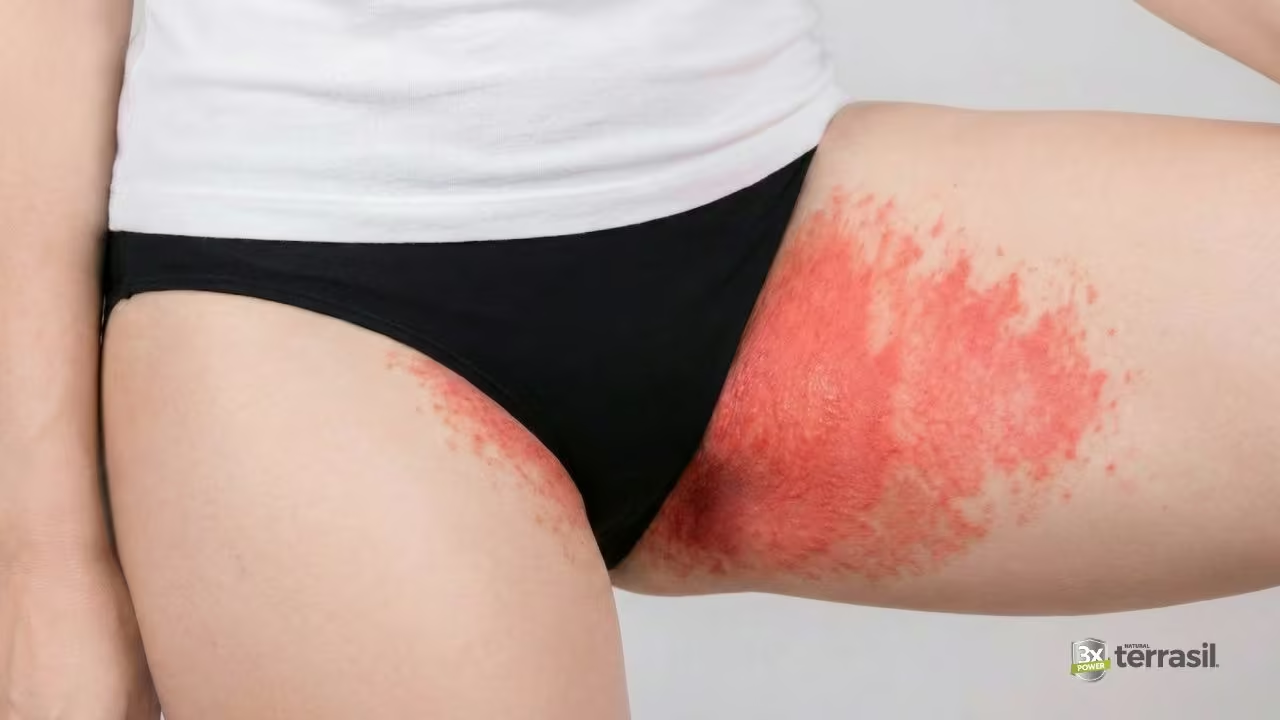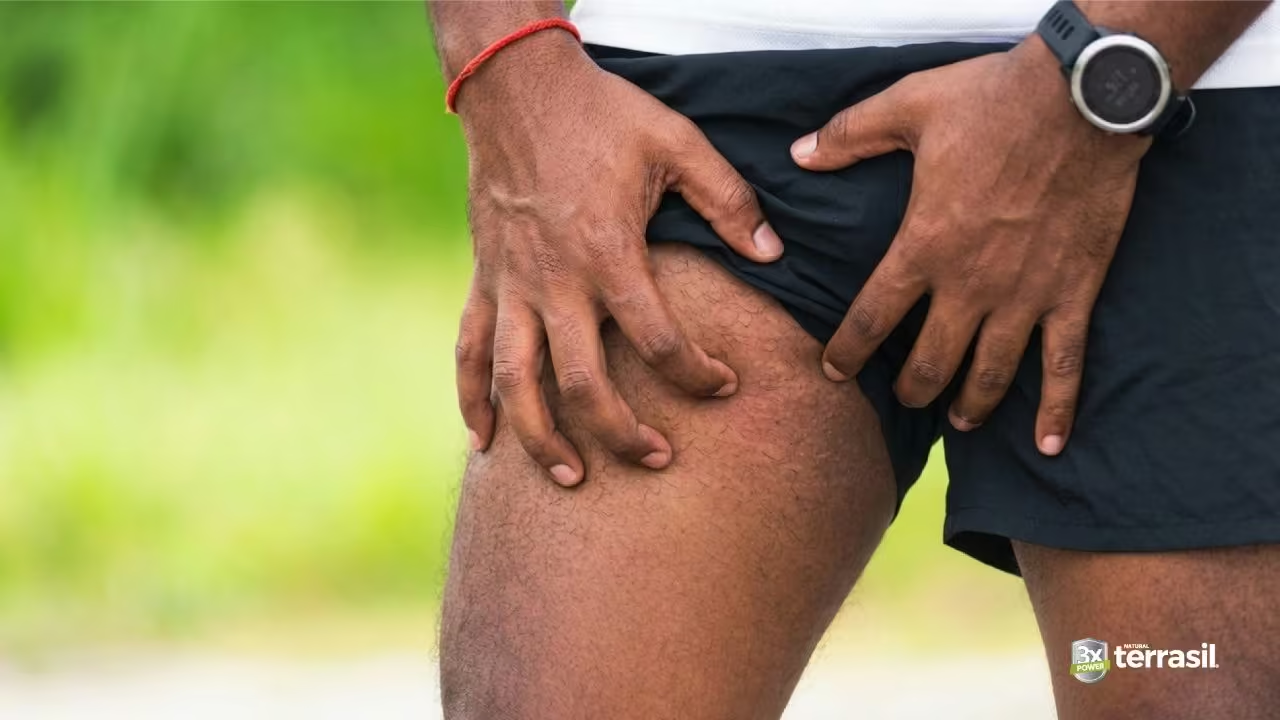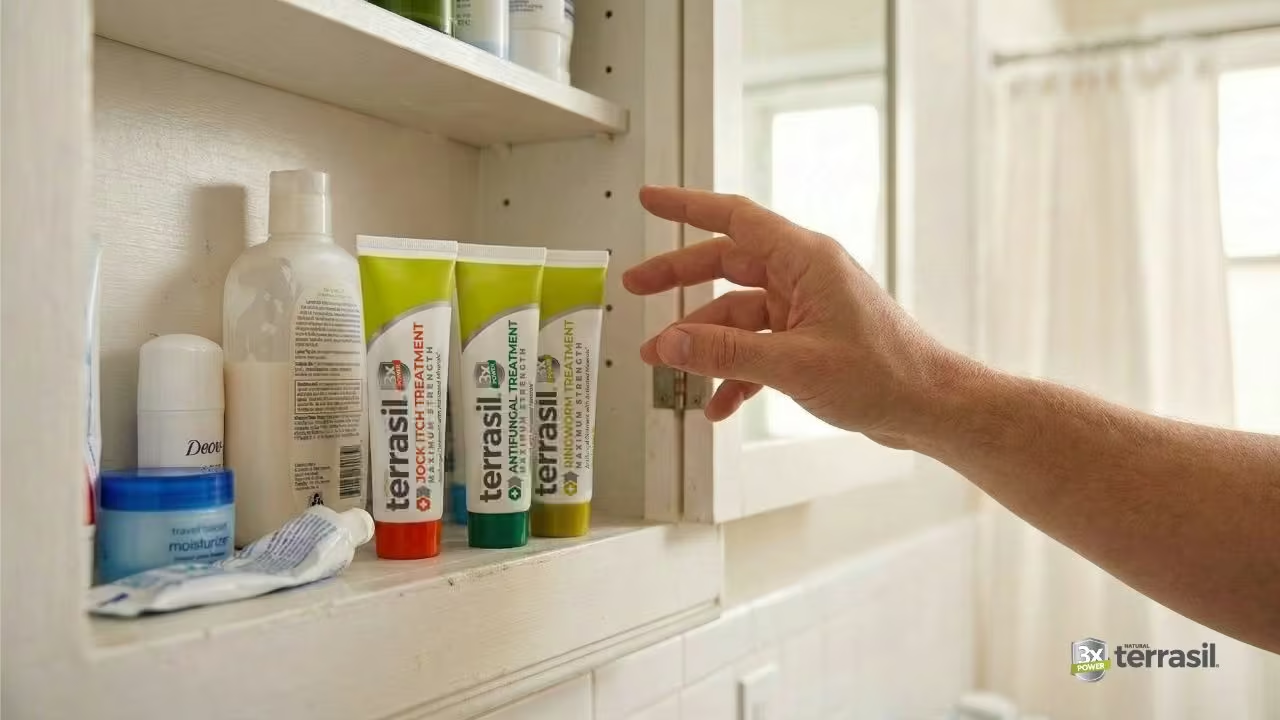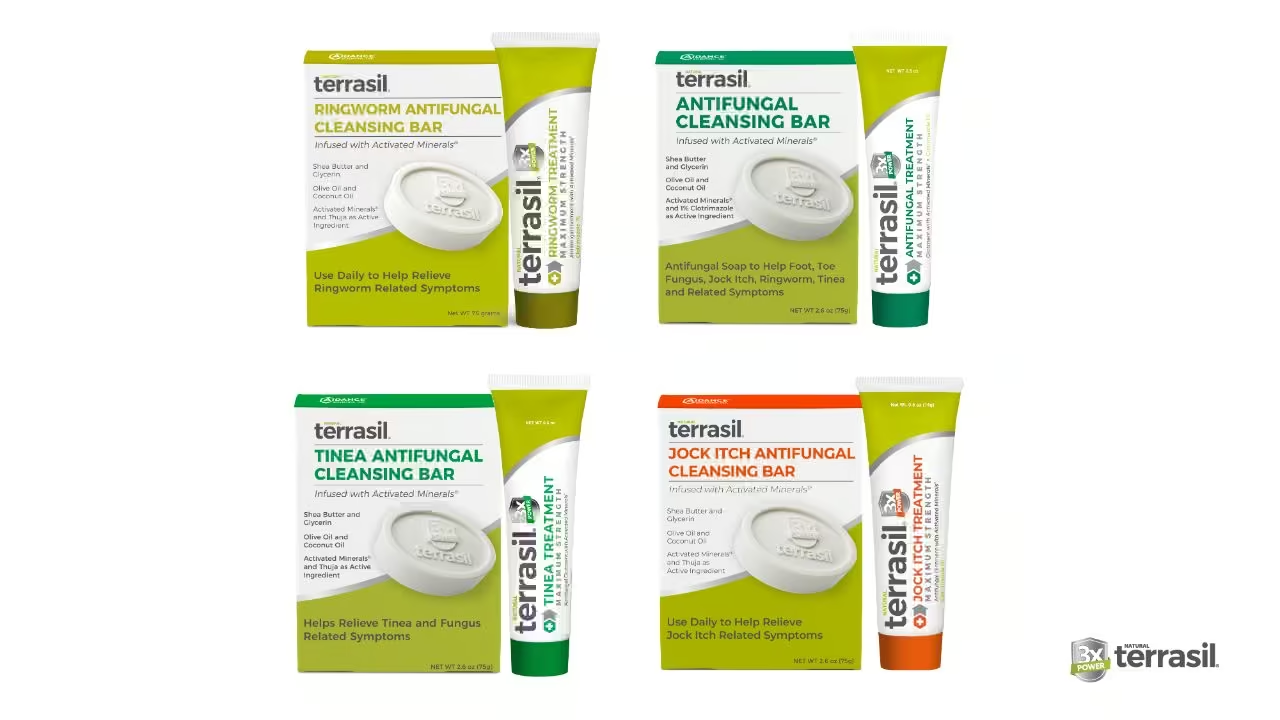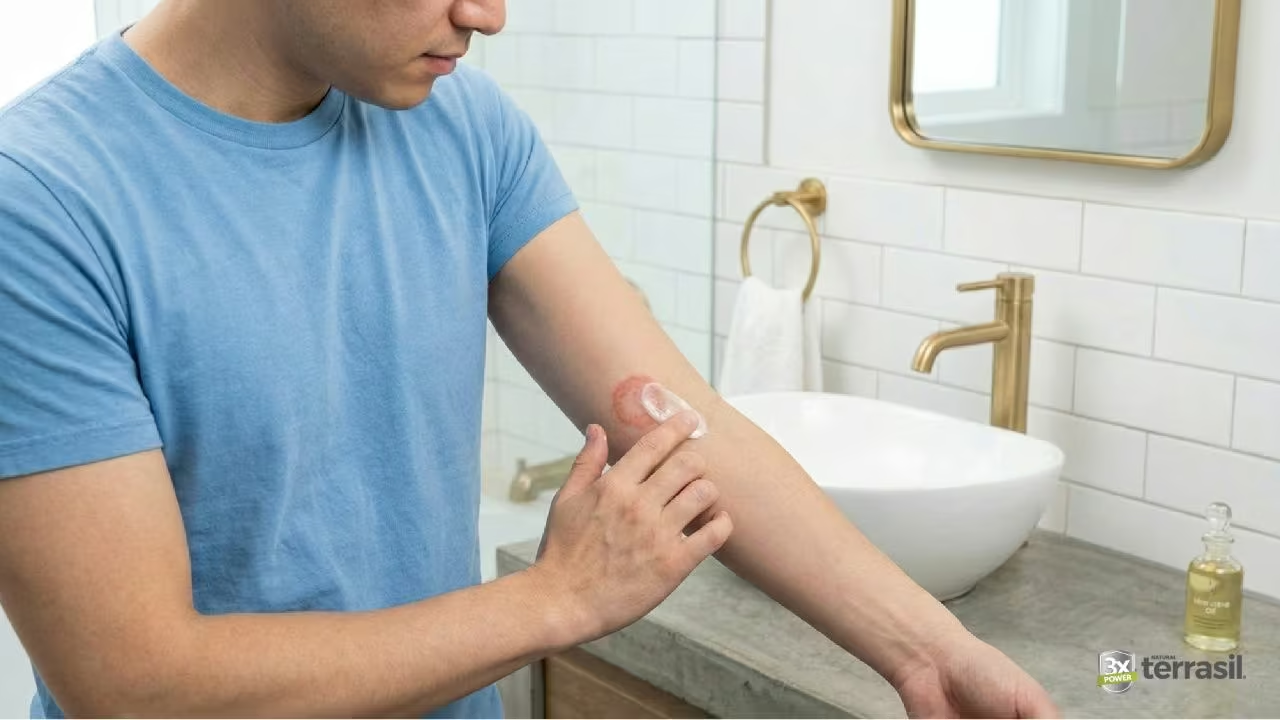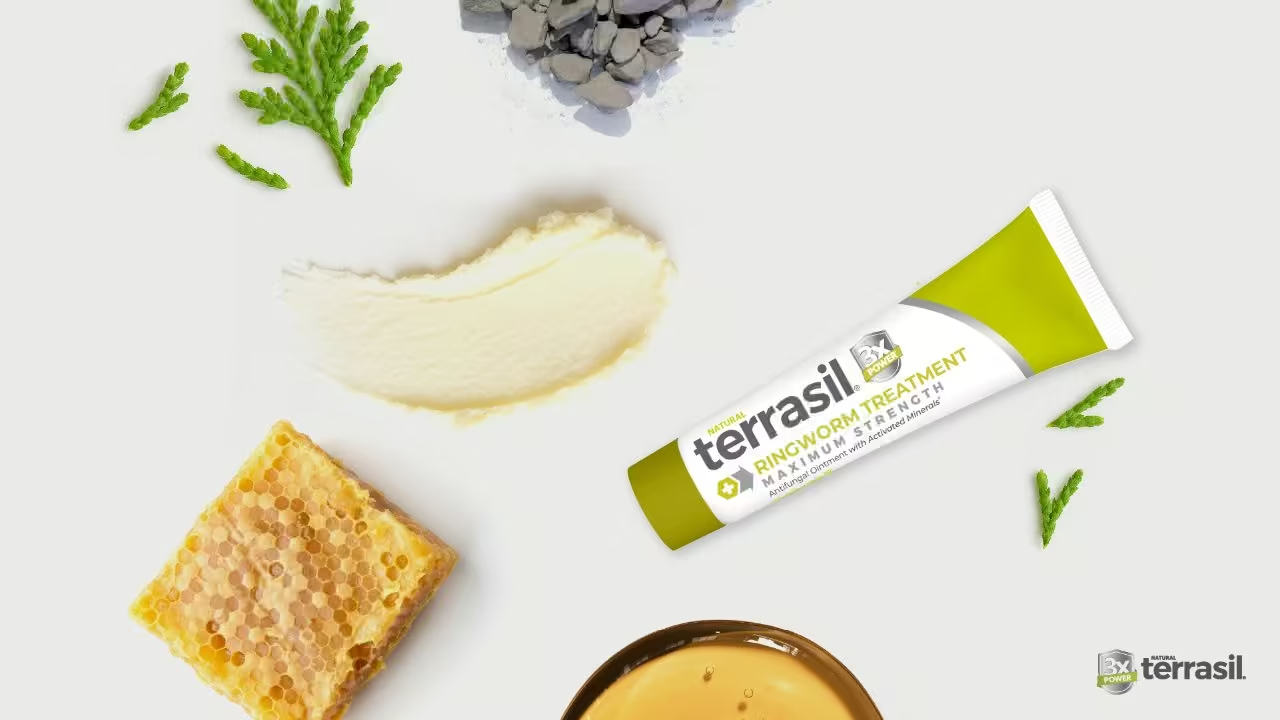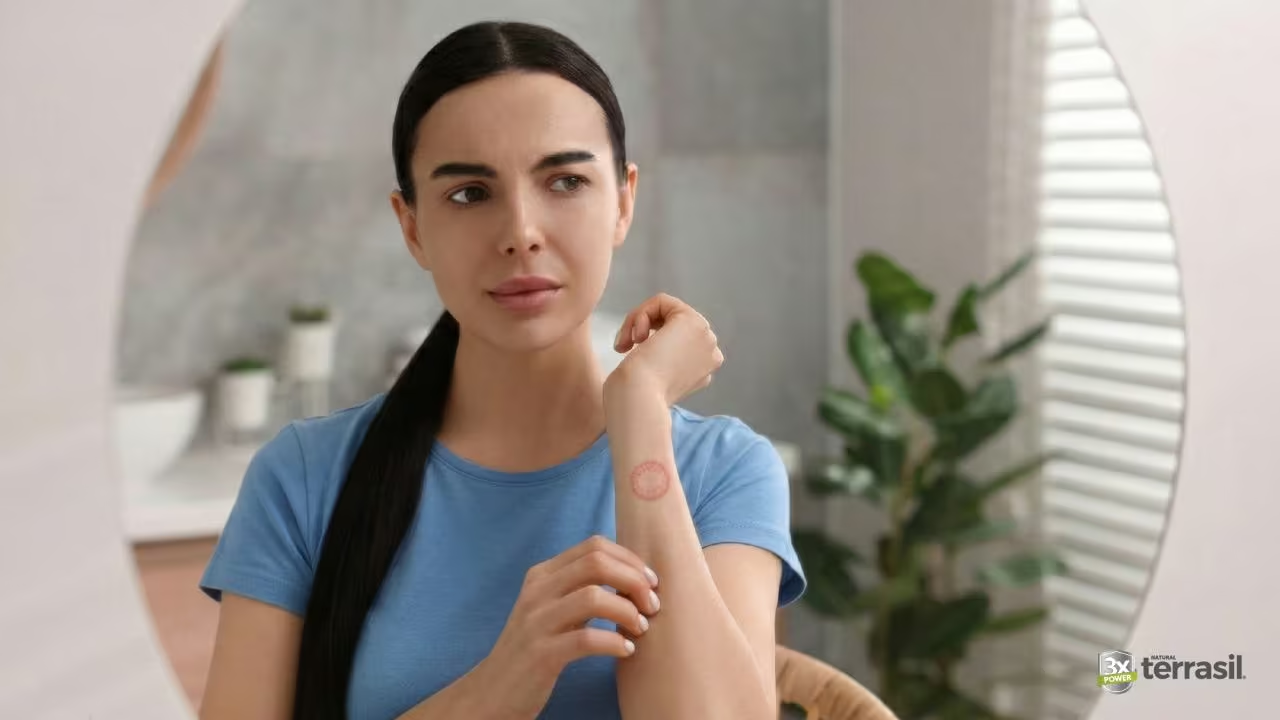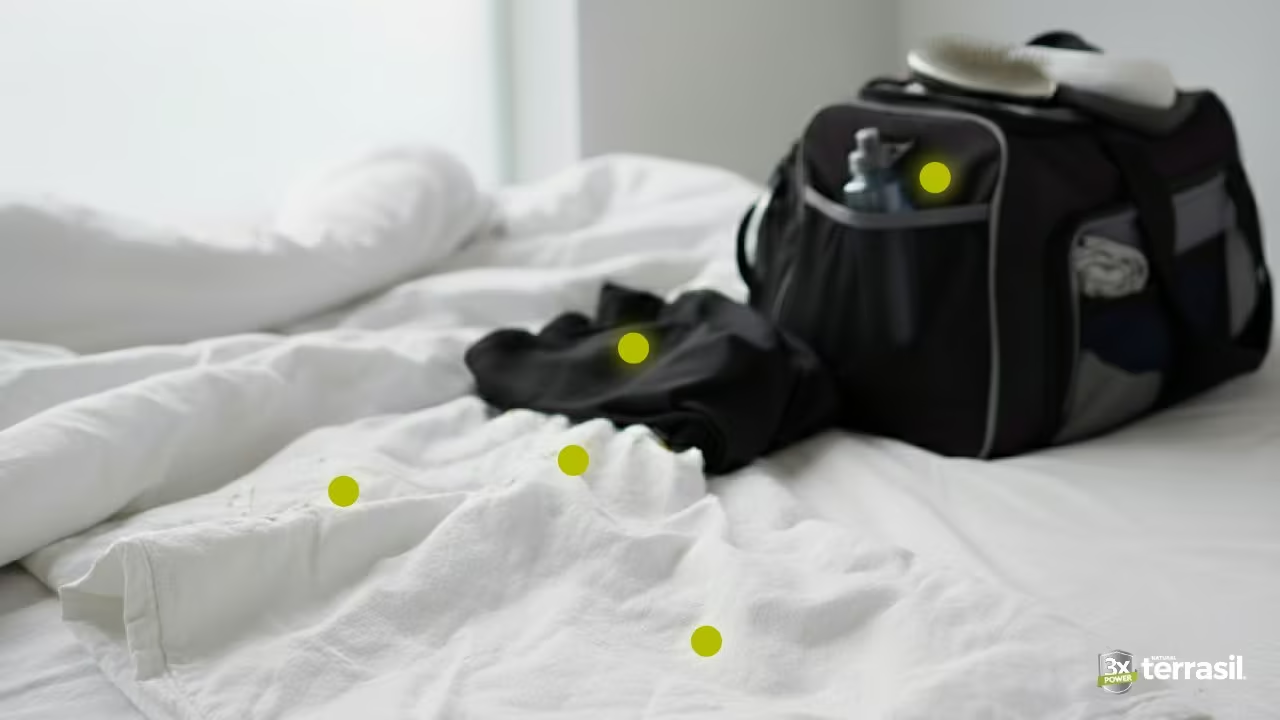





What Does Ringworm Look Like? Early Symptoms, Signs, and How the Rash Changes

terrasil silver accent terrasil silver accent
Doctor examining a little girl's arm

Last Updated: March 2026
This article is reviewed periodically to reflect current dermatology information and treatment approaches.

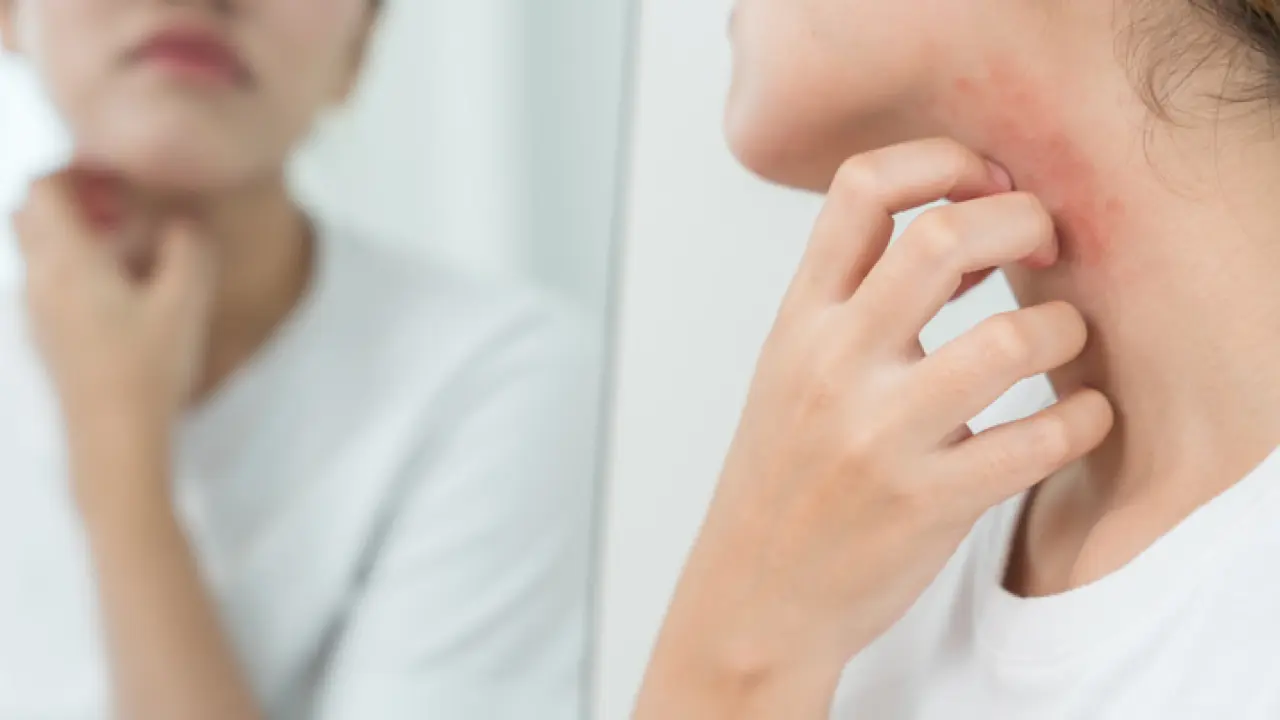
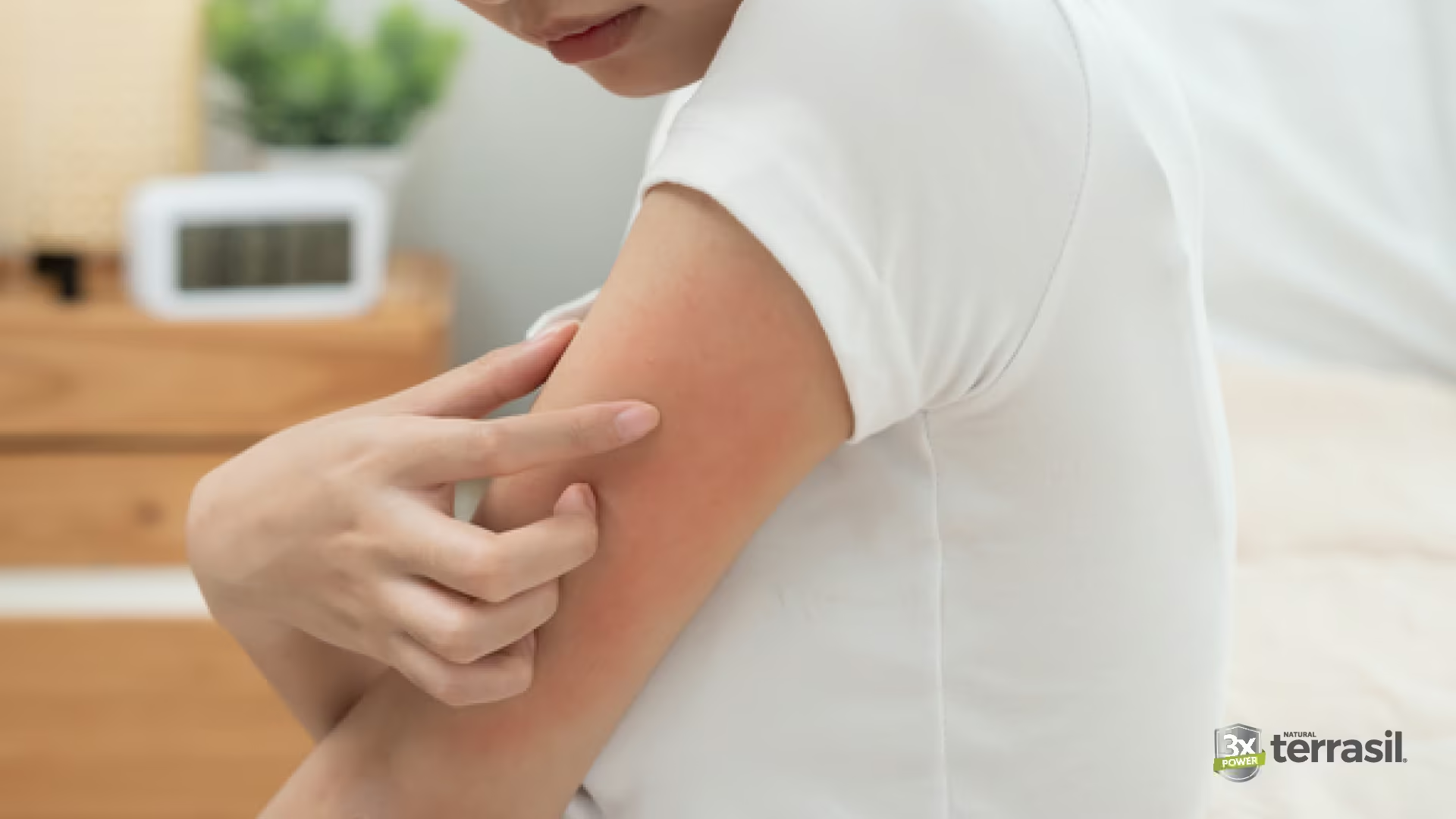
If you’ve been searching for what ringworm looks like, there’s a good chance you’re looking at a rash right now and trying to figure out what it might be.

Maybe it’s a small, itchy patch. Maybe the edges look slightly raised, or a faint circle seems to be forming. When something unusual appears on your skin, it’s natural to feel uncertain — especially when it doesn’t look like something you’ve seen before.

Ringworm is one of the most common fungal skin infections worldwide, but it often surprises people because it rarely looks the way they expect.

Despite the name, ringworm has nothing to do with worms. The infection is caused by fungi called dermatophytes, which live on the outer layer of the skin.¹

Ringworm is extremely common and very treatable, even though it may look concerning at first.

What makes ringworm confusing is that its appearance changes as it develops. A rash that looks like dry skin or mild irritation today may look very different in a week.

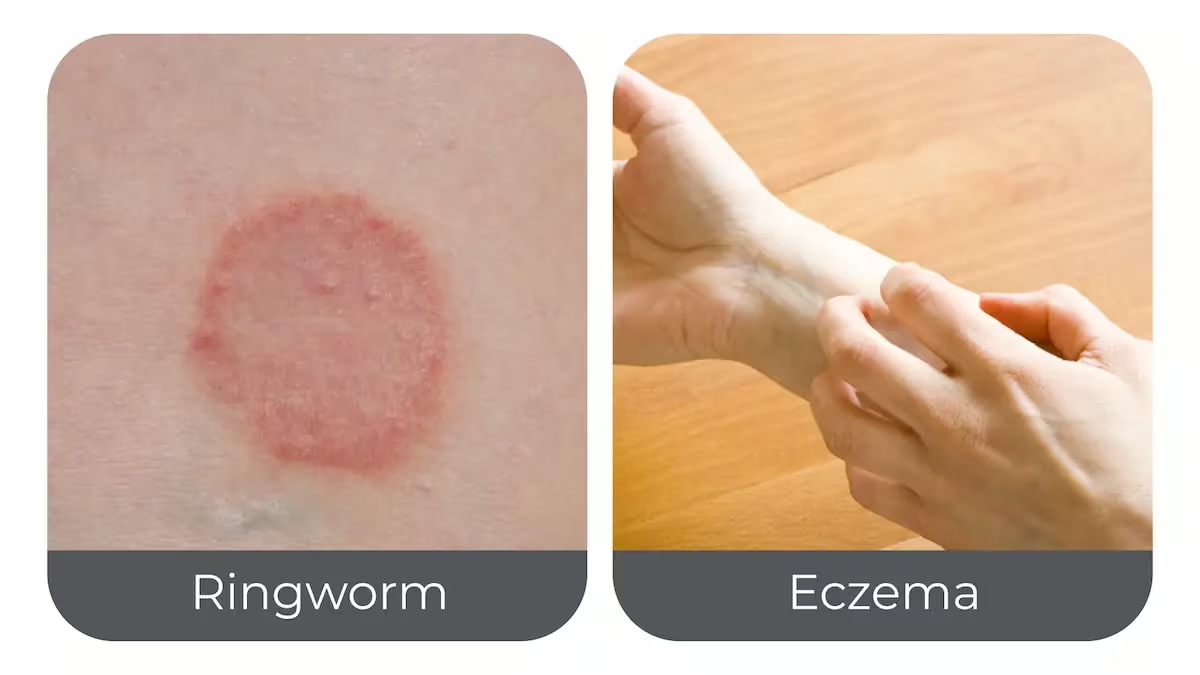
Understanding how ringworm develops — and how the rash changes during different stages — can help explain what you may be seeing on your skin. Because ringworm can resemble other skin conditions in its early stages, identifying its visual patterns can help you distinguish it from eczema, irritation, or other common rashes.

Quick Answer: What Does Ringworm Look Like?

Ringworm typically appears as a circular rash with a red or raised border and clearer center. The rash may itch, flake, or slowly expand outward as the fungal infection spreads across the outer layer of the skin.

Our Commitment to Accurate, Evidence-Based Information

Our articles are written using information from peer-reviewed dermatology research and reputable health organizations. We review scientific literature and clinical resources to ensure the information we share is clear, accurate, and helpful.

Sources referenced in this article include materials from organizations such as the Centers for Disease Control and Prevention (CDC) and the American Academy of Dermatology.

Key Takeaways

  • Ringworm is a fungal skin infection that often forms a circular rash with a raised border.
  • The infection is caused by dermatophyte fungi, primarily from the genera TrichophytonMicrosporum, and Epidermophyton.
  • The infection usually begins as a small irritated patch before gradually spreading outward.
  • Ringworm can appear on many areas of the body, including arms, legs, scalp, groin, and feet.
  • Antifungal ingredients such as clotrimazole are commonly used to address fungal skin infections.
  • The rash may change appearance as the infection spreads and as the skin begins recovering.

What Ringworm Looks Like in the Early Stages

Man holding a large cat

In the beginning, ringworm often looks subtle and easy to dismiss.

Many people first notice something like:

  • a small reddish patch
  • slightly dry or irritated skin
  • mild itching that comes and goes
  • a faint flaky texture

At this stage, the rash may only be about the size of a coin.

Because early symptoms can resemble common skin irritation, many people assume it is simply dry skin or a temporary rash that will disappear on its own.

However, fungal infections behave differently from ordinary irritation.

Dermatophyte fungi feed on keratin, a protein found in the outer layer of skin, hair, and nails.¹ As long as keratin is available and the environment remains warm and moist, the fungi can continue spreading outward.

This is why a small patch that looks harmless at first may gradually expand over time.

Why Ringworm Forms a Ring

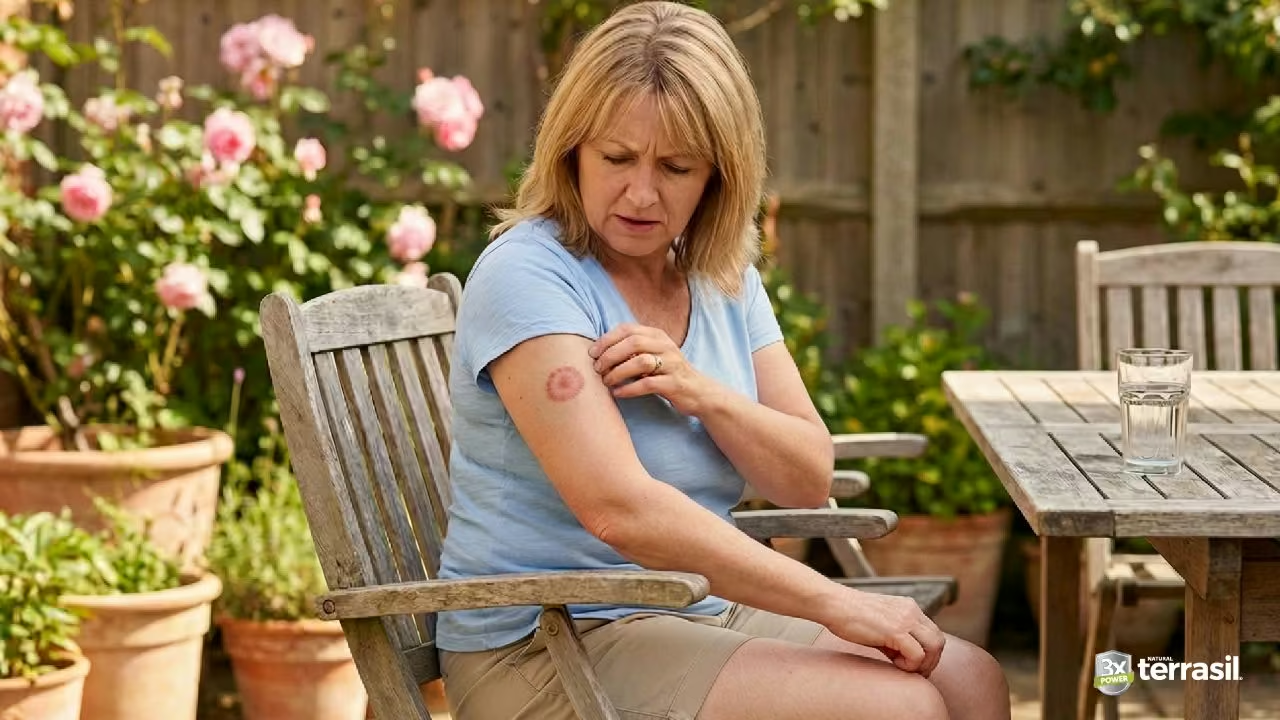
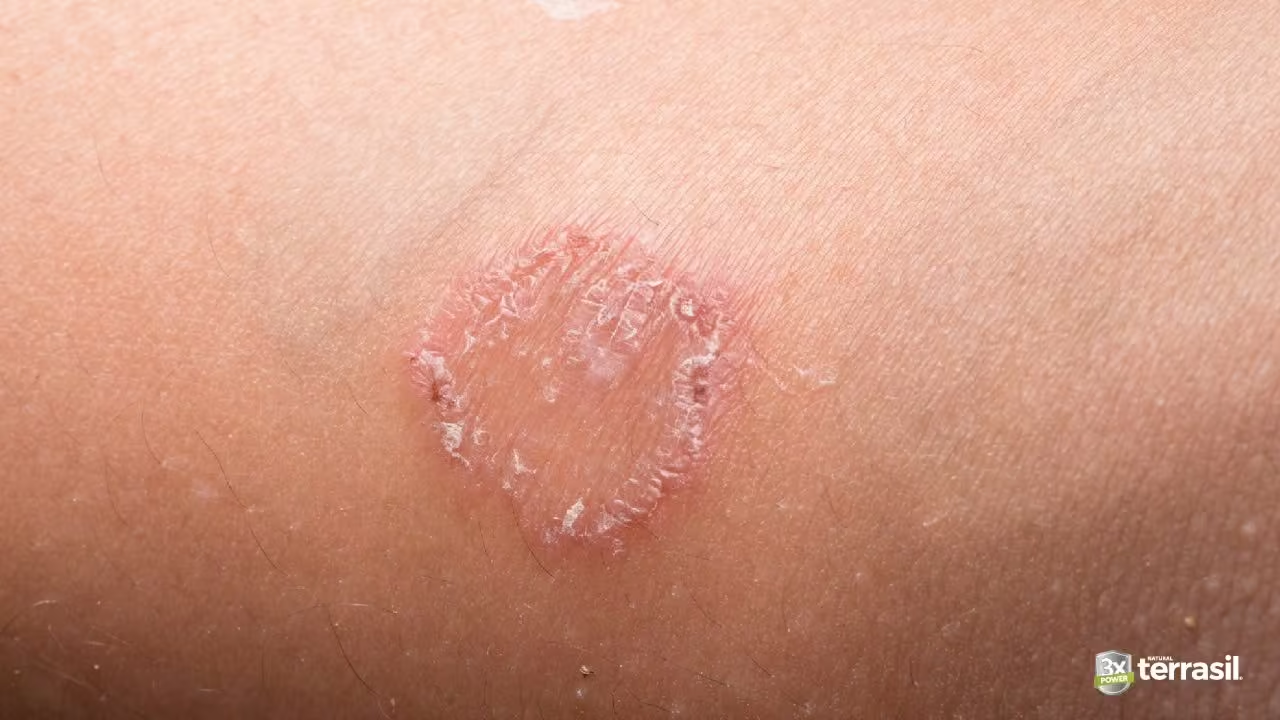
Ringworm example close up

The circular shape of ringworm isn’t random — it reflects how the infection spreads.

Dermatophyte fungi grow outward from the original point of infection.

As the fungi expand across the skin:

  • The outer edge remains active, where the fungi are still growing
  • The center may begin calming, as the body responds to the infection

This contrast creates the familiar pattern:

  • a red or raised outer ring
  • calmer skin toward the center

That pattern is what gives ringworm its name.²

Not every infection forms a perfect circle. Some appear oval or slightly irregular, depending on how the fungi spread across the skin.

The Classic Ringworm Rash

As the infection progresses, the rash often becomes easier to recognize.

Typical features may include:

  • a circular or oval shape
  • a raised or red border
  • dry or flaky skin
  • itching or irritation

The outer edge of the rash often appears more inflamed because that is where the fungal growth is most active.

Meanwhile, the center of the rash may look calmer or closer to normal skin tone.

Ringworm Stages: How the Rash Changes as It Spreads and Heals

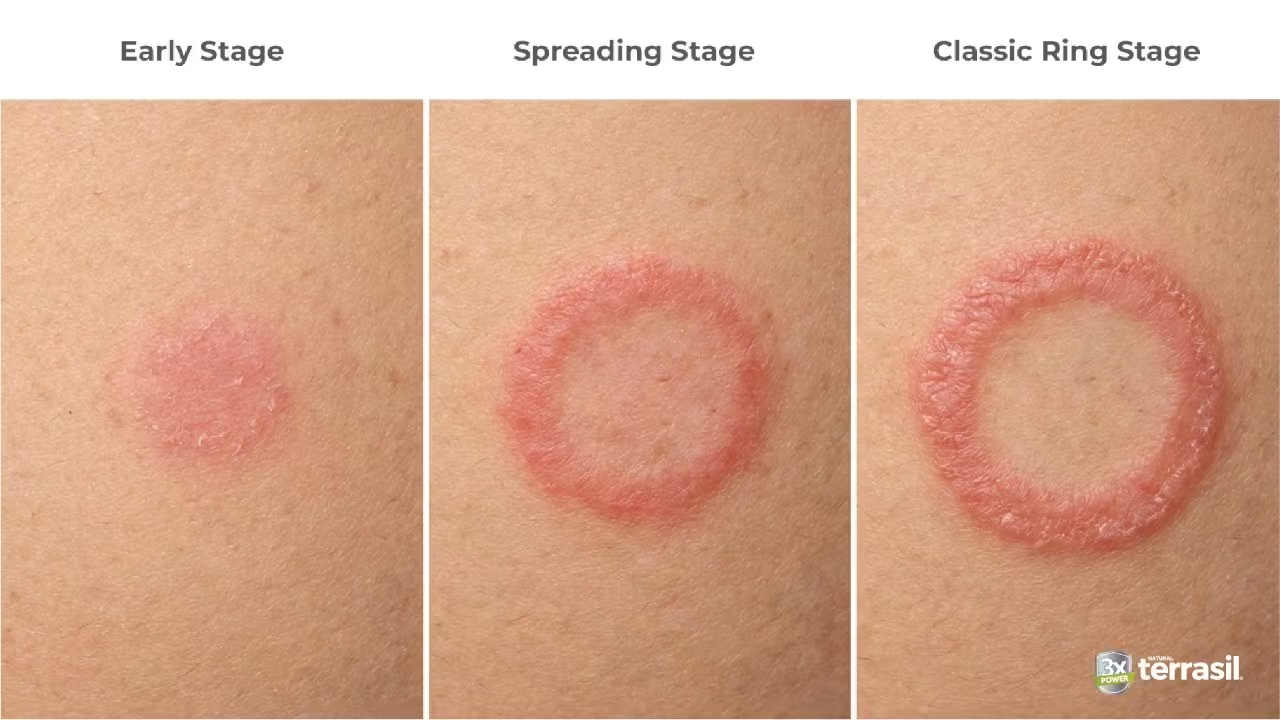
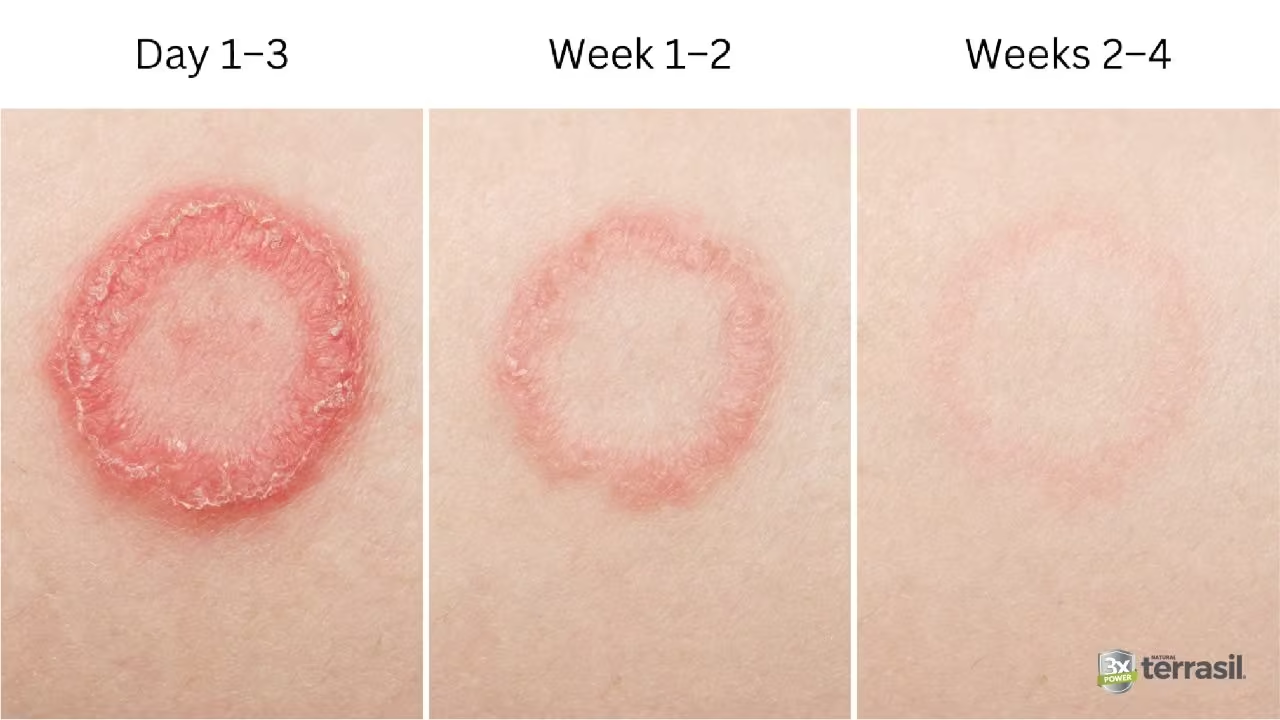
Ringworm change examples

Ringworm doesn’t stay the same throughout the infection. The rash often changes gradually as the fungi spread and the skin begins responding.

Early stage

The infection may begin as a small irritated patch that resembles dry skin or a mild rash.

Spreading stage

The rash gradually expands outward as fungal growth continues across the skin. The border becomes more defined while the center may begin calming.

Classic ring stage

The circular rash becomes more recognizable, often with a red border and clearer center.

Healing stage

As antifungal treatment addresses the infection, the rash may slowly fade. The border may stop expanding, and redness may gradually improve as the skin recovers.

Because the infection affects the outermost layer of the skin, visible improvement can occur gradually as the skin replaces affected cells.

Common Places Ringworm Appears

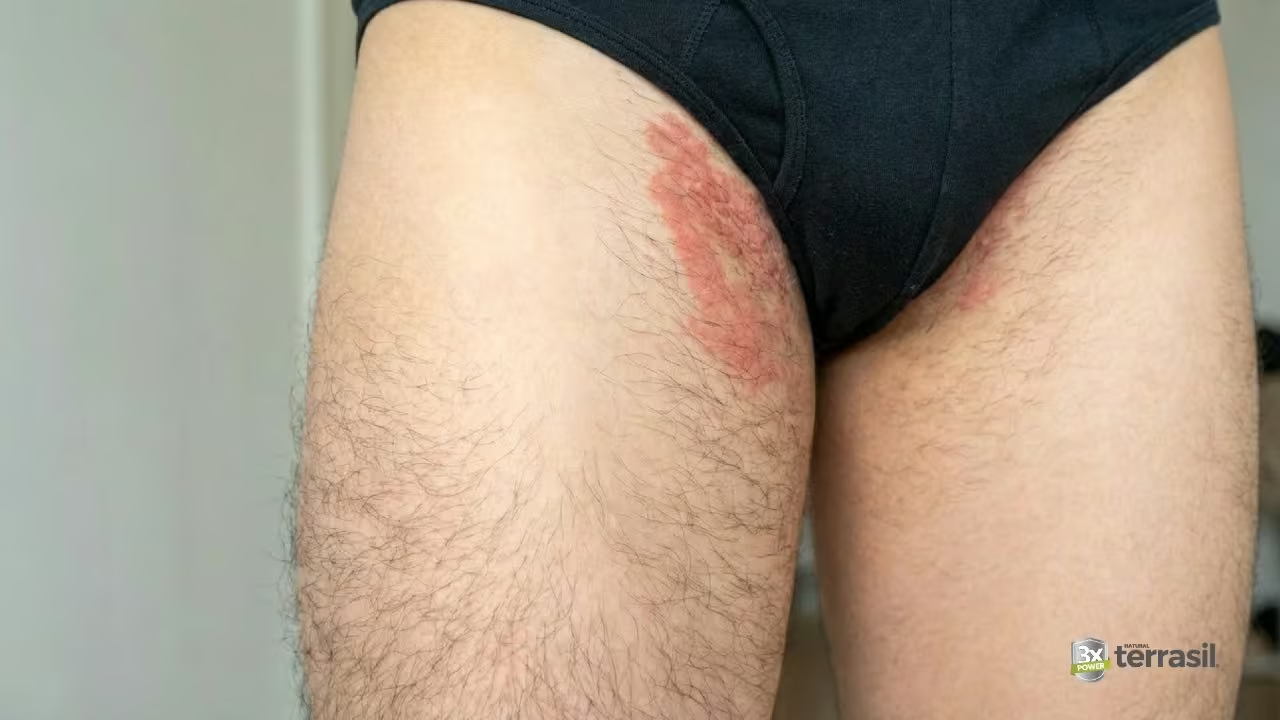
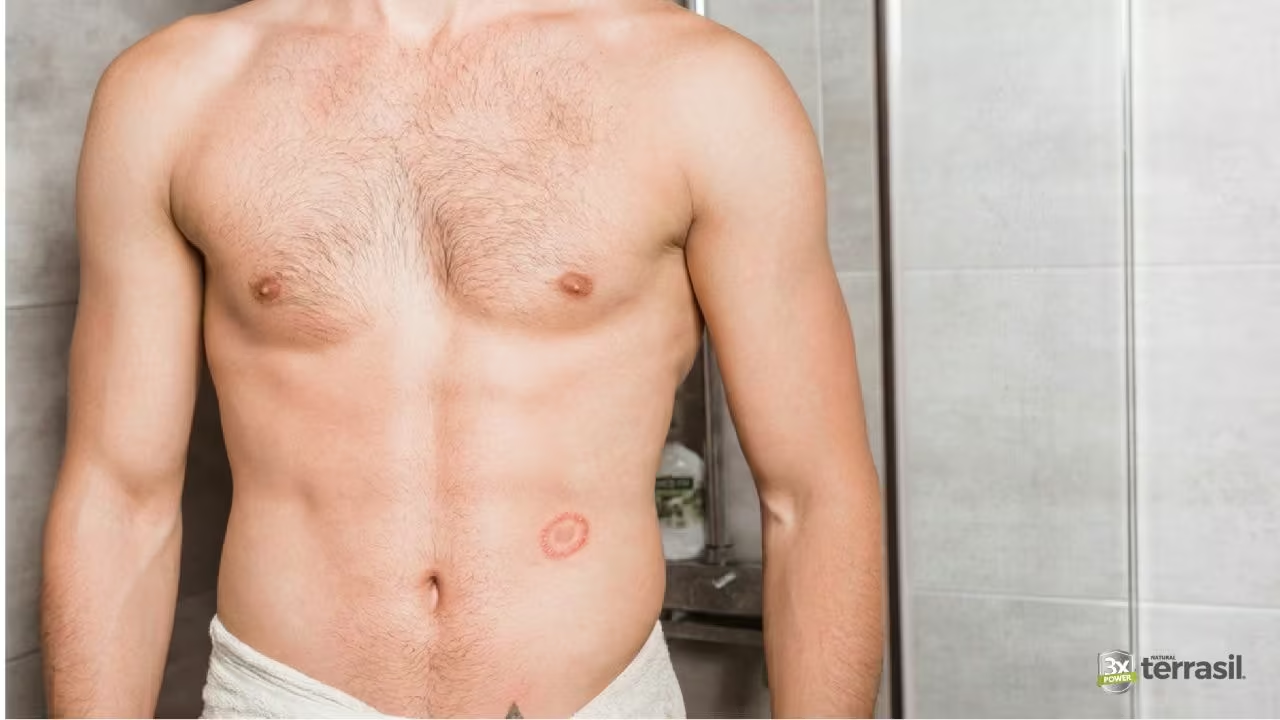
Man with ringworm rash on lower abdominal

Ringworm can appear on many areas of the body.

Common locations include:

  • arms
  • legs
  • torso
  • neck
  • face
  • scalp
  • groin
  • feet

Some infections have different names depending on where they appear. For example, athlete’s foot affects the feet, while jock itch affects the groin. Although the names differ, these infections are caused by the same types of dermatophyte fungi.³

Where People Commonly Catch Ringworm

Red empty locker room

Ringworm spreads through fungal spores that can survive on surfaces and fabrics.

People may encounter these spores in environments such as:

  • gyms and locker rooms
  • communal showers
  • shared sports equipment
  • shared towels or clothing
  • wrestling mats or athletic facilities

Because fungi thrive in warm and humid environments, shared spaces where skin contact occurs can sometimes allow the infection to spread more easily.³

What Causes Ringworm

Dermatophyte Fungi Render

Ringworm is caused by dermatophyte fungi that grow on the outer layer of the skin.

These fungi feed on keratin, a structural protein found in skin, hair, and nails.¹

The infection can spread through:

  • direct skin-to-skin contact
  • contaminated surfaces
  • shared clothing or towels
  • infected animals such as cats or dogs

Fungal skin infections, including ringworm, athlete’s foot, and jock itch, affect millions of people worldwide each year.

Which Fungi Cause Ringworm? The Dermatophytes Explained

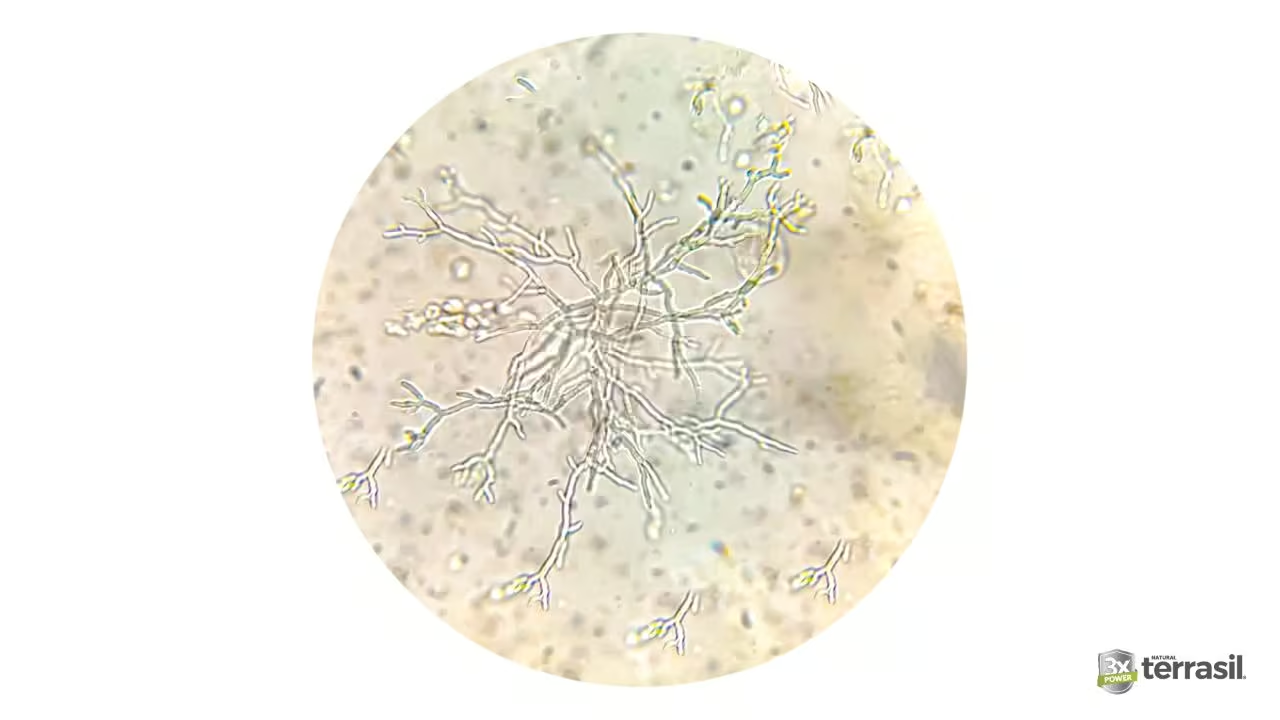
dermatophyte fungi skin scraping under microscope

“Ringworm” is not caused by a single organism. It is a general term for a fungal skin infection that can be triggered by roughly 40 species of dermatophytes, though a small number of species account for the vast majority of cases worldwide.

Dermatophytes are organized into three main genera, each with distinct characteristics:

Genus
Key characteristic
Common species
Trichophyton
The most frequent cause of ringworm in humans globally
T. rubrumT. tonsurans
Microsporum
Often transmitted from animals such as cats and dogs
M. canis
Epidermophyton
Primarily affects the skin and nails; less commonly the scalp
E. floccosum

The Most Common Species

While many species can cause ringworm, three tend to be responsible for the majority of infections:

  • Trichophyton rubrum — the leading cause of ringworm worldwide, particularly for infections on the body, feet, and nails.
  • Trichophyton tonsurans — a major cause of scalp ringworm, especially in children in the United States.
  • Microsporum canis — frequently seen in children who have close contact with infected pets such as cats or dogs.

How Ringworm Is Named by Body Location

Medical professionals use the term tinea followed by a Latin descriptor to specify where on the body the infection is located. This naming system helps standardize diagnosis and treatment, even though the same dermatophyte species may be responsible across different sites.

Tinea corporis
Ringworm on the body (arms, legs, or trunk)

Tinea capitis
Ringworm on the scalp; can cause itchy, flaky patches or hair loss

Tinea pedis
Commonly known as athlete’s foot

Tinea cruris
Commonly known as jock itch

Tinea unguium
Fungal infection of the nails (also called onychomycosis)

Tinea faciei
Ringworm on the face

How Ringworm Is Diagnosed

In many cases a doctor can identify ringworm from its appearance alone. When additional confirmation is needed, two methods are commonly used:

  • Potassium Hydroxide (KOH) test — a skin scraping is examined under a microscope after applying a KOH solution, which dissolves skin cells and makes fungal elements easier to identify.
  • Fungal culture — a sample is grown in a laboratory over several days or weeks to confirm the specific species causing the infection.

For scalp ringworm, a Wood’s lamp (ultraviolet light) may also be used, as some Microsporum species fluoresce under UV light.

What Actually Kills Ringworm

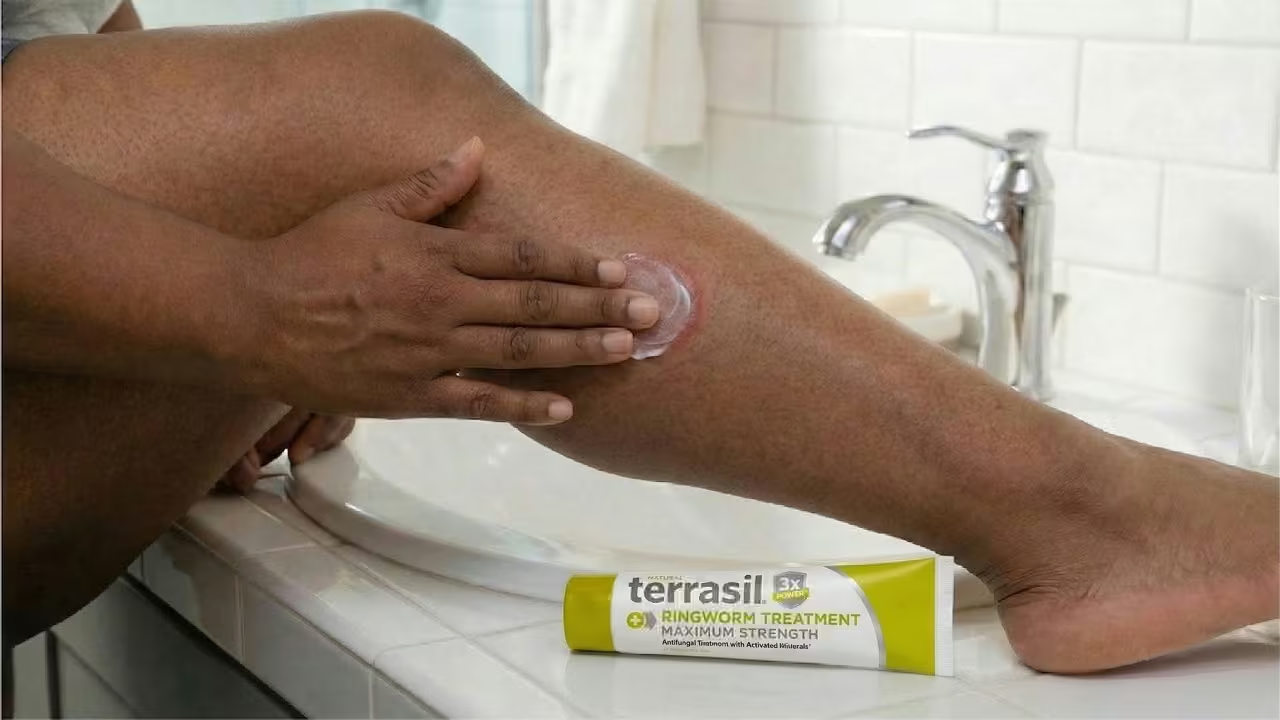
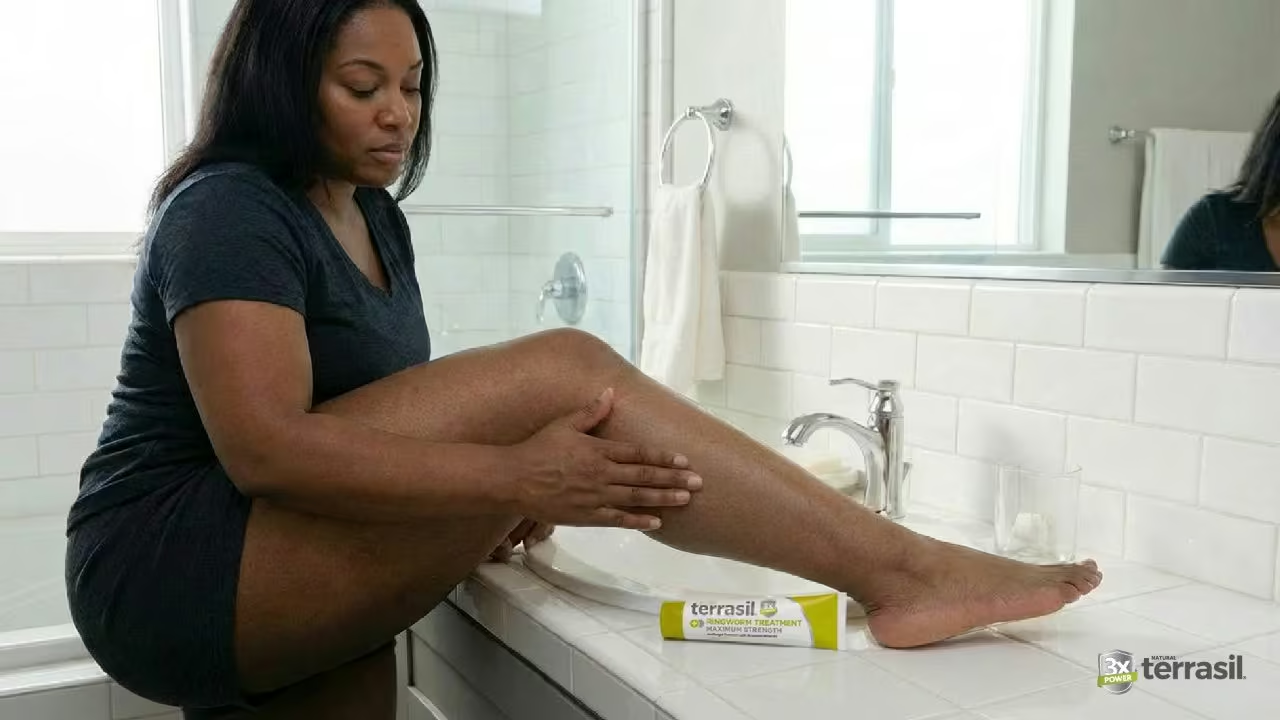
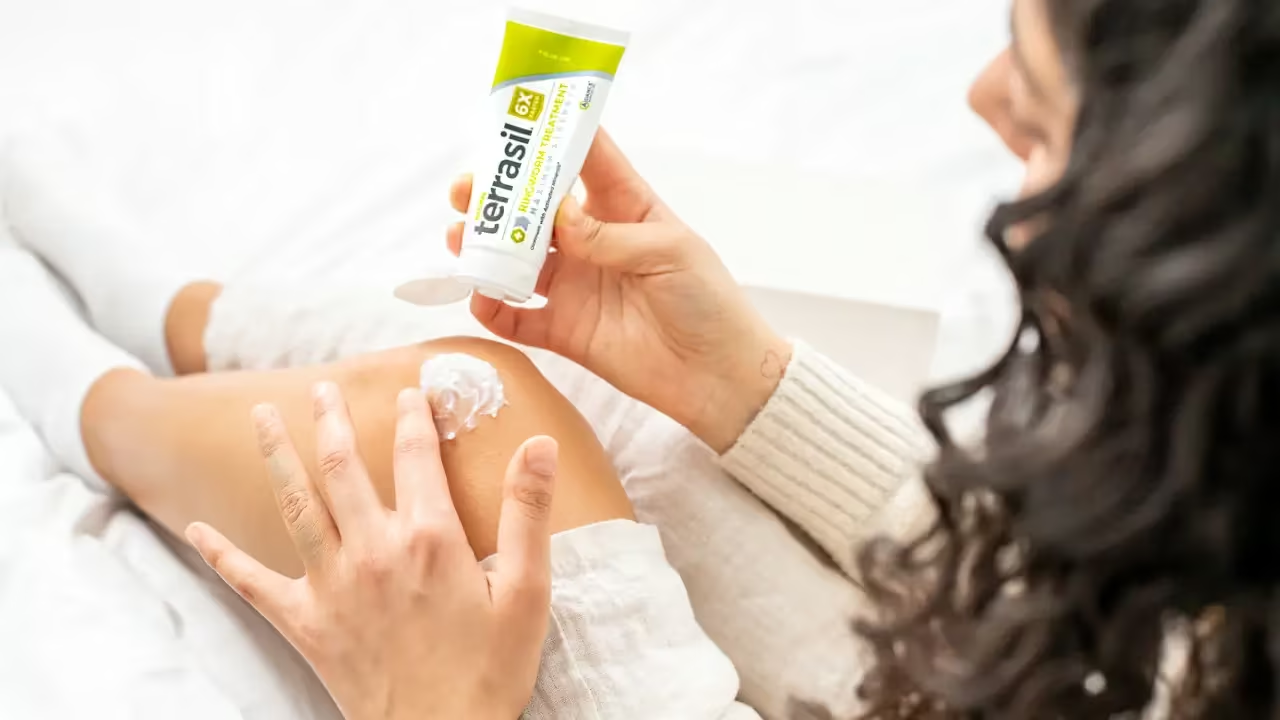
Applying terrasil ringworm ointment to leg

Ringworm is commonly addressed with antifungal ingredients designed to stop fungal growth.

Common antifungal APIs include:

  • clotrimazole
  • terbinafine
  • miconazole
  • tolnaftate

These ingredients interfere with fungal growth by disrupting the fungal cell membrane or blocking essential enzymes the fungi need to survive.²·⁷ Because dermatophytes live in the outer layers of the skin, consistent topical application is typically required over a period of several weeks to fully address the infection. Starting treatment promptly and following through the full recommended course can make a meaningful difference in how the infection resolves.

If you’re comparing treatment options, our guide Best Ringworm Cream – What Actually Works explains how the most common antifungal ingredients differ.

Why the Formula of a Ringworm Cream Matters

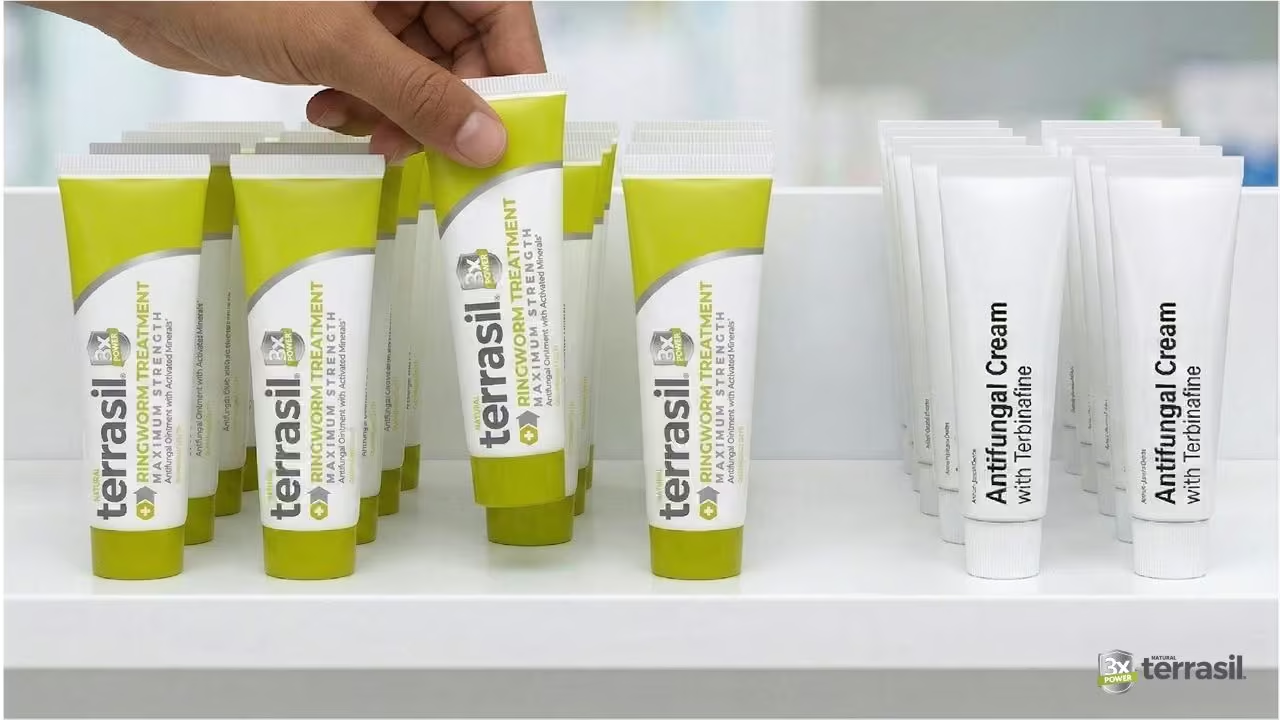
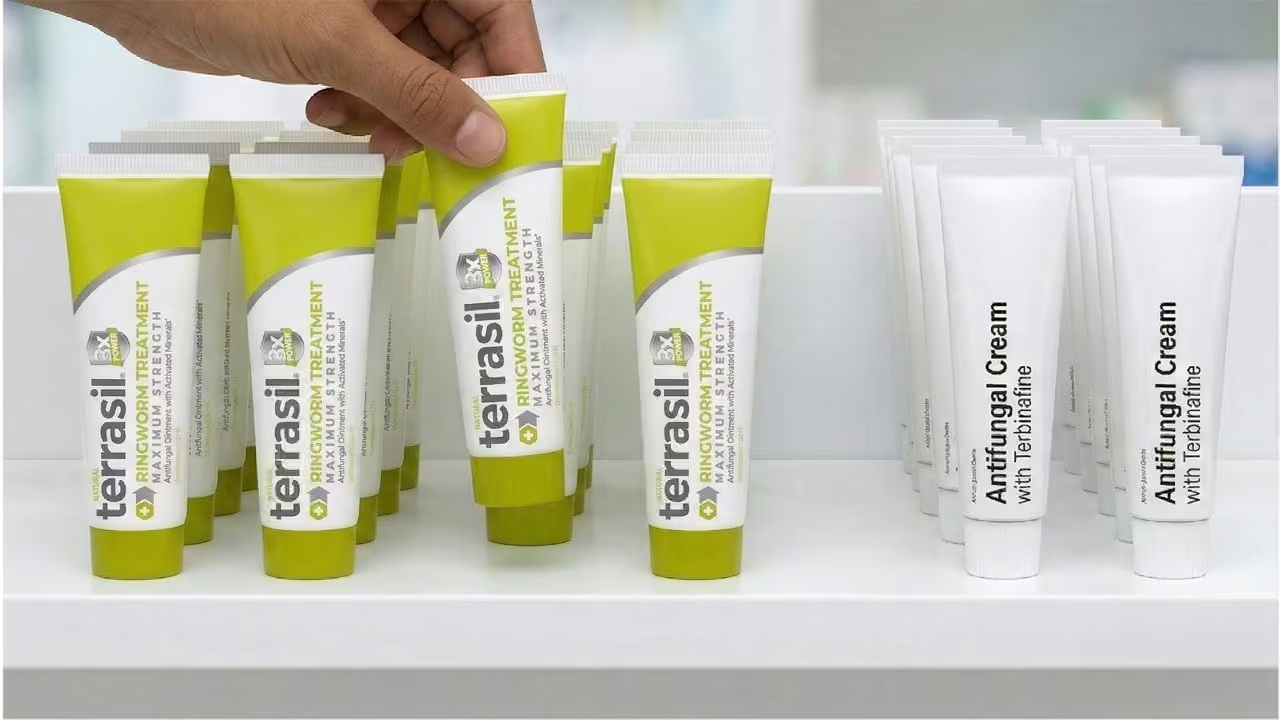
Choosing terrasil Ringworm Treatment Ointment from store shelf

Many antifungal treatments contain the same active ingredient — clotrimazole. However, the overall formulation can vary significantly between products.

Some antifungal creams focus primarily on delivering the active ingredient alone. Others are designed to support the condition of the skin throughout the treatment process.

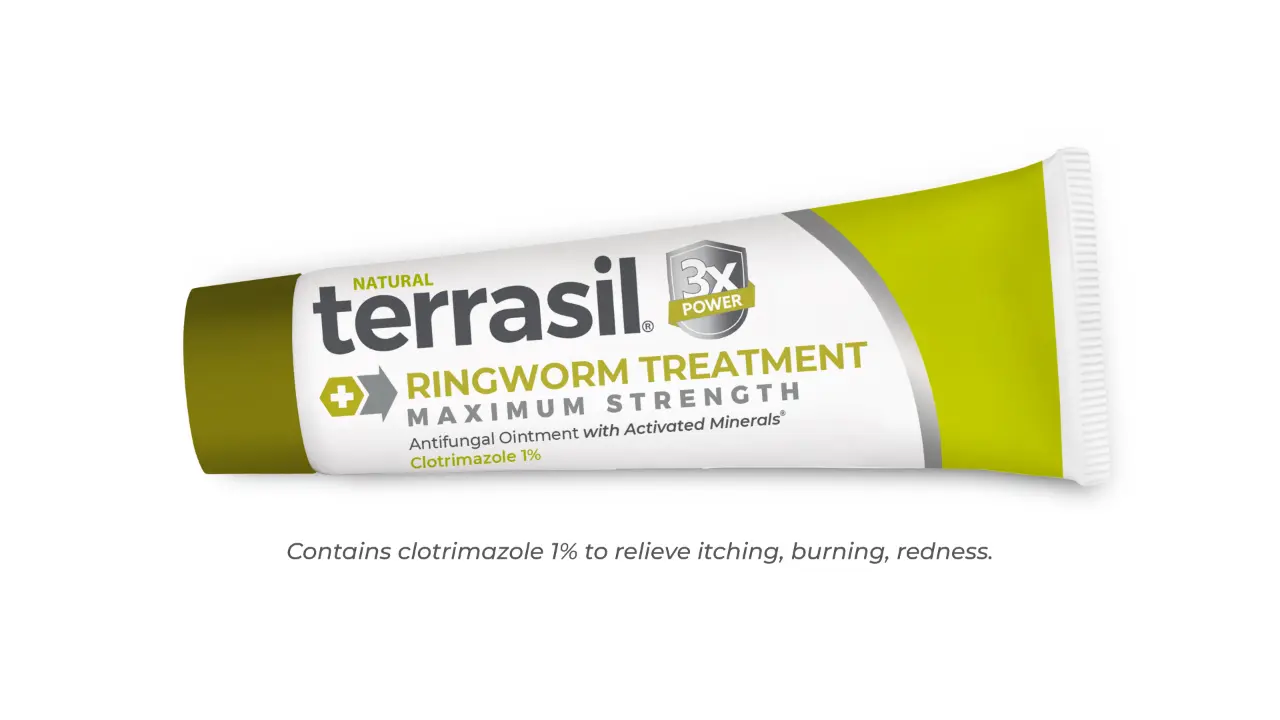
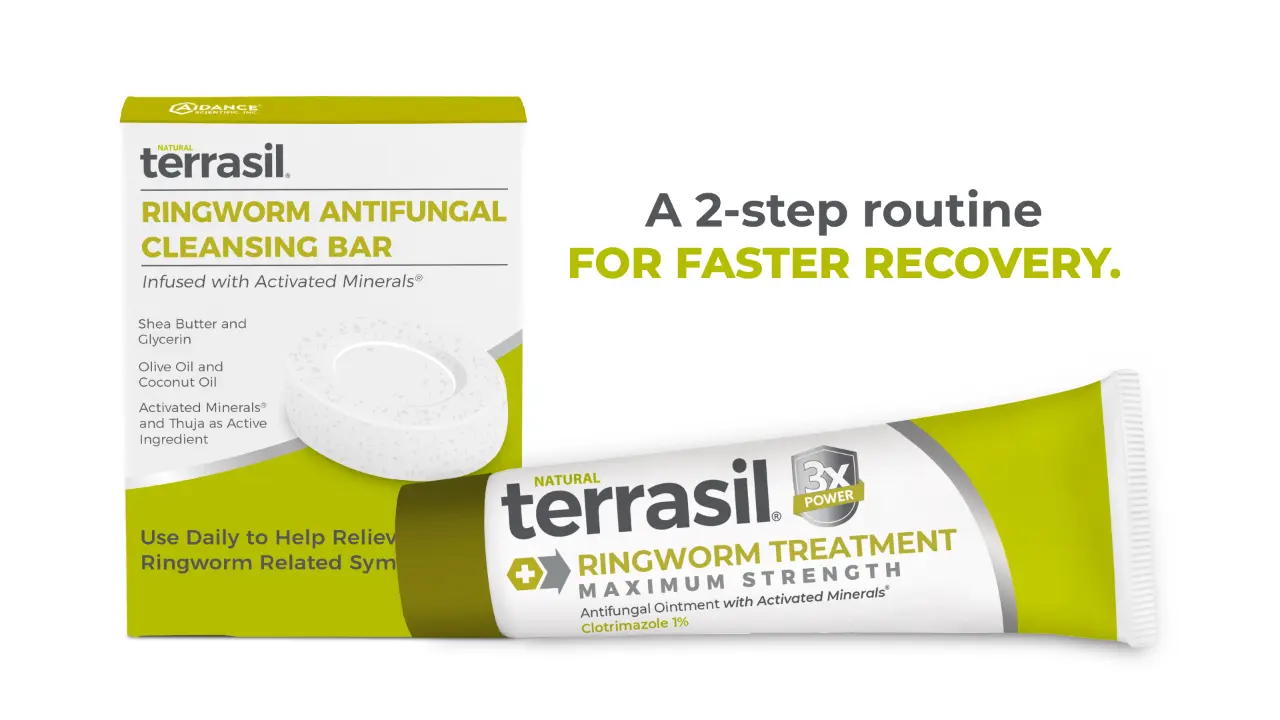
Terrasil® Ringworm Treatment MAX Ointment with Activated Minerals® contains clotrimazole as the antifungal API, but the formulation also includes Activated Minerals® technology and targeted botanical ingredients.

Activated Minerals® are included to help create a protective environment on the skin’s surface, supporting skin comfort while the antifungal ingredient is applied.

The formula also contains botanical ingredients selected for their skin-conditioning properties.

Because antifungal treatments are typically applied consistently for several weeks, many people prefer formulas designed to help maintain skin comfort and hydration during the treatment process.

A well-formulated product isn’t only about the active ingredient — it also considers how the skin feels during the treatment period.

Preparing the Skin Before Applying Treatment

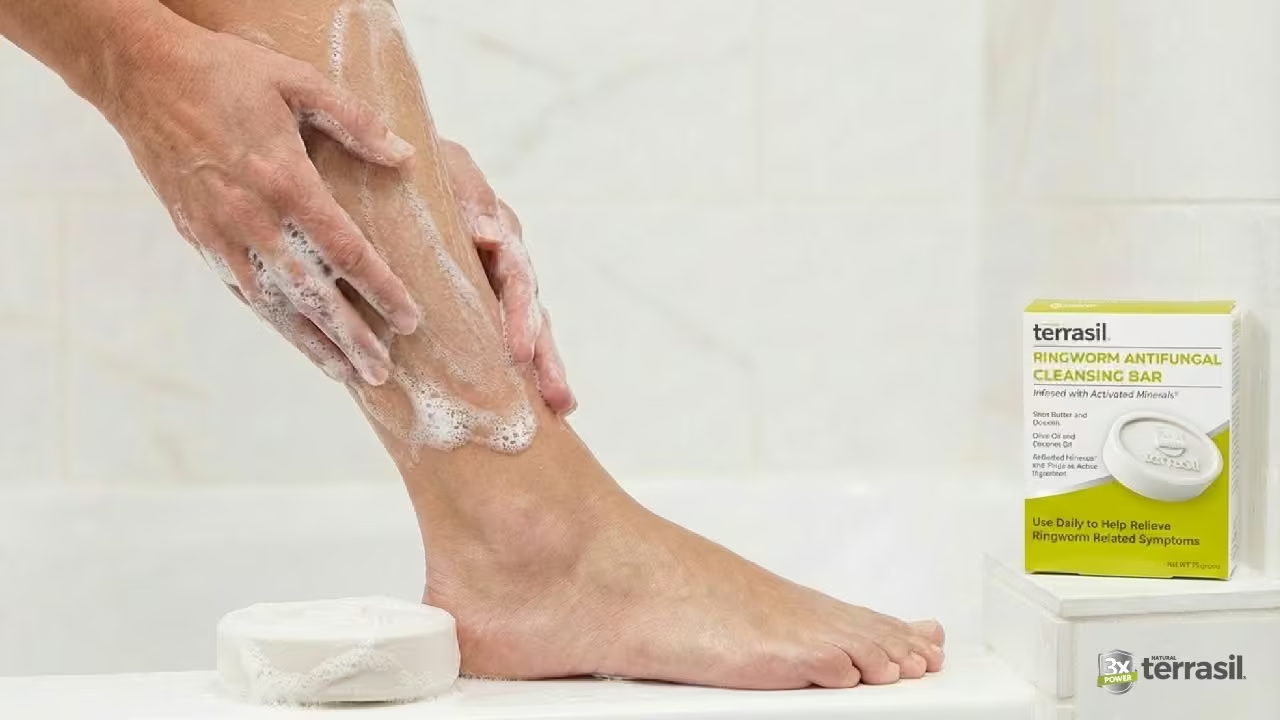
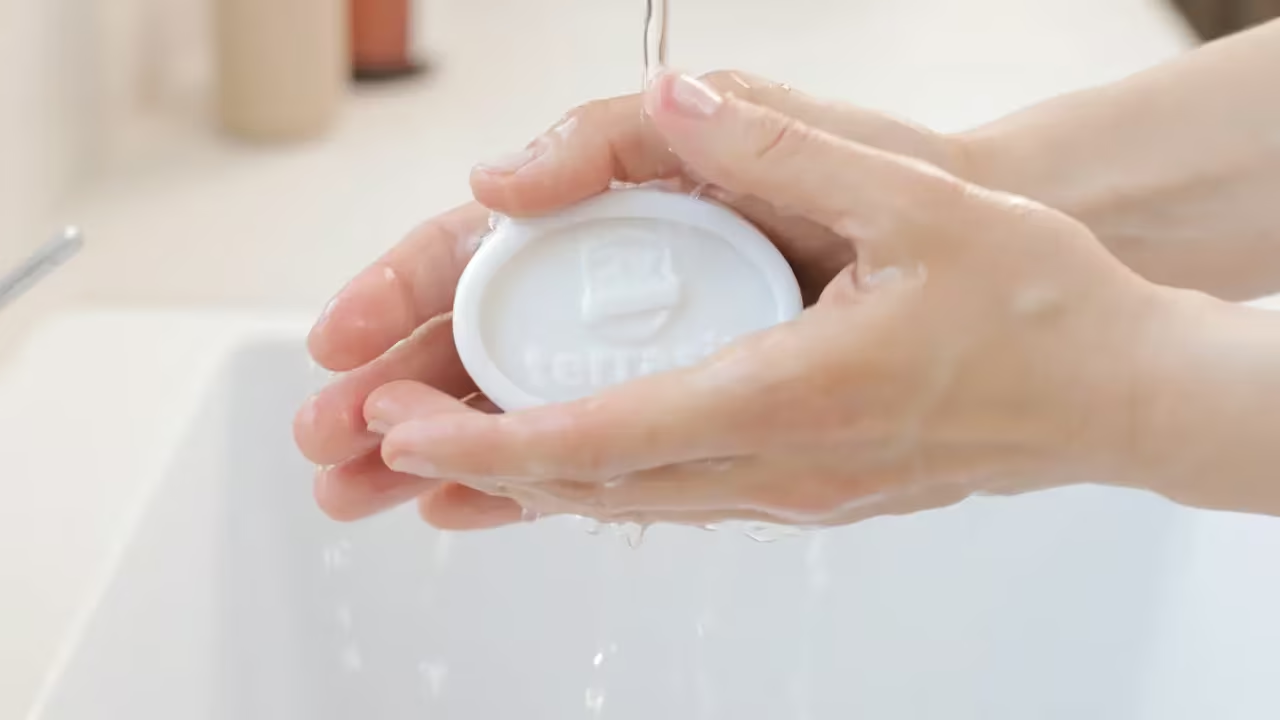
Washing leg in shower with Terrasil Ringworm Antifungal Soap

Before applying antifungal treatment, cleansing the affected area can help remove sweat, oils, and debris from the skin.

Some people use cleansing bars designed for fungal skin concerns.

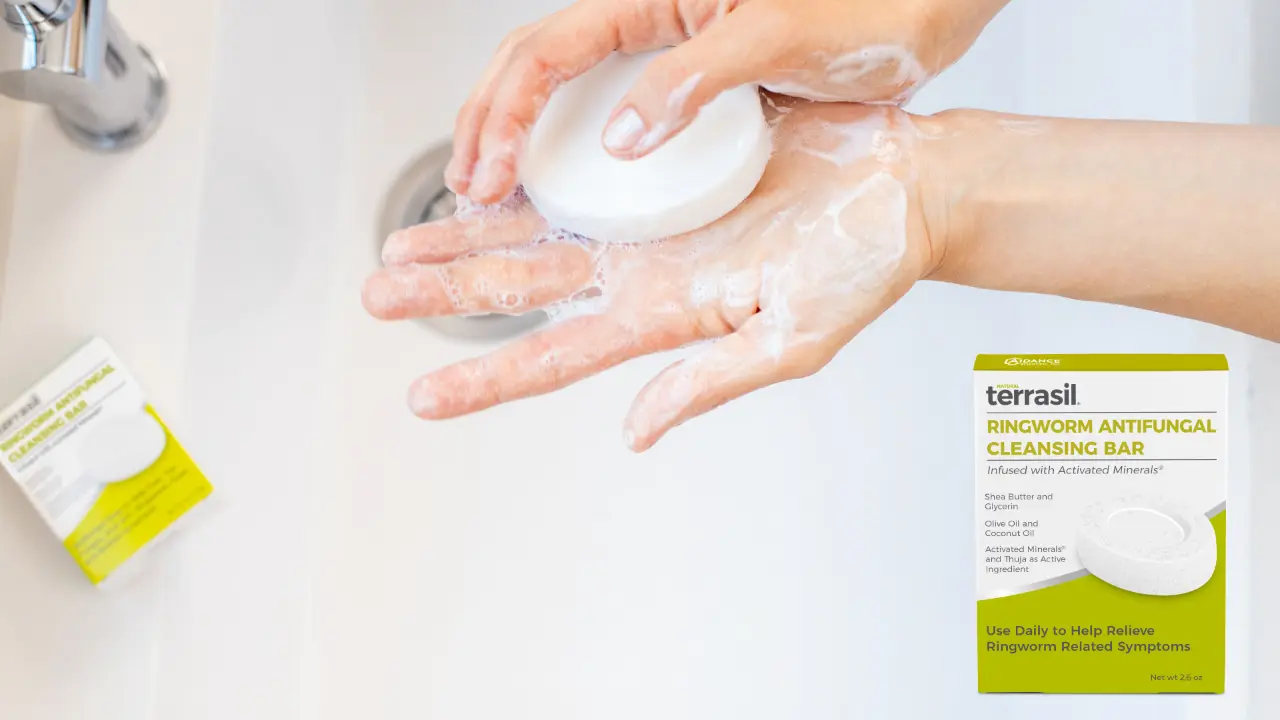
Terrasil® Ringworm Cleansing Bar contains moisturizing ingredients like olive oil and shea butter along with botanical ingredients including tea tree oil and peppermint oil. It also contains Activated Minerals® designed to support skin comfort during cleansing.

After washing and thoroughly drying the skin, antifungal treatment can be applied according to product directions.

Many antifungal treatments are typically applied twice daily, often once in the morning and once in the evening.

How Ringworm Changes as It Heals

Healing stages of a ringworm infection

As treatment addresses the infection, the rash may gradually improve.

Common signs of improvement include:

  • less itching
  • fading redness
  • shrinking borders of the rash
  • reduced scaling or flaking

The outer border may stop expanding as the skin begins recovering.

Because the infection affects the outer layer of the skin, visible improvement may take time as new skin cells replace the affected ones.

Simple Habits That Help Prevent Ringworm

Example of person changing bed sheets

Some everyday habits can help reduce exposure to fungal spores.

Helpful practices include:

  • keeping skin clean and dry
  • changing sweaty clothing promptly
  • washing workout gear regularly
  • avoiding shared towels or clothing
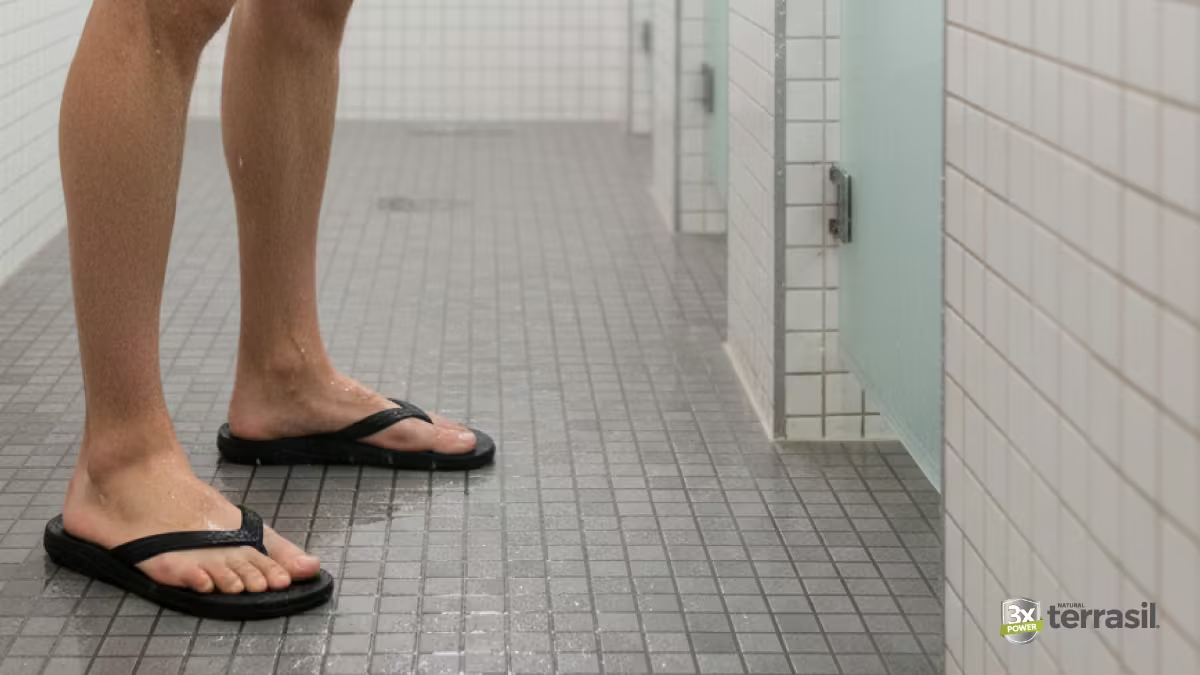
  • wearing footwear in communal showers

These habits help reduce the warm, moist environments where fungi tend to grow.

Frequently Asked Questions

Conclusion

If you’re wondering what ringworm looks like, the infection often begins as a small irritated patch that gradually spreads outward.

Over time the rash may develop the circular pattern that ringworm is known for — a shape that directly reflects how dermatophyte fungi expand across the skin.

Understanding which fungi are responsible and how the infection changes during its different stages can help explain why the rash may evolve as the skin responds and recovers.

References

  1. Centers for Disease Control and Prevention (CDC). Ringworm and Fungal Nail Infections. https://www.cdc.gov/ringworm/
  2. American Academy of Dermatology Association. Ringworm: Signs, Symptoms, and Treatment. https://www.aad.org/public/diseases/a-z/ringworm-overview
  3. Mayo Clinic. Ringworm (Tinea Corporis): Symptoms and Causes. https://www.mayoclinic.org/diseases-conditions/ringworm-body/symptoms-causes/syc-20353780
  4. Hay R., et al. Tinea Corporis (Ringworm of the Body). StatPearls Publishing, National Center for Biotechnology Information (NCBI). https://www.ncbi.nlm.nih.gov/books/NBK544360/
  5. Zhan P., et al. Dermatophytosis: A Review of Species Distribution and Epidemiology. Mycopathologia. https://doi.org/10.1007/s11046-021-00544-2 [For genus/species prevalence data: T. rubrumT. tonsuransM. canis.]
  6. Ely J.W., Rosenfeld S., Seabury Stone M. Diagnosis and Management of Tinea Infections. American Family Physician. 2014;90(10):702–710. https://www.aafp.org/pubs/afp/issues/2014/1115/p702.html [KOH test, fungal culture, Wood’s lamp.]
  7. Gupta A.K., Versteeg S.G. Topical Treatment of Superficial Dermatophyte Infections. Clinical Dermatology Reviews. https://journals.lww.com/cddr

This article is intended for informational purposes only and is not medical advice. Always read and follow product label directions. Consult a healthcare professional if you are uncertain about a skin condition or treatment.

How Long Does Ringworm Last? A Realistic Timeline for Healing 

terrasil silver accent terrasil silver accent
Woman inspecting ringworm infection

If you’ve noticed a red, circular rash spreading across your skin, you might be wondering: how long does ringworm last? If you’re searching for answers, you’re not alone. Ringworm is one of the most common fungal skin infections people encounter, and the questions that follow are always the same—”How long will this take to go away?” and “Will it ever fully clear?” 

The short answer is that ringworm doesn’t disappear overnight. With consistent antifungal treatment, many people begin to see meaningful improvement within the first few weeks. Let’s explore exactly what to expect during the healing process so you can set realistic expectations and understand why patience is such an important part of recovery.

What Causes Ringworm and Why Does It Take So Long? 

man playing outside with dog

Before we talk about healing timelines, it helps to understand what ringworm actually is—because despite its name, it has nothing to do with worms at all. 

What Actually Causes Ringworm 

Ringworm is a fungal skin infection caused by organisms called dermatophytes. Despite the name “ringworm,” there are no worms involved. Instead, you’re dealing with tiny fungi—microscopic organisms that live on the outer layer of your skin. These fungi feed on keratin, a natural protein found in your skin, hair, and nails [1]. 

The fungi create that characteristic circular rash with a raised, scaly border and often a clearer center—which is how the infection got its misleading name. The circular, ring-like pattern made people think worms were involved, and the name stuck even though we now know it’s purely fungal. 

Where Ringworm Comes From and How You Contract It 

Ringworm spreads through contact with fungal spores—microscopic particles released by infected fungi. You can catch ringworm from: 

Direct Contact: 

  • Infected people — Touching the skin of someone who has ringworm 
  • Infected animals — Cats, dogs, and other animals can carry ringworm spores. Petting an infected animal or handling them without washing your hands afterward is a common source of infection 
  • Your own infected skin — Scratching a ringworm rash and then touching another part of your body spreads the infection to new areas 

Indirect Contact (Contaminated Items): 

  • Towels and washcloths —
    Using a towel that an infected person used, or that touched their infected skin 
  • Bedding and sheets —
    Sleeping on contaminated pillows, sheets, or blankets 
  • Clothing —
    Wearing infected clothing, especially items that touch the skin like underwear or fitted shirts 
  • Shared bathroom surfaces —
    Shower floors, bathtub surfaces, and bathroom counters where spores can survive 
  • Gym equipment and locker rooms —
    Weight benches, yoga mats, shower floors, and benches where athletes change clothes 
  • Shared personal items —
    Combs, hairbrushes, razors, nail clippers, sports equipment, or helmets 
  • Floors and communal spaces —
    Swimming pools, locker rooms, and warm, moist areas where people walk barefoot 
  • Sports equipment and wrestling mats —
    Especially concerning in wrestling, where skin-to-skin contact is constant 

Environmental Sources: 

  • Contaminated soil — Working in gardens or playing in dirt where fungal spores may be present 
  • Pet bedding — If you have an infected pet, their bedding contains spores 

Why Ringworm Is So Contagious

Fungal spores are extremely resilient. They can survive on fabrics and surfaces for extended periods, sometimes for weeks. This is why ringworm spreads so easily and why it’s so common in: 

  • Schools and daycare centers (children in close contact) 
  • Gyms and fitness facilities (sweating, skin contact, shared equipment) 
  • Sports teams (wrestling, football, rugby—sports with skin-to-skin contact)
  • Warm, humid climates (fungi thrive in heat and moisture)  

Why Antifungal Treatment Takes Time

Now that you understand what causes ringworm, let’s explain why it doesn’t clear up immediately. 

The reason ringworm doesn’t disappear overnight is because the infection involves a living organism that needs to be eliminated, and your skin needs time to heal afterward. When you apply an antifungal treatment, the medication works by interfering with the fungus’s ability to survive and grow. However, this process is gradual—not instant. 

Why the process is slow: 

  • The fungus lives in your skin — The fungi aren’t just sitting on the surface. They’ve invaded the outer layer of your skin and are embedded there, feeding on keratin. Eliminating them takes time. 
  • Your skin needs to repair itself — Even after the fungus is addressed by antifungal medication, your skin still needs to replace the damaged cells and return to its normal state. This is a biological process that simply cannot be rushed. The outer layer of your skin is constantly shedding and regenerating, and healing happens as part of this natural cycle. 
  • Fungi are designed to persist — Fungi are particularly good at surviving in certain environments. They thrive in warm, moist conditions—which is why ringworm infections often persist longer in areas where you sweat, wear tight clothing, or experience friction. As long as conditions favor fungal growth, the infection will hang on.
  • Antifungal medication works gradually — Antifungal treatments don’t kill the fungus instantly. Instead, they interfere with the fungus’s ability to grow and reproduce. Over days and weeks, the fungus population shrinks, but this is a gradual process, not an overnight cure.  

How Long Does Ringworm Last? The Realistic Timeline

Stages of healing a ringworm infection

Let’s walk through what typically happens during treatment so you know what to expect at each stage. 

Early Days (Days 1–3) 

What you might notice: 

In the first few days after starting antifungal treatment, you may notice some subtle improvements: 

  • Itching begins to decrease — The constant itch that’s been bothering you should start to feel less intense. This is usually the first sign that the treatment is working. 
  • Redness may appear less bright — The rash might not look quite as inflamed or angry. 
  • The rash stops expanding — One of the most reassuring early signs is when the rash stops growing outward, which means the fungus is no longer spreading. 

Why these changes happen: 

Antifungal ingredients begin affecting fungal cells early in treatment, which reduces irritation and stops the infection from spreading further. This is encouraging, and it’s natural to feel hopeful at this stage. 

Important note: Early improvement does not mean the infection is gone. Many people make the mistake of stopping treatment too early because they think they’re cured. This is one of the biggest reasons ringworm lingers and comes back. The fungus is still present, even though symptoms are improving. 

One to Two Weeks 

What you might notice: 

By week one to two, you should see more noticeable changes: 

  • The border of the rash begins to shrink — The outer edge of the rash becomes less distinct and starts moving inward. This is a sign that the infection is responding to treatment. 
  • Scaling and irritation improve — The flaky, irritated skin becomes smoother. The area might look and feel less uncomfortable. 
  • The center of the rash clears first — Often, the center of the circular rash clears before the edges, which is completely normal and expected. 

Why this pattern happens: 

The antifungal medication is systematically eliminating the fungus from the outside in. The infection doesn’t just disappear all at once—it gradually shrinks and fades. This is a healthy sign that your body is responding to treatment. 

Several Weeks (Weeks 2–4+) 

What you might notice: 

As treatment continues: 

  • The rash typically continues to fade — The redness continues to diminish, and the skin begins to look more normal. 
  • The rash area becomes less raised — The texture of the skin smooths out and returns to normal. 
  • Overall improvement becomes more noticeable — The infected area increasingly blends in with surrounding skin. 

Why treatment continues even when the rash is fading: 

This is crucial to understand: you should continue using antifungal treatment for the full recommended duration on the product label, even after the rash looks like it’s gone. 

When a rash looks clear, it can be tempting to stop treating it. However, fungal cells may still be present in the outer layer of your skin even though they’re no longer visible. Stopping treatment early allows these remaining fungal cells to regrow, and the infection returns. This is why the label directions matter so much. 

Antifungal treatments typically continue for 2–4 weeks or longer, depending on the product and the severity of your infection. 

Can Ringworm Go Away in 3 Days?

This is one of the most common questions people search online, and the honest answer is no. 

While your itching and redness may begin to improve within 3 days of starting treatment, the infection itself requires much longer to fully resolve. Here’s why: 

What 3 days of treatment accomplishes: 

In just 3 days, antifungal medication can reduce inflammation and stop the fungus from spreading further. Your discomfort may decrease noticeably. This rapid improvement in symptoms can feel misleading—it makes you think the infection is almost over. 

What 3 days cannot accomplish: 

3 days is not enough time to eliminate all the fungal cells living on your skin. It’s also not enough time for your skin to fully repair the damage caused by the infection. The fungus has taken hold in the outer layer of your skin, and eliminating it completely requires consistent treatment over weeks. 

The bottom line: 

Expect improvement within days, but complete resolution usually requires consistent treatment over several weeks.

How Long Does Ringworm Last Without Treatment?

Mother and young boy with ringworm rashes

This is an important question because it shows why treatment matters. 

Without antifungal medication, ringworm can persist for extended periods without treatment. Because the infection is caused by a living fungus, the rash will continue to slowly expand outward if the fungus remains active on your skin [1]. In some cases, untreated ringworm can spread to other areas of your body or to other people. 

What happens without treatment: 

  • The fungus continues feeding on keratin in your skin 
  • The rash gradually expands in a circular pattern 
  • The infection can persist for months or even longer 
  • You risk spreading the infection to other people through direct contact or shared items 

This is why antifungal treatment is so important. Without it, you’re essentially allowing the fungus to continue living and thriving on your skin. 

Why some people delay treatment: 

Some people hope ringworm will clear on its own or try home remedies first. While your immune system does fight fungal infections naturally, it’s often not powerful enough to eliminate the infection completely without antifungal medication. Treatment significantly accelerates the healing process and prevents the infection from spreading. 

How Long Is Ringworm Contagious?

An important concern for many people is: how long can I spread this to others? 

Ringworm spreads through contact with fungal spores. These microscopic spores can live on: 

  • Your infected skin 
  • Clothing and undergarments 
  • Towels and washcloths 
  • Bedding and blankets 
  • Shared surfaces like gym equipment or locker room floors 
  • Combs, hairbrushes, and personal grooming items 

The contagious period: 

Fungal spores can survive on fabrics and surfaces for a surprisingly long time—sometimes for weeks. This is why hygiene during treatment is so important. You can continue to spread ringworm even after you’ve started treatment, because: 

  1. Fungal spores are still present on your skin during the early stages of treatment 
  2. Spores remain on any items that have come into contact with the infected area 
  3. These spores can transfer to other people if precautions aren’t taken 

Practical steps to reduce spread: 

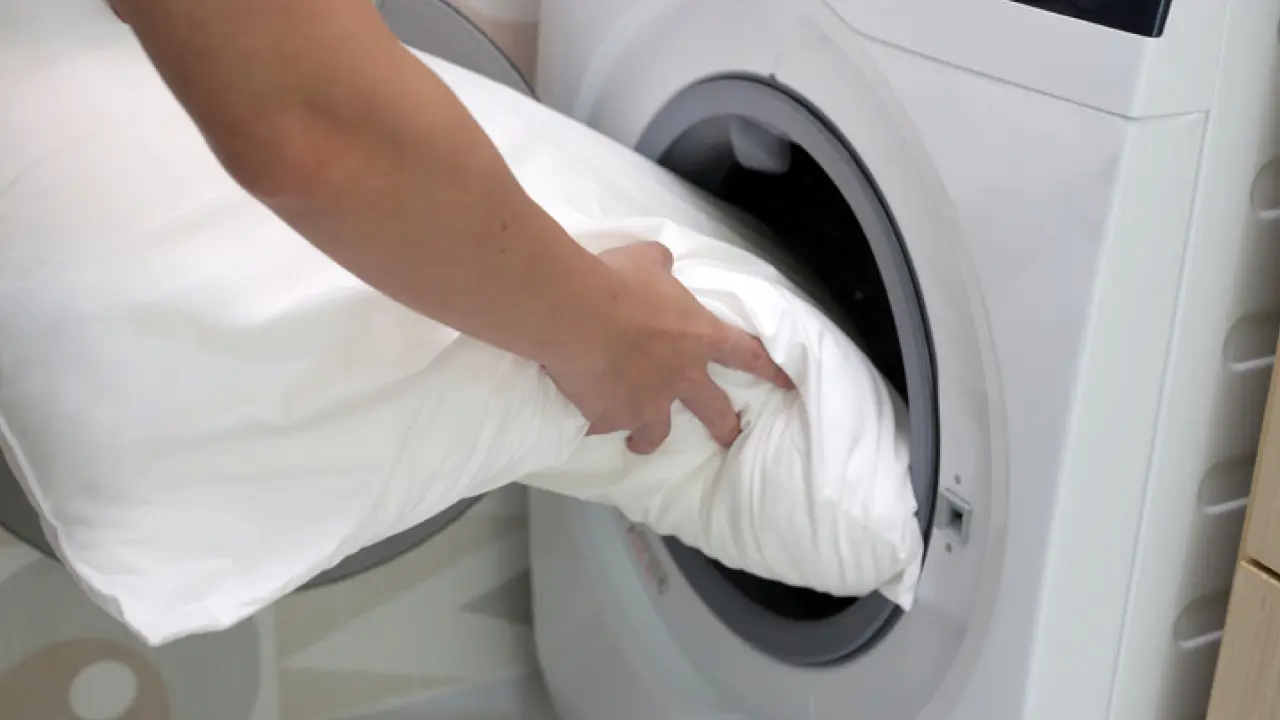
managing towels in a washing machine
  • Wash towels, bedding, and clothing in hot water 
  • Don’t share personal items like combs, hairbrushes, or razors 
  • Keep the infected area covered when possible 
  • Wash your hands after touching the infected area 
  • Avoid close skin-to-skin contact with others, especially children 
  • Don’t share sports equipment or gym facilities 

Transmission risk typically decreases after consistent treatment begins, though precautions are still important during treatment.

Why Your Ringworm Might Take Longer to Clear

Even with treatment, ringworm doesn’t always clear at the same speed for everyone. Some infections resolve quickly, while others linger. Several factors can slow down your healing. 

Stopping Treatment Too Early 

One of the most common mistakes people make is stopping antifungal treatment as soon as the rash starts looking better. Even when the redness has mostly faded or the itching has nearly disappeared, the fungus is still present in the deeper layers of your skin. 

The product label tells you how long to continue treatment for a reason. When you stop early: 

  • Remaining fungal cells regrow 
  • The infection returns, often within weeks 
  • You end up treating it again from the beginning 
  • The cycle repeats, and you feel frustrated 

What to do instead: 

Use your antifungal treatment for the full recommended duration, even if the rash is barely visible. Write down your start date and the end date on your calendar so you stay accountable. 

Inconsistent Application 

Antifungal treatments work gradually over time, and consistency is key. 

If you skip applications, apply the treatment sporadically, or miss days, your progress will slow down. The antifungal ingredient needs to build up on your skin and maintain consistent contact with the fungus to eliminate it. 

Why consistency matters: 

Think of antifungal treatment like taking an antibiotic. If you take it every other day instead of every day as prescribed, the infection fights back. The same principle applies to topical antifungal creams. When you apply consistently, you maintain an environment where the fungus cannot survive. 

Staying consistent: 

  • Apply the treatment at the same time each day (morning or night, whichever you prefer) 
  • Set a phone alarm or reminder 
  • Keep the product in a visible spot so you don’t forget 
  • Apply it right after you shower when your skin is clean and dry 

Moisture and Friction 

Fungi absolutely love warm, moist environments. This is why ringworm often appears in areas where you sweat, like: 

  • Between your toes (athlete’s foot) 
  • In your groin area 
  • Under your arms 
  • Under the breasts 
  • Anywhere skin rubs together 

Why this slows healing: 

If the infected area stays damp from sweat or moisture, the fungus has ideal conditions to continue growing even while you’re treating it. Tight, non-breathable clothing traps moisture and creates the perfect environment for fungi to thrive. 

What to do about it: 

  • Keep the infected area clean and dry 
  • Change out of sweaty clothes as soon as possible 
  • Wear breathable fabrics like cotton instead of synthetics 
  • Avoid overly tight clothing during treatment 
  • Dry the area thoroughly after bathing or swimming 
  • Consider using antifungal powder in addition to cream if the area stays moist 

Re-Exposure From Contaminated Items 

Another reason ringworm returns is reinfection from contaminated clothing, towels, or bedding. 

Ringworm spores can survive on fabrics for weeks. If you’ve treated the infection on your skin but continue sleeping on contaminated bedding or wearing contaminated clothing, you can continuously re-expose yourself to the fungus. 

Preventing reinfection: 

  • Wash all towels, bedding, and clothing that came into contact with the infected area in hot water 
  • Wash these items separately from other laundry 
  • Dry in a hot dryer (the heat kills spores) 
  • Don’t reuse towels that touched the infected area 
  • Change your pillowcase and sheets more frequently 
  • Wash any items you’ve worn during treatment 

If you’re dealing with repeated infections, read our guide on why ringworm keeps coming back and how to stop it.

The Quality of Your Treatment Product 

Since ringworm treatment typically continues for several weeks, the overall formulation of the product you choose matters more than you might think. 

Why product choice affects consistency: 

A poorly formulated antifungal cream might: 

  • Feel greasy or heavy on your skin 
  • Stain your clothing 
  • Irritate your skin 
  • Feel uncomfortable to wear, making you less likely to apply it consistently 
  • Leave your skin feeling dry and tight 

When a treatment feels uncomfortable, it’s harder to stay motivated to use it every single day for weeks. This is why dermatological products are designed with both active ingredients and supporting ingredients that work together. 

For example, a well-formulated antifungal cream might combine: 

  • Clotrimazole 1% — a clinically recognized antifungal ingredient that targets the fungus 
  • Activated Minerals® technology — designed to support the skin environment during treatment 
  • Botanical ingredients commonly used to help soothe irritated skin

When your treatment feels pleasant to apply and soothes your skin, you’re much more likely to use it consistently, which directly impacts how quickly your infection clears. 

Understanding Antifungal Ingredients 

Choosing terrasil Ringworm Treatment Ointment from store shelf

Most ringworm treatments work using one of several antifungal active pharmaceutical ingredients (APIs). Understanding how these work can help you choose an effective treatment. 

Common antifungal ingredients include: 

  • Clotrimazole — works by interfering with the fungal cell membrane 
  • Terbinafine — disrupts the fungus’s ability to produce a protective wall 
  • Miconazole — similar mechanism to clotrimazole 
  • Tolnaftate — interferes with fungal growth 

All of these are recognized as effective when used according to product directions [1][2]. 

How to choose: 

If you want a detailed comparison of how these antifungal ingredients work and their specific strengths, we recommend reading our guide, Best Ringworm Cream – What Actually Works. This article breaks down each ingredient, how they differ, and what the clinical evidence says about their effectiveness. 

The active ingredient is important, but remember that how the entire formula feels on your skin also matters. If you’re going to be applying a treatment multiple times daily for several weeks, the product needs to feel good enough that you’ll actually use it consistently. 

Myth vs. Fact: Clearing Up Common Misconceptions

There’s a lot of misinformation about ringworm online. Let’s clear up what’s actually true.

Myth: “Ringworm is caused by worms”

Fact: Ringworm is caused entirely by fungi, not worms. The name is misleading—it comes from the circular, ring-like shape of the rash, not from what causes it. Dermatophyte fungi are tiny organisms that live on your skin. They’re completely different from parasitic worms and require completely different treatment. Antifungal creams are designed to target these fungi, while they would do nothing against a worm infection. 

Myth: “Ringworm disappears overnight once you start treatment”

Fact: Symptom improvement may begin within several days, but the infection itself takes weeks to fully clear. Even when the rash looks like it’s almost gone, antifungal treatment should continue for the full recommended period. Many people see their rash fade after a week or two and assume they’re cured, only to have it return because they stopped treatment too early. 

Myth: “Only children get ringworm”

Fact: Ringworm can affect people of any age—children, teenagers, adults, and older adults. While it is common in children (especially in schools and daycare settings), adults catch it regularly too. Athletes, gym members, and people in warm, moist climates experience it frequently. Age doesn’t make you immune.

Myth: “You should scratch ringworm to help it heal”

Fact: Scratching actually makes things worse. When you scratch the infected area, you: 

  • Spread fungal spores to other parts of your body 
  • Spread spores to other people through your fingernails 
  • Damage your skin barrier further, making infection worse 
  • Risk introducing bacteria that can cause a secondary bacterial infection 
  • Increase itching by irritating the area 

Keep your nails trimmed and try to resist the urge to scratch. If itching is unbearable, ask a healthcare provider about options. 

Myth: “You can treat ringworm with home remedies alone”

Fact: While some home remedies may provide temporary relief (like keeping the area dry or using tea tree oil), they are not typically strong enough to eliminate a fungal infection on their own. Antifungal medications are specifically formulated to target and kill the fungus. Home remedies might reduce symptoms, but they don’t address the root cause. Treatment with antifungal medication is the most effective approach. 

Myth: “Once ringworm is treated, you can never get it again”

Fact: You can get ringworm more than once. Fungal infections don’t provide lasting immunity. Once you’ve had ringworm, you can catch it again from contaminated surfaces, other people, or animals. Good hygiene and avoiding exposure reduces your risk, but immunity doesn’t develop.

What Does Healing Look Like? How to Know Your Treatment Is Working 

Knowing what progress looks like helps you stay motivated during treatment. 

Signs that your treatment is working: 

  • Reduced itching — The constant itch becomes less intense and bothersome 
  • Fading redness — The rash is less bright red and more subtle 
  • Shrinking border — The outer edge of the rash moves inward rather than outward 
  • Cleared center — The middle of the circular rash clears first 
  • Smoother texture — The flaky, scaly appearance improves 
  • Less visible after a few weeks — By week 2–3, the rash should be noticeably less obvious 

Signs that something might be wrong: 

  • The rash is expanding after 1 week of treatment — This suggests the fungus is still active, which might mean inconsistent application, reinfection from contaminated items, or the need for a different treatment approach
  • Severe itching increases — While mild itching might decrease initially, severe itching that worsens might indicate a different condition 
  • Signs of a secondary infection — Pus, warmth, increased redness, or swelling might indicate bacteria have infected the area 

If you’re not seeing improvement after 2–3 weeks of consistent treatment, or if the infection seems to be worsening, it’s worth discussing with a healthcare provider. 

When Ringworm Appears to Come Back 

Sometimes, after treatment seems to have cleared the infection, ringworm returns weeks or months later. 

What’s actually happening: 

In most cases, this isn’t the original infection returning—it’s reinfection from fungal spores that survived on your clothing, bedding, towels, or other items. 

Why reinfection happens so often: 

  • You treated your skin successfully, but didn’t thoroughly wash contaminated fabrics 
  • Fungal spores survived on items in your environment 
  • Those spores came into contact with your skin again, starting a new infection 
  • You repeat the cycle of treating your skin without treating your environment 

Preventing recurring ringworm: 

  • Wash all bedding, towels, and clothing in hot water 
  • Dry items in a hot dryer (heat kills spores) 
  • Don’t reuse items that touched the infected area 
  • Replace items like pillows or bath mats if possible 
  • Clean shared surfaces (bathroom counters, shower floors) 
  • Keep the previously infected area clean and dry to prevent reinfection 
  • Treat family members if they show signs of ringworm 

If you’re experiencing recurring infections repeatedly, we recommend reading our detailed article Why Ringworm Keeps Coming Back (and How to Stop It for Good), which explains the most common causes of reinfection and specific prevention strategies. 

Choosing the Right Antifungal Treatment 

When selecting a ringworm treatment, you’re looking at two things: the active ingredient and the overall formula. 

The active ingredient matters: 

As mentioned earlier, common antifungal ingredients include clotrimazole, terbinafine, miconazole, and tolnaftate. These are all recognized for treating fungal skin infections when used according to product directions. 

However, the active ingredient is only part of the equation. 

The overall formula also matters: 

Since you’ll be applying treatment daily for several weeks, consider: 

  • Does it feel comfortable on your skin? — Greasy formulas feel heavy; dry formulas might irritate. A balanced formula feels pleasant enough to use consistently. 
  • Will it stain clothing? — Some creams stain or discolor clothes, which makes them annoying to use regularly. 
  • Does it soothe irritated skin? — Ingredients like botanicals and minerals can reduce itching and irritation while the antifungal medication works. 
  • Does it moisturize? — Antifungal treatment can sometimes dry out skin. A formula that includes moisturizing ingredients supports your skin’s health during treatment. 

Example of a well-formulated approach: 

Terrasil® Ringworm Treatment combines clotrimazole 1% (a clinically recognized antifungal ingredient) with Activated Minerals® technology and botanicals selected for their soothing and moisturizing properties. This approach addresses both the fungal infection and your skin’s comfort, making consistent daily application feel sustainable over several weeks. 

When treatment requires daily application for an extended period, choosing a product that’s designed with both efficacy and comfort in mind helps support your consistency—and consistency directly impacts how quickly your infection clears. 

woman applying terrasil ringworm treatment in bathroom

Ringworm Healing Timeline: Quick Reference Table

Stage
Timeframe
What to Expect
Early treatment
Days 1 – 3
Itching decreases, redness less intense, rash stops expanding
Early improvement
Week 1
Redness begins fading, border becomes less distinct
Noticeable progress
Weeks 1 – 2
Border shrinks inward, scaling improves, center clears
Significant clearing
Weeks 2 – 4
Rash continues fading, texture smooths, overall appearance improves
Continued treatment
Weeks 3 – 6+
Continue treatment per product label even if rash is mostly gone
Full resolution
After treatment ends
Skin returns to normal; risk of reinfection decreases

Frequently Asked Questions About Ringworm Cream 

Conclusion

If you’re asking how long ringworm lasts, the realistic answer is that it requires patience. Fungal infections take time to resolve because they involve a living organism that must be eliminated, and your skin needs time to repair the damage. 

Here’s what you need to remember: 

  • Symptom improvement begins within days, but complete healing takes weeks. Your itching and redness may decrease quickly, but the infection itself requires 2–4 weeks or longer to fully clear. 
  • Consistency matters more than anything else. Using your antifungal treatment every single day, exactly as directed, is the single most important factor in how quickly you heal. 
  • Don’t stop treatment early. Even when the rash looks mostly gone, continue using your antifungal medication for the full recommended duration. Stopping early is the #1 reason ringworm returns. 
  • Your environment matters. Wash contaminated fabrics, keep the infected area clean and dry, and avoid reinfection from your own clothing and bedding. 
  • A well-formulated treatment can help support consistency. When your antifungal product feels good on your skin and soothes irritation, you’re more likely to apply it consistently, which accelerates healing. 

Understanding the realistic timeline helps you stay motivated and committed to treatment. Ringworm isn’t a quick fix, but with consistent antifungal treatment, you will see steady improvement week after week until the infection fully clears. 

If you’re not seeing improvement after 3–4 weeks of consistent treatment, or if your infection seems to be worsening, reach out to a healthcare provider for guidance. 

Disclaimer 

This article is for informational and educational purposes only and is not intended to provide medical advice, diagnosis, or treatment recommendations. The information presented reflects general knowledge about fungal skin infections and over-the-counter antifungal treatments. Always read and carefully follow all product label directions before using any treatment product. If you have questions about your specific condition or whether a particular treatment is appropriate for you, consult a qualified healthcare provider. Do not use this article as a substitute for professional medical advice. 

References: 

  1. Centers for Disease Control and Prevention (CDC). Ringworm and Fungal Infections. Retrieved from https://www.cdc.gov/fungal/ringworm/index.html 
  2. American Academy of Dermatology (AAD). Ringworm: Diagnosis and Treatment. Retrieved from https://www.aad.org/ 

Best Ringworm Cream: What Actually Works

terrasil silver accent terrasil silver accent
Man on couch concerned about ringworm rash

If you’re searching for the best ringworm cream, you probably want one thing: 

Something that actually works to treat the infection.

Ringworm can be uncomfortable, itchy, and frustrating. It can spread if ignored. And once you start comparing treatments, it can quickly become confusing — especially when most products appear to use similar ingredients. 

So what actually makes one cream better than another? 

Let’s break this down clearly and practically. 

What Is Ringworm?

Ringworm example close up

Ringworm is a common fungal skin infection. Its medical name is tinea corporis [1]. 

Despite the name, it is not caused by a worm. It’s caused by fungi called dermatophytes. These fungi live on the outer layer of the skin and feed on keratin — a protein found in skin, hair, and nails [1]. 

If you want a step-by-step treatment plan, see our guide on how to get rid of ringworm quickly.

Common signs of ringworm include: 

  • A circular red or pink patch 
  • A raised or slightly scaly border 
  • Clearer skin in the center 
  • Itching 

It spreads through: 

  • Direct skin contact 
  • Shared towels or clothing 
  • Gym surfaces 
  • Locker rooms 
  • Contact with infected pets [1] 

Because ringworm affects the outer layer of skin, topical antifungal creams are commonly used for uncomplicated cases on the body [1][2]. 

What Kills Ringworm on Skin? 

Man in bathroom applying cream to ringworm infection

Ringworm is caused by fungus. 

So treatment requires an antifungal ingredient

Antifungal creams work by damaging the fungus so it cannot survive or grow [2]. 

Common antifungal ingredients include: 

  • Clotrimazole 
  • Terbinafine 
  • Miconazole 
  • Tolnaftate 

When used as directed, these ingredients are recognized for treating uncomplicated body ringworm [1][2]. 

Antifungal creams usually require consistent use over several weeks. 

Most treatments require consistent application for several weeks. Using the cream consistently according to label directions is essential. 

Clotrimazole vs Terbinafine: What’s the Difference? 

Choosing terrasil Ringworm Treatment Ointment from store shelf

Most non-prescription ringworm creams use one of two main antifungal families: 

1. Azoles (Clotrimazole & Miconazole) 

Azoles disrupt the fungal cell membrane. Without a stable membrane, the fungus cannot survive [2]. 

Clotrimazole has been widely used in over-the-counter antifungal treatments for decades. 

2. Allylamines (Terbinafine) 

Terbinafine blocks an enzyme involved in fungal membrane formation [2]. 

3. Tolnaftate 

Tolnaftate prevents fungal growth and is commonly found in sprays and powders. 

Ingredient Comparison Table 

Antifungal Ingredient
Common OTC Strength
How It Works
Commonly Used For
Notes
Clotrimazole
1%
Stops fungi from growing by disrupting their cell membranes
Ringworm, athlete’s foot, jock itch
Widely used antifungal active in OTC creams; application frequency varies by product instructions
Terbinafine
1%
Interferes with fungal cell membrane production, which helps stop fungal growth
Ringworm, athlete’s foot, jock itch
Often used once or twice daily depending on product instructions
Miconazole
2%
Blocks fungal growth by affecting the fungal cell membrane 
Ringworm, athlete’s foot, yeast infections 
Found in creams, powders, and sprays
Tolnaftate
1%
Helps prevent fungal growth by damaging fungal cells
Athlete’s foot, ringworm
Often available in sprays and powders
Ketoconazole
Usually prescription strength
Interferes with fungal cell membrane production
Ringworm, dandruff, other fungal infections
Typically prescription-only for many skin infections

Which Antifungal Is Best for Ringworm? 

Man reading a box contemplating a selection

For uncomplicated body ringworm, these antifungal ingredients are all recognized treatment options when used properly [1][2]. 

For most people, the difference is often less about which ingredient is “stronger” — and more about: 

  • Using it consistently 
  • Completing the full treatment duration 
  • Choosing a formula your skin tolerates well 

Clotrimazole has a long history of use in over-the-counter antifungal products for ringworm and other common fungal infections [1][2]. 

And that is the antifungal active used in Terrasil® Ringworm Treatment. 

Why Formula Quality Matters in a Ringworm Cream 

terrasil ringworm treatment ointment shown with natural ingredients

The active ingredient targets the fungal infection. 

But the rest of the formula influences how the cream feels — and whether you’ll continue using it consistently. 

Treating ringworm usually requires repeated application for several weeks. 

If a cream feels greasy, drying, or irritating, people often stop early. 

And stopping early increases the chance the infection returns. 

Two creams can both contain clotrimazole 1% — and still feel completely different in use. 

That difference comes from the inactive ingredients. 

What Makes Terrasil® Ringworm Treatment Different? 

Applying terrasil ringworm ointment to leg

Many antifungal treatments use similar active ingredients, but formulations can differ. First, Terrasil® Ringworm Treatment contains: 

  • Clotrimazole 1%, which, as you know now, is a common  
  • Activated Minerals® technology 
  • Botanical ingredients are commonly used for soothing properties 
  • A formulation designed without added synthetic fragrance 

Activated Minerals® technology is designed to support the skin environment during treatment.

The antifungal active addresses the fungal infection. 

The surrounding formula is designed to support skin comfort during the treatment period. 

When treatment lasts several weeks, comfort can influence consistency. 

And consistency matters. 

Terrasil is not simply clotrimazole in a basic cream base. 

It is a complete formulation designed to combine a recognized antifungal ingredient with thoughtful skin-conscious ingredients. 

How Long Does Ringworm Take to Go Away? 

Calendar with specific dates flagged

With proper use of antifungal cream, uncomplicated body ringworm is commonly treated over several weeks when antifungal creams are used consistently [2]. 

Continue using the product for the full duration listed on the label — even if symptoms improve. 

Why Does Ringworm Come Back?

Woman in mirror worried about a ringworm rash

Common reasons include: 

  • Stopping treatment too early 
  • Re-exposure through clothing or towels 
  • Moist environments 
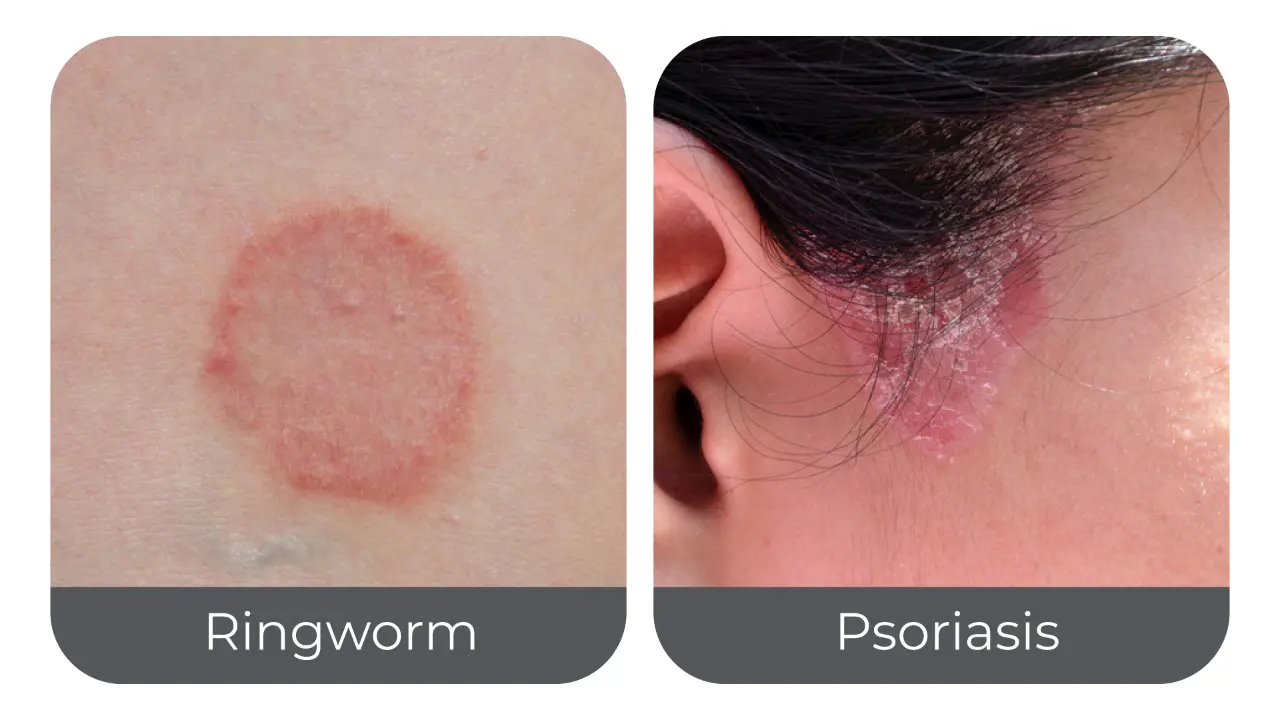
  • Misidentifying another skin condition such as eczema, psoriasis, or other fungal infections

Keeping skin clean and dry during treatment is important [1]. 

How to Help Prevent Ringworm from Spreading 

A stack of towels

During treatment: 

  • Use clean towels 
  • Wash clothing and bedding regularly 
  • Avoid sharing personal items 
  • Keep the area dry 

Moist environments allow fungi to grow more easily, which is why keeping skin dry is a key part of preventing fungal skin infections.

What Is the Strongest Ringworm Cream?

Man in mirror with towel

When deciding which ringworm cream to use, consider: 

  • Does it contain a recognized antifungal active? 
  • Is the formula comfortable for consistent use? 
  • Is the ingredient list thoughtfully designed? 

Choosing a ringworm cream involves both the active ingredient and the overall formulation.

It’s about the complete formulation. 

Terrasil® Ringworm Treatment combines clotrimazole 1% with Activated Minerals® technology and skin-conscious ingredients — offering more than just a basic antifungal base. 

When to see a healthcare provider
If the rash spreads rapidly, becomes painful, produces drainage, or does not improve after several weeks of antifungal treatment, it is important to consult a healthcare professional for evaluation.

Frequently Asked Questions About Ringworm Cream 

Conclusion: Choosing the Best Ringworm Cream 

When looking for the best ringworm cream, the most important factor is choosing a product with a recognized antifungal active ingredient and using it exactly as directed. 

Clotrimazole, terbinafine, miconazole, and tolnaftate are commonly used in over-the-counter treatments for uncomplicated body ringworm [1][2]. 

However, the active ingredient is only part of the formula.

The overall formulation influences how the cream feels on your skin — and whether you’ll continue using it consistently for the full treatment period. 

Terrasil® Ringworm Treatment combines clotrimazole 1% with Activated Minerals® technology and carefully selected ingredients designed with skin comfort in mind. It is formulated to deliver a recognized antifungal active within a carefully developed base. 

When evaluating the best ringworm cream, consider both the active ingredient and the overall formulation. 

Consistency and proper use matter. 

Disclaimer 

This article is for educational purposes only. It is not intended to provide medical advice, diagnosis, or treatment recommendations.
Always read and follow product label directions carefully. 

References: 

  1. Centers for Disease Control and Prevention (CDC). Ringworm and Fungal Infections. 
  2. American Academy of Dermatology (AAD). Ringworm: Diagnosis and Treatment. 

Why Ringworm Keeps Coming Back (and How to Stop It for Good)

terrasil silver accent terrasil silver accent
Why ringworm comes back

Introduction 

You treated it. The rash went away. You thought you were done. And then—two weeks later, maybe a month—there it is again. That same circular, scaly patch (see our guide on how to get rid of ringworm fast), right back where it started. Or maybe it’s popped up somewhere new this time. 

If you’re reading this, you’re probably beyond frustrated. You’ve done everything the instructions said. You used the cream twice a day. You kept the area clean. And yet ringworm keeps showing up like an uninvited guest who doesn’t understand that the party’s over. 

Here’s what nobody tells you upfront: ringworm—medically known as tinea corporis—doesn’t come back because you did something wrong. It comes back because fungal spores are remarkably resilient, and most people stop treatment too early, or don’t address the environment where the fungus lives (i.e., your pets, dirty clothes, shoes, and bed sheets, etc.), and, thereby, unknowingly keep reintroducing it through their daily routines. 

The good news? Once you understand why recurrence happens and what actually eliminates fungal infections for good, you can break the cycle. This isn’t about managing ringworm indefinitely—it’s about getting rid of it and keeping it gone. 

Let’s dig into the real reasons it keeps coming back and exactly what to do about it. 

Quick Answer: Why Ringworm Keeps Coming Back

Ringworm usually “comes back” for four main reasons: the antifungal treatment was stopped too early, contaminated items like towels, bedding, and clothing were not fully cleaned, there is an untreated source (such as a pet or family member), or you have other fungal infections (like athlete’s foot or jock itch) that keep re-seeding the area.

To stop it for good, you need to:

  • Use an effective antifungal such as clotrimazole 1% consistently for 2–4 weeks,
  • Continue for at least one week after symptoms disappear,
  • Wash everything that touched the infection in hot water and high heat,
  • Treat pets and other fungal infections at the same time.

Understanding Why Ringworm Recurs 

Understanding ringworm

First, let’s get clear on what we’re dealing with. Ringworm is a fungal infection caused by dermatophytes—microscopic fungi from families like Trichophyton, Microsporum, and Epidermophyton. Despite the name, there are no worms involved. The “ring” appearance comes from how the infection spreads outward in a circular pattern with raised, scaly borders.¹ 

These fungi feed on keratin, the protein in your skin, hair, and nails. They’re opportunistic organisms that thrive in warm, moist environments and can survive on surfaces, fabrics, and even in soil for extended periods. Here’s the part that makes recurrence so common: fungal spores can remain viable on your towels, clothing, bedding, and household surfaces for weeks or even months.² 

When ringworm “comes back,” it’s usually one of four scenarios: 

  1. You never fully eliminated it in the first place. The visible rash clearing doesn’t mean the fungus is gone—it just means the infection has reduced enough that you can’t see it anymore. Stop treatment too early, and the remaining fungi simply start multiplying again.¹ 
  2. You’re reinfecting yourself from contaminated items. Your towel, your gym bag, your favorite hoodie, your shoes, your bed sheets, you get the point—if these items had contact with the infection and haven’t been properly cleaned, they’re harboring spores that reintroduce the fungus to your skin.² 
  3. You’re getting reinfected from an external source. This could be a pet with ringworm, a family member with an untreated infection, shared athletic equipment, or contaminated surfaces in gyms or locker rooms.³ 
  4. You have a fungal infection elsewhere on your body. If you have athlete’s foot or jock itch at the same time, you can keep spreading the fungus from one area to another through contact or shared towels.¹ 

Understanding which scenario applies to you is the first step toward actually stopping recurrence. 

The Most Common Mistakes People Make 

woman examining arm

Let’s be honest about where treatment plans typically fall apart. These aren’t signs of failure—they’re just gaps that need closing. 

Stopping Treatment Too Early 

This is the big one. You apply antifungal cream for a week, maybe ten days. The itching stops. The redness fades. The ring gets less obvious. You figure you’re good and you stop treating it. 

Here’s what’s actually happening: the visible symptoms improve long before the fungus is fully eliminated. When you stop treatment at the point where the rash looks better, there are still fungal organisms and spores present in the deeper layers of your skin. They’re just not active enough yet to cause visible symptoms.¹ 

Give them at minimum another week or two without antifungal pressure, and they multiply right back to symptomatic levels. To you, it looks like the ringworm “came back.” In reality, it never left. 

The fix: Continue treatment for at least 2-4 weeks, and keep applying the antifungal for at least one full week after all visible symptoms disappear.¹ ² 
This “extra week” is often the difference between ringworm staying gone and seeming to “come back.”

Not Treating Your Environment 

You can apply the best antifungal in the world, but if your towels, bedding, and clothes are contaminated with fungal spores, you’re reinfecting yourself every time you use them. 

Fungal spores don’t die from air-drying or sitting around. They’re patient. They wait. And the moment they contact your skin again—especially skin that’s warm and slightly moist—they reactivate.² 

The fix: Wash everything that touched the infected area in hot water and dry on high heat. This includes towels, sheets, clothing, gym bags (if washable), and anything else that made contact. Do this throughout treatment, not just at the end. 

Ignoring Your Pets 

Pets – especially cats, dogs, and rodents – can carry ringworm without showing obvious symptoms. Or they might have subtle signs like small bald patches or scaly skin that you mistake for something else.³ 

If your pet has ringworm and you’re cuddling with them, grooming them, or letting them sleep in your bed, you’re getting reinfected no matter how well you treat yourself. 

The fix: Have your vet check your pets for ringworm if you’re experiencing recurrent infections. If they’re positive, they need treatment too—and you need to temporarily limit close contact until their infection clears. 

Not Addressing Other Fungal Infections 

Here’s something people don’t connect: if you have athlete’s foot or jock itch, you’re carrying the same family of fungi that causes ringworm. Touch your feet, scratch your groin, then touch another part of your body? You’ve just introduced fungal spores to a new area.¹ 

The fix: Treat all fungal infections simultaneously. Use separate towels for different body areas during treatment, and wash your hands after touching any infected area. 

What Actually Stops Ringworm for Good 

Terrasil® Ringworm Treatment Ointment

Stopping ringworm permanently requires two things: completely eliminating the current infection and breaking the reinfection cycle. Here’s how to do both. 

STEP #1: Use an Effective Antifungal—and Use It Long Enough 

The gold standard active ingredient for ringworm is clotrimazole 1%, which is FDA-recognized for treating tinea corporis. It works by disrupting the fungal cell membrane, preventing growth and allowing your immune system to clear the infection.⁴ 
(See our guide on the best antifungal creams for different fungal infections.)

terrasil® Ringworm Treatment MAX Ointment combines clotrimazole 1% with patented Activated Minerals® technology that accelerates your skin’s natural healing process. What this means practically: you get faster relief from the itching, scaling, and inflammation while the antifungal does its work killing the fungus. The formula includes high-quality natural moisturizers that protect and soothe irritated skin without causing additional dryness. 

The protocol that works: 

  • Clean the affected area and dry it completely—truly bone-dry, not just patted with a towel 
  • Apply a thin layer to the entire rash and extend about one inch beyond the visible border (the infection extends past what you can see) 
  • Do this twice daily without skipping 
  • Continue for a minimum of 2-4 weeks—even if symptoms disappear after one week 

That last point bears repeating because it’s where most people fail. The fungus is still present even when your skin looks normal. One extra week of treatment is the difference between “clear for now” and “actually eliminated.” 

If you’re dealing with multiple ringworm patches or fungal infections in different areas, terrasil® Antifungal Treatment MAX offers the same powerful formula suitable for any fungal skin infection—making it a versatile option to keep in your medicine cabinet. 

STEP #2: Clean Everything the Infection Touched 

washing machine near clean clothes

This isn’t optional. Fungal spores survive regular washing and sitting around. You need heat to kill them.² 

Immediate steps: 

  • Wash all towels, bedding, and clothing that contacted the infected area in the hottest water the fabric can handle 
  • Dry everything on the highest heat setting for at least 30 minutes 
  • Don’t reuse towels or clothing without washing, even if they “seem clean” 
  • Disinfect any non-washable items (shoes, gym bags) with antifungal spray or wipe them down with diluted bleach solution if appropriate 

Throughout treatment: 

  • Use a fresh towel every time you bathe 
  • Wash workout clothes after every use 
  • Change bed sheets weekly 
  • Don’t share towels or clothing with anyone 

After symptoms clear: 

  • Do one final hot-water wash of everything that might have been exposed 
  • Consider replacing items that can’t be thoroughly cleaned (old towels, worn-out gym clothes) 

STEP #3: Add (and Stick to) an Antifungal Cleansing Routine 

terrasil ringworm cleansing bar being used

Regular soap cleans your skin, but it doesn’t eliminate fungal spores that are sitting on the surface. That’s where antifungal cleansing makes a significant difference. 

terrasil® Ringworm Cleansing Bar is formulated to remove spores while remaining gentle enough for daily use—it won’t over-dry your skin or cause additional irritation. Using it consistently throughout treatment and for a few weeks after creates an extra layer of protection against reinfection. 

Use it daily in the shower, working it into a lather over the affected area and surrounding skin. Let it sit for a minute before rinsing. Pat dry thoroughly with a clean towel. 

The combination of antifungal ointment plus antifungal cleansing significantly improves your odds of complete elimination and prevents recurrence. 

STEP #4: Check Your Pets 

Checking cat for ringworm

If you have pets and you’re experiencing recurrent ringworm, this is non-negotiable. Have them checked by a veterinarian.³ 

Cats are particularly common carriers, and they can have ringworm without showing obvious symptoms. Dogs, rabbits, guinea pigs, and other furry pets can also carry and transmit it. 

If your pet tests positive: 

  • Follow your vet’s treatment plan completely 
  • Limit close physical contact until they’re cleared 
  • Wash your hands after touching them 
  • Clean their bedding, toys, and common areas 
  • Vacuum frequently and dispose of vacuum bags or clean canisters immediately 

NOTE: Treat All Fungal Infections Simultaneously 

Father and son with bicycles

If you have athlete’s foot, jock itch, or ringworm in multiple locations, treat everything at the same time. Use antifungal treatment on all affected areas, wash your hands after touching any infected site, and use separate towels for different body areas.¹ 

This prevents the endless cycle of clearing one area while another area keeps reintroducing the fungus. 

How to Prevent Future Outbreaks

How to prevent future ringworm outbreaks

Once you’ve successfully eliminated ringworm, keeping it gone requires some habit changes. These aren’t forever restrictions—just smart practices, especially during high-risk periods.² 

Personal hygiene: 

  • Shower after activities that make you sweat, especially shared facilities like gyms 
  • Dry your skin thoroughly after bathing—fungi need moisture to establish themselves 
  • Don’t share personal items like towels, clothing, hairbrushes, or sports equipment 
  • Wash your hands after touching your feet or any area that previously had ringworm 

In shared spaces: 

  • Wear flip-flops or shower shoes in gym locker rooms, public pools, and communal showers 
  • Wipe down gym equipment before and after use 
  • Avoid walking barefoot in public areas 
  • If you do contact sports, shower immediately after and wash your gear after every practice or match 

At home:

  • Keep your living space clean and dry—fungi thrive in damp environments 
  • Wash towels and workout clothes regularly in hot water 
  • Don’t let wet towels or clothes sit around in gym bags or hampers 
  • Vacuum and clean floors regularly, especially if you have pets 

With pets: 

  • Regular vet checkups that include skin assessment 
  • Watch for signs of ringworm (bald patches, scaly skin, scratching) 
  • If you adopt a new pet, have them checked for ringworm before bringing them home 
  • Wash your hands after playing with or grooming pets³ 

💡 Pro Tip: Keep terrasil® Antifungal Treatment MAX in your medicine cabinet even after you’ve cleared the infection. At the very first sign of a suspicious circular patch or persistent itch, start treating immediately. Catching it in the earliest stages means it clears much faster and never fully establishes itself. 

Frequently Asked Questions 

The Bottom Line 

Ringworm keeps coming back for specific, solvable reasons: incomplete treatment, contaminated environment, reinfection from external sources, or concurrent fungal infections elsewhere on your body. It’s not bad luck and it’s not a failure on your part—it’s just that most people don’t get the full picture of what it takes to actually eliminate a fungal infection. 

The solution is straightforward but requires commitment: Use an effective antifungal like terrasil® Ringworm Treatment MAX Ointment—which combines FDA-recognized clotrimazole 1% with Activated Minerals® technology for faster healing—twice daily for the full 2-4 weeks, continuing one week past visible symptom resolution. Pair it with terrasil® Ringworm Cleansing Bar to remove spores. Wash everything that touched the infection in hot water. Check your pets. Treat any other fungal infections simultaneously.¹ ² 

Do all of it, not just some of it, and you’ll break the recurrence cycle. Miss any piece—stop treatment too early, skip the hot-water laundry, ignore a pet with subtle symptoms—and you’re likely to see it come back. 

It’s not about perfection. It’s about consistency and thoroughness. Give the treatment time to work completely, address the environment that’s harboring spores, and eliminate all the reinfection pathways. That’s how you stop ringworm for good instead of just managing it until the next outbreak. 

References 

  1. Centers for Disease Control and Prevention (CDC). “Fungal Diseases: Ringworm.” Available at: https://www.cdc.gov/fungal/diseases/ringworm 
  2. American Academy of Dermatology (AAD). “Ringworm: Diagnosis and Treatment.” Available at: https://www.aad.org/public/diseases/a-z/ringworm-treatment 
  3. Cleveland Clinic. “Ringworm (Tinea Corporis).” Available at: https://my.clevelandclinic.org/health/diseases/4560-ringworm 
  4. Mayo Clinic. “Ringworm (body): Diagnosis and Treatment.” Available at: https://www.mayoclinic.org/diseases-conditions/ringworm-body/diagnosis-treatment/drc-20353784

Disclaimer 

This content is for educational purposes only and is not a substitute for professional medical advice. Over-the-counter antifungal products containing clotrimazole 1% are FDA-recognized for the treatment of ringworm (tinea corporis), athlete’s foot (tinea pedis), and jock itch (tinea cruris). 

How to Identify and Treat Tinea Infections (Ringworm, Jock Itch & More)

terrasil silver accent terrasil silver accent
Itchy Arm Rash

Introduction

Here’s something nobody tells you about that mysterious circular rash: it’s probably not what you think it is. 

Despite the creepy name “ringworm,” there are no actual worms involved. What you’re dealing with is a tinea infection — a fungal skin condition that’s way more common than most people realize. That itchy patch spreading on your arm? The persistent burning between your toes after the gym? The uncomfortable rash that showed up seemingly out of nowhere? All likely candidates for tinea, the umbrella term for a whole family of stubborn fungal infections. 

Here’s the tricky part: these infections don’t just go away on their own. But here’s the good news — they’re highly treatable when you know what you’re dealing with and use the right approach. In this guide, we’re breaking down everything you need to know about tinea infections: how to spot them, what actually works to clear them up, and (just as importantly) how to keep them from coming back.

What is Tinea, Really?

What is tinea?

Let’s clear up the confusion right away. Tinea is the medical name for fungal skin infections caused by dermatophytes — tiny fungi that have a particular appetite for keratin, the protein that makes up your skin, hair, and nails.¹ Dermatophytes are the most common cause of fungal skin infections worldwide.

Think of dermatophytes as unwelcome houseguests that prefer warm, damp environments. Your sweaty gym socks? Paradise. That steamy locker room floor? Five-star accommodations. The fold of skin where your thigh meets your groin after a long run? You get the idea.

What most people don’t realize is how easily these fungi spread. Tinea infections can be transmitted through direct skin-to-skin contact, contact with contaminated surfaces, or even from infected animals.¹ The fungi are hardy little survivors, capable of living on towels, bedding, and clothing for weeks at a time.

Types of Tinea Infections

Not all tinea infections look or feel the same. Here’s how to tell them apart:² 

Tinea Type 
Common Name 
Where It Appears 
Key Signs
Tinea corporis 
Ringworm 
Body, arms, legs 
Round rash with a raised edge and clearer center 
Tinea pedis 
Athlete’s Foot 
Feet, between toes 
Itching, burning, peeling skin that won’t quit 
Tinea cruris 
Jock Itch 
Groin, inner thighs 
Red, ring-shaped rash that’s maddeningly itchy 
Tinea capitis 
Scalp Ringworm 
Scalp 
Scaly patches, sometimes with hair loss 
Tinea unguium 
Nail Fungus 
Fingernails, toenails 
Thickened, yellowed, brittle nails 
Tinea versicolor 
Pityriasis Versicolor 
Torso, shoulders 
Light or dark discolored patches 

Each type has its own personality, so to speak — but they all respond to the same basic game plan: consistent antifungal treatment paired with smart hygiene habits.

Symptoms and Early Signs

Symptoms of tinea collage

The symptoms depend on where the infection sets up shop, but there are some common threads:³ 

  • Persistent itching or burning — not the kind that comes and goes, but the kind that demands your attention 
  • Red, scaly patches that tend to expand outward over time 
  • Circular or ring-like lesions (especially with ringworm on the body) 
  • Cracking or peeling skin between the toes or on the feet 
  • Discoloration — lighter or darker patches, particularly with tinea versicolor 

If you’re seeing any combination of these signs, especially if they’re not improving with regular moisturizer or general skin care, it’s time to consider a fungal infection. 

What Causes Tinea?

The culprits behind tinea infections are dermatophyte fungi — specifically species like Trichophyton, Microsporum, and Epidermophyton. These microscopic troublemakers are remarkably resilient, surviving on surfaces and fabrics for weeks.⁴ 

You’re more likely to pick up a tinea infection if you: 

  • Sweat heavily or spend time in hot, humid environments (gyms, locker rooms, tropical climates) 
  • Share personal items like towels, clothing, or razors with others 
  • Wear tight, non-breathable fabrics that trap moisture against your skin 
  • Have contact with infected pets or people — yes, your dog or cat can absolutely pass ringworm to you¹ 

lightbulbDid You Know? Athletes who participate in contact sports are particularly susceptible to tinea infections because of frequent skin-to-skin contact and shared equipment.² It’s so common in wrestling that there’s even a specific term for it: “tinea corporis gladiatorum.” 
How to Treat Tinea Infections

Treating tinea isn’t complicated, but it does require consistency. The goal is threefold: kill the fungus, calm the irritation, and prevent it from bouncing back.³

1. Use an FDA-Recognized Antifungal Ointment 

The gold standard for over-the-counter antifungal treatment is clotrimazole 1%, which the FDA recognizes for treating most types of tinea, like ringworm (tinea corporis), athlete’s foot (tinea pedis), and jock itch (tinea cruris).² 

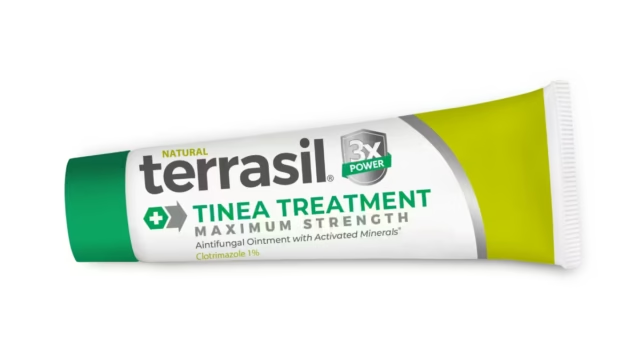
For comprehensive relief across all types of tinea infections, terrasil® Tinea Treatment MAX delivers fast, natural relief with clinically proven antifungal ingredients that tackle itching, burning, and redness while directly addressing the fungal infection. 

If you’re dealing with a specific type of tinea infection, targeted formulas can provide even more focused care: 

For a versatile option that works on any fungal skin infection (and makes an excellent addition to your first aid kit), consider terrasil® Antifungal Treatment MAX. Apply your chosen treatment twice daily to clean, dry skin, and keep it up for 2–4 weeks or as directed by your healthcare provider. 

Here’s where people often go wrong: they stop applying the treatment as soon as the rash looks better. But the fungus can still be present beneath the surface even when symptoms have resolved.³ Keep treating for a few extra days after symptoms clear to make sure you’ve actually eliminated it. 

2. Cleanse With a Specialized Antifungal Soap 

terrasil Tinea Antifungal soap

Regular soap does its job — it cleans. But it doesn’t remove the fungal spores that can cling to your skin and cause reinfection the moment you think you’re in the clear. 

That’s where antifungal cleansing bars come in. The terrasil® Tinea Anti-Fungal Cleansing Bar and terrasil® Antifungal Cleansing Bar are formulated to be tough on fungus while staying gentle on sensitive skin. For those dealing with specific infections, terrasil® also offers targeted cleansing options like the Athlete’s Foot Soap Cleansing Bar, Jock Itch Anti-Fungal Cleansing Soap Bar, and Ringworm Cleansing Bar. Use your chosen bar daily in the shower as part of your treatment routine to help maintain healthy skin balance and reduce the chance of recurrence. 

3. Keep Skin Clean and Dry 

towel drying feet

This sounds simple, but it’s where most people slip up. Fungi absolutely thrive in moisture — which means every sweaty workout or steamy shower is an opportunity for them to multiply.⁴

After bathing or exercise, pat your skin completely dry, paying special attention to the spaces between your toes, under your arms, and in your groin area. And don’t just throw on clean clothes over damp skin — change out of sweaty clothes immediately, even if you’re not showering right away.

4. Guard Your Personal Items 

loading clothes into washer

Remember how hardy these fungi are? They can survive on your towels, sheets, and workout gear, waiting for another chance to reinfect you or spread to someone else.

Wash towels, bedding, and socks in hot water and dry them on the highest heat setting your fabrics can handle.¹ And here’s a rule worth following: don’t share personal items like towels, razors, or clothing until your infection is completely cleared.

5. Prescription or Advanced Care 

Some tinea infections need more aggressive treatment. If the infection involves your scalp or nails, or if over-the-counter treatment hasn’t worked after a solid month of consistent use, see a healthcare provider. They may recommend oral antifungal medications like terbinafine or itraconazole, which work from the inside out.² 

Myths vs Truths About Tinea 

couple sitting in sauna

Myth: Tinea is caused by worms

Truth: It’s a fungal infection caused by dermatophytes — no worms involved whatsoever.

Myth: Only people with poor hygiene get it

Truth: Anyone can catch tinea infections, especially in warm, humid environments. Even the cleanest person can pick it up from a locker room floor.

Myth: It’ll go away on its own

Truth: Without proper antifungal treatment, tinea infections typically spread and worsen over time.

Myth: Natural oils or vinegar can cure it

Truth: Some may temporarily soothe symptoms, but they don’t actually eliminate the fungus.

Prevention Tips: Stop It Before It Starts

mens sandles on wet public bathroom floor

Preventing tinea comes down to making your skin an inhospitable place for fungi to set up camp. Here are some proven strategies:¹ 

  • Shower immediately after exercise and make sure you’re bone-dry before getting dressed 
  • Choose breathable fabrics like cotton over synthetic materials that trap sweat 
  • Never share towels, razors, or shoes — even with family members 
  • Use antifungal powder in your shoes and socks if you’re prone to sweating 
  • Wash bedding and workout gear regularly in hot water 
  • Keep your pets clean and watch for bald patches or scaly skin (signs they might have ringworm) 
  • Wear flip-flops or shower shoes in public showers, locker rooms, and pool areas 

lightbulbPro Tip: Alternate between at least two pairs of shoes daily. Giving shoes 24 hours to dry completely between wears can dramatically reduce your risk of reinfection — fungi can’t survive as easily in dry environments. 
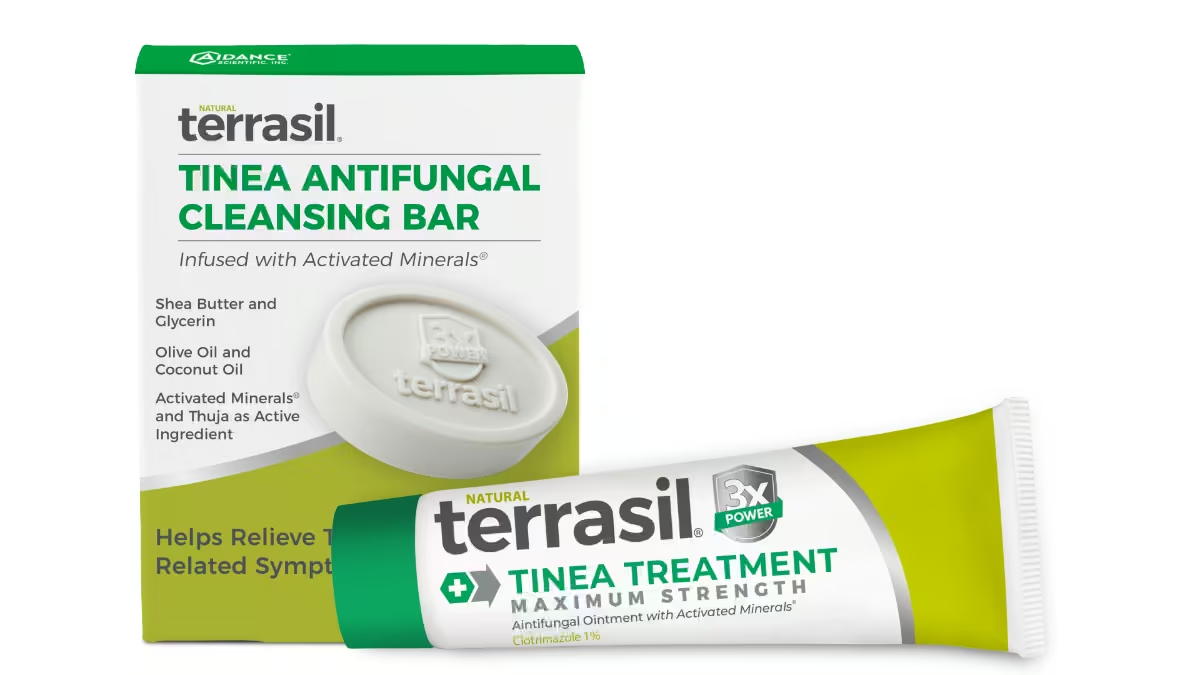
Frequently Asked Questions

The Bottom Line

terrasil tinea ointment and soap

Tinea infections are common, contagious, and genuinely uncomfortable — but they’re also highly treatable when you take the right approach.

A complete care routine starts with choosing the right antifungal treatment. terrasil® Tinea Treatment MAX offers comprehensive relief for all types of tinea infections, while targeted formulas like terrasil® Athlete’s Foot Antifungal Ointment, terrasil® Jock Itch Treatment MAX, and terrasil® Ringworm Treatment MAX Ointment provide focused care for specific problem areas. Pair your ointment with daily cleansing using one of terrasil’s antifungal soap bars to remove spores and support healthy skin.

The secret to success? Consistency. Clean your skin, apply your treatment, repeat daily — and protect yourself from the inside out. Think of it as creating an environment where fungi simply can’t thrive.

References

  1. Centers for Disease Control and Prevention (CDC). “Fungal Diseases: Ringworm.” Available at: https://www.cdc.gov/fungal/diseases/ringworm 
  2. American Academy of Dermatology (AAD). “Ringworm: Signs and Symptoms.” Available at: https://www.aad.org/public/diseases/a-z/ringworm-symptoms 
  3. Mayo Clinic. “Ringworm (Body): Diagnosis and Treatment.” Available at: https://www.mayoclinic.org/diseases-conditions/ringworm-body/diagnosis-treatment/drc-20353784 
  4. Cleveland Clinic. “Tinea Infections (Ringworm).” Available at: https://my.clevelandclinic.org/health/diseases/4485-tinea-infections 

Disclaimer

This content is for educational purposes only and is not a substitute for professional medical advice. Over-the-counter antifungal products containing clotrimazole 1% are FDA-recognized for the treatment of ringworm (tinea corporis), athlete’s foot (tinea pedis), and jock itch (tinea cruris).

How to Get Rid of Ringworm Fast: A Complete, Evidence-Backed Guide 

terrasil silver accent terrasil silver accent
woman with rash on neck

If you’re dealing with a red, itchy rash that looks like a spreading circle, you might be wondering: “How do I get rid of ringworm fast?” 

Ringworm (tinea corporis) is a common fungal infection that can spread quickly, but with the right antifungal care, most cases improve within just a couple of weeks. In this guide, you’ll learn what ringworm looks like, how antifungal treatments work, and the steps you can take to clear it up as quickly as possible. 

What Is Ringworm? (aka Tinea corporis) 

doctor visit arm trouble

Ringworm, or tinea corporis, is a superficial fungal infection caused by dermatophyte species (e.g. Trichophyton, Microsporum, Epidermophyton). It feeds on keratin in the skin, hair, or nails.
Contrary to the name, ringworm is not caused by a worm. It thrives in warm, moist environments — think sweaty clothes, damp gyms, humid weather, or pet fur.

Picture it like this: fungi are opportunists. They thrive in warm, damp environments — sweaty gym clothes, steamy locker rooms, even your pet’s fur. Once they find a way onto your skin, they settle in and form those classic ring-shaped rashes. 

Symptoms & Signs: How to Spot Ringworm

Not every itchy rash is ringworm, but the signs are pretty distinct: 

  • Circular or ring-shaped red patches with scaly, raised edges
  • Clearer or less inflamed center (gives “ring” appearance)
  • Intense itching, burning, or irritation
  • Possible spread outward if untreated
  • Multiple lesions or satellite spots adjacent to the main patch

finger pointing rightPro Tip: If a pet is scratching, grooming excessively, or shows patchy hair loss, ringworm may be involved — humans and pets can pass the fungus back and forth.

Why Fast Treatment Matters

woman folding laundry

Delaying treatment risks:

  • Infecting others (household, roommates, gym buddies)
  • Spreading the fungus to more body areas
  • Developing secondary bacterial infections from scratching
  • Treatment is taking longer or is less effective

Treating early shortens duration, reduces discomfort, and prevents frustrating recurrences.

Step-by-Step Treatment Plan

Strategy = kill the fungus + reduce conditions that let it thrive.

Step #1: Cleanse with Antifungal Soap 

cleanse with antifungal soap

Standard soap removes oils and dirt, but an antifungal soap helps break down lingering spores.
Use daily in affected and surrounding areas. After use, thoroughly rinse and pat dry.
(Example: terrasil® Ringworm Cleansing Bar contains dual-action support, though you may use any clinically proven antifungal cleansing bar.)

Step #2: Use a Clinically Proven Antifungal Cream

terrasil ringworm treatment MAX with clotrimazole

The standard first-line treatment is a topical antifungal containing clotrimazole 1% (or alternatives like terbinafine, miconazole).

  • Apply twice daily (morning & night)
  • Continue for 2 to 4 weeks, even if rash looks resolved earlier
  • Extend treatment 1 cm beyond visible rash border (fungus often extends beyond what’s obvious)
  • Resist stopping early — recurrence often follows premature discontinuation

lightbulb ideaIf symptoms worsen or fail to improve after 4 weeks, escalation is needed.

Step #3: Keep Skin Dry & Change Habits 

clean dry feet
  • After bathing or sweating, pat skin dry (don’t rub)
  • Change out of damp or sweaty clothes quickly
  • Use moisture-wicking fabrics (cotton, breathable synthetics)
  • Avoid tight clothing that traps heat

Step #4: Sanitize Clothes, Linens & Surfaces

pillow in washing machine
  • Wash bedding, towels, clothes in hot water (≥ 60°C / 140°F)
  • Dry on high heat cycles
  • Disinfect surfaces, gym mats, bathroom floors
  • Don’t share personal items (towels, clothing, gloves) until fully cleared

Myths vs Truths About Ringworm 

Ringworm has been around for centuries, and with it comes a fair share of myths. Let’s set the record straight: 

Myth: Ringworm is caused by worms

Truth: No — it’s fungal in nature (dermatophytes)

Myth: Poor hygiene is the only cause

Truth: Anyone can get ringworm — shared surfaces, pets, gyms are typical sources

Myth: It will always go away on its own

Truth: Sometimes mild cases regress, but many linger or spread without treatment

Myth: Natural home remedies cure it

Truth: Some may soothe, but none reliably cure — use them only as adjuncts

Myth: You can “burn out” ringworm with bleach or harsh chemicals

Truth: That’s dangerous and ineffective. Stick with clinically tested antifungals designed for skin use

OTC vs. Prescription vs. Home Remedies

Here’s how the main options stack up:

Approach
What It Does
When to Use
Downsides
OTC Antifungal Cream
(Clotrimazole 1%)
Kills the fungus, relieves itch and redness
Mild to moderate ringworm on body
Requires consistent 2 – 4 week use
Prescription Oral Antifungals
Strong, systemic effect
Scalp/nail infections, widespread rashes
Potential side effects, doctor visit needed
Home Remedies (tea tree, vinegar, garlic, etc.)
May soothe some symptoms
Supportive only, not curative
Not clinically proven to kill fungus

finger pointing rightThe takeaway: OTC antifungals are effective for most cases. Prescriptions are only needed if the infection is stubborn or in hard-to-reach areas like the scalp or nails.

Prevention: Protecting Yourself & Others

Men's legs in locker room with sandals

Even after clearing, prevention is key.

Hygiene Practices

  • Shower after workouts or outdoor activity, then dry thoroughly. Using an antifungal soap like the terrasil® Ringworm Cleansing Bar can help keep skin clear of spores that linger after sweating
  • Use a separate towel for infected area — wash after each use
  • Trim and clean nails (fungus hides under nails)

Clothing & Fabrics

  • Wear breathable fabrics
  • Change socks, underwear daily
  • Avoid sharing clothes until cleared

At the Gym 

  • Wear flip-flops in showers/locker rooms
  • Wipe down equipment before/after use
  • Don’t share yoga mats, gloves, helmets, towels

At Home 

  • Wash bedding and clothes in hot water and dry on high heat
  • Disinfect shared surfaces (couches, gym equipment, bathroom mats)
  • Vacuum carpets and upholstery if pets are involved

Pet Care 

  • Monitor for patchy hair loss, excessive scratching
  • Wear gloves when handling suspicious areas
  • Treat pets and humans simultaneously if both are infected
  • Vacuum and clean pet beds, carpets, and furniture

When to See a Doctor 

video call with doctor

Seek medical help if:

  • The rash doesn’t improve after 4 weeks of consistent OTC use
  • Scalp, nails, groin, or face are affected
  • The infection spreads rapidly or is painful
  • You develop pus, fever, or worsening symptoms
  • You have a weakened immune system

A physician may prescribe stronger topical agents, systemic antifungals, or lab testing.

FAQs

Summary & Next Steps

terrasil ringworm antifungal treatment
  • Use a two-pronged approach: cleanse + treat
  • Chew through full 2–4 week antifungal therapy
  • Keep things dry, hygienic, and sanitized
  • Prevent re-exposure (especially from pets or shared spaces)
  • If no improvement by week 4 or if complex areas involved → see a doctor

By following these steps, many people successfully clear ringworm faster, prevent spread, and reduce recurrence risk.

References & Further Reading

  1. Centers for Disease Control and Prevention. “Fungal Diseases: Ringworm.” cdc.gov 
  2. Mayo Clinic. “Ringworm (Body): Symptoms and Causes.” mayoclinic.org 
  3. American Academy of Dermatology. “Ringworm: Diagnosis and treatment.” aad.org 
  4. National Library of Medicine. “Clotrimazole Topical.” nih.gov

Disclaimer

This content is for educational purposes only and is not a substitute for professional medical advice. Over-the-counter antifungal products containing clotrimazole 1% are FDA-recognized for the treatment of ringworm (tinea corporis), athlete’s foot (tinea pedis), and jock itch (tinea cruris).

How to Tell if I Have Eczema or Ringworm? A Helpful Identification Guide 

terrasil silver accent terrasil silver accent
Woman examining arm

Dealing with an itchy, red, scaly rash can be incredibly frustrating, especially when you’re unsure what’s causing it. Two of the most commonly confused skin conditions are eczema and ringworm – and while they may look similar at first glance, they’re completely different conditions that require different approaches. 

Getting the right identification is crucial because using the wrong treatment can actually make your symptoms worse or delay healing. This comprehensive guide will help you understand the key differences between eczema and ringworm, recognize important warning signs, and know when it’s time to consult a healthcare professional. 

Important Note: This information is for educational purposes only and should not replace professional medical advice. Always consult with a healthcare provider or dermatologist for proper diagnosis and treatment recommendations. 

Understanding the Basics: What Are Eczema and Ringworm? 

Eczema (Atopic Dermatitis) 

Eczema is a chronic inflammatory skin condition that affects millions of people worldwide. According to the National Eczema Association, it’s a non-contagious condition often linked to genetics and immune system function. People with eczema typically have sensitive skin that reacts to various triggers in their environment. 

Ringworm (Tinea)

Despite its name, ringworm isn’t caused by worms at all. It’s actually a fungal infection caused by dermatophytes – microscopic fungi that feed on keratin found in skin, hair, and nails. The Centers for Disease Control and Prevention (CDC) notes that ringworm is highly contagious and can spread through direct contact with infected people, animals, or contaminated surfaces. 

Key Differences: How to Tell Them Apart 

Ringworm vs Eczema example

Visual Appearance and Shape 

Ringworm Characteristics: 

  • Distinctive circular or oval patches with well-defined borders 
  • Raised, scaly edges that are often red or darker than surrounding skin 
  • Clear or less affected skin in the center, creating the characteristic “ring” appearance 
  • Individual patches that may grow larger over time 
  • Often asymmetrical distribution on the body 

Eczema Characteristics: 

  • Irregular, poorly defined borders 
  • Patches can be various shapes and sizes 
  • Uniform redness and inflammation throughout the affected area 
  • May appear thickened or leathery from chronic scratching 
  • Often symmetrical, appearing on both sides of the body  

Common Locations

Where Ringworm Typically Appears: 

  • Can occur anywhere on the body 
  • Common sites include arms, legs, torso, and face 
  • May appear as isolated patches 
  • Can affect the scalp (tinea capitis) or feet (athlete’s foot)  

Where Eczema Commonly Develops:

  • Flexural areas (elbow creases, behind knees) 
  • Neck, wrists, and ankles 
  • Face and eyelids (especially in children) 
  • Hands and fingers 
  • Typically appears in predictable patterns   

Symptoms and Sensations

Ringworm Symptoms: 

  • Itching (ranging from mild to intense) 
  • Red, scaly patches with raised borders 
  • Hair loss if affecting the scalp 
  • Brittle or discolored nails if affecting nail beds 
  • Burning sensation in some cases   

Eczema Symptoms:

  • Intense itching, especially at night 
  • Dry, sensitive skin 
  • Red or brownish-gray patches 
  • Small, raised bumps that may leak fluid when scratched 
  • Raw, sensitive, swollen skin from scratching   

The Science Behind Each Condition

What Causes Ringworm?

Ringworm is caused by dermatophyte fungi that thrive in warm, moist environments. These fungi can survive on surfaces for extended periods, making transmission relatively easy. Risk factors include: 

  • Close contact with infected individuals or animals (especially house pets) 
  • Sharing personal items like towels, clothing, or sports equipment 
  • Walking barefoot in public areas (pools, locker rooms, showers) 
  • Having a compromised immune system 
  • Living in hot, humid climates 

What Triggers Eczema?

dna trigger

Eczema is a complex condition involving genetic predisposition and environmental factors. The National Institute of Arthritis and Musculoskeletal and Skin Diseases identifies several common triggers:

  • Allergens (dust mites, pet dander, pollen) 
  • Irritants (harsh soaps, detergents, fragrances) 
  • Stress and emotional factors 
  • Weather changes (especially dry, cold conditions) 
  • Hormonal fluctuations 
  • Certain foods (in some individuals)  

When to Seek Professional Medical Care

While some mild skin conditions can be managed at home, certain situations require professional medical evaluation: 

See a Healthcare Provider If You Experience:

  • Symptoms that worsen despite home care 
  • Signs of bacterial infection (pus, increasing redness, red streaking) 
  • Fever accompanying skin symptoms 
  • Widespread rash covering large areas of the body 
  • Symptoms affecting the scalp or nails 
  • Uncertainty about the diagnosis 
  • Symptoms that significantly impact daily activities or sleep   

Emergency Care May Be Needed If:

  • You develop signs of severe allergic reaction 
  • The affected area becomes extremely painful 
  • You experience fever with rapidly spreading rash   

Treatment Approaches: Understanding Your Options 

Disclaimer: The following information is educational only. Always consult healthcare professionals before starting any treatment. 

Curability 

Depending on what you may be experiencing, you might be asking yourself, “Is this curable?”

  • Ringworm: It responds to and can be cured by antifungal treatments. 
  • Eczema: It’s a chronic condition that can’t be cured, but symptoms can be managed with topical treatments to control flare-ups. Some might even say that certain diets or dietary restrictions can also help, but that would require your own personal journey to discover if that is the case. 

Ringworm Management 

applying terrasil ringworm treatment

Since ringworm is a fungal infection, it typically requires antifungal treatment. The American Academy of Dermatology notes that proper treatment can effectively eliminate the infection:

  • Topical antifungals: Often the first line of treatment for body ringworm 
  • Oral medications: May be necessary for scalp or nail infections 
  • Proper hygiene: Essential for preventing spread and reinfection 

For those managing ringworm, some people turn to over-the-counter antifungal ointments. terrasil® Ringworm Treatment MAX, which contains an FDA-recognized antifungal, 1% clotrimazole, and is formulated to relieve itching, burning, and redness associated with ringworm while supporting skin repair with its patented Activated Minerals® blend.‡ Consistent use, paired with good hygiene habits, is important for results. 

Eczema Management 

terrasil soap

Eczema is a chronic condition that requires ongoing management rather than a cure:

  • Moisturizing: Daily application of fragrance-free moisturizers 
  • Trigger avoidance: Identifying and avoiding personal triggers 
  • Topical treatments: As recommended by healthcare providers.  
  • Lifestyle modifications: Stress management, appropriate clothing choices 

When flare-ups strike, many people look for steroid-free ways to calm irritation. terrasil® Eczema & Psoriasis Severe Outbreak Ointment is designed to soothe itching, redness, and discomfort with natural botanicals like Comfrey and Thuja, along with Activated Minerals®.‡ Used with the terrasil® Eczema Cleansing Soap Bar, which gently cleanses with calendula, coconut oil, and shea butter, this routine can help support skin comfort and barrier health.

Prevention Strategies: Stopping Problems Before They Start 

Preventing Ringworm: Your Defense Game Plan 

woman meditating

Keep skin clean and dry – this is your first line of defense against fungal infections. Fungi absolutely love warm, moist environments, so after workouts, swimming, or any activity that makes you sweat, shower as soon as possible and dry off thoroughly². Pay special attention to areas where skin touches skin, like between your toes, under your arms, and in the groin area. If you can’t shower immediately, at least change out of sweaty clothes and use antifungal powder in problem areas. 

Avoid sharing personal items because ringworm spreads incredibly easily through contaminated objects. This means keeping your towels, razors, hairbrushes, hats, and clothing to yourself². Even seemingly innocent items like yoga mats, sports equipment, or hotel bedding can harbor fungal spores. If you must share equipment (like at a gym), wipe it down before and after use with antifungal disinfectant. 

Wear protective footwear in public areas because walking barefoot in locker rooms, pool decks, communal showers, and hotel rooms is basically like rolling out the welcome mat for fungi². Flip-flops or shower shoes aren’t just about avoiding gross stuff – they’re your barrier against picking up fungal infections. Even in seemingly clean areas, fungi can survive on surfaces for months. 

Regular handwashing is crucial, especially after touching animals, using gym equipment, or being in public spaces. Fungi can live under your fingernails and spread to other parts of your body when you scratch or touch your skin². Use soap and warm water, and don’t forget to clean under your nails. 

Keep pets healthy and get them checked regularly for signs of ringworm, especially if they go outdoors or interact with other animals². Cats are notorious carriers and might not show obvious symptoms while still being contagious. If your pet has patchy hair loss, scaly skin, or circular lesions, get them to a vet promptly to prevent transmission to your family. 

Managing Eczema Flare-ups: Your Long-term Strategy 

breathing deeply

Maintain a consistent skincare routine because eczema-prone skin needs constant TLC, not just attention during flare-ups. This means moisturizing at least twice daily with thick, fragrance-free products, using gentle cleansers that don’t strip your skin’s natural oils, and being consistent even when your skin looks good⁴. This is the perfect time to apply terrasil® Eczema & Psoriasis Severe Outbreak Ointment, for example. Unlike standard lotions, its ointment formula delivers a longer-lasting protective barrier to help lock in moisture and soothe your skin throughout the day. 

Keep skin moisturized year-round, but pay extra attention during winter months when indoor heating and cold outdoor air can wreak havoc on sensitive skin⁵. Use a humidifier in your bedroom, avoid hot showers (lukewarm is better), and apply our terrasil® Eczema & Psoriasis Severe Outbreak Ointment or other moisturizer while your skin is still damp from bathing to lock in hydration. 

Use gentle, fragrance-free products throughout your home, not just in your skincare routine. This includes laundry detergents, fabric softeners, household cleaners, and even the soap other family members use⁵. Fragrances and harsh chemicals can trigger flare-ups even through indirect contact, like sleeping on sheets washed with scented detergent or hugging someone wearing strong perfume. 

Identify and avoid personal triggers by keeping a detailed eczema diary. Note what you ate, what products you used, your stress levels, the weather, and how your skin responded⁵. Patterns might not be obvious at first, but over time you’ll start to see connections. Some people find that certain foods trigger flares, while others are more sensitive to environmental factors like pollen or dust mites. 

Manage stress levels because the connection between stress and eczema is real and powerful. Chronic stress can weaken your immune system and increase inflammation throughout your body, making flare-ups more likely and more severe⁵. This might mean regular exercise, meditation, therapy, or whatever stress-reduction techniques work for you. It’s not just about feeling better mentally – it’s about keeping your skin healthy too. 

Red Flags: When Home Diagnosis Isn’t Enough

Self-diagnosis can sometimes lead to inappropriate treatment, which may worsen symptoms or delay proper healing. Professional evaluation is particularly important when: 

  • Symptoms don’t improve with appropriate care 
  • The rash spreads rapidly 
  • Multiple family members develop similar symptoms 
  • You have underlying health conditions that affect immune function 

The Importance of Accurate Diagnosis 

Misidentifying your skin condition can have significant consequences. Using the wrong type of treatment – such as applying steroid creams to a fungal infection – can actually make the condition worse and harder to treat later. 

Healthcare providers have access to diagnostic tools and expertise that can provide definitive answers, including: 

  • Clinical examination techniques 
  • Laboratory tests (such as KOH preparation for fungal detection) 
  • Patch testing for allergen identification 
  • Dermoscopy for detailed skin examination 

Frequently Asked Questions

The Bottom Line: When in Doubt, See a Professional 

While understanding the differences between eczema and ringworm is valuable for educational purposes, professional medical evaluation should be your first step when dealing with any persistent or concerning skin condition. 

The Reality Check: 

  • Dermatologists spend years training to diagnose skin conditions accurately 
  • Even they sometimes need diagnostic tests to be certain 
  • Self-diagnosis based on internet research, while tempting, often leads to treatment delays and complications 
  • The cost of a medical visit is typically far less than weeks of wrong treatments and potential complications 

What to Expect at Your Visit: Your healthcare provider will likely: 

  • Take a detailed history of your symptoms and potential exposures 
  • Perform a thorough examination of the affected areas 
  • Potentially conduct simple in-office tests for immediate results 
  • Provide you with a clear diagnosis and treatment plan 
  • Give you specific instructions for prevention and follow-up care  

Remember: Both eczema and ringworm are completely treatable conditions. Getting the right diagnosis from the start puts you on the fastest path to relief and prevents potential complications or spread to others. 

Sources and References 

  1. National Eczema Association. “What is Eczema?” Available at: nationaleczema.org 
  2. Centers for Disease Control and Prevention. “Fungal Diseases: Ringworm.” Available at: cdc.gov/fungal/diseases/ringworm 
  3. American Academy of Dermatology. “Ringworm: Overview.” Available at: aad.org 
  4. National Institute of Arthritis and Musculoskeletal and Skin Diseases. “Atopic Dermatitis (Eczema).” Available at: niams.nih.gov 
  5. National Institute of Arthritis and Musculoskeletal and Skin Diseases. “Atopic Dermatitis: Causes and Risk Factors.” Available at: niams.nih.gov 
  6. Mayo Clinic. “Ringworm (body): Symptoms and Causes.” Available at: mayoclinic.org 
  7. American Academy of Dermatology. “Eczema: Diagnosis and Treatment.” Available at: aad.org 
  8. Cleveland Clinic. “Dermatophyte Infections.” Available at: clevelandclinic.org 

Medical Review: This content has been developed for educational purposes and should be reviewed by qualified healthcare professionals. Individual medical situations may vary.