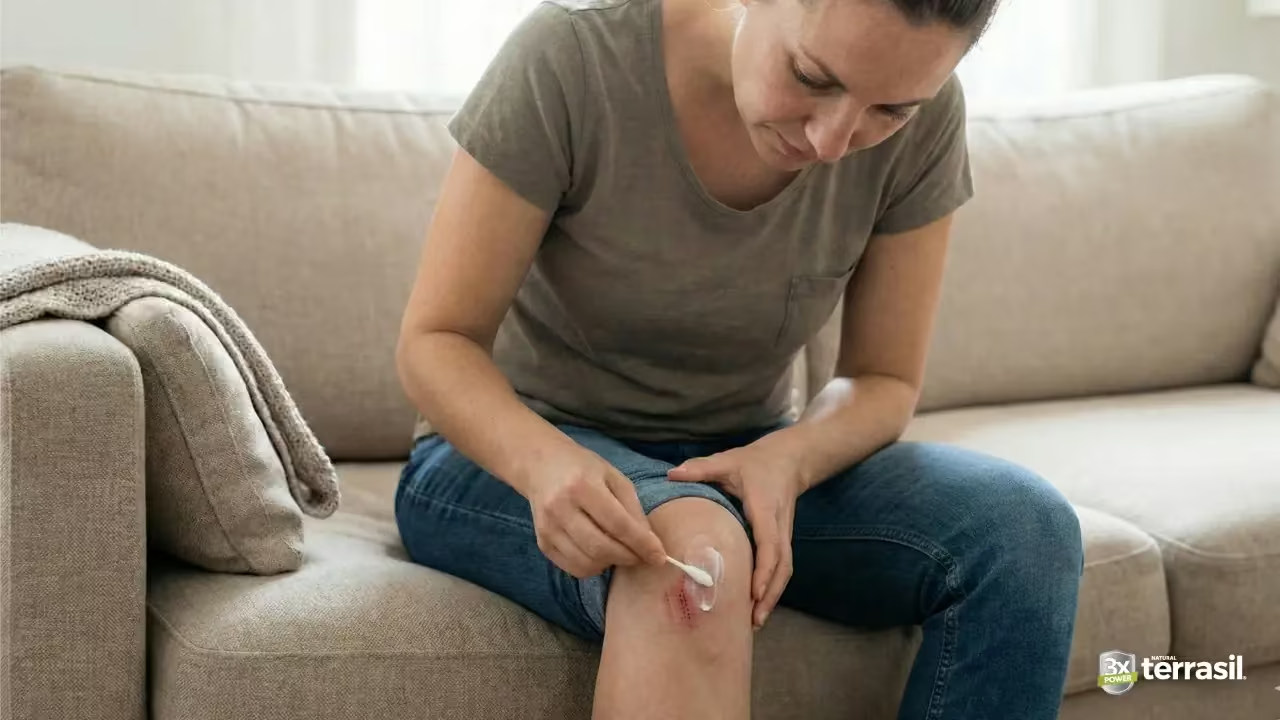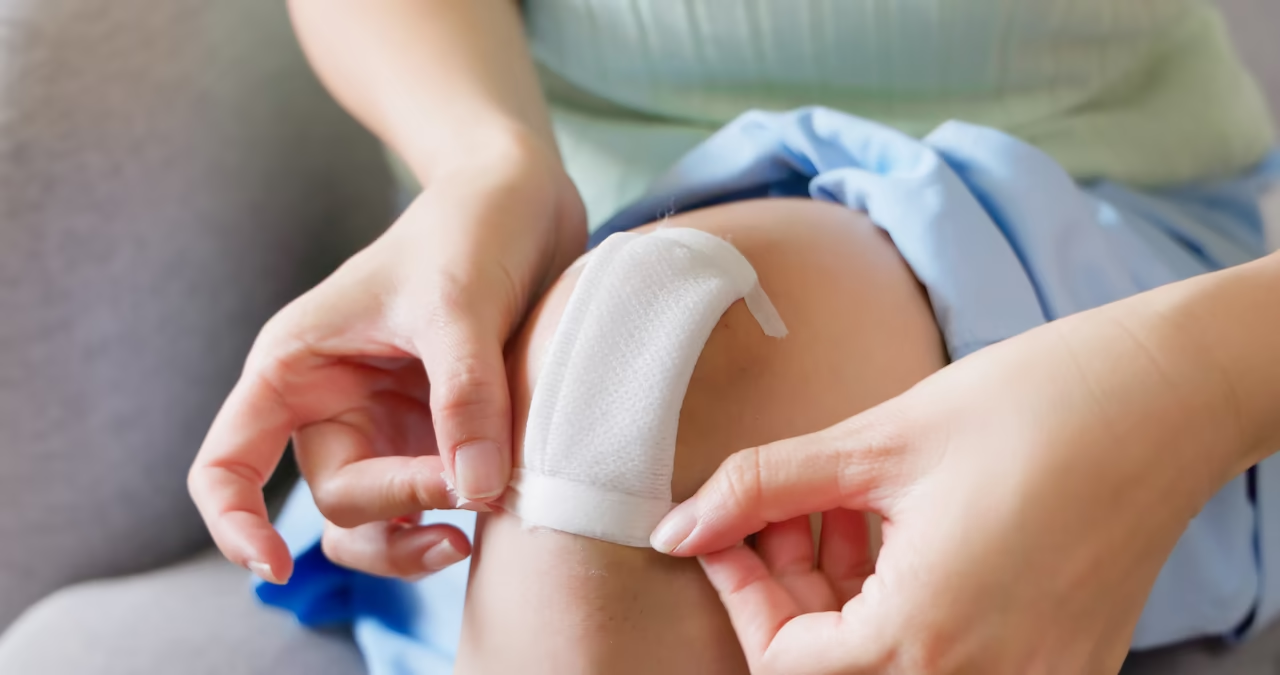



You got hurt. Or someone you love did. Maybe it just happened — a slip of the knife, a stumble on the pavement, a burn from something hot in the kitchen. Maybe it’s been a few days and the wound is looking angrier than it should, weeping when it should be closing, or just not healing the way you expected. Maybe it’s a sore that keeps coming back in the same spot, or a pressure wound from lying in bed in one position too long that’s getting worse instead of better.
Whatever brought you here, you want the same thing: to treat it right, stop it from getting infected, help it heal as quickly and cleanly as possible, and perhaps even walk away without a scar. Depending on the wound, it may be something that can be supported at home — with the right approach and the right products. Whatever the case may be, we hope that you, or your loved one, gets well soon.
What this guide covers
- How to clean a wound and keep it protected
- What to put on it — and what to keep away from it
- Whether to cover it or leave it to breathe
- How the healing process works, in plain language
- Wounds from metal or rusty objects — what to know
- How to lower the risk of infection and scarring
- Natural wound care products formulated to help
If you have any concerns about a wound, always check in with a healthcare provider — they’re the best person to ask.
How Do You Treat a Wound at Home?
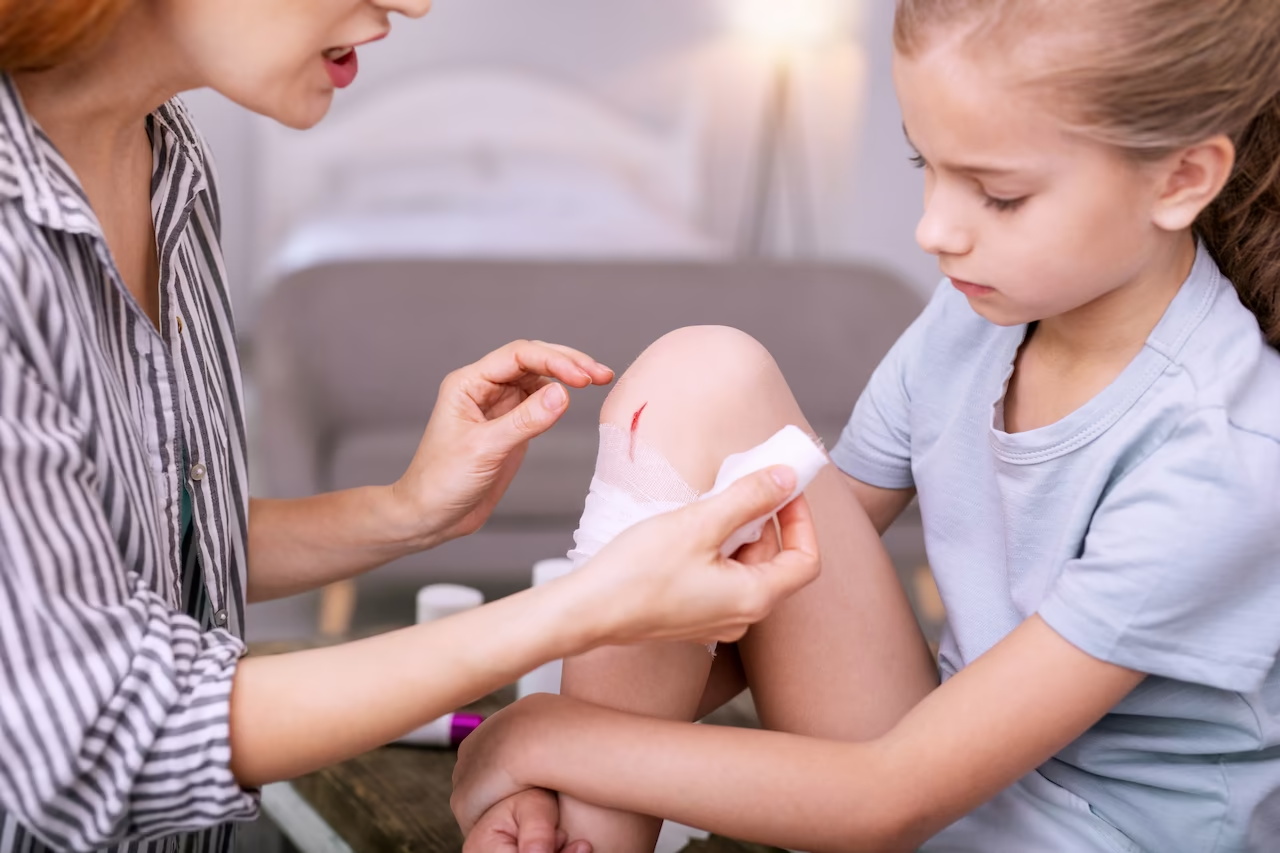
To treat a wound at home, stop any bleeding, gently clean the area with water, apply a protective wound care ointment, and cover it with a clean bandage. Keep the wound clean, monitor for signs of infection, and change dressings regularly until healing occurs.
How a wound heals — in plain and simple terms
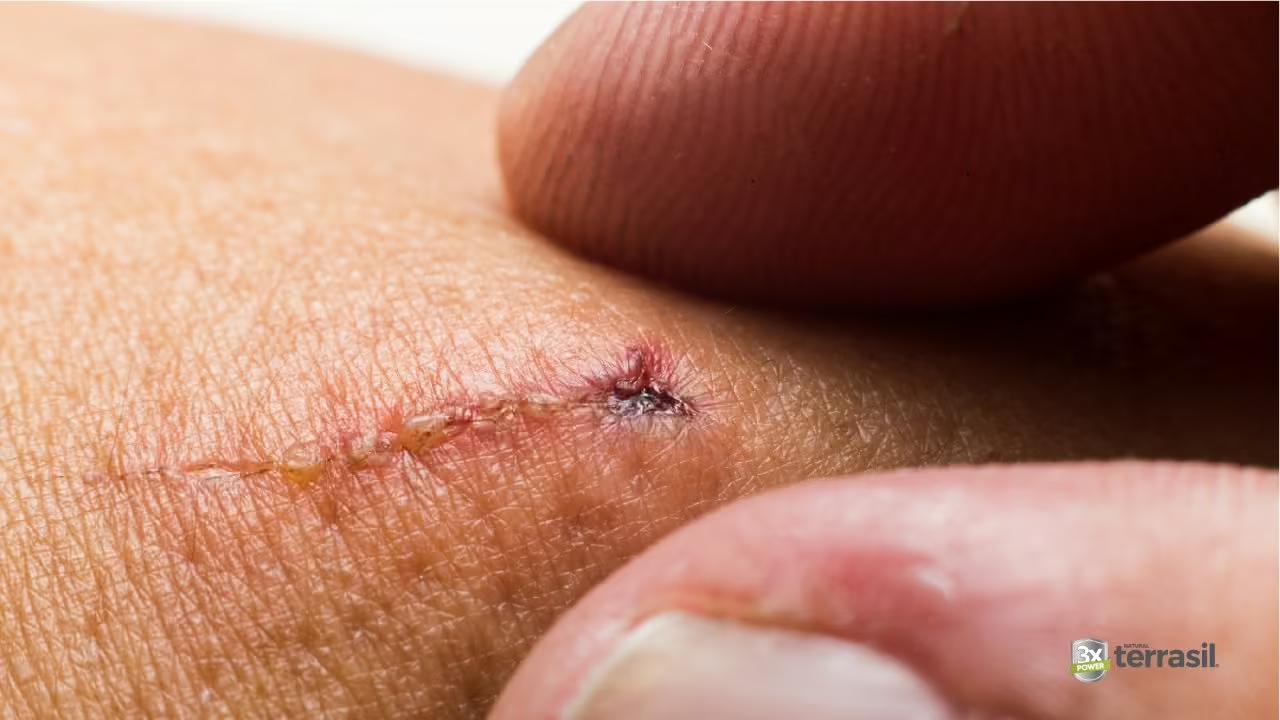
Here’s something reassuring: the moment your skin gets hurt, your body immediately starts working to fix it.1 You don’t have to do anything for that to begin. But understanding what’s happening under the surface can help you make choices that support the process instead of getting in its way.
Step 1: The bleeding slows down
Right away, your body sends signals to slow the bleeding. Tiny cells rush to the wound and start forming a clot — like a natural plug. This usually happens within a few minutes for a minor wound. Try not to keep poking or wiping at it during this time, or you’ll keep restarting the process.
Step 2: Your body cleans house (days 1–5)
Over the first few days, your immune system sends defenders to the wound site to fight off any bacteria and clear away damaged tissue. This is why some redness, warmth, and mild puffiness in the first couple of days is completely normal — it means your body is doing its job. If those signs are getting worse instead of better after a few days, that’s worth paying attention to.
Step 3: New tissue starts growing (days 4 through week 3)
This is where the real rebuilding happens. Your body starts laying down fresh tissue, forming new tiny blood vessels, and the edges of the wound start moving toward each other. You might see some pink or red tissue inside — that’s healthy new growth. Keeping the wound moist and covered during this stage helps it close more fully and with less scarring.
Step 4: New skin covers the surface
New skin cells start sliding across the wound to close it up from the outside. This is the part where staying moist really matters — if the wound dries out and forms a hard scab, those new skin cells have a much harder time crossing the surface. A moist wound heals faster and more smoothly.
Step 5: The skin strengthens over time (weeks to months)
Once the wound looks closed, healing is still quietly happening underneath. The skin is getting stronger and the scar is fading. This can take weeks or even months for deeper wounds. Keeping healed skin out of direct sun during this time helps reduce long-term marks.
How to Treat a Wound at Home Step by Step
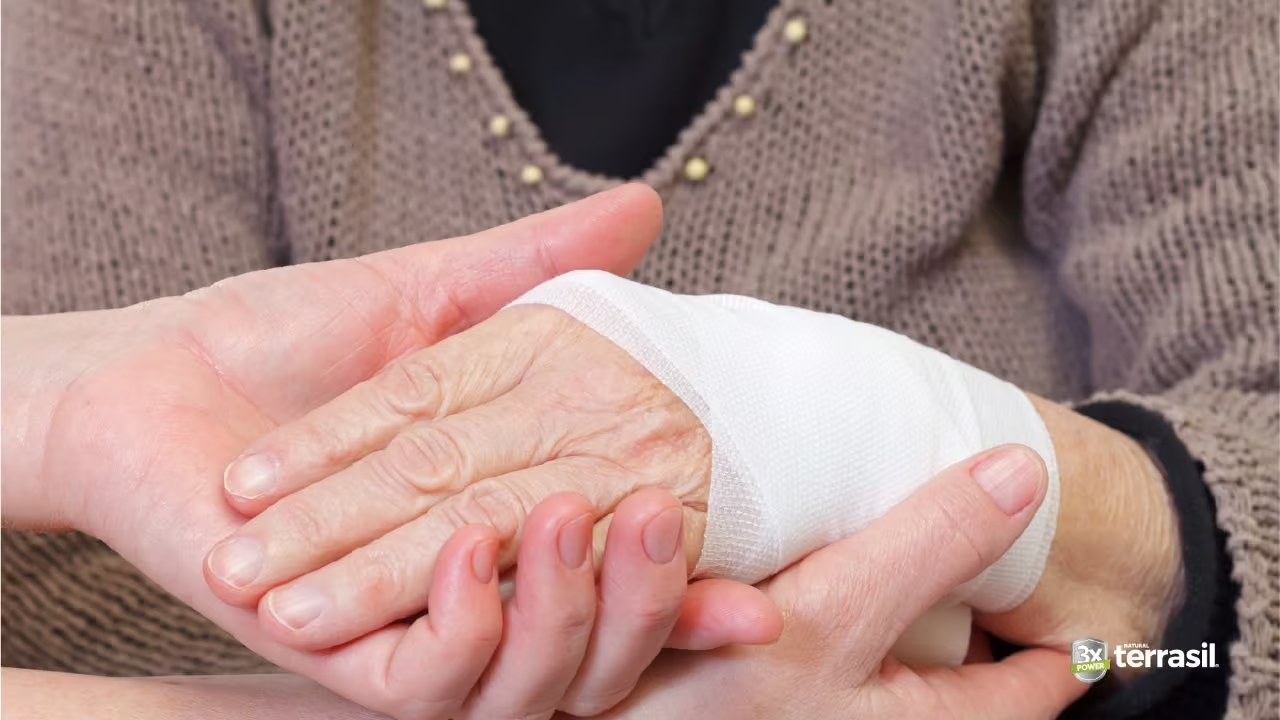
If you only remember one thing from this whole guide, make it this: wounds heal better when they’re kept clean, moist, and covered.
A lot of people grew up thinking wounds need to “breathe” and dry out. That turns out not to be true.2 A hard, dry scab actually slows healing. A wound that stays moist under a clean bandage heals faster, hurts less, and is far less likely to leave a scar. Think of the bandage as giving your skin a safe, cozy place to do its work.
How to take care of a minor wound, step by step
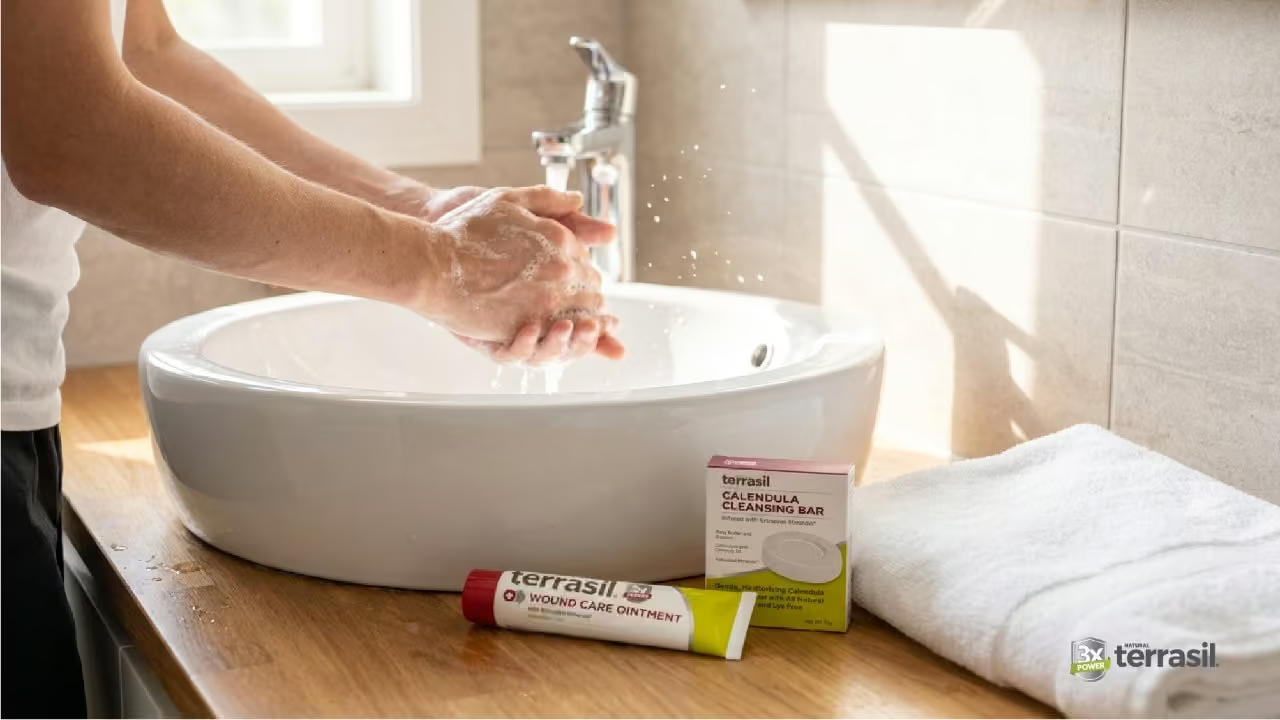
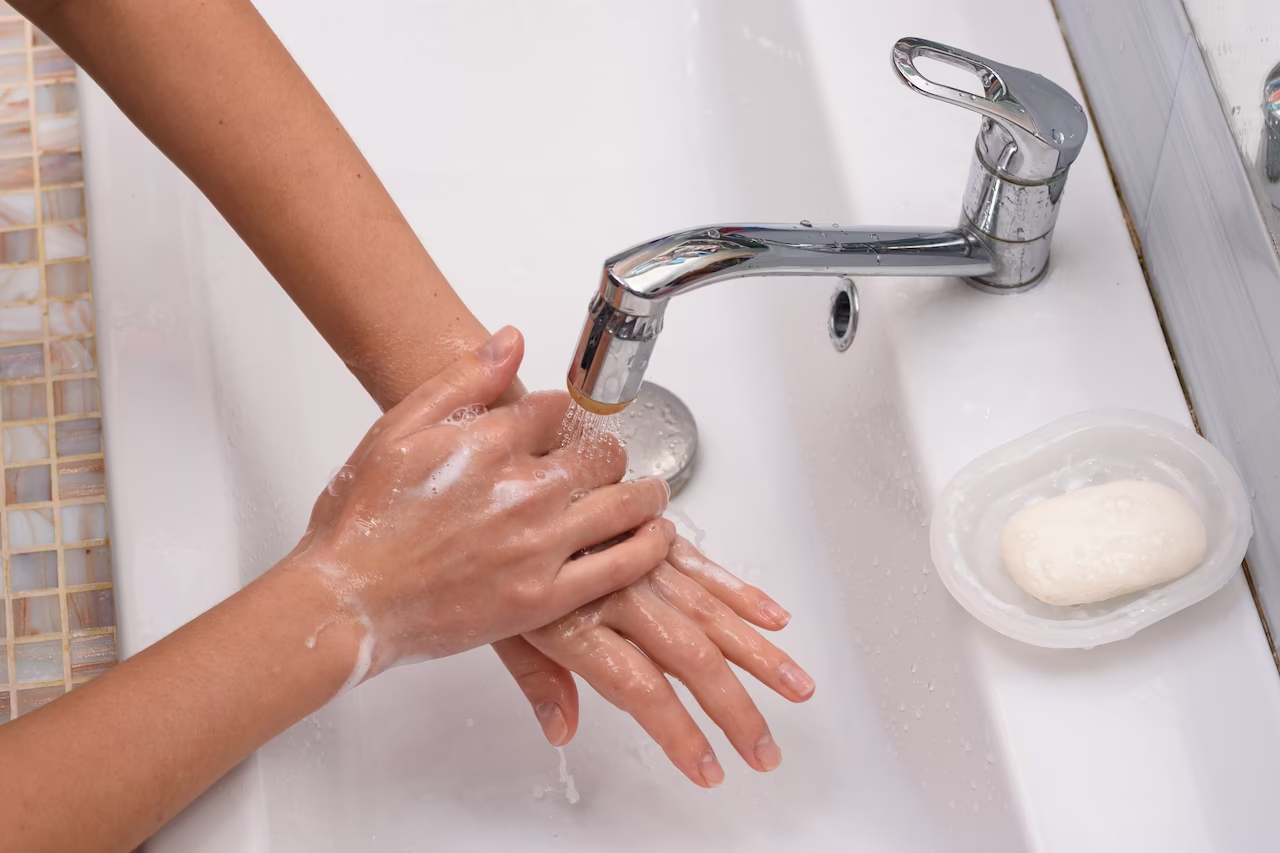
Step 1 — Wash your hands first
Before you touch anyone’s wound — including your own — wash your hands with soap and water for about 20 seconds. It’s the simplest thing you can do to protect the wound from picking up extra bacteria.
Step 2 — Rinse the wound gently
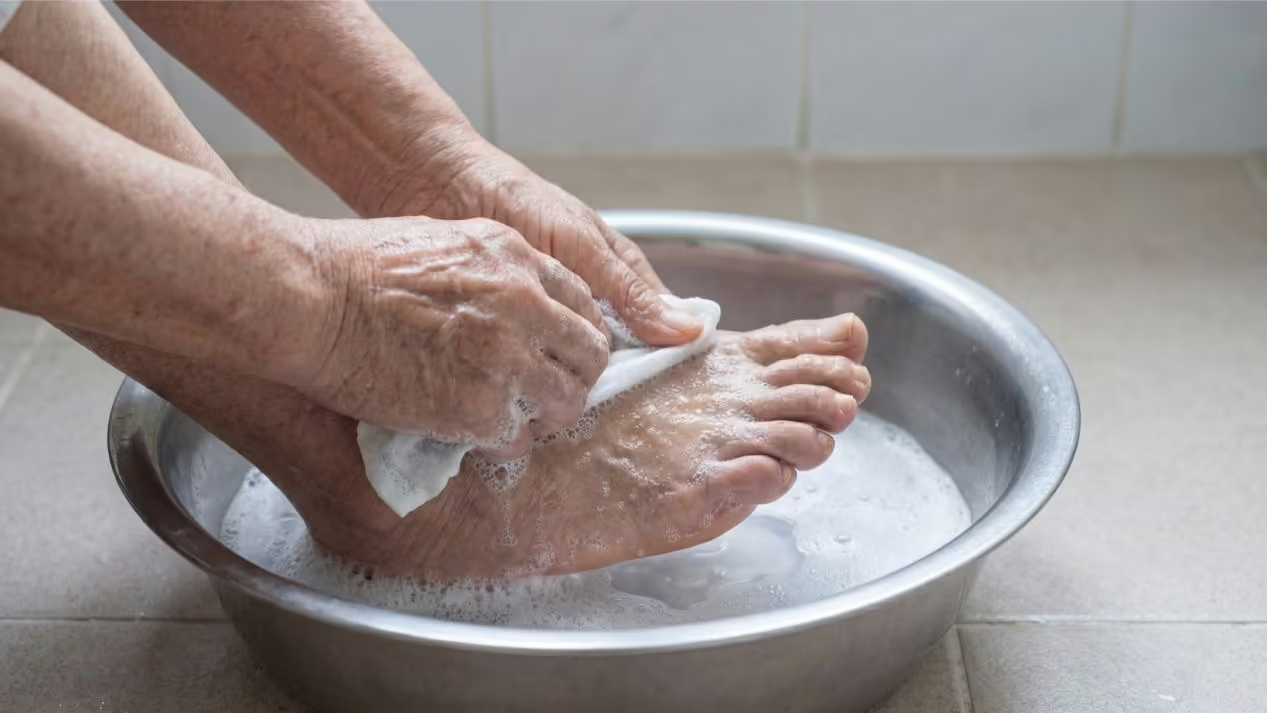
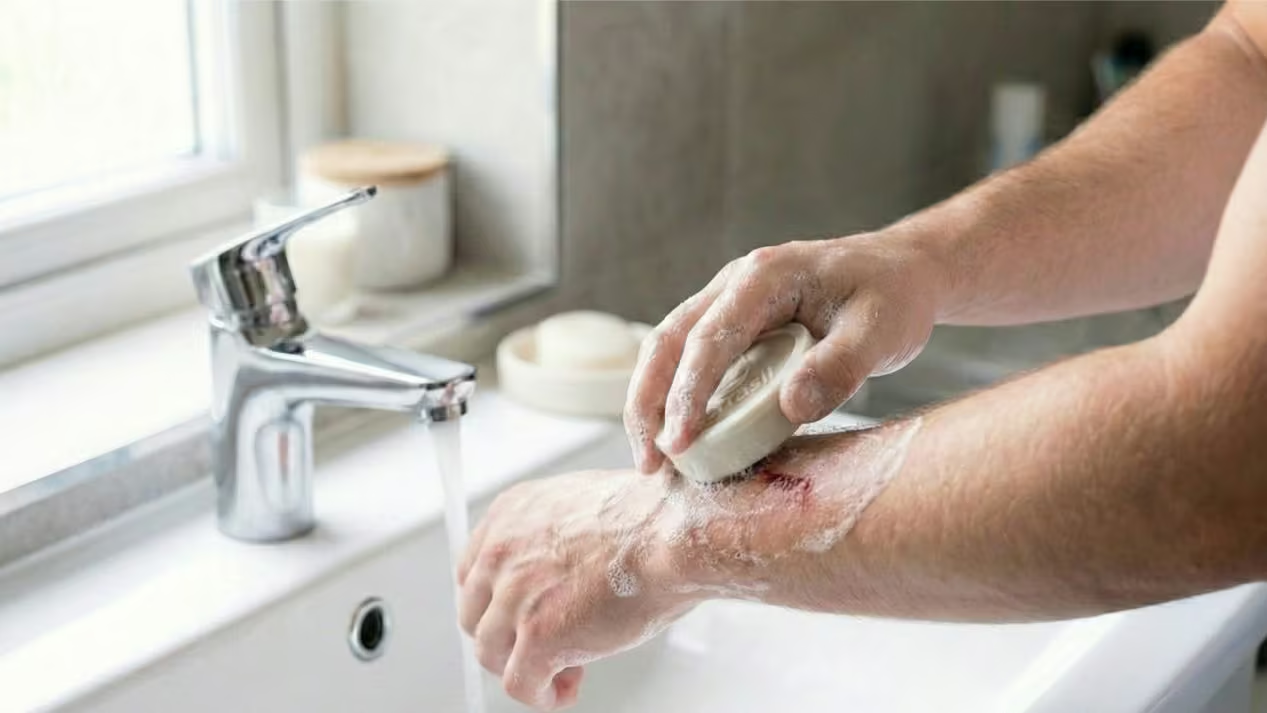
Hold the wound under cool running water for a minute or two to wash away dirt and debris. You can gently clean the skin around it with a mild soap, but try to keep soap out of the wound itself.
A quick note on things to avoid: hydrogen peroxide, iodine, and rubbing alcohol are common medicine cabinet staples, but most wound care experts now recommend keeping them out of wounds. They’re harsh enough to damage the very tissue your skin needs to heal.
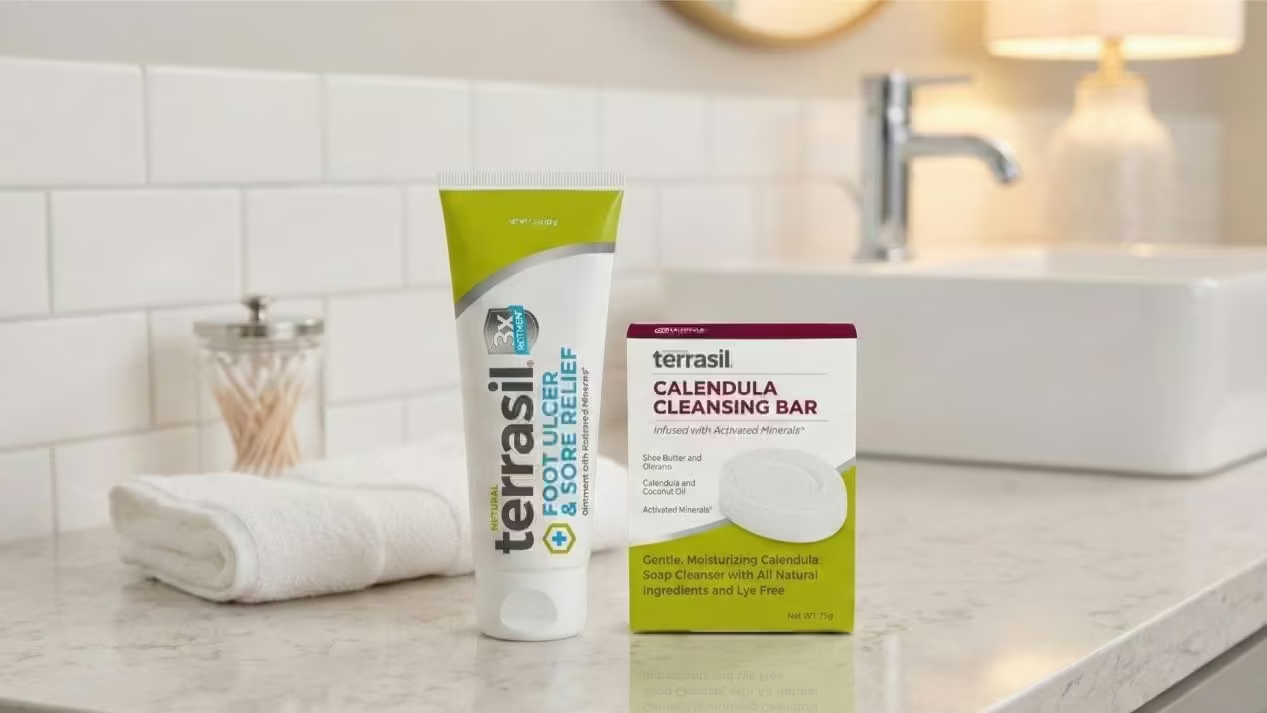
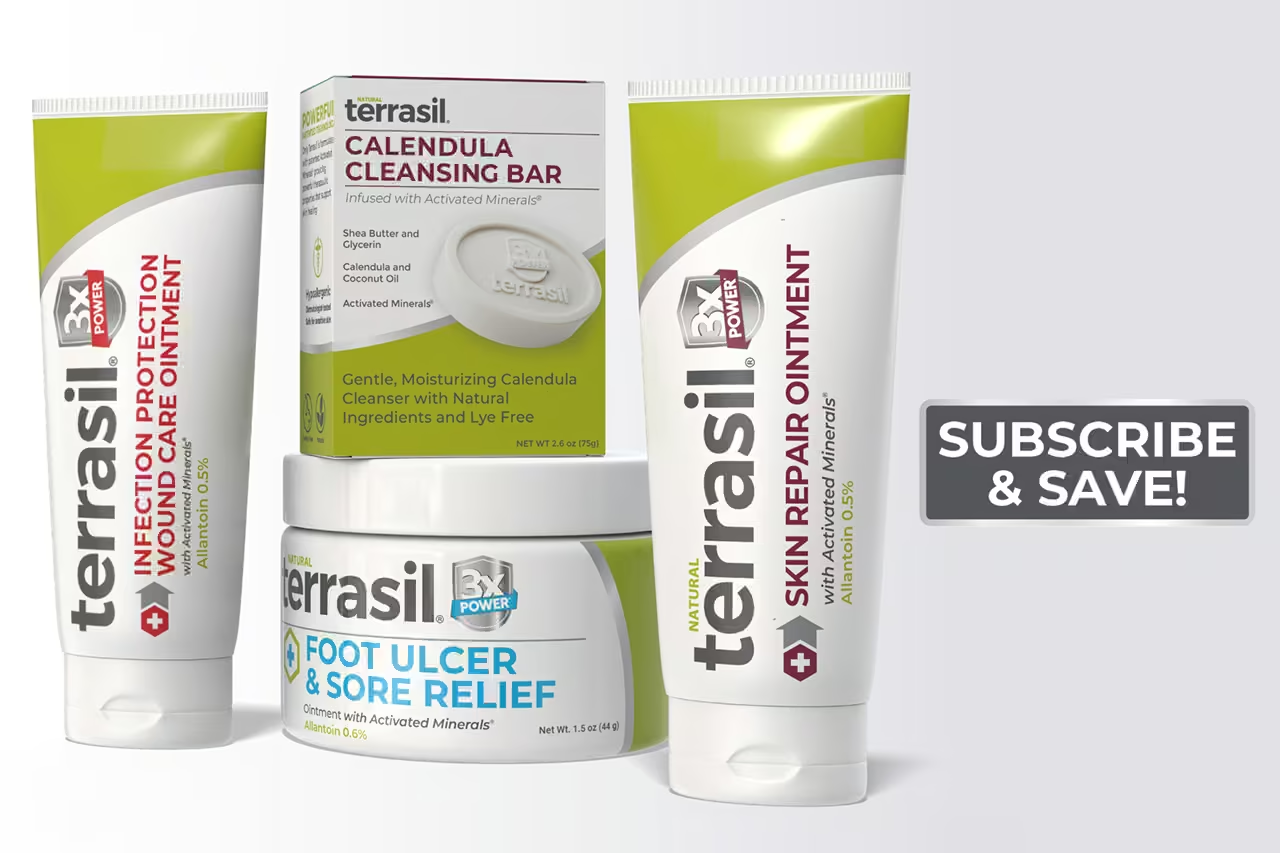
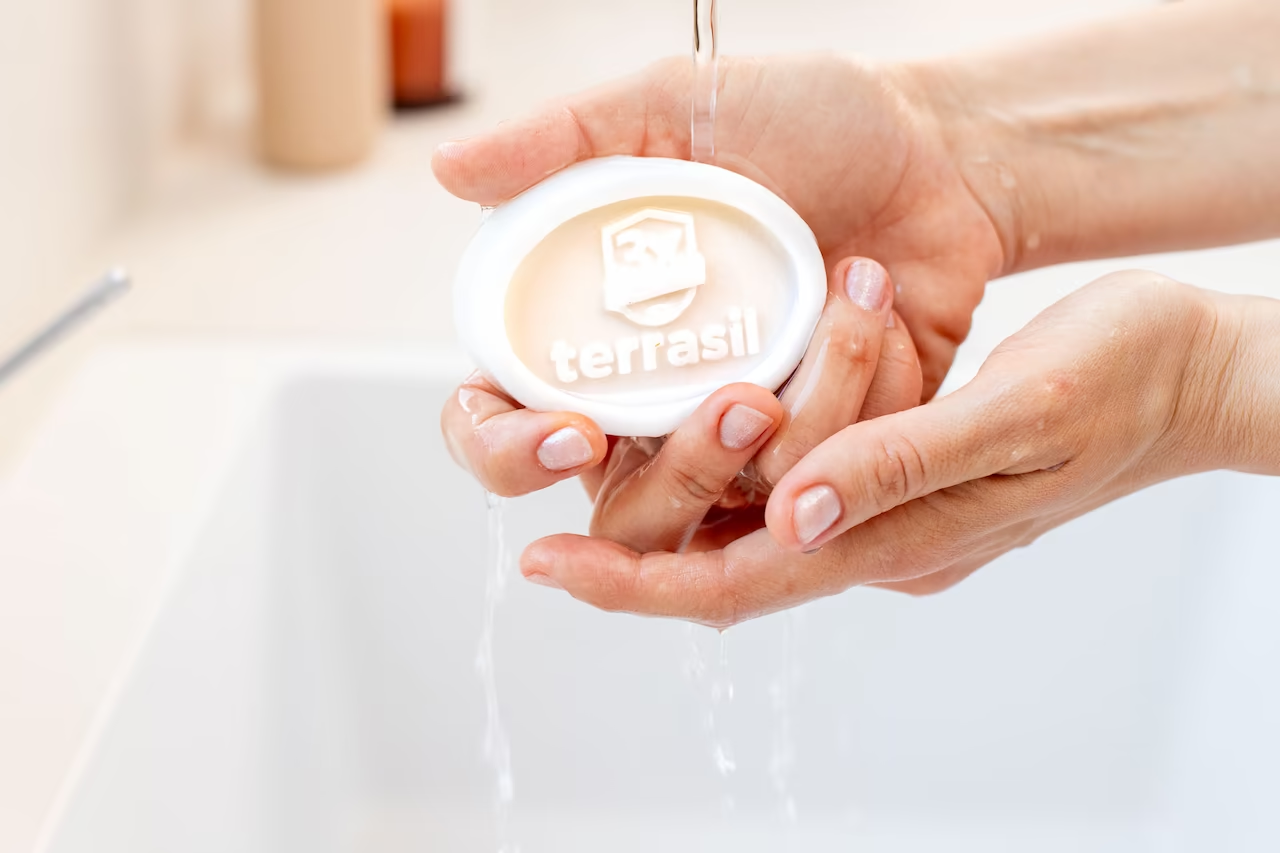
If you want a gentler cleansing option that’s actually good for the skin around the wound, Terrasil® Calendula Cleansing Bar is a lovely choice. It’s made with soothing natural ingredients — olive oil, shea butter, coconut oil — and contains our patented Activated Minerals®. It cleans without stripping or drying out the skin. It’s the kind of thing that’s nice to have in your bathroom cabinet for moments exactly like this.
Terrasil® Calendula Cleansing Bar
A gentle, natural cleansing bar with Activated Minerals® and soothing botanicals. Free of parabens, alcohol, and synthetic fragrances. Great for sensitive skin.
Step 3 — Put a wound care ointment on it
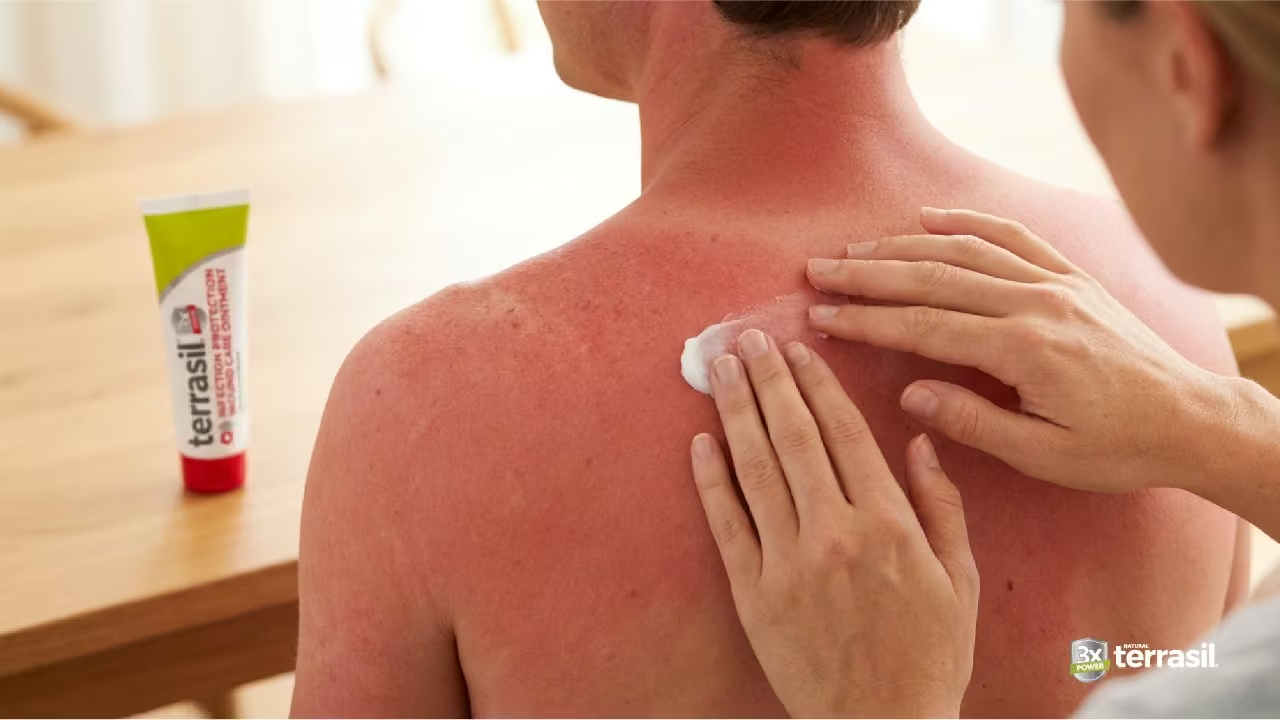
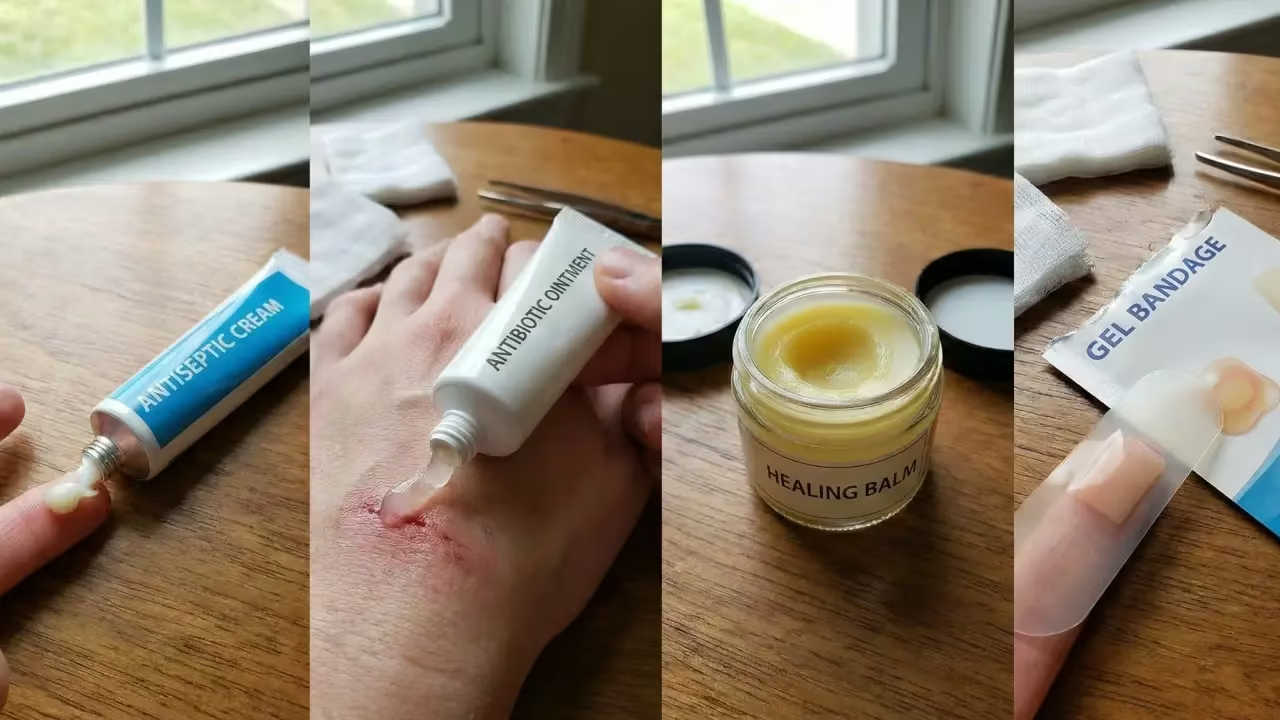
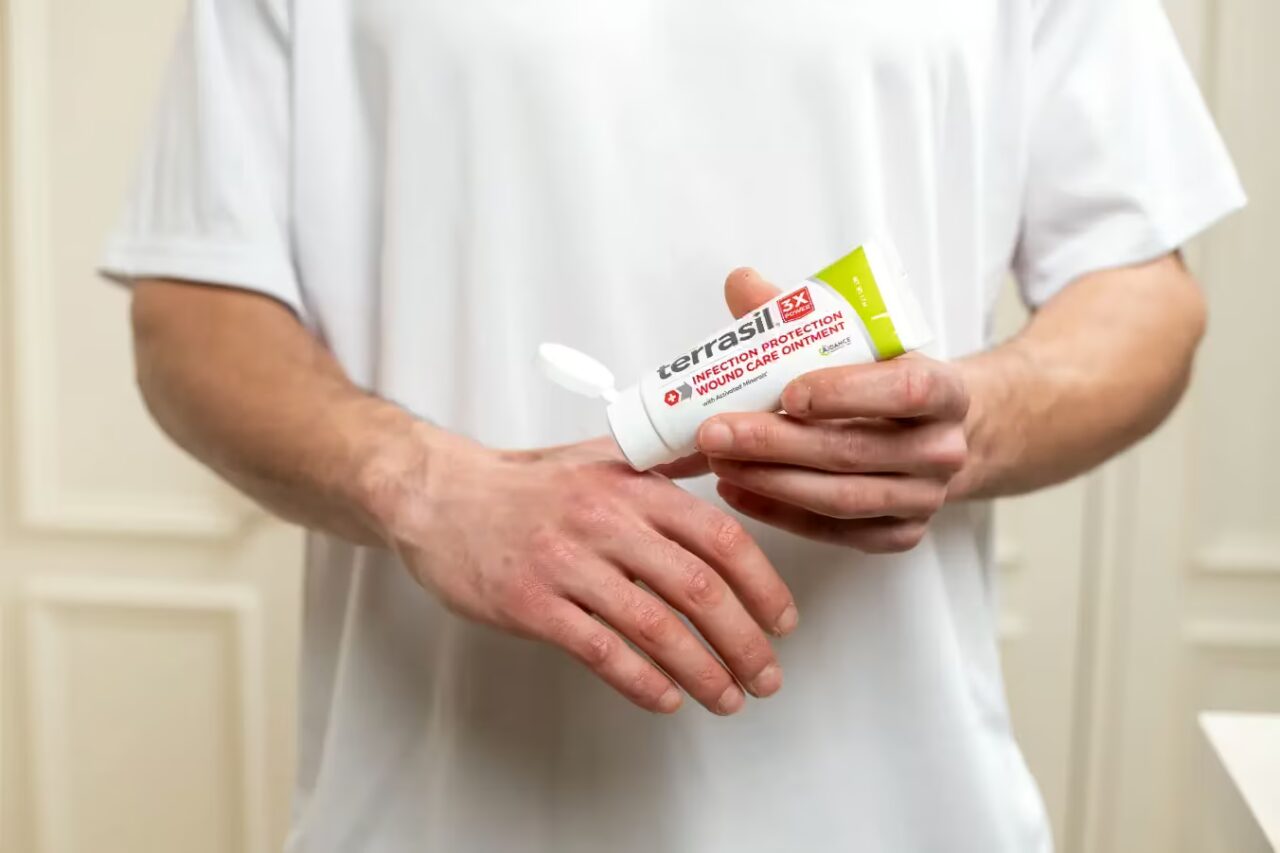
This step makes a real difference. An ointment does two important things at once: it keeps the wound moist so healing can happen faster, and it creates a protective layer that helps keep bacteria out.
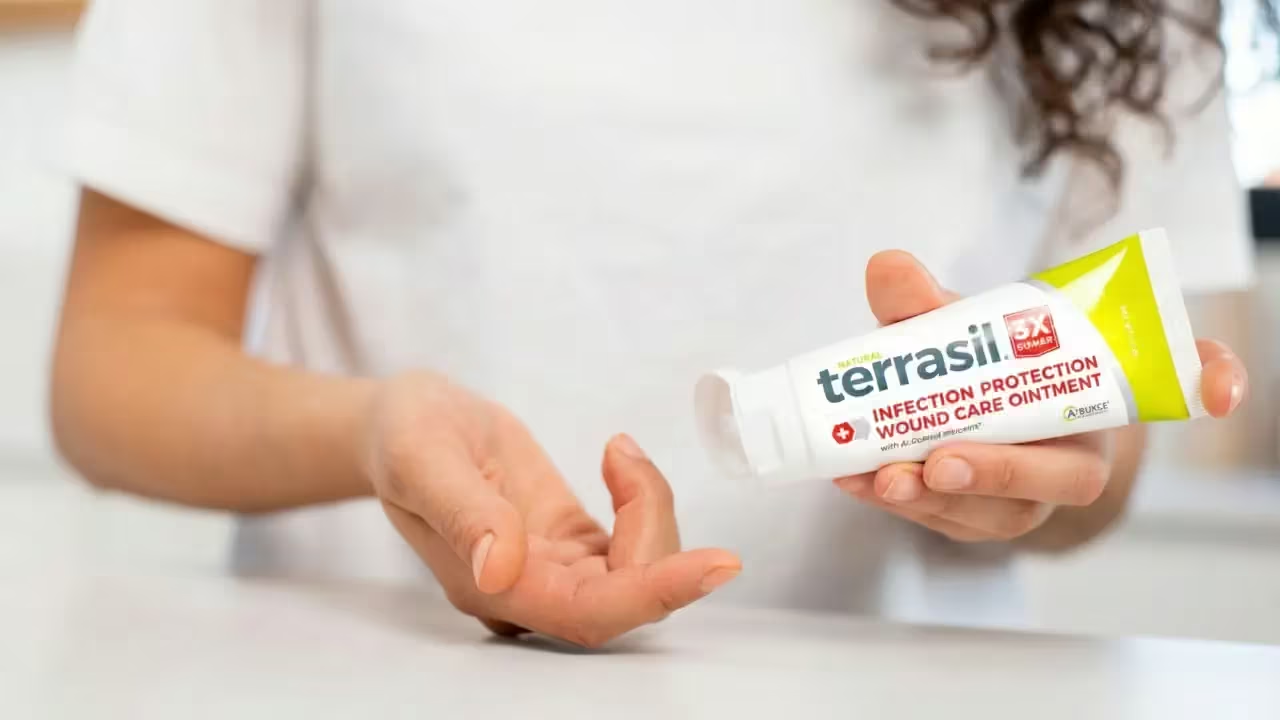
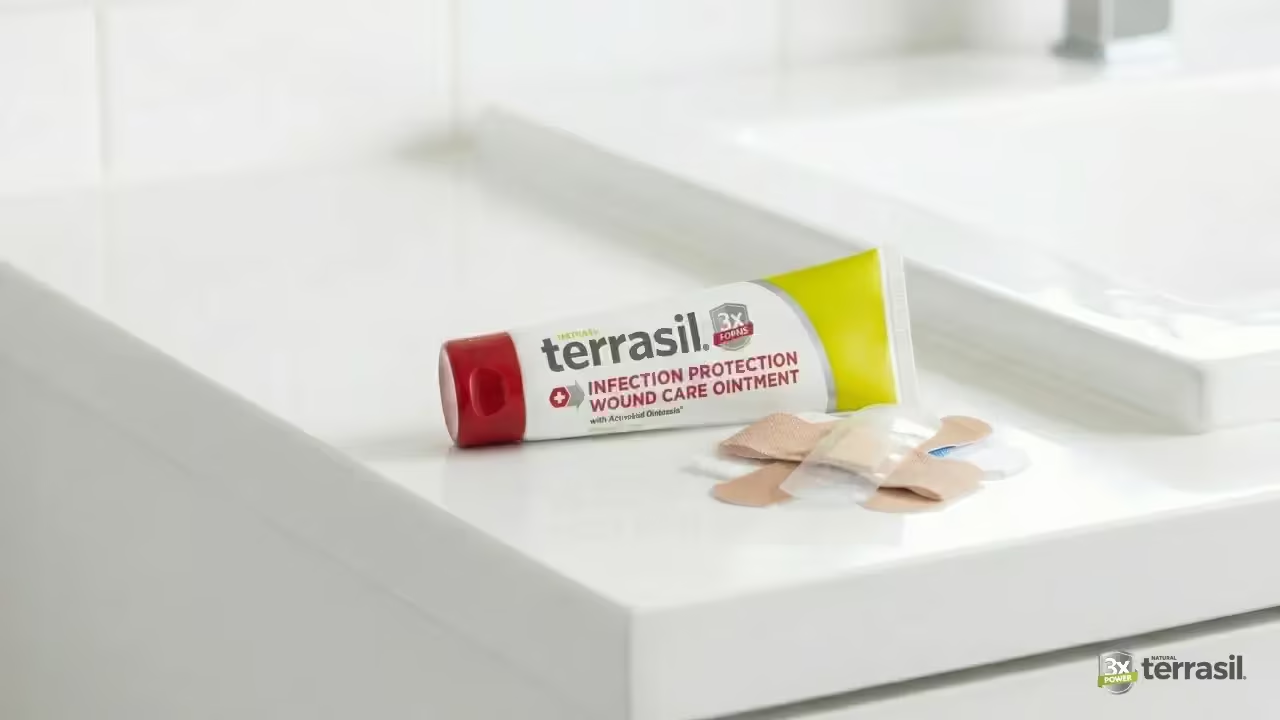
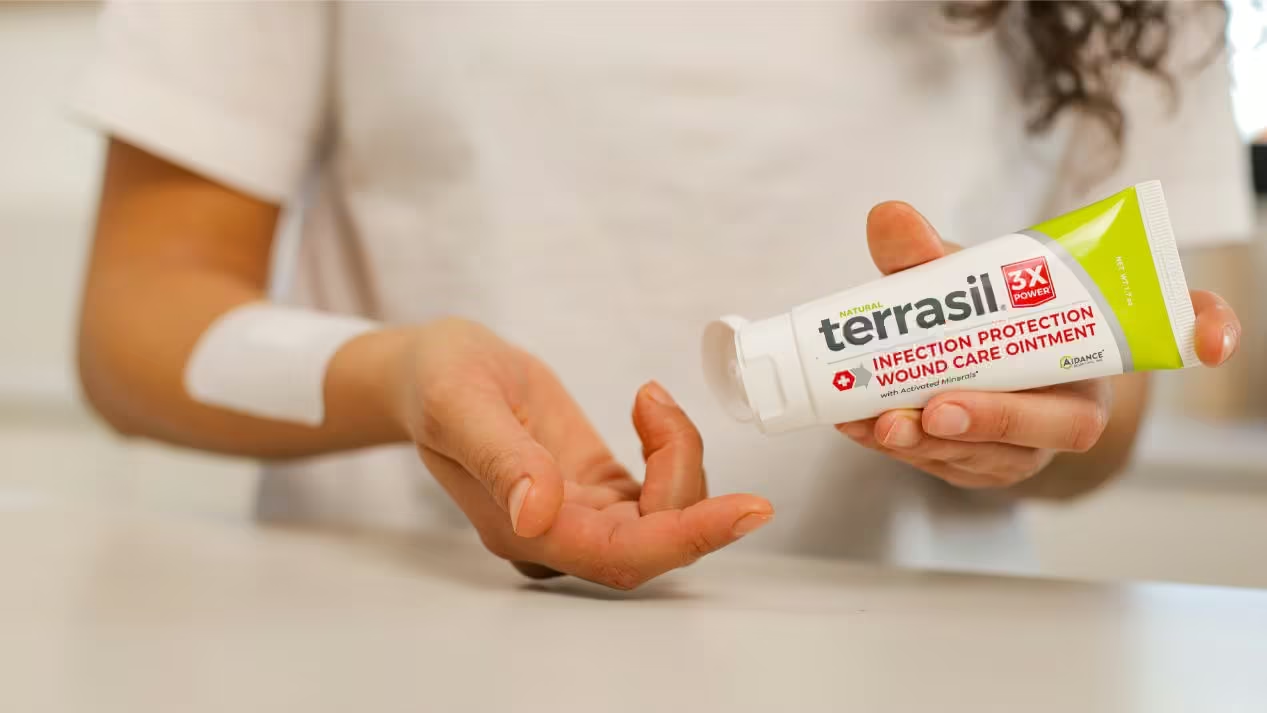
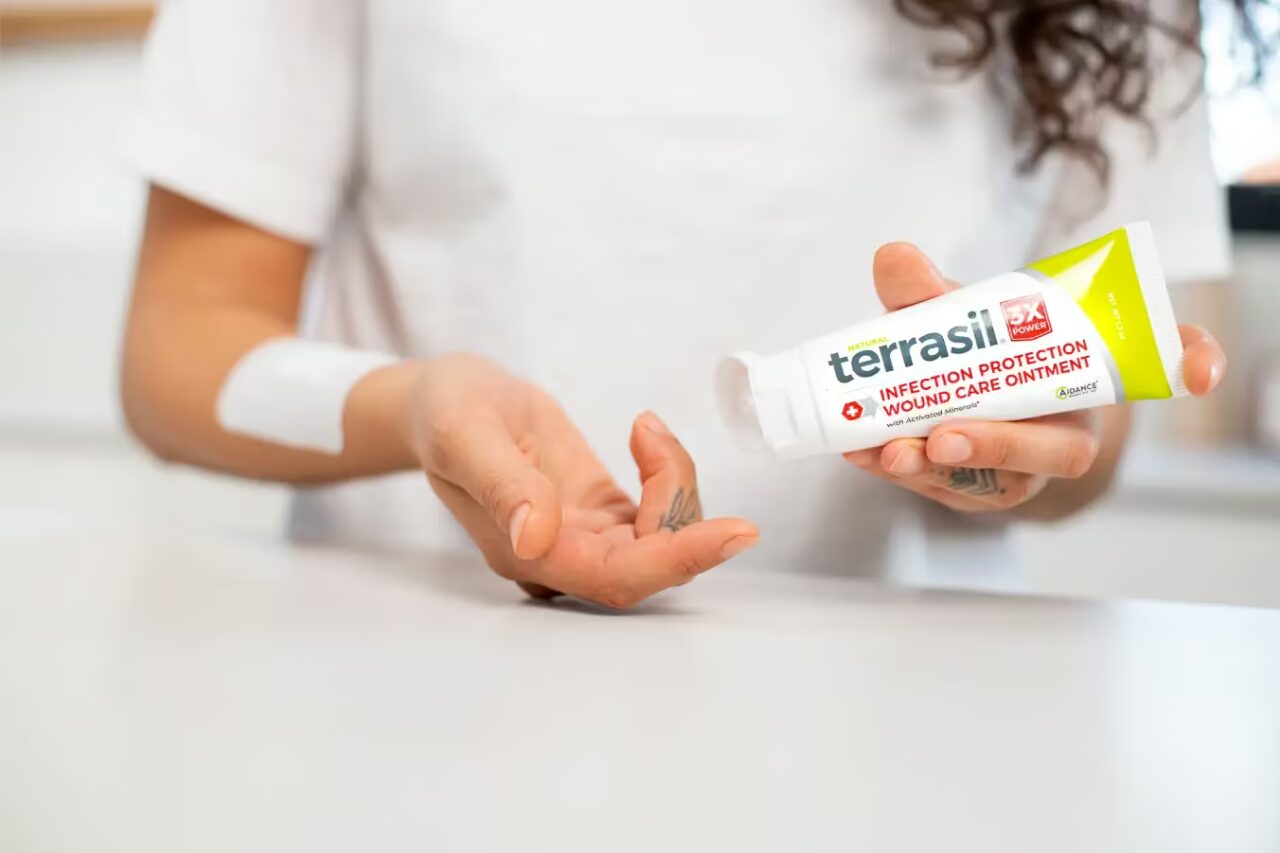
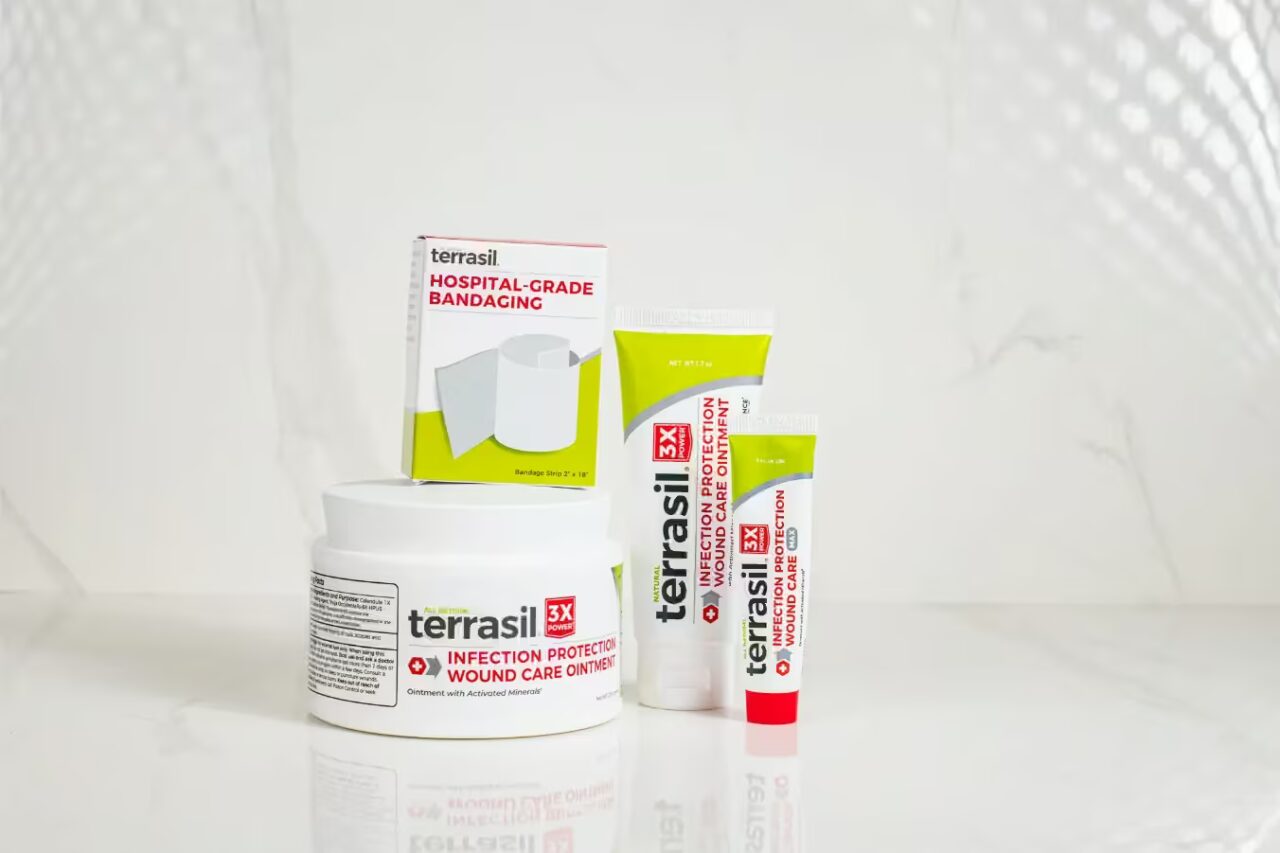
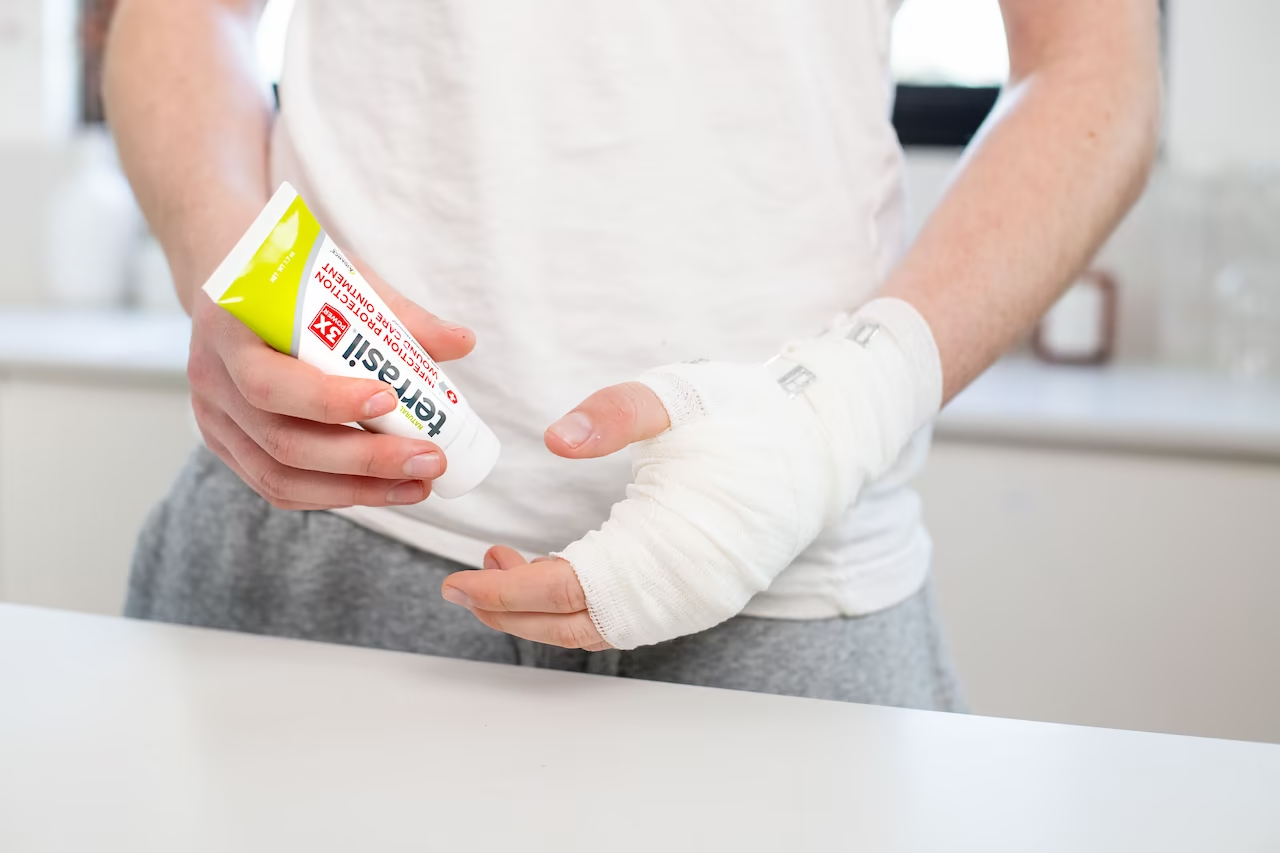
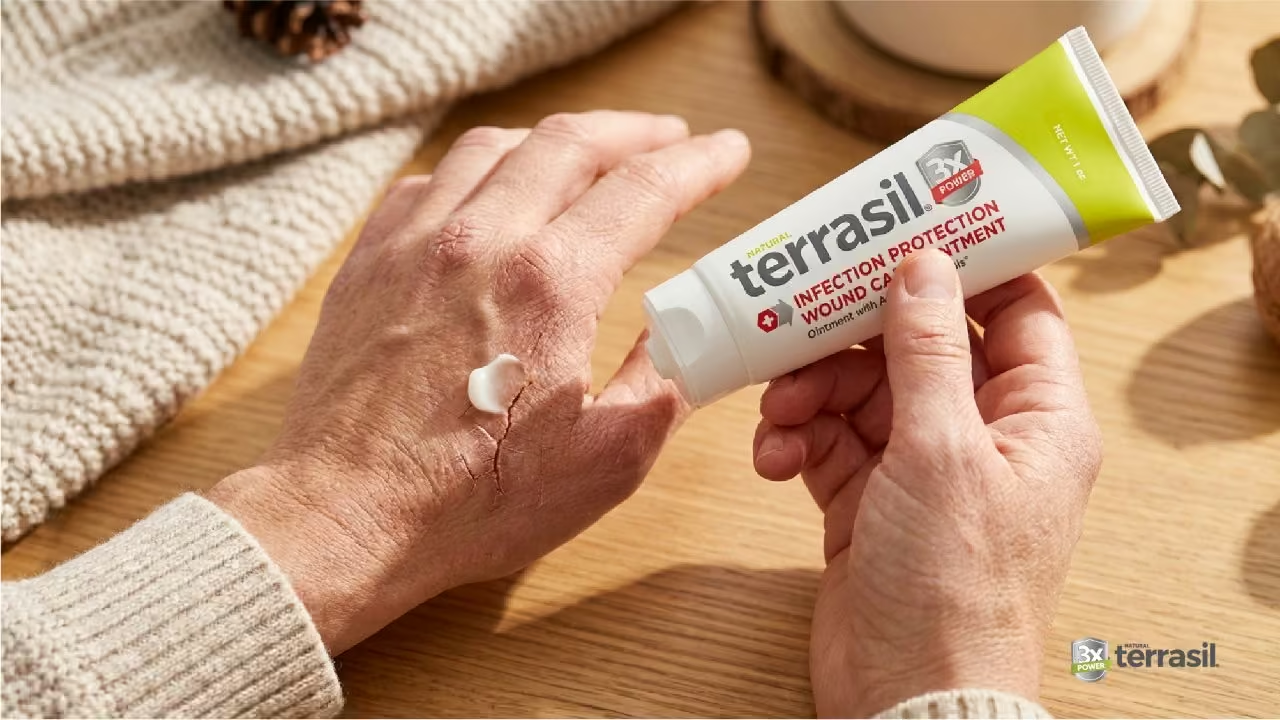
Terrasil® Infection Protection Wound Care Ointment is what we’d recommend here. It’s made with natural ingredients, no harsh chemicals, no synthetic fragrances, and no parabens. It contains an FDA-registered active ingredient alongside calendula extract, jojoba oil, beeswax, and our patented Activated Minerals® technology that supports skin healing. It’s gentle enough for kids aged 2 and up and for sensitive skin.
If you’d like a really simple two-step routine: cleanse with the Calendula Cleansing Bar, then apply the Infection Protection Ointment. You don’t have to do both — the ointment alone is great — but together they give the wound the best possible environment to heal in.
Terrasil® Infection Protection Wound Care Ointment
Natural wound care ointment with Activated Minerals®, calendula, and botanical oils. Supports skin healing and helps protect against infection. FSA/HSA eligible. Safe for ages 2 and up.
Step 4 — Cover it with a clean bandage
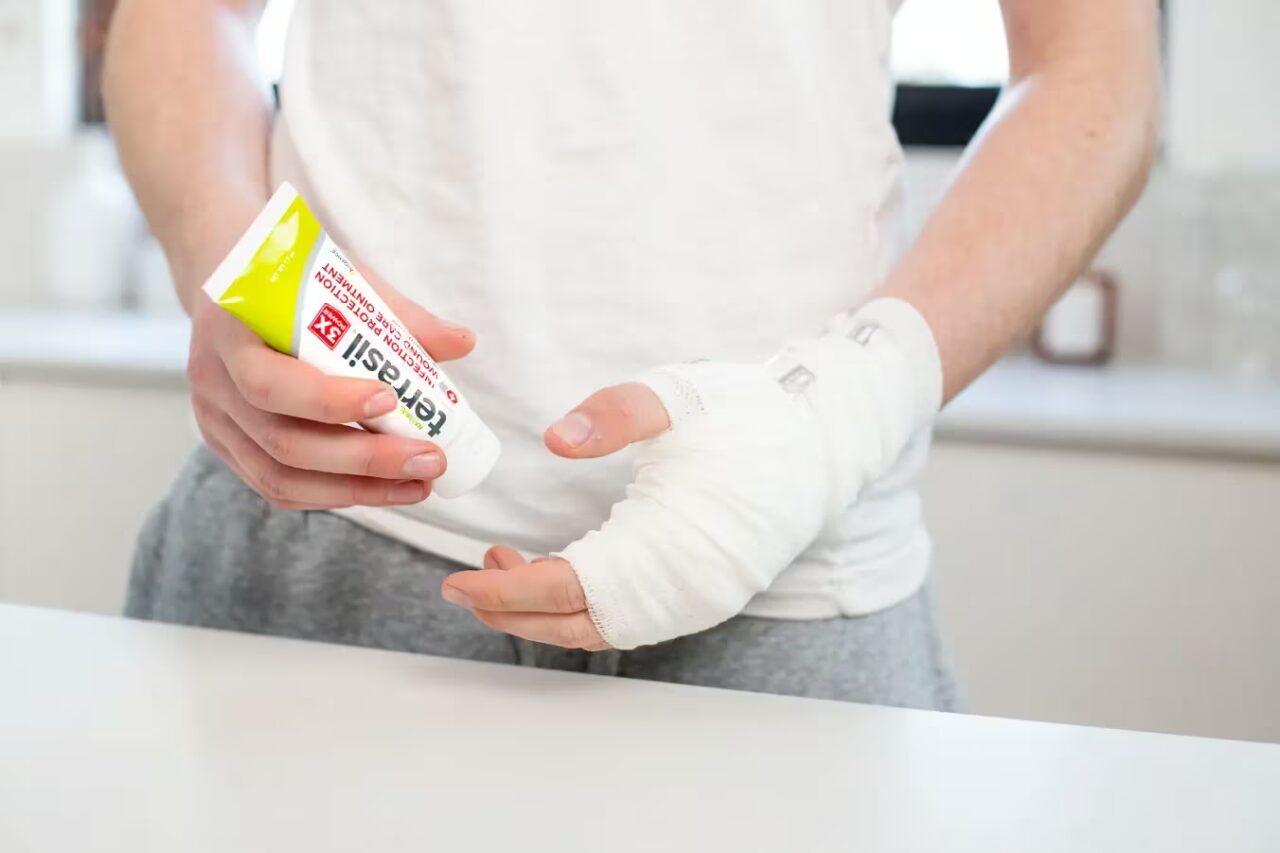
Put a clean bandage or dressing over the ointment.2 Change it at least once a day, or sooner if it gets wet or dirty. Each time you change it, add a little more ointment. That’s the routine — simple and consistent.
Step 5 — Keep checking on it
Take a quick look every time you change the bandage. A wound that’s healing well will gradually look less red, feel less sore, and slowly get smaller. If it’s doing the opposite — getting angrier, puffier, or developing discharge that doesn’t look right — that’s a good moment to check in with a healthcare provider.
Burns and blisters — which product is right?

Not every skin problem is the same, and it helps to know which product fits your situation.
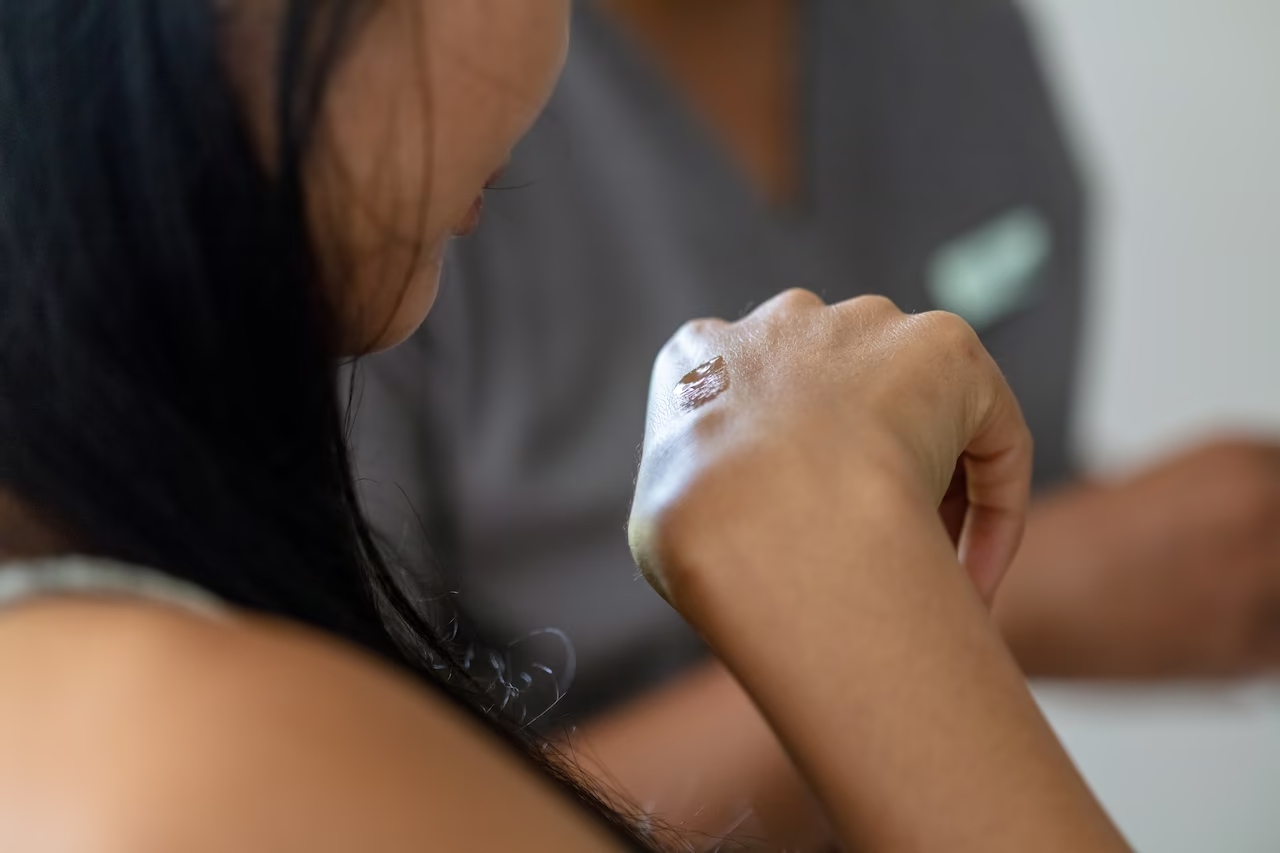
If it’s a minor burn or an open blister, treat it like you would any open wound — keep it clean, moist, and covered. Terrasil® Infection Protection Wound Care Ointment is the right choice here.
If the skin is irritated, rashy, chafed, dry, or cracked — but there’s no open wound, that’s a different story. Skin that’s irritated but still intact does better with a formula made specifically for skin repair.

Terrasil® Skin Repair Ointment
For irritated or inflamed skin without an open wound — rashes, razor burn, chafing, dry cracked skin, folliculitis, and more. Natural ingredients, no parabens, alcohol, fragrances, or steroids.
Signs of Wound Infection
Not every red or irritated wound is infected. Understanding the difference between normal healing and infection can help determine when additional treatment may be needed.
Most minor wounds quietly get better on their own with good care. But every now and then, something goes in the wrong direction. Here are a few general signs that a wound might need more attention than home care can provide:
- Redness or swelling that keeps growing instead of settling down after the first couple of days
- The wound starts hurting more, not less, as time goes on
- Discharge that looks cloudy, yellow-green, or smells unusual
- The skin around the wound feels increasingly warm to the touch
- The wound doesn’t seem to be closing or getting better after about a week of good care
- You or the person you’re caring for generally feels unwell alongside the wound
None of this is meant to alarm you — most minor wounds don’t go this route. But if any of these sound familiar, a quick conversation with a healthcare provider is always a smart move.
A word about wounds from metal or rusty objects
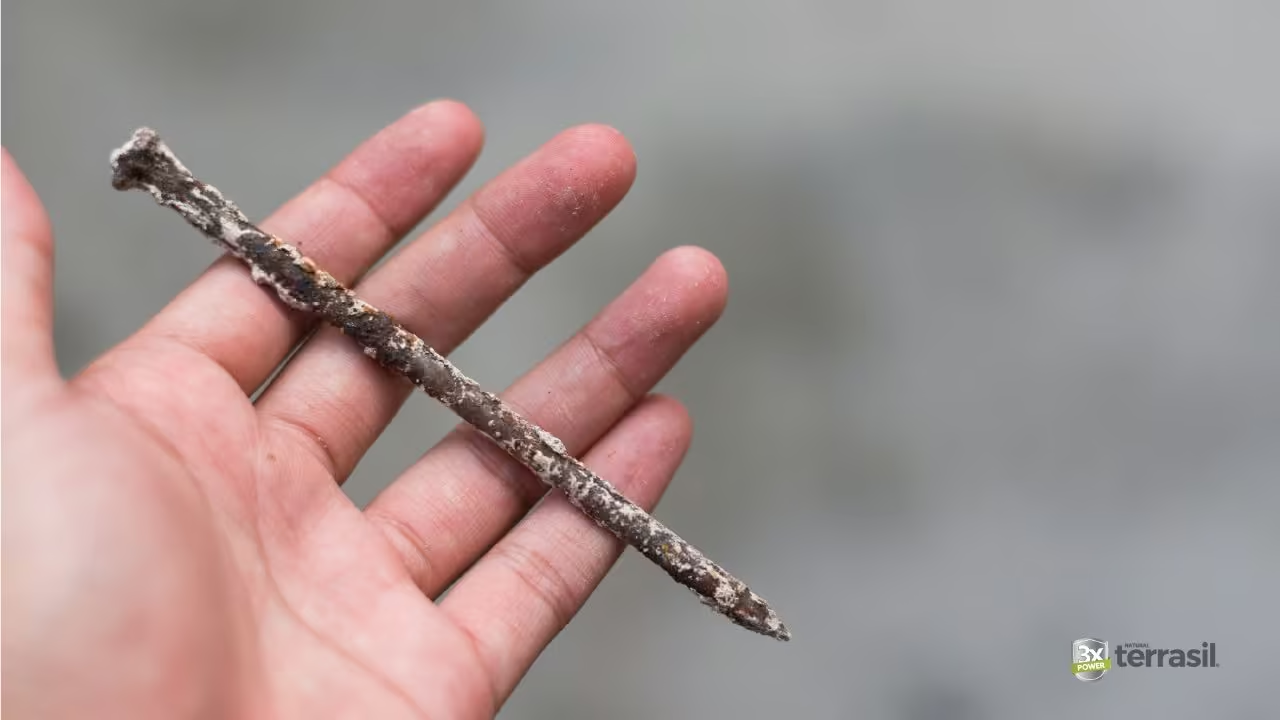
If the wound came from a rusty nail, a metal wire, or anything dirty and sharp, it’s worth a bit of extra thought — not to panic, but because this type of wound comes with a specific consideration most people haven’t thought about since their last school vaccination.
Tetanus is a serious illness caused by bacteria that live in soil, dust, and rust. It can enter the body through cuts and puncture wounds. The good news is it’s easily preventable with a vaccine — most people in developed countries got vaccinated as children, and boosters are recommended every 10 years or so.
If there’s any question about vaccination status — especially for a wound from a rusty or dirty object — it’s worth a quick call to a healthcare provider to talk it through. For the wound itself, the same basic care applies: rinse it well, apply ointment, and keep it covered while you keep an eye on it.
What Not to Put on a Wound

A few very common household items are actually better kept away from wounds:
- Hydrogen peroxide — it kills bacteria but also damages the healthy cells your skin needs to heal. Best avoided inside a wound.
- Iodine — similar story. Fine as a skin cleanser before certain procedures, but too harsh for ongoing wound care.
- Rubbing alcohol — very drying, and not kind to healing tissue.
- Cotton balls — the fibers can get stuck in a wound and cause irritation. Gauze or a non-stick pad is a much better choice.
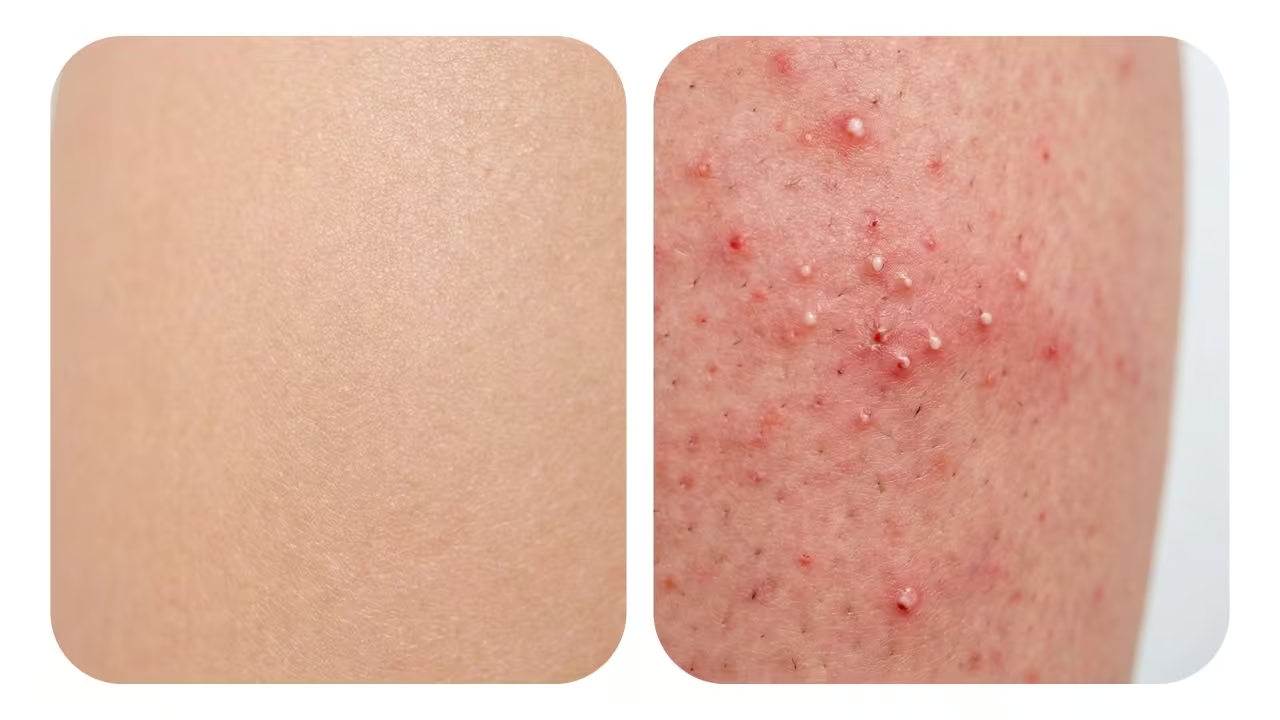
- Products with strong fragrances, dyes, or alcohol-based preservatives — broken skin is more sensitive than usual and can react to ingredients it normally handles fine.
Should you cover a wound or let it breathe?
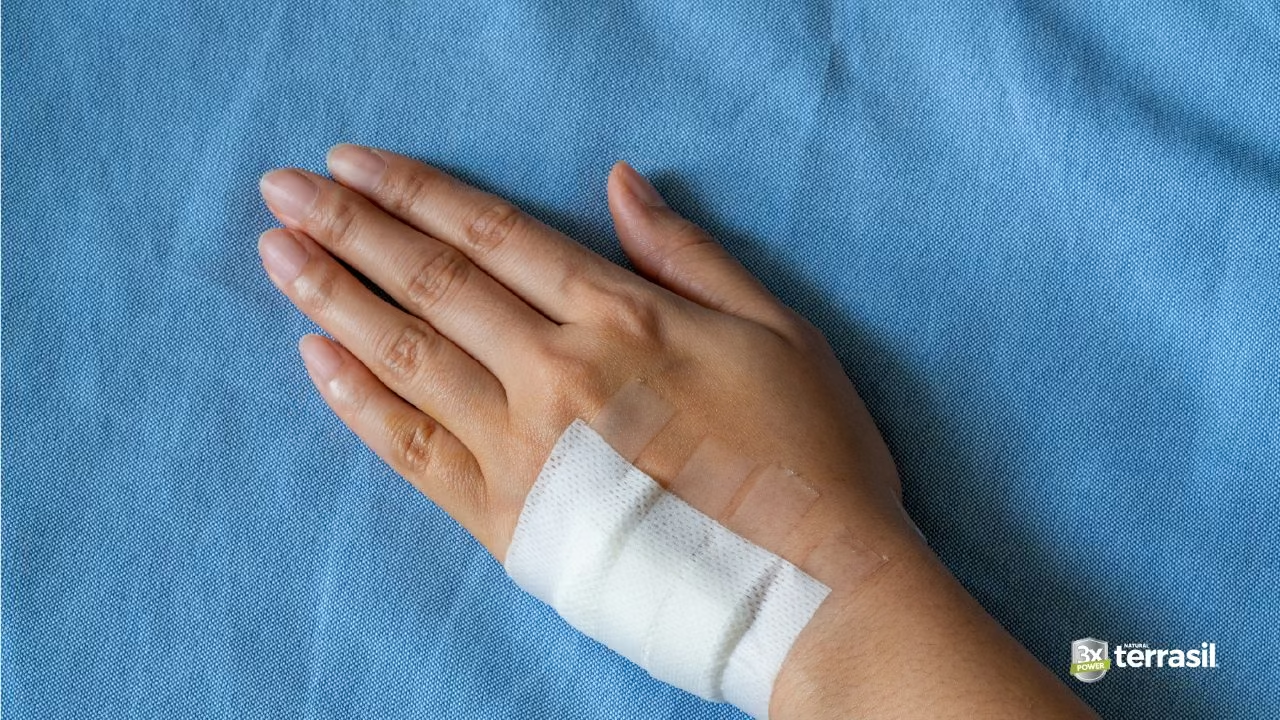
Cover it. We know — it feels counterintuitive. But wounds actually heal better covered.2 A covered wound stays moist, heals faster, is less likely to scar, and has a lower chance of picking up bacteria from the environment. The old idea that wounds need air to heal just hasn’t held up in research.
Keep it covered until the skin has fully closed. After that, it’s fine to let it breathe.
What Terrasil® Infection Protection Wound Care is made for
Everyday wounds | Chronic or recurring wounds | Complex skin conditions |
|---|---|---|
Minor cuts and scrapes | Leg sores and ulcers | Diabetic skin ulcers |
Open blisters and burns | Bed sores (pressure sores) | Fissures |
Chapped or cracked skin | Wound recovery | Post-procedure skin care |
From everyday scrapes to longer-term wounds that need extra support.
It’s safe for ages 2 and up, free of parabens, alcohol, dyes, and synthetic fragrances, and made with sensitive skin in mind. FSA/HSA eligible.
What Helps a Wound Heal Faster?

A clinical study found over 86% wound closure in a month* in patients with pressure ulcers and leg sores treated using Terrasil technology.4
And in everyday use, many customers report noticeable improvement — less redness, less soreness, visible progress — within just 1 to 2 days.†
Terrasil® Infection Protection Wound Care Ointment
A natural ointment formulated to help protect wounds, supports skin healing, and soothes discomfort — with patented Activated Minerals®, calendula extract, jojoba oil, and no parabens, alcohol, or synthetic preservatives. FSA/HSA eligible.
Doctor recommended. Dermatologist tested. Hypoallergenic approved. Safe for ages 2+.
Simple habits that help prevent wounds and infections

You can’t avoid every bump and scrape in life — but a few easy habits can go a long way toward protecting your skin, especially for older adults, young children, or anyone managing a health condition that affects healing.
Keep your skin in good shape
- Moisturize regularly. Dry, cracked skin is much easier for bacteria to sneak into than healthy, hydrated skin
- Wear gloves when cooking or gardening, and proper footwear for anyone who has reduced sensation in their feet
- If someone spends a lot of time in bed or in a wheelchair, changing positions regularly — at least every couple of hours — helps prevent pressure sores from developing
Clean wounds right away
- The sooner you clean a wound, the better. The first hour matters most
- Skip the hydrogen peroxide and alcohol — plain water and a gentle soap are kinder to healing skin
- Leave the scab alone once it forms. Picking at it reopens the wound and slows everything down
Create the right environment for healing
- Keep wounds covered and moist — they heal faster and with less scarring that way
- Change the dressing every day, or whenever it gets wet or dirty
- Check on the wound regularly so you can catch any changes early
Frequently asked questions

Related Reading
- Terrasil Infection Protection Wound Care Ointment
- Terrasil Skin Repair Ointment
- Bed Sore and Pressure Sore Relief
- Terrasil Calendula Cleansing Bar
Disclaimer
This article is for general educational purposes only and is not a substitute for professional medical advice, diagnosis, or treatment. Always consult a qualified healthcare provider with any questions about a wound or medical condition. Terrasil® products are for external use only. Contains calendula extract — do not use if you are sensitive to plants in the Asteraceae/Compositae family (ragweed, chrysanthemums, and related plants). These statements have not been evaluated by the Food and Drug Administration. These products are not intended to diagnose, treat, cure, or prevent any disease.
* Based on a prospective multi-site case series study at four US hospital wound care centers. Data reflects 10 wound patients treated using Terrasil technology. Study published in Advances in Skin & Wound Care, 2016.
† Based on customer-reported experiences. Results vary based on wound type, size, and severity.
Sources
- Guo, S. & Dipietro, L.A. (2010). Factors affecting wound healing. Journal of Dental Research, 89(3), 219–229. Retrieved May 2026 from https://pmc.ncbi.nlm.nih.gov/articles/PMC2903966/
- Winter, G.D. (1962). Formation of the scab and the rate of epithelialisation of superficial wounds in the skin of the young domestic pig. Nature, 193, 293–294. Retrieved May 2026 from https://pubmed.ncbi.nlm.nih.gov/14007593/
- Aidance Scientific. Terrasil® Infection Protection Wound Care Ointment — Product Information. Retrieved May 2026 from https://www.aidanceproducts.com/terrasil-wound-care
- Advances in Skin & Wound Care (2016). Prospective multi-site case series study on wound closure using Terrasil® technology. Study data on file, Aidance Scientific.
- Bowler, P.G., Duerden, B.I. & Armstrong, D.G. (2001). Wound microbiology and associated approaches to wound management. Clinical Microbiology Reviews, 14(2), 244–269. Retrieved May 2026 from https://pmc.ncbi.nlm.nih.gov/articles/PMC88973/
- Mayo Clinic. Cuts and scrapes: First aid. Retrieved May 2026 from https://www.mayoclinic.org/first-aid/first-aid-cuts/basics/art-20056711