





Last Updated: March 2026
This article is reviewed periodically to reflect current dermatology information and treatment approaches.
Understanding the real reasons behind pruritus — and what your body might be telling you
If you’ve been asking why does my skin itch, you’re definitely not alone. Itching — also called pruritus — is one of the most common skin symptoms people experience, and it can range from mildly annoying to genuinely disruptive to daily life.1 Sometimes it’s not just uncomfortable — it’s distracting, persistent, and hard to ignore once it starts.
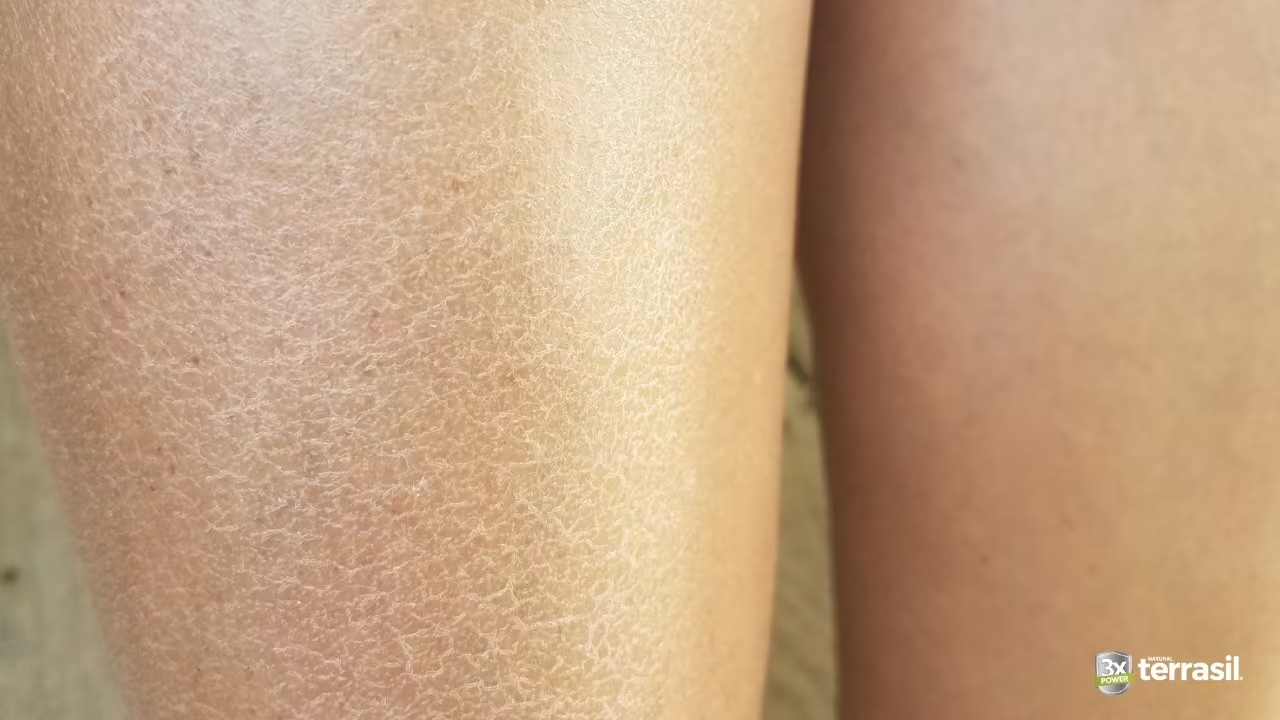
Sometimes the cause is obvious. Dry winter air, a mosquito bite, or a new laundry detergent can leave you scratching within hours. Other times, itching feels completely mysterious — creeping up at night when you’re trying to sleep, flaring after a workout, appearing in sensitive areas like the scalp or groin, or coming and going without any obvious pattern.
One of the most helpful things to understand right away is this: itching is a symptom, not a diagnosis. It’s your skin’s way of telling you that something is happening — whether that’s dryness, inflammation, infection, or an allergic reaction — but the itch itself doesn’t tell the whole story.
Many different things can trigger itching, including:
- dry skin
- eczema
- fungal infections
- allergic reactions
- parasites
- insect bites
- product irritation
- healing skin
- friction or sweat
The good news is that where the itch occurs, what the surrounding skin looks like, and what has recently touched your skin can often point you toward a clear set of possibilities. This guide is built around exactly that approach.
Quick Answer: Why Skin Itches
Skin itching is usually caused by dryness, irritation, infection, or allergic reactions—and the location of the itch is one of the most important clues for identifying the cause.
At a Glance
Skin itching can happen for many reasons. The most common include:
- dry skin
- eczema or dermatitis
- fungal infections
- allergic reactions
- insect bites
- parasites
- product irritation
- sweating or friction
- healing skin
- certain health conditions
Looking at where the itch occurs and when it appears can help narrow down the possibilities and make sense of what’s going on.1
Key Takeaways
- Itching is a symptom — not a diagnosis — and can have many different causes
- Location, timing, and recent exposures are the most helpful clues
- Common causes include dry skin, eczema, fungal infections, allergies, and irritation
- External triggers like products, insects, and fabrics are often overlooked
- Matching the cause to the right type of care is key to improving skin comfort
Our Commitment to Accurate, Evidence-Based Information: Our articles are written using information from peer-reviewed dermatology research and reputable health organizations. We review scientific literature and clinical resources to ensure the information we share is clear, accurate, and helpful. Sources referenced in this article include materials from organizations such as the Centers for Disease Control and Prevention (CDC), the American Academy of Dermatology (AAD), and the Mayo Clinic.
Find Your Solution Fast (Based on Your Itch)
If you already have a good idea of what might be causing your itch, this quick guide can help you quickly match your symptoms to the right type of solution — especially if you’re looking for fast relief without reading the entire guide.
Product |
Common Conditions |
Action |
|---|---|---|
 Antifungal Treatment MAX |
Athlete’s foot, jock itch, ringworm, tinea (all types), yeast infections, general fungal infections |
|
 Ringworm Treatment MAX Ointment |
Ringworm |
|
 Tinea Treatment MAX |
Tinea versicolor, tinea corporis, other tinea skin fungus | |
 Eczema & Psoriasis Ointment |
Eczema, psoriasis, dry skin, cracked skin, general itching | |
 Femmesil® Cream / Ointment |
Yeast infections (external), vaginal irritation, redness, discomfort | |
 Skin Repair Ointment |
Razor burn, folliculitis, ingrown hairs, impetigo, rashes, dry/cracked skin | |
 Wound Care Ointment |
Cuts, scrapes, burns, wounds, irritation | |
 Bed Sore / Pressure Sore Relief |
Bed sores, pressure ulcers, skin breakdown | |
 Foot Ulcer Treatment |
Diabetic foot ulcers, foot sores, slow-healing wounds |
Supporting your skin from start to finish: For many of these conditions, Terrasil® also offers medicated cleansing bars designed to gently cleanse the affected area while helping prepare the skin for treatment. Using a cleansing step alongside ointment application can help support a more complete care routine.
Start With the Itch Map: Location Matters
One of the most practical ways to understand why your skin itches is to start with location. The body gives us useful clues. A rash on the scalp points toward very different causes than itching between the toes or discomfort in the groin. Walking through the most common locations one by one can help you quickly identify the most likely culprits.
If the Itch is on Your Scalp
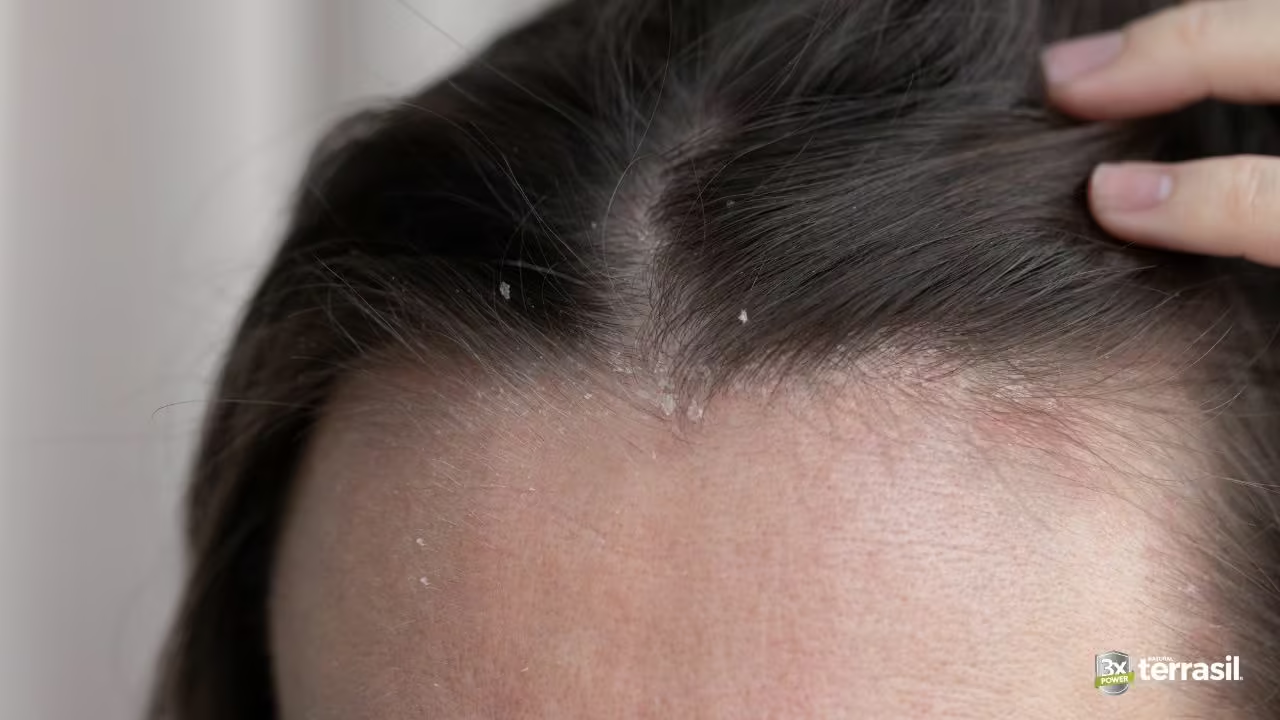
Scalp itching is extremely common and often traced back to everyday causes. Common possibilities include:
- dandruff (seborrheic dermatitis)
- dry scalp
- eczema
- fungal scalp infections
- hair product irritation
- head lice
Sometimes scalp itching shows up as a constant urge to scratch without any obvious rash — just a feeling that something isn’t right under your hair. Head lice are small parasites that live on the scalp and feed on blood. They spread easily, particularly among school-age children, and cause intense itching — especially behind the ears and at the back of the neck where lice prefer to lay eggs.2 If your child has recently been around other kids and suddenly starts scratching their head, lice are worth checking for.
Seborrheic dermatitis is another very common culprit for scalp itching and flaking. It’s related to an overgrowth of a naturally occurring skin yeast and may also appear on the eyebrows, alongside the ears, and on the sides of the nose — the oily “T-zone” areas of the face where this condition tends to thrive.3
Hair and scalp products — including dry shampoos, styling sprays, and certain conditioners — can also irritate the scalp over time, even if you’ve been using them for years. Fragrance is a common hidden irritant.
If the Itch is on Your Face

Facial itching often relates directly to something you’re applying to your skin — or wearing near it. Possible causes include:
- cosmetic or makeup irritation
- skincare product sensitivity
- contact dermatitis
- eczema
- seborrheic dermatitis
- shaving irritation
- jewelry — especially nickel allergy
It can be especially frustrating when your face reacts, because even products labeled “gentle” or “natural” don’t always feel that way on your skin. Facial skin is thinner, more vascular, and more reactive than the skin on most other parts of the body. This makes it significantly more susceptible to reacting to ingredients in cosmetics or skincare products.4 If you’ve recently switched to a new moisturizer, foundation, sunscreen, or serum and your face has started itching, that product is worth investigating.
Shaving, whether with a razor or electric trimmer, can also disrupt the skin barrier and cause temporary itching — especially if done without adequate lubrication or against the direction of hair growth. If shaving-related irritation is a frequent issue, our razor burn treatment and prevention guide explains how to prevent and soothe it effectively.
Earrings, necklaces, and facial piercings are another frequently overlooked trigger. Nickel allergy is one of the most common forms of contact dermatitis, affecting an estimated 10–20% of the general population.12 It typically causes a red, itchy rash wherever metal touches the skin — earlobes are a classic site, but necklace clasps, watch buckles, and even the metal back of a phone case pressed against the cheek can provoke a reaction. The itching and redness usually appear within 12 to 48 hours of contact and resolve once the metal is removed. If you notice a pattern of itching wherever jewelry sits against your skin, a nickel allergy may be worth exploring with a dermatologist through a patch test.
If the Itch is Between the Toes or on the Feet

Itchy feet and toes are a very common complaint, and the cause is often fungal. Possible causes include:
- athlete’s foot (tinea pedis)
- dry skin
- eczema
- contact dermatitis from footwear
- sweat irritation
Athlete’s foot is a fungal infection that thrives in warm, moist environments — think gym locker rooms, communal showers, and sweaty shoes. It typically starts between the toes and can spread to the sole and sides of the foot if left untreated. The skin may peel, crack, turn red, or develop small blisters.5 You might notice it most at night when everything else is quiet. Sometimes it’s not painful — just persistent enough to drive you crazy. If you’re unsure about next steps, here’s how to treat athlete’s foot effectively.
If you wear tight or non-breathable footwear for long periods, sweat trapped against the skin creates an ideal environment for fungal growth and irritation. Wearing moisture-wicking socks and allowing feet to air out regularly can make a noticeable difference.
If the Itch is in Intimate Areas

Genital and intimate itching can feel embarrassing to discuss, but it’s incredibly common and usually has a straightforward explanation. It’s the kind of discomfort that’s hard to talk about — but also hard to ignore once it starts. Possible causes include:
- yeast infections
- jock itch (fungal infection)
- product irritation
- sweat and friction
- shaving irritation
- certain sexually transmitted infections (STIs)
Some STIs — including genital herpes, genital warts, and pubic lice — may cause itching or irritation in the genital area and are worth ruling out with a healthcare provider if you have any concerns.6 However, many cases of genital itching are caused by far more common and easily addressed issues.
Yeast imbalance is a frequent cause, particularly for people who have recently taken antibiotics, are pregnant, or have diabetes. Friction from tight clothing, chafing during exercise, or shaving the pubic area can also cause significant irritation. Scented soaps, intimate washes, and even laundry detergent residue left in underwear are surprisingly common triggers.
For gentle cleansing of sensitive external intimate skin, some people prefer formulas specifically designed for delicate areas. Femmesil® cleansing products offer an option formulated with this in mind, avoiding common harsh ingredients that may disrupt sensitive skin.
If the Itch is Around the Anus

Perianal itching is more common than most people realize, and it has several possible explanations. Many people only notice it at night, when everything is quiet and the sensation becomes much more noticeable. Possible causes include:
- hemorrhoids
- skin irritation from wiping
- not cleaning well enough
- fungal or yeast infections
- dermatitis
- pinworms
- anal eczema (perianal dermatitis)
Pinworm infections are a particularly notable cause of nighttime anal itching, especially in children. Female pinworms migrate to the anal area at night to lay eggs, which triggers intense itching that can disrupt sleep.7 If a child is consistently waking up scratching at night, pinworms are worth discussing with a pediatrician.
Over-wiping or using scented toilet paper and wet wipes can also strip the delicate perianal skin, leaving it irritated and itchy. Switching to unscented, plain products and patting rather than rubbing can sometimes resolve the problem entirely.
If the Itch is on Arms, Legs, Hands, or the Body

General body itching — on the arms, legs, torso, or hands — covers a wide range of possible causes. Possible causes include:
- dry skin
- eczema
- allergic reactions
- fungal infections such as ringworm (tinea corporis)
- insect bites
- shaving irritation
- contact dermatitis
- jewelry / nickel allergy — particularly on the wrists, neck, and torso
- poison ivy, poison oak, or poison sumac
Ringworm is one of the more recognizable fungal infections affecting the body. Despite its name, it has nothing to do with worms — it’s a skin fungus that often appears as a circular, scaly rash with a clearer center and a more active, slightly raised outer ring. It can occur on almost any part of the body and spreads through direct skin contact or contaminated surfaces.8 If you’re unsure whether a rash may be ringworm, our guide on how to identify ringworm can help you recognize the early signs.
Eczema, or atopic dermatitis, is another very common cause of body itching. It tends to flare in response to triggers like dry air, sweat, wool fabrics, certain soaps, or stress. People with eczema often describe the itch as relentless — sometimes worse than any visible rash would suggest. If you’re dealing with recurring dry, itchy patches and you’re not sure if you are experiencing eczema or ringworm, read this guide to learn how to tell if you have Eczema or Ringworm.
Poison ivy, poison oak, and poison sumac are plant-based causes of itching that deserve special mention. All three contain an oily resin called urushiol, and even brief skin contact can trigger a significant allergic reaction in people who are sensitized to it. The rash typically appears as streaky red lines with intense itching, followed by fluid-filled blisters. It commonly affects the arms, legs, and face — wherever skin was exposed during outdoor activities. Notably, the rash does not spread on its own once it appears; it only develops where urushiol has touched the skin, though areas with thicker skin may react more slowly, creating the appearance that it is “spreading.”13 The reaction can be severe enough to require medical attention. Rinsing the skin thoroughly with soap and water immediately after suspected exposure may help reduce the severity of the reaction.
External Causes of Itching
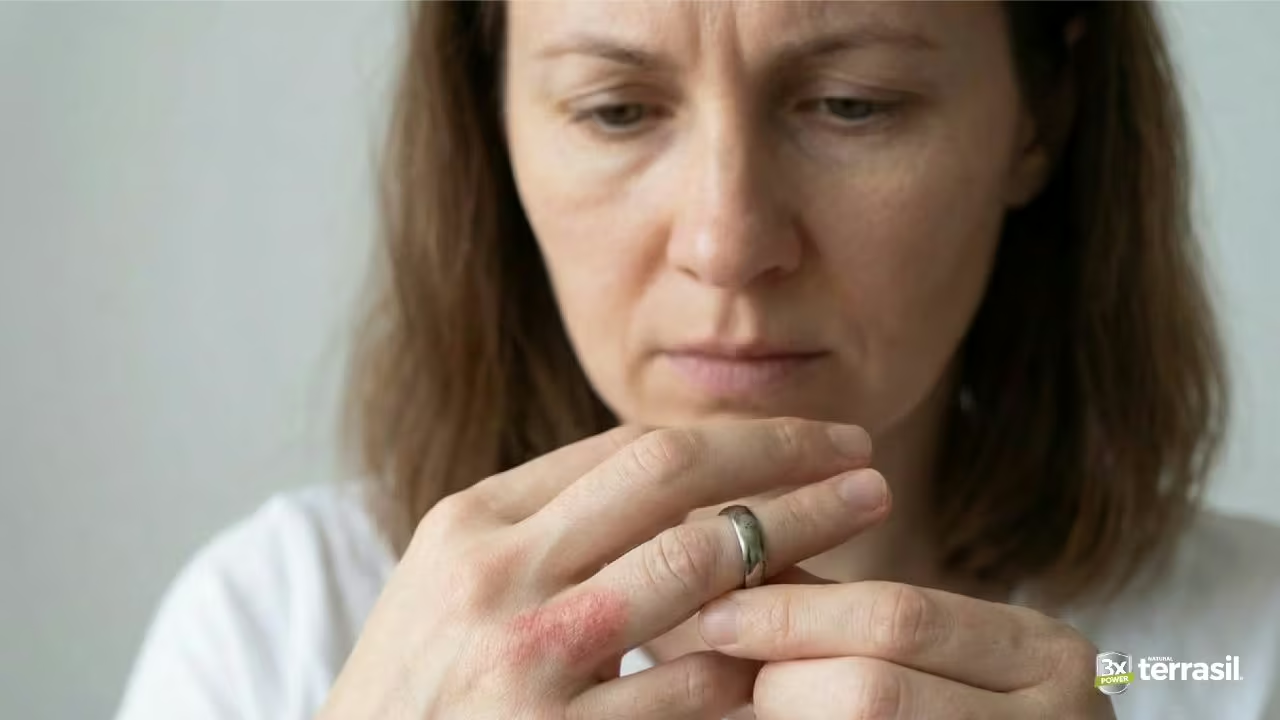
Many itching problems begin directly on the surface of the skin — often triggered by something that touches or enters the skin from the outside. Understanding these external causes can make it much easier to identify what’s happening and take appropriate steps.
Insect Bites
Insect bites are among the most recognizable causes of itching. When an insect bites, it injects saliva into the skin, and the body’s immune system responds — producing histamine, which causes the characteristic itch, redness, and swelling. Common itchy insect bites come from mosquitoes, bedbugs, fleas, mites, ticks, and spiders. These bites often cause small raised bumps that itch intensely, sometimes for days. Bedbug bites, in particular, are notorious for appearing in clusters or lines, and often cause people to itch most at night. Some bites itch for hours, others for days — and scratching often makes them feel even more intense.
Parasites
Some parasites can cause prolonged and severe itching. The most common examples include head lice, pubic lice, scabies mites, and pinworms.
Scabies mites are microscopic parasites that burrow directly under the outer layer of skin to lay eggs. The immune reaction to these mites — and their eggs and waste — produces intense, relentless itching, especially at night when the body is warm.9 Scabies spreads through prolonged skin-to-skin contact and can affect anyone, regardless of hygiene. It’s important to treat all household members simultaneously if scabies is suspected. This type of itching tends to feel different — deeper, more persistent, and often worse at night.
Fungal Skin Infections
Fungi thrive in warm, moist environments, which is why fungal skin infections so often develop in skin folds, between the toes, and in the groin. The most common fungal infections causing itching include ringworm (which can appear on the body, scalp, or nails), athlete’s foot (tinea pedis), and jock itch (tinea cruris).
Antifungal ingredients such as clotrimazole are widely used to address these infections by interfering with the fungal cell membrane.
Terrasil® Ringworm Treatment MAX Ointment combines clotrimazole with patented Activated Minerals® technology and carefully selected botanical ingredients designed to support skin comfort during treatment. It’s formulated to address the infection while being mindful of the surrounding skin.
Jewelry and Metal Contact
Jewelry is one of the most commonly overlooked causes of skin itching, and nickel is the main culprit. Nickel allergy is an allergic contact dermatitis — meaning the immune system has become sensitized to nickel metal, and any subsequent contact triggers a localized inflammatory reaction. It is remarkably common, estimated to affect roughly 10–20% of the population, and more frequently develops in people who have had prolonged skin contact with metal through pierced ears, watches, or belt buckles.12
The reaction typically appears as redness, itching, and sometimes small blisters right where the metal touches the skin. Earlobes are the most familiar site, but the reaction can appear on the wrists from watch straps, around the neck from necklace clasps, at the waist from metal belt buckles, and even on the cheek or chin from prolonged contact with a metal phone case. The itch usually begins within 12 to 48 hours of contact and resolves when the metal is no longer worn.
If you notice a consistent pattern of itching that matches the outline of where a piece of jewelry sits, nickel allergy is a strong possibility. Switching to jewelry labeled nickel-free, surgical-grade stainless steel, titanium, or solid gold may help. A dermatologist can confirm nickel allergy through a patch test.
Poison Ivy, Poison Oak, and Poison Sumac

Among the most intensely itchy reactions a person can experience outdoors is contact with poison ivy, poison oak, or poison sumac. All three plants produce the same allergen: a sticky, oily resin called urushiol. For the majority of people, urushiol causes a classic allergic contact dermatitis — meaning it’s not the plant itself that causes harm, but the immune system’s reaction to the oil.13
The first time someone is exposed to urushiol, they typically don’t react visibly — but the immune system becomes sensitized. Subsequent exposures cause the well-known response: intense itching, redness, and streaky rashes that develop into fluid-filled blisters within 12 to 72 hours of contact. The rash appears most commonly on the arms, legs, and face.
A common misconception is that the rash “spreads” across the body over time. In reality, only skin areas that came into direct contact with urushiol will develop a rash — but because some areas absorb the oil faster than others (thinner skin reacts sooner, thicker skin like the palms reacts later), new areas of rash can continue appearing for several days, creating the impression of spreading. The blisters themselves do not contain urushiol and cannot spread the rash.
If you suspect you’ve been exposed, washing the affected skin thoroughly with soap and water as soon as possible — ideally within minutes to an hour of exposure — may significantly reduce the severity of the reaction. Urushiol can also transfer from pet fur, clothing, and garden tools, so these should also be washed after potential contact. Reactions can range from mild to severe; widespread reactions, rash on the face or genitals, or difficulty breathing warrant prompt medical attention.
Product and Chemical Triggers

One of the most underappreciated causes of persistent skin itching is the products we use every single day. Skin reactions are often caused by ingredients in products that regularly touch the skin — and because these exposures happen so routinely, it can be hard to notice the connection.
Common triggers include:
- cosmetics and makeup
- skincare products
- fragrances and perfumes
- hair products
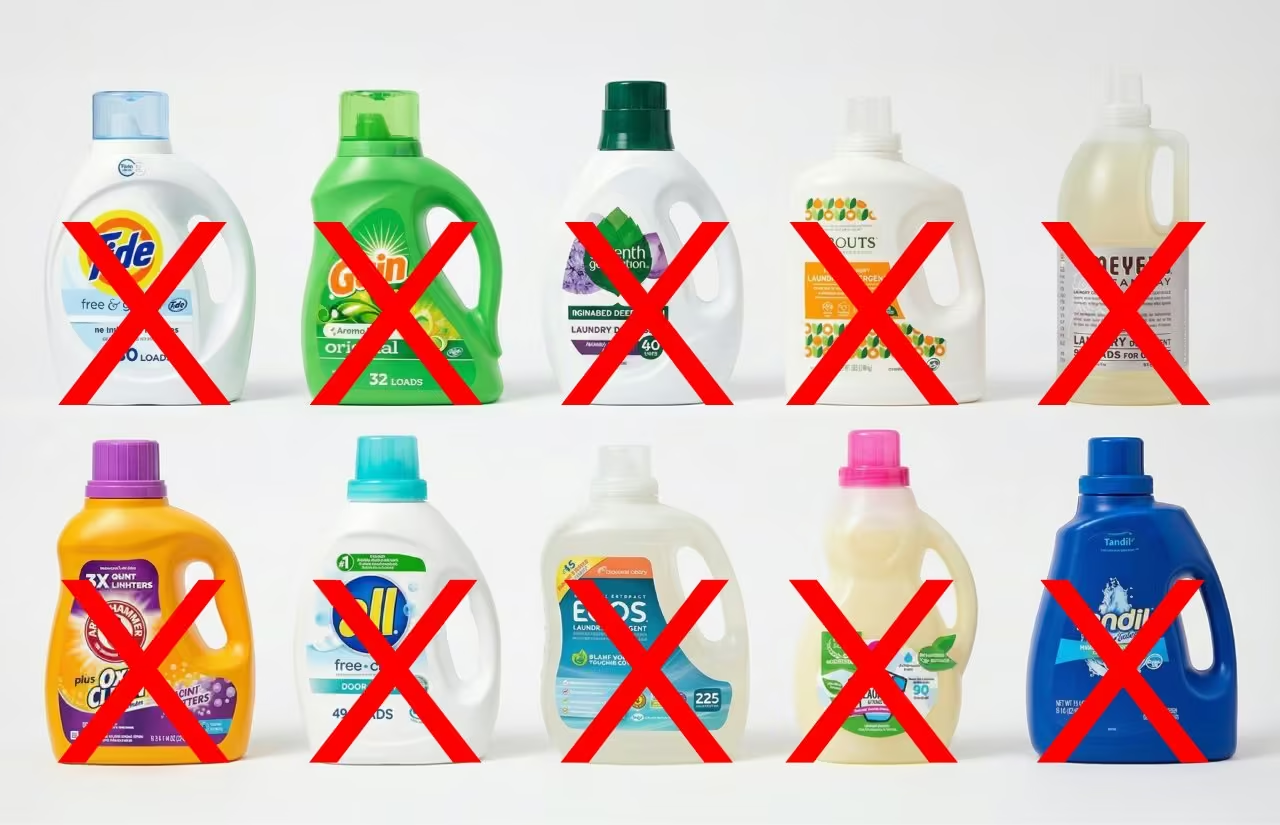
- laundry detergents
- fabric softeners
- disinfectants and cleaning products
- soaps and cleansers
- jewelry containing nickel
- plant resins — urushiol (poison ivy, oak, sumac)
Worth knowing: Both natural and synthetic ingredients can cause skin reactions. “Natural” does not automatically mean non-irritating. Fragrance — whether synthetic or derived from plants — is one of the most common contact allergens identified in skincare products.
If you suspect a product is causing your itching, one helpful approach is an elimination test: stop using the suspected product entirely for two to three weeks and see whether symptoms improve before reintroducing it. Also, if you suspect your laundry routine may be contributing, our guide on how detergents affect skin explores this in depth.
Terrasil® products emphasize carefully selected ingredients and avoid petroleum, parabens, and harsh synthetic fillers whenever possible — a formulation philosophy that may be worth considering for people with sensitive or reactive skin.
Other Reasons Skin Itches

Beyond infections, parasites, and product reactions, there are several other common reasons skin may itch that don’t fit neatly into a single category. These are worth knowing about because they’re easy to overlook.
Healing Skin
Cuts, scrapes, scabs, and sunburn all itch while they heal — sometimes intensely. This is actually a sign the healing process is working. New skin cells forming beneath a scab release chemical signals that stimulate the same nerve fibers involved in itching. Resisting the urge to scratch is important, as scratching can reopen wounds and slow healing. It can feel counterintuitive — just as your skin is getting better, it suddenly starts itching more.
If you’ve ever felt a sudden itch while walking or starting a workout, you’re not imagining it — it’s a real physiological response. Some people experience a noticeable itching sensation during or after exercise, particularly in the legs and torso. This happens because increased blood flow causes capillaries to expand and stimulate nearby nerve fibers. For most people, this resolves within minutes of stopping activity and is harmless. In rare cases, a condition called exercise-induced urticaria may be involved.
Heat Rash
Heat rash, also called miliaria, develops when sweat ducts become blocked — often in hot or humid conditions, or when skin is covered by tight, non-breathable clothing. Tiny, itchy red bumps or blisters appear on the skin surface. It’s most common in the summer months, in skin folds, and in babies whose sweat glands are still maturing.
Psoriasis
Psoriasis is a chronic inflammatory condition in which the skin produces new cells far faster than normal, leading to a buildup of thick, scaly plaques. These plaques can itch significantly, and psoriasis has a particular tendency to appear on the scalp, elbows, knees, and lower back.10 Psoriasis flares are often triggered by stress, illness, certain medications, or injury to the skin.
Hives
Hives — also called urticaria — are raised, itchy welts that can appear anywhere on the body. They may come on suddenly and resolve within a few hours, only to reappear elsewhere. Hives are usually caused by an allergic reaction to food, medication, insect stings, or other triggers, though in some cases no clear cause is identified. The welts tend to be intensely itchy and can vary dramatically in size and shape.
Finding the Right Skin Care Solution

Once you have a general sense of what may be behind the itch — based on location, appearance, and what’s come into contact with your skin — choosing the right type of product can help support skin comfort while your skin works toward recovery.
On the Terrasil website, you can explore options using the Shop by Condition guide, which organizes products by skin concern to help you find the most relevant option.
Terrasil® Product Guide by Skin Concern
Skin Concern | When It May Apply | Terrasil® Options |
|---|---|---|
Antifungal | Ringworm, athlete’s foot, jock itch, tinea infections | |
Balanitis / Sensitive Intimate Skin | Genital irritation or balanitis-related discomfort | |
Skin & Wound Care | Cuts, scrapes, folliculitis, damaged skin |
Prevention Tips
While not every cause of itching is preventable, several practical habits can significantly reduce your skin’s vulnerability to irritation and infection over time:
- Moisturize regularly — especially after bathing, while skin is still slightly damp. This helps lock in moisture and maintain the protective skin barrier.
- Avoid harsh detergents — choose fragrance-free, dye-free laundry products, and rinse clothing thoroughly.
- Keep skin dry in high-moisture areas — particularly between the toes, in the groin, and under skin folds where fungal infections commonly take hold.
- Wear breathable fabrics — natural fibers like cotton and bamboo allow air circulation and reduce sweat buildup.
- Patch-test new products — before applying a new skincare or cosmetic product to a large area, test it on a small patch of inner arm skin for 24–48 hours.
Frequently Asked Questions
Conclusion
If you’ve been wondering why your skin itches, the answer very often lies in identifying patterns — where the itch shows up, when it’s worst, and what has come into contact with your skin recently. And if it feels confusing or inconsistent, that’s because it often is — the same symptom can have very different causes depending on your body and environment.
Dry skin, fungal infections, eczema, parasites, insect bites, product reactions, jewelry, plants like poison ivy, and environmental factors can all contribute to itching. None of these causes is particularly unusual, and most have well-established approaches that can help support skin comfort.
Understanding these patterns is the first and most important step. It helps you better recognize what your skin may be reacting to and guides you toward the most appropriate next step — whether that’s adjusting a product, removing a piece of jewelry, avoiding certain plants, exploring appropriate over-the-counter options, or speaking with a dermatologist for persistent or severe symptoms.
This article is intended for informational purposes only and is not medical advice. Always read and follow product label directions. Consult a healthcare professional if you are uncertain about a skin condition or treatment.
References
1 Mayo Clinic – Itchy Skin (Pruritus)
https://www.mayoclinic.org/diseases-conditions/itchy-skin/symptoms-causes/syc-20355006
2 CDC – Head Lice
https://www.cdc.gov/parasites/lice/head/index.html
3 American Academy of Dermatology – Seborrheic Dermatitis
https://www.aad.org/public/diseases/a-z/seborrheic-dermatitis-overview
4 American Academy of Dermatology – Contact Dermatitis
https://www.aad.org/public/diseases/eczema/types/contact-dermatitis
5 Mayo Clinic – Athlete’s Foot
https://www.mayoclinic.org/diseases-conditions/athletes-foot/symptoms-causes/syc-20353841
6 Mayo Clinic – Sexually Transmitted Diseases
https://www.mayoclinic.org/diseases-conditions/sexually-transmitted-diseases-stds/symptoms-causes/syc-20351240
7 CDC – Pinworms
https://www.cdc.gov/parasites/pinworm/index.html
8 CDC – Ringworm
https://www.cdc.gov/fungal/diseases/ringworm/index.html
9 CDC – Scabies
https://www.cdc.gov/parasites/scabies/index.html
10 National Psoriasis Foundation
https://www.psoriasis.org/about-psoriasis/
11 Mayo Clinic – Allergies
https://www.mayoclinic.org/diseases-conditions/allergies/symptoms-causes/syc-20351497
12 American Academy of Dermatology – Nickel Allergy
https://www.aad.org/public/diseases/eczema/types/contact-dermatitis
13 FDA – Outsmarting Poison Ivy and Other Poisonous Plants
https://www.fda.gov/consumers/consumer-updates/outsmarting-poison-ivy-and-other-poisonous-plants