





Introduction
When you get a minor cut or scrape, choosing the right over-the-counter product matters more than you think. The shelves of any drugstore overflow with wound care options: synthetic antibiotic ointments, petroleum jelly, and formulas loaded with unnecessary chemicals. Many people aren’t sure what actually matters or whether all these products are really that different from each other.
Here’s the truth: they’re not all the same. And choosing the right product can make a real difference in how your skin recovers.
This guide walks you through the science of wound care, explains what your skin actually needs, and helps you choose a product that aligns with your values — whether that’s effectiveness, gentleness, natural ingredients, or all of the above.
What Counts as a “Minor” Cut or Scrape?
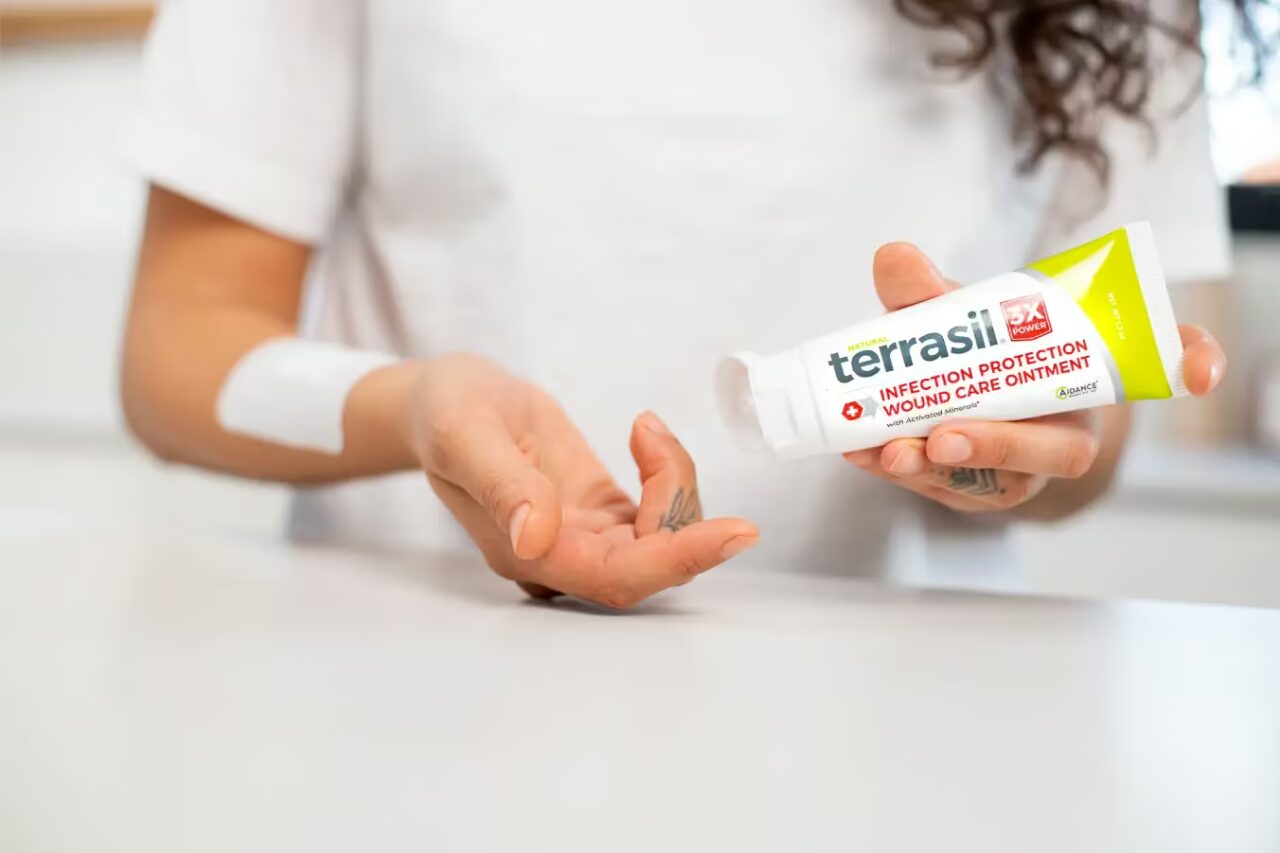
Before diving into products, it’s worth clarifying what you can safely treat at home. Minor cuts and scrapes are typically superficial injuries that don’t involve deep punctures, embedded objects, or significant bleeding. Most household injuries — paper cuts, scraped knees, minor kitchen cuts — fall into this category.
If a wound is deep, won’t stop bleeding after 10–15 minutes of pressure, or shows signs of infection (see our guide on how to treat an infected wound at home), that might be worth a conversation with a healthcare provider. If you haven’t already reached out to someone about it, now could be a good time.¹
First Aid Basics for Minor Cuts & Scrapes
The foundation of effective wound care starts with the basics:
STEP #1: Wash Your Hands First
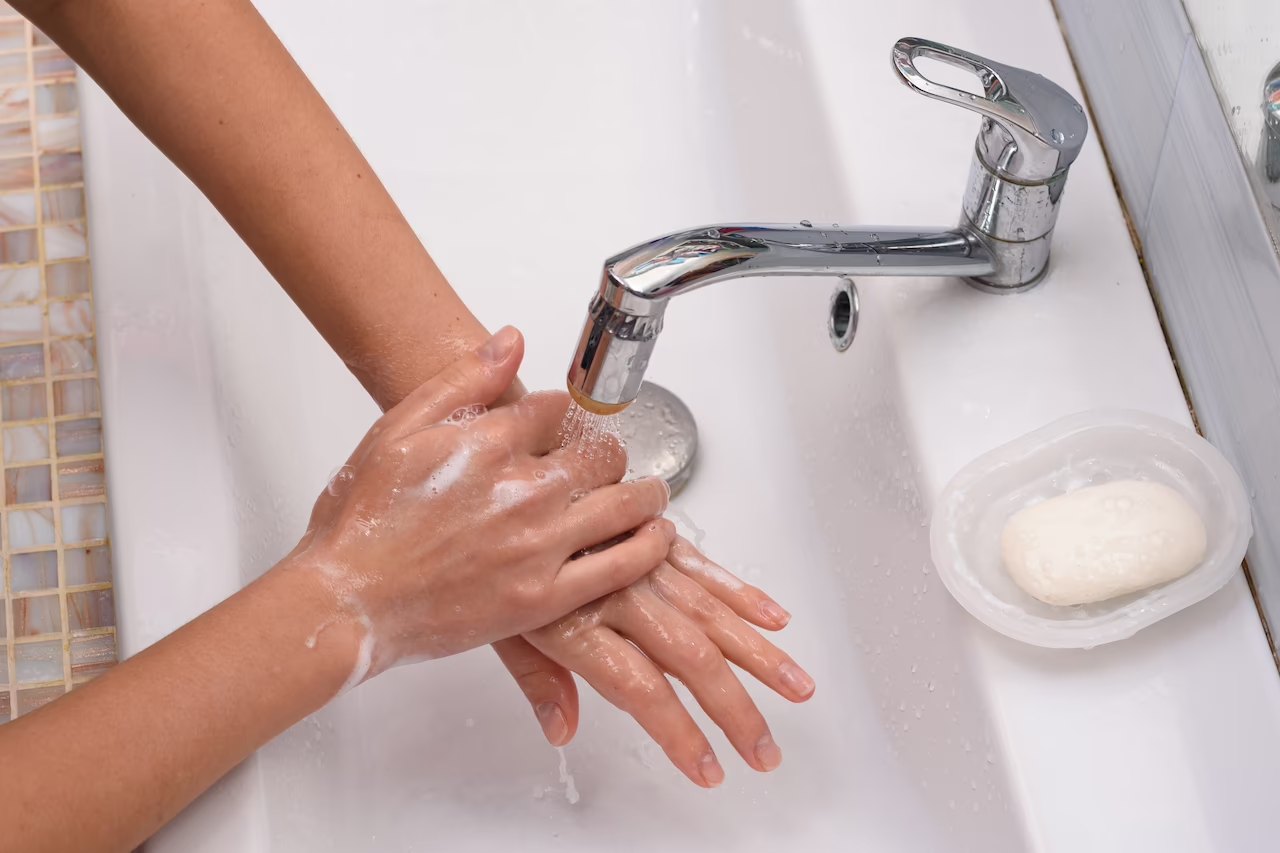
Before touching the wound, wash your own hands with soap and water. This prevents introducing new bacteria into the injured area.
STEP #2: Clean the Wound
Rinse the cut or scrape gently under cool running water with mild soap. This removes dirt, debris, and surface bacteria. A gentle, plant-based cleansing bar like Terrasil® Calendula Cleansing Bar is ideal for this step — it’s powerful enough to clean effectively yet gentle on sensitive skin and won’t sting. If there’s visible debris (such as gravel or dirt), you can gently pat the area with a clean cloth to remove larger particles.²
STEP #3: Pat Dry
Use a clean, lint-free cloth or sterile gauze to gently pat the area dry. Avoid rubbing, which can irritate the wound further.
STEP #4: Apply the Right Ointment
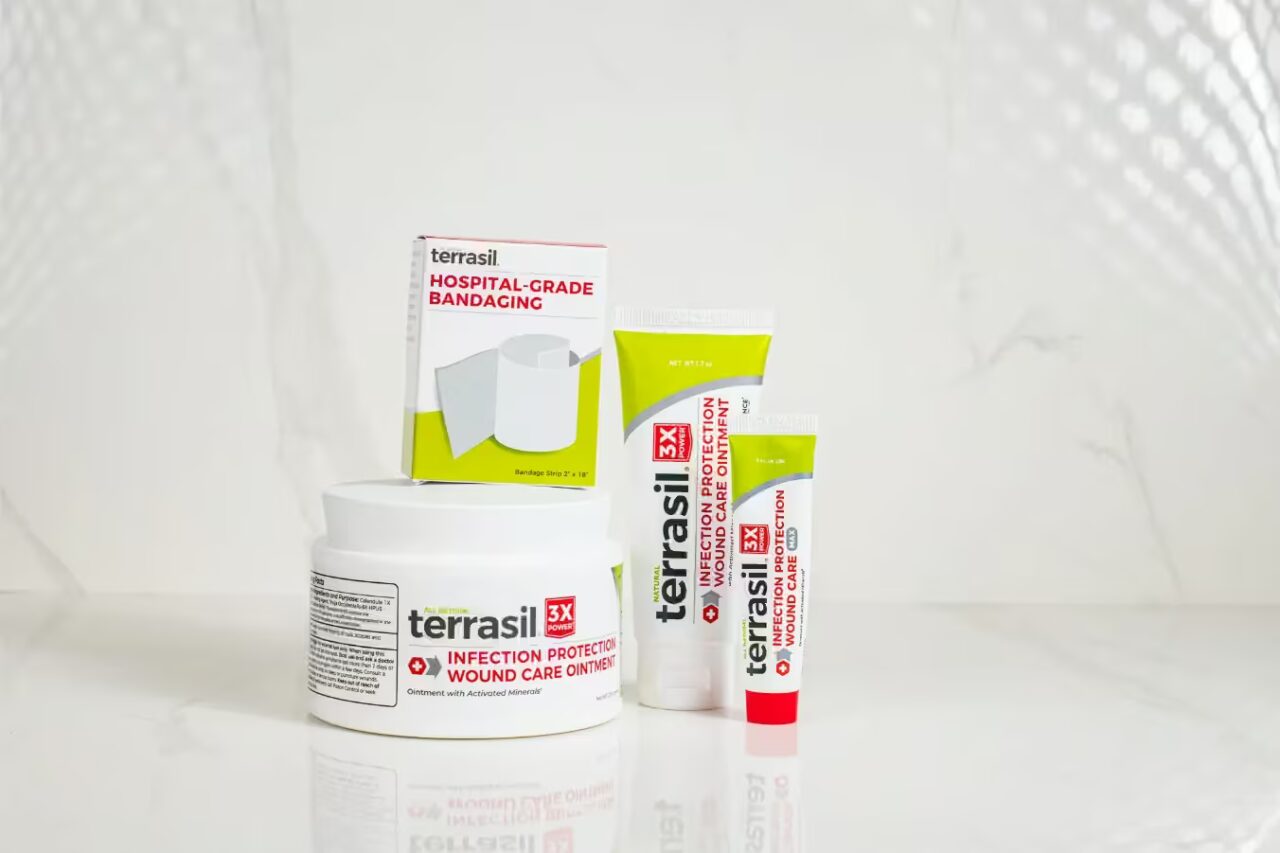
This is where your choice matters. After cleansing, your wound needs an ointment that will stay on for hours, maintaining moisture and protection while your skin recovers. If you want a product based on high-quality, natural ingredients designed to support your skin’s comfort — without synthetic chemicals, parabens, or unnecessary additives — choose Terrasil® Infection-Protection Wound Care Ointment. It features patented Activated Minerals® combined with botanical oils and natural moisturizers, specifically formulated to help maintain a protective barrier and keep skin comfortable during the recovery process.
If you prefer conventional synthetic antibiotic ointments (bacitracin or triple antibiotic formulas), those are widely available and inexpensive. Both options work to create a protective environment for your wound.³
STEP #5: Protect and Cover
Cover the wound with a sterile bandage or gauze pad, especially if it’s in an area prone to rubbing or dirt. This keeps the area clean and maintains the ideal moisture level for recovery.
STEP #6: Replace Daily
Change the dressing daily or whenever it becomes wet or soiled. Continue this routine until the wound closes and new skin has formed.
Why Ointments Matter for Wound Recovery
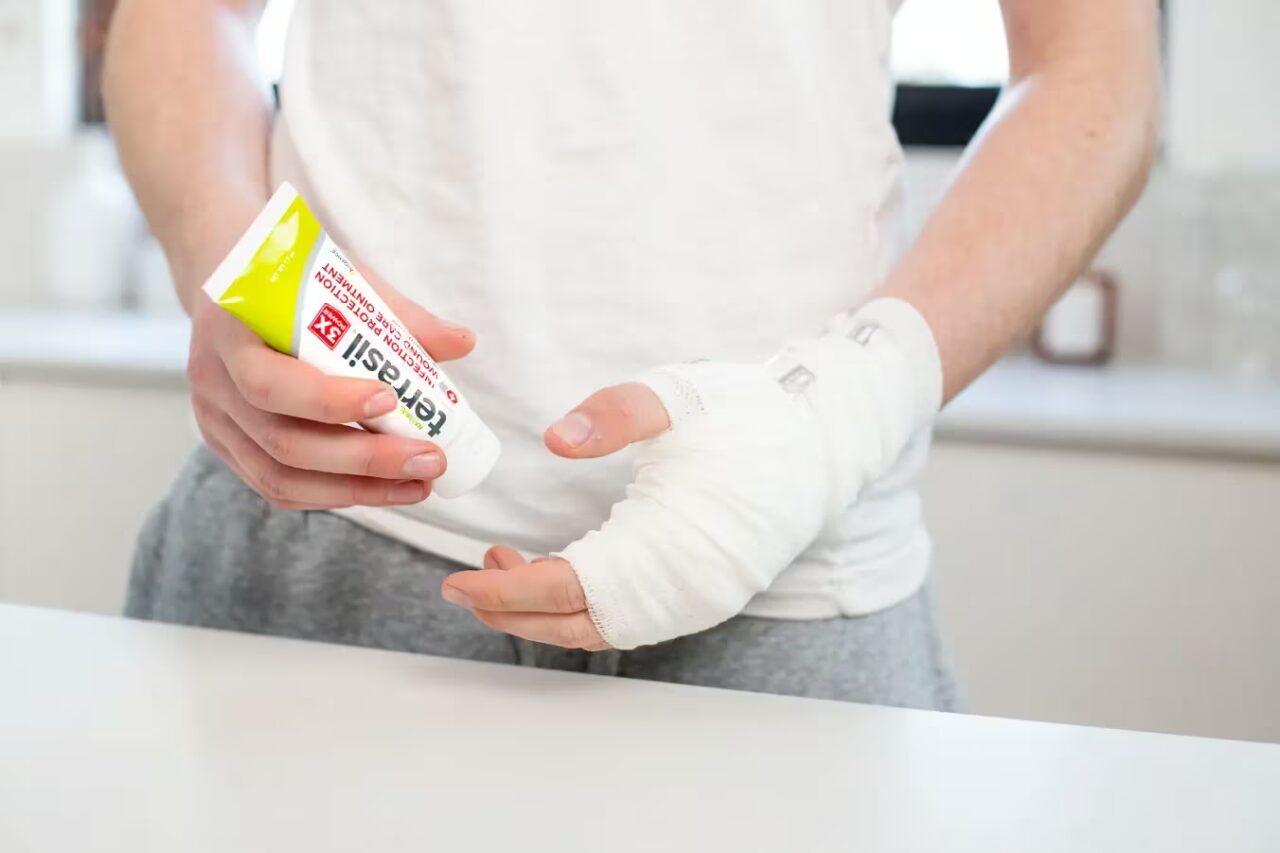
After you clean a wound with soap and water, an ointment plays an important role in the recovery process.
An ointment serves three key purposes: it maintains moisture, creates a protective barrier, and keeps the wound environment comfortable. Research consistently shows that wounds kept in a slightly moist, protected environment progress through recovery more efficiently than wounds left exposed or treated with harsh, drying products.⁴
The quality of your ointment matters because it’s in direct contact with healing tissue. High-quality, natural ingredients like those in Terrasil® support your skin’s comfort without irritation. All ointments work to protect the wound, but formulations differ in their ingredients and how they support the skin environment.
What NOT to Do to a Wound: Common Mistakes That Slow Recovery
Just as important as knowing what to do is understanding what to avoid. These common practices can irritate wounds, disrupt the recovery process, or introduce complications.
Don’t Use Hydrogen Peroxide
Hydrogen peroxide was a staple of home first-aid kits for generations, but modern wound-care science has moved away from it — and for good reason.
When hydrogen peroxide contacts a wound, it fizzes and bubbles. Many people assumed this action was “cleaning,” but what’s actually happening is a chemical reaction that damages healthy skin cells. This irritates the wound bed and causes unnecessary discomfort. Additionally, hydrogen peroxide breaks down quickly in the body, meaning its antiseptic benefit is minimal.⁵ For minor cuts, soap and water are far more effective.
Don’t Over-Clean or Scrub
While keeping a wound clean is important, aggressive scrubbing or repetitive cleaning causes further tissue damage. Once you’ve gently cleansed the wound and removed visible debris, additional scrubbing makes things worse — not better. After the initial cleaning, simply apply your chosen ointment. Excessive manipulation of the wound can restart inflammatory responses and interfere with the recovery process.⁶
Don’t Leave Minor Wounds Completely Exposed
There’s an old saying that wounds “need air to heal,” but research shows wounds kept covered in a moist (but not wet) environment progress more efficiently through recovery.⁷ Completely dry wounds form thick scabs, which can be uncomfortable. A covered wound with the right ointment maintains an environment that supports the skin’s natural recovery process.
Don’t Use Alcohol, Iodine, or Bleach to Clean
Rubbing alcohol denatures proteins in both bacteria and your own healthy skin cells, causing unnecessary damage. Iodine can stain and irritate. Bleach is toxic to living tissue. Instead, as we stated above, use soap that is gentle, effective, and won’t damage delicate tissue.
Don’t Apply Products to Completely Wet Wounds
If a wound is weeping (releasing clear or slightly yellowish fluid) or actively bleeding, pat it dry first with a clean cloth. This fluid is your body’s natural response to injury, but products applied to wet wounds are diluted and less effective. Always dry the wound thoroughly before applying your ointment.
Don’t Reuse Contaminated Applicators
Use a clean applicator each time — don’t dip fingers directly into shared containers. This prevents contaminating the product and introducing bacteria back into the wound.
Best Over-the-Counter Products for Treating Minor Cuts and Scrapes
Feature | Terrasil® Wound Care Ointment | Generic Synthetic Antibiotic Ointments | Petroleum Jelly |
|---|---|---|---|
Natural Ingredients | ✓ Patented Activated Minerals®, botanical oils, plant-based moisturizers | ✗ Synthetic chemicals and fillers | ✗ Petroleum-based only |
Gentle on Sensitive Skin | ✓ Free of parabens, artificial fragrances, unnecessary chemicals | ✗ Often contains allergens (neomycin) | ✗ Can cause irritation |
Maintains Moisture & Protective Barrier | ✓ Designed for extended comfort and protection | ✗ Creates basic barrier | ✗ Creates basic barrier |
Supports Skin Comfort | ✓ Soothing botanical oils and natural moisturizers | ✗ Limited comfort support | ✗ Limited comfort support |
Quality of Ingredients | ✓ High-quality natural formulation | Synthetic compounds | Single-function barrier |
Bonus: Pair Terrasil® Infection-Protection Wound Care Ointment with Terrasil® Calendula Cleansing Bar for a complete natural wound-care routine — gentle yet effective cleansing without over-drying.
Moist Wound Care Environment
One of the most important principles in modern wound care is maintaining a moist wound environment. Wounds kept covered with an appropriate ointment and bandage allow the skin’s natural recovery process to progress more efficiently compared to wounds that are left exposed to air and allowed to dry out completely.
This is why ointment-based products are commonly recommended — they help maintain moisture and create a protective environment that supports the skin during recovery.
Frequently Asked Questions
Conclusion
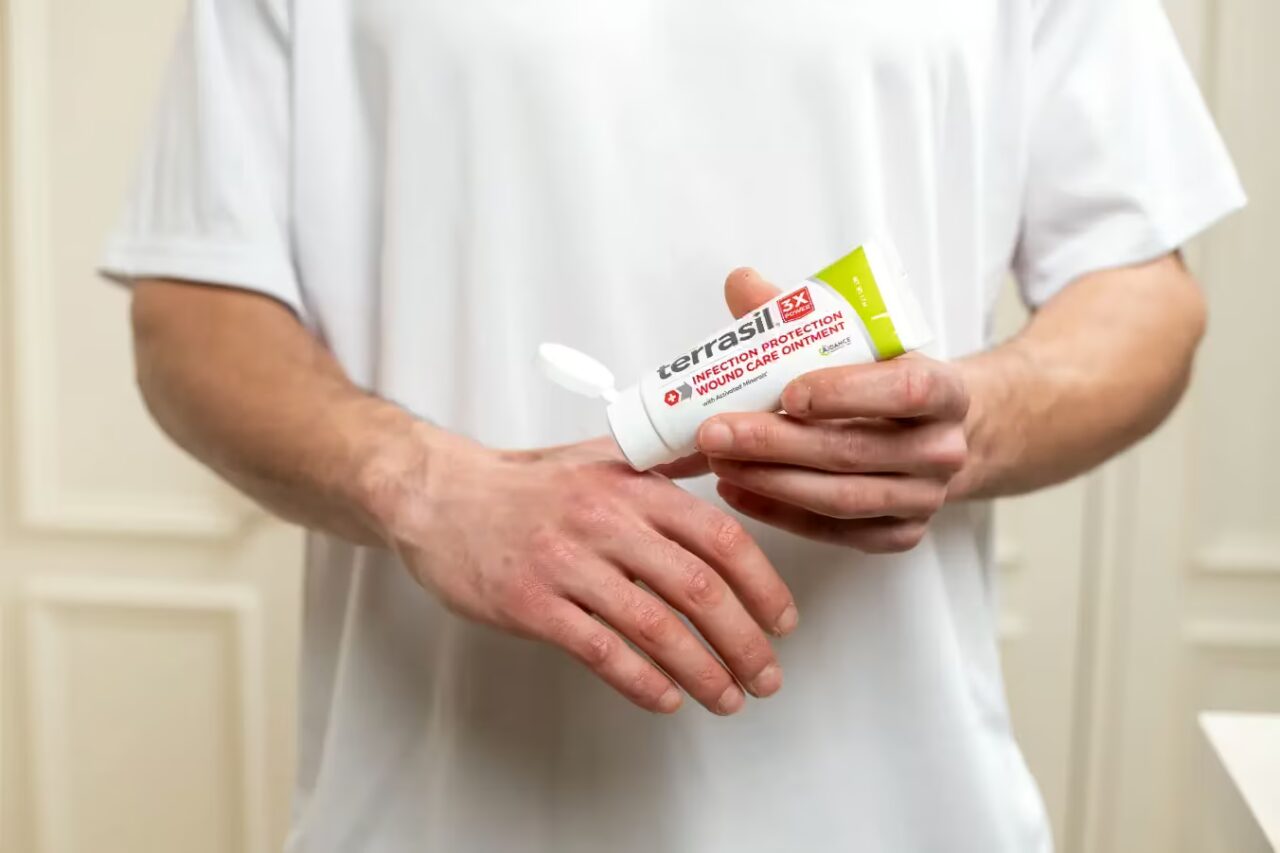
Caring for minor cuts and scrapes at home is straightforward — but your choice of ointment matters. Clean with gentle soap and water, remove debris, pat dry, and apply a high-quality product that will support your skin’s comfort and recovery.
If you want an ointment based on natural, high-quality ingredients designed to support sensitive skin and maintain a protective barrier, Terrasil® Infection-Protection Wound Care Ointment is an excellent choice. If you prefer conventional synthetic antibiotic ointments, those are also widely available.
Either way, the key is consistency: apply your chosen ointment daily, keep the wound covered, and avoid common mistakes that interfere with recovery. Most minor injuries recover well with basic care and a little patience.
References
- ¹ Centers for Disease Control and Prevention. (2023). When to Seek Medical Care for Wounds. CDC.gov.
- ² American Academy of Dermatology. (2022). Wound Care and Infection Prevention. AAD.org.
- ³ Cleveland Clinic. (2023). Wound Care Products and Recovery. Cleveland Clinic Health Essentials.
- ⁴ Junker, J. P., et al. (2013). Clinical Efficacy and Cost-Effectiveness of Moist Wound Healing. International Wound Journal, 10(4), 423–428.
- ⁵ NHS. (2023). Hydrogen Peroxide: Use in Wound Care. NHS.uk.
- ⁶ American College of Wound Healing Specialists. (2022). Optimal Wound Cleansing Techniques. Wound Care Today.
- ⁷ Eaglstein, W. H. (1985). Moist Wound Healing. Journal of the American Academy of Dermatology, 12(4), 662–668.
Disclaimer
This content is for educational purposes only and is not a substitute for professional medical advice. Always consult with a healthcare provider if you have concerns about wound care.