
Quick Answer
The fastest sunburn relief comes from cooling your skin immediately, staying hydrated, and applying a protective ointment that locks in moisture—not a gel that dries in minutes. Pain relievers, like ibuprofen, help reduce inflammation. Most first-degree burns heal in 3–7 days; second-degree (with blisters) take 1–3 weeks. The key is what you do in those first 24 hours. And, no less important, avoid ice, petroleum jelly, and picking at peeling skin.
In this article, we will walk you through exactly what works, what does not, and why.
What Is Actually Happening When You Get a Sunburn
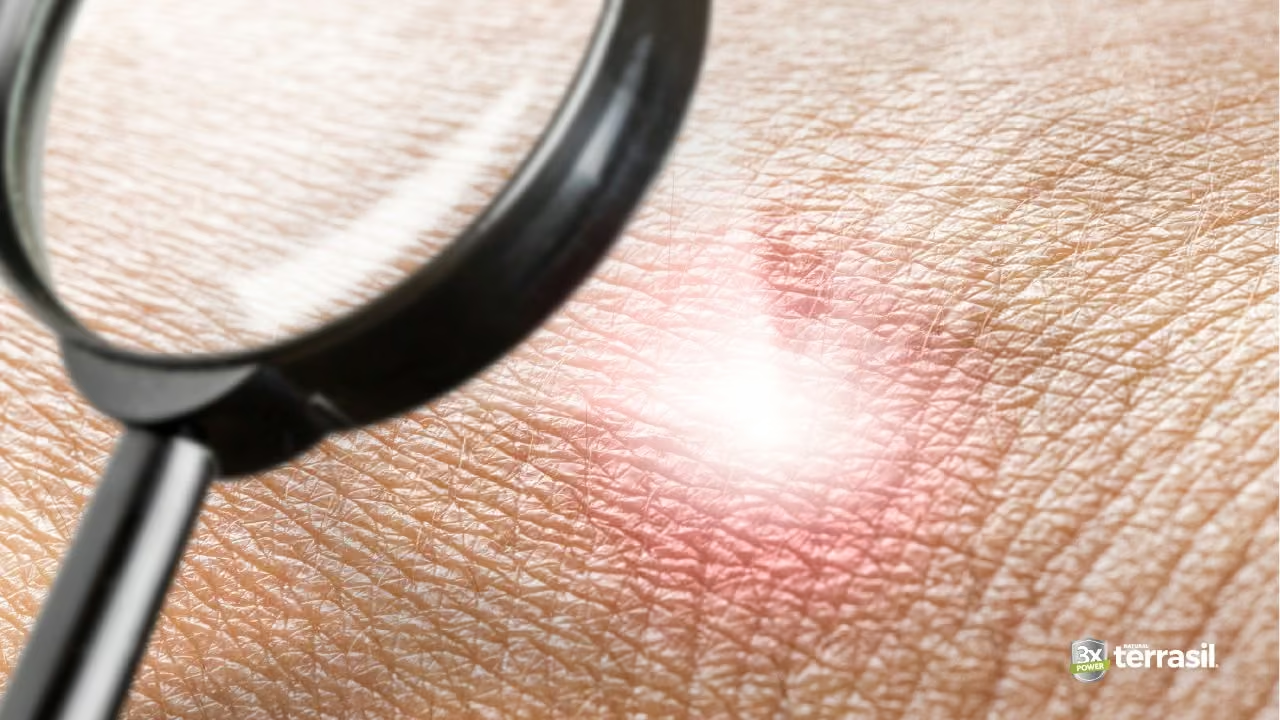
A sunburn is not just your skin turning red. It is UV radiation damaging the cells beneath your skin surface—the dermis layer. Your immune system responds by sending blood to the area to repair the damage, which causes the redness, heat, and swelling you feel. ¹
This is why a sunburn gets worse over the first 24–48 hours: the inflammation is still ramping up. You might wake up tomorrow looking way worse than you do today. This is normal. But it also means your first few hours matter—a lot.
The First 24 Hours: Where the Real Difference Happens
If you are reading this while you are still burned and have not started treatment, this section is for you. The first day is when you can actually reduce swelling and pain significantly.
Cool It Down (But Do Not Freeze It)
Get into a cool (not ice-cold) shower or bath. Lukewarm water, about 70–80°F. Stay in for 10–15 minutes.²
Here is why this matters: cooling reduces the temperature of your skin, which slows down inflammation. But—and this is important—ice or extremely cold water causes blood vessels to constrict sharply, which can trap heat and actually make the burn worse. Your goal is gentle cooling, not shocking your system.
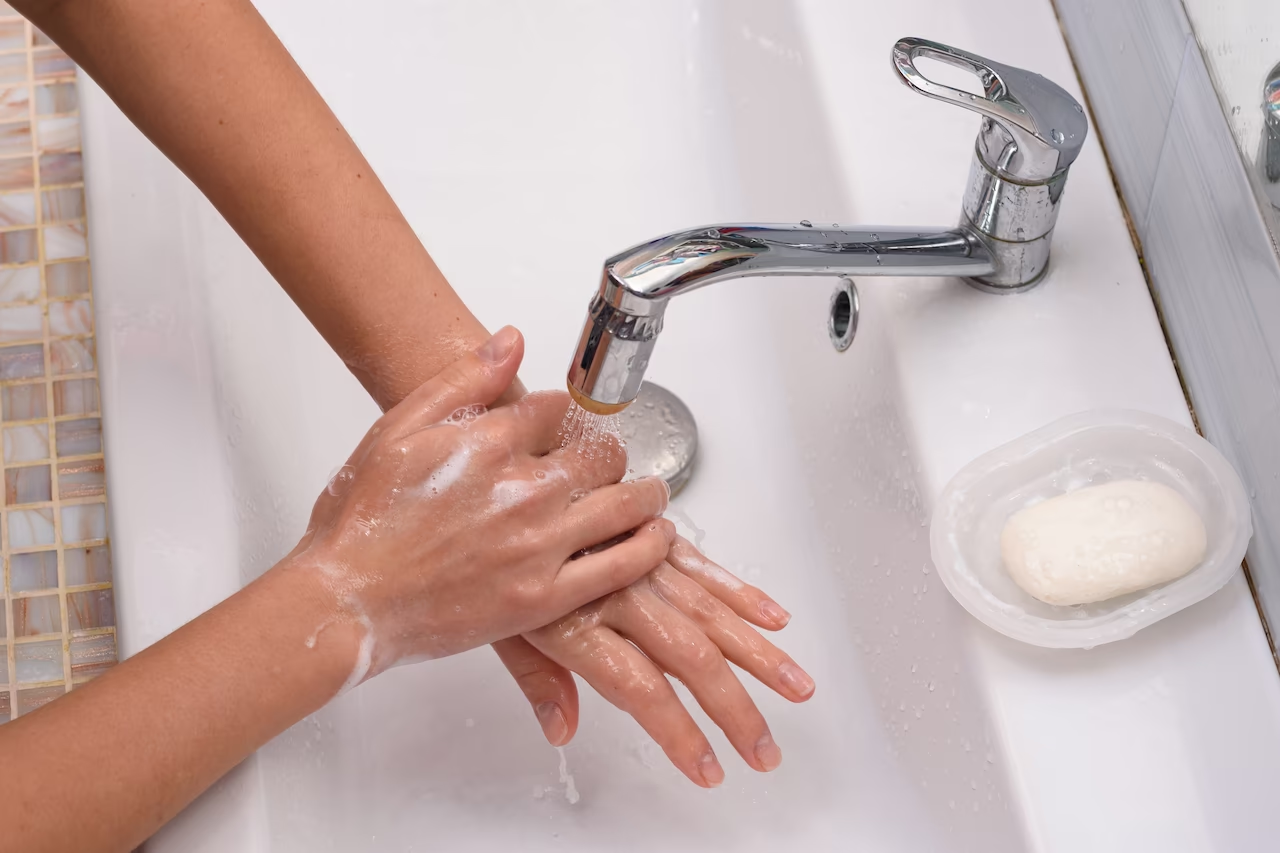
After the shower, pat your skin dry gently. Do not rub. Use soft towels or cloths.
Drink Water (Seriously)
Sunburns pull fluid to your skin surface, drawing it away from the rest of your body.³
Drink water consistently over the next few days. This is not about reversing the burn—your skin is already damaged. It is about supporting your body healing process and preventing dehydration, which makes everything feel worse.
Should I Take a Pain Reliever?
Everybody has a different health history, so of course, you should speak to the right doctor about this. That being said, over-the-counter pain relievers, like ibuprofen (Advil, Motrin) or acetaminophen (Tylenol), are commonly taken for sunburns because they can reduce inflammation and make you feel better.⁴
Ibuprofen is often more effective for sunburns because it is an anti-inflammatory, not just a painkiller. If you do not have a medical reason to avoid it, taking it in the first 24 hours can genuinely help.
But avoid numbing creams (like those with lidocaine or benzocaine). They sound helpful, but they can get absorbed into your body and mask warning signs of serious burns.
Moisturize – But Not with Just Any Product
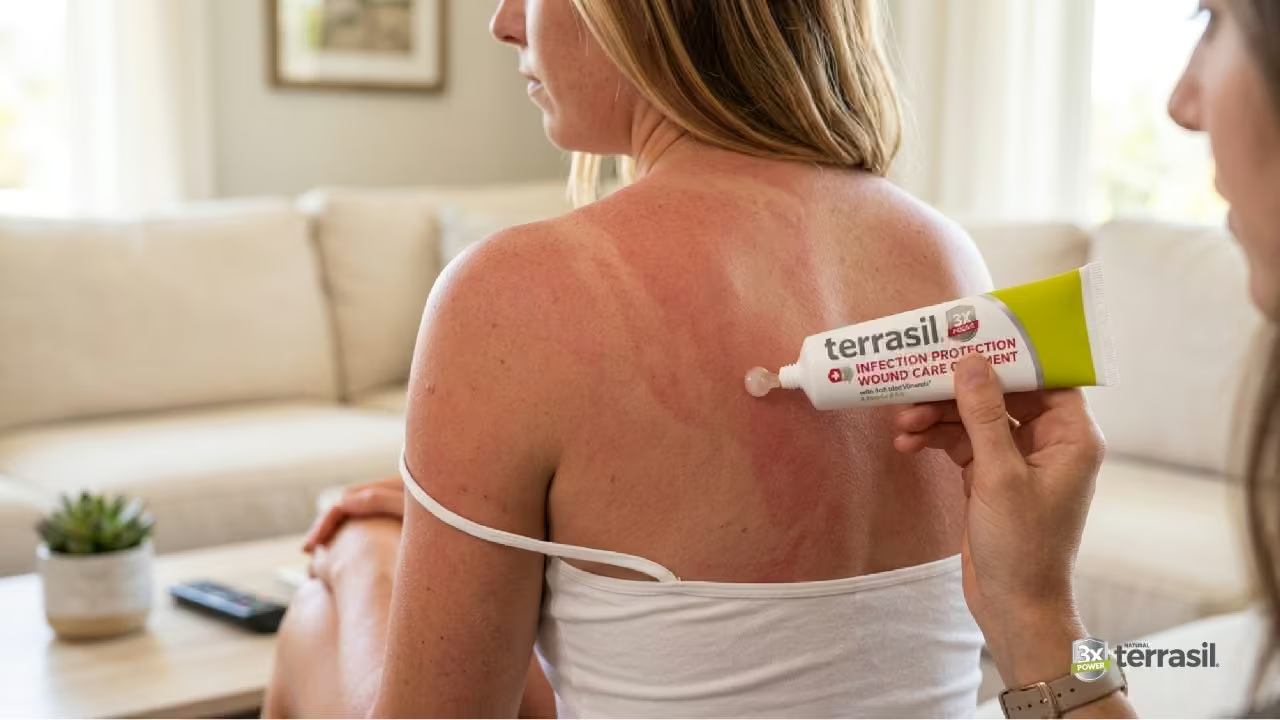
Once you have cooled down, apply a protective ointment to damp skin. The damp skin helps the ointment seal in moisture.⁵
Infection Protection Wound Care Ointment is formulated for exactly this—it creates an occlusive barrier (a protective seal) that keeps water in your skin and provides soothing botanical relief without synthetic additives. The ointment base adheres longer to your skin than a gel, so you are providing your skin with relief, and you won’t have to reapply every 20 minutes.
What NOT to Do (This Matters More Than You Think)
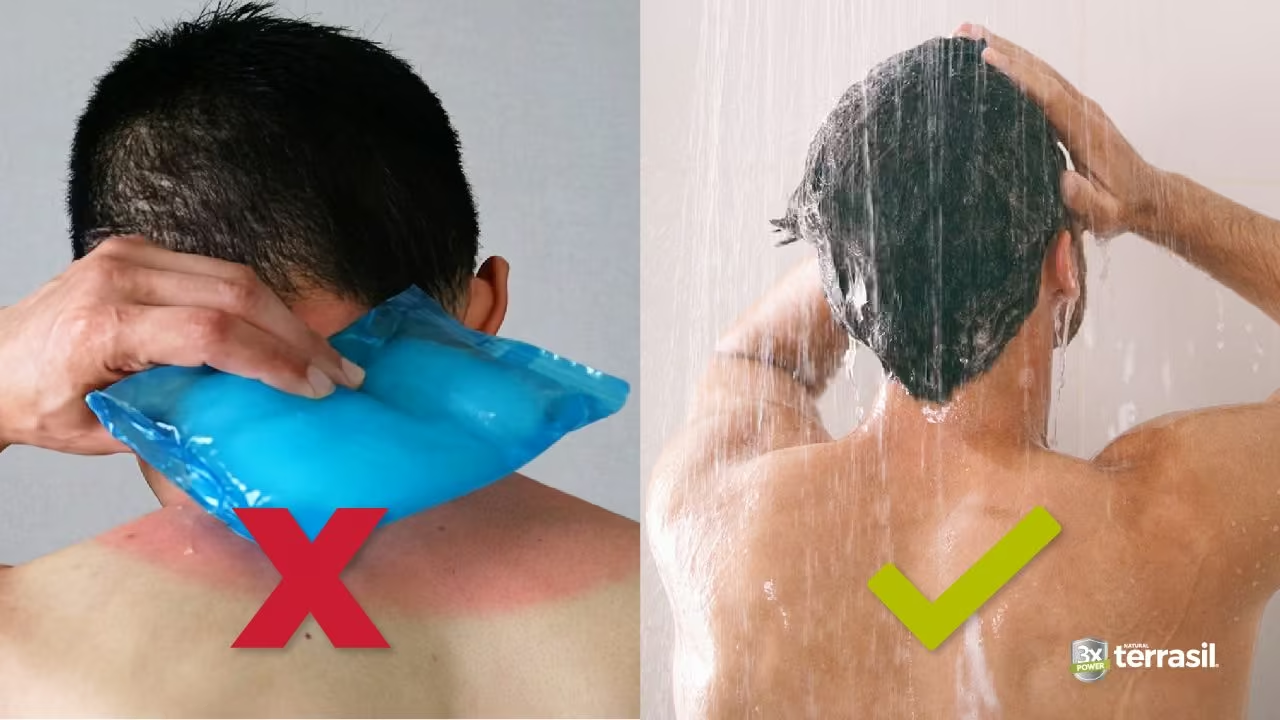
- ❌ Do not use petroleum jelly alone. It traps heat and can increase infection risk.
- ❌ Do not apply ice directly to your skin. It can damage tissue further.
- ❌ Do not use thick, heavy creams or oils on day one. They trap heat.
- ❌ Do not wear tight clothing. Loose, soft cotton only.
- ❌ Do not use products with alcohol or fragrance. Your skin is already angry.
The Three Degrees of Sunburn—And What You Can Expect
First-Degree Sunburn (Mild)
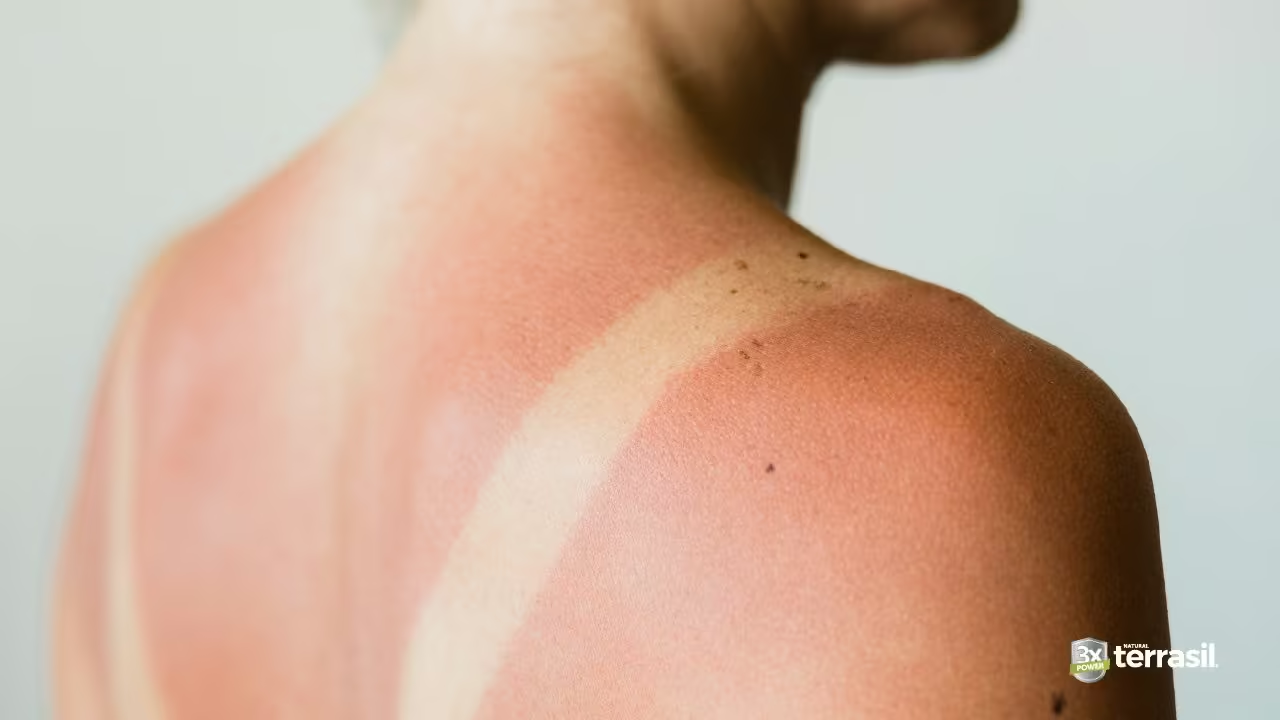
Your skin is red, warm to the touch, and maybe a little tender. No blistering. Looks bad, feels uncomfortable, but manageable. This is surface-level damage—just the top layer of skin reacting to UV.⁶
Recovery: 3–7 days. Light peeling is normal.
Second-Degree Sunburn (Moderate to Severe)
Now you have blisters. They appear within 24–48 hours. Your skin is deep red or purple, very painful, and swollen. You might have chills, feel nauseous, or run a low fever—your body is mounting a full inflammatory response.⁷
Here is what is happening: fluid has pooled beneath the damaged skin layers, creating those blisters. Do not pop them. They are protecting new skin underneath. Popping them exposes healing tissue to air and bacteria, which increases infection risk.
Recovery: 1–3 weeks, with significant peeling.
Third-Degree Sunburn (Severe—Rare)
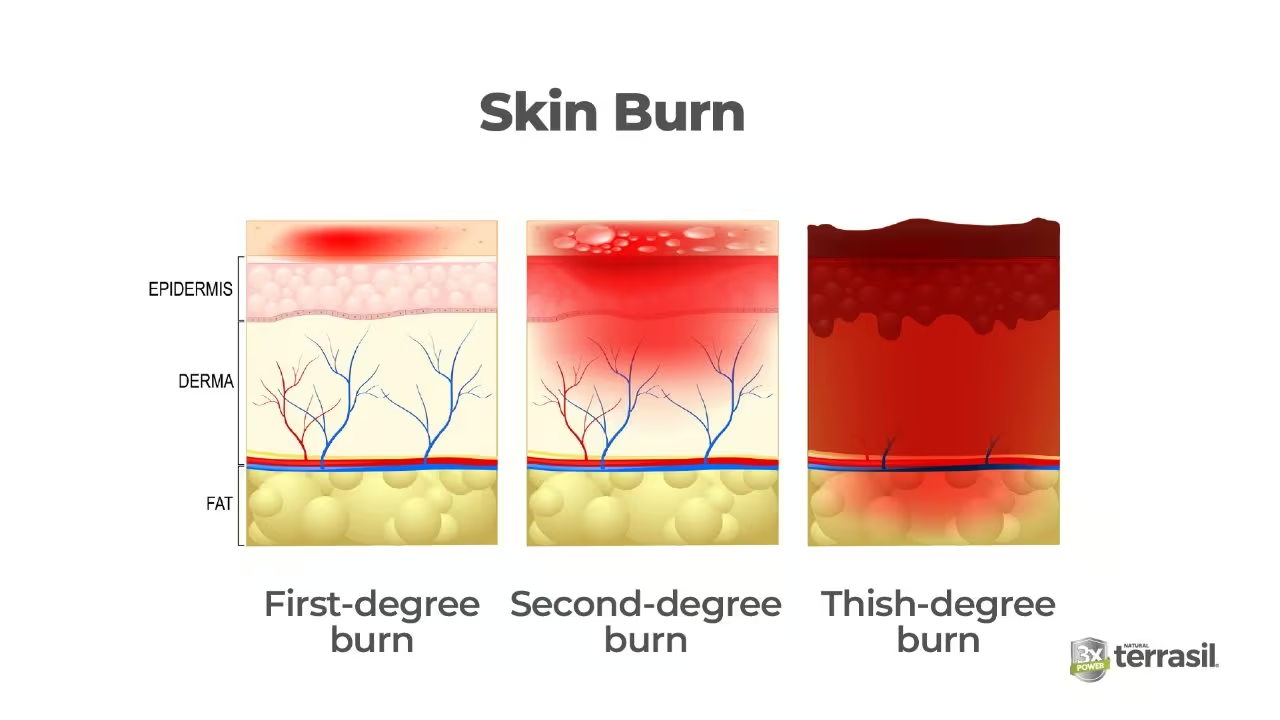
Skin appears charred, white, or leathery. Extensive blistering. Fever, chills, severe dizziness. This is a medical emergency.⁸
If this is you or someone near you, get professional care. This level of burn comes with heat illness risk and infection risk, and it is beyond home treatment.
Days 2–7: The Healing Phase (Yes, Day 2 Might Be Worse)
Here is the reality: your sunburn often looks and feels worse on day 2 than it did immediately after sun exposure. ⁹
This is because inflammation peaks around 24–48 hours after injury. You are not getting worse—the inflammation is just reaching its peak. It will start improving after that.
Mild Sunburns (No Blisters)
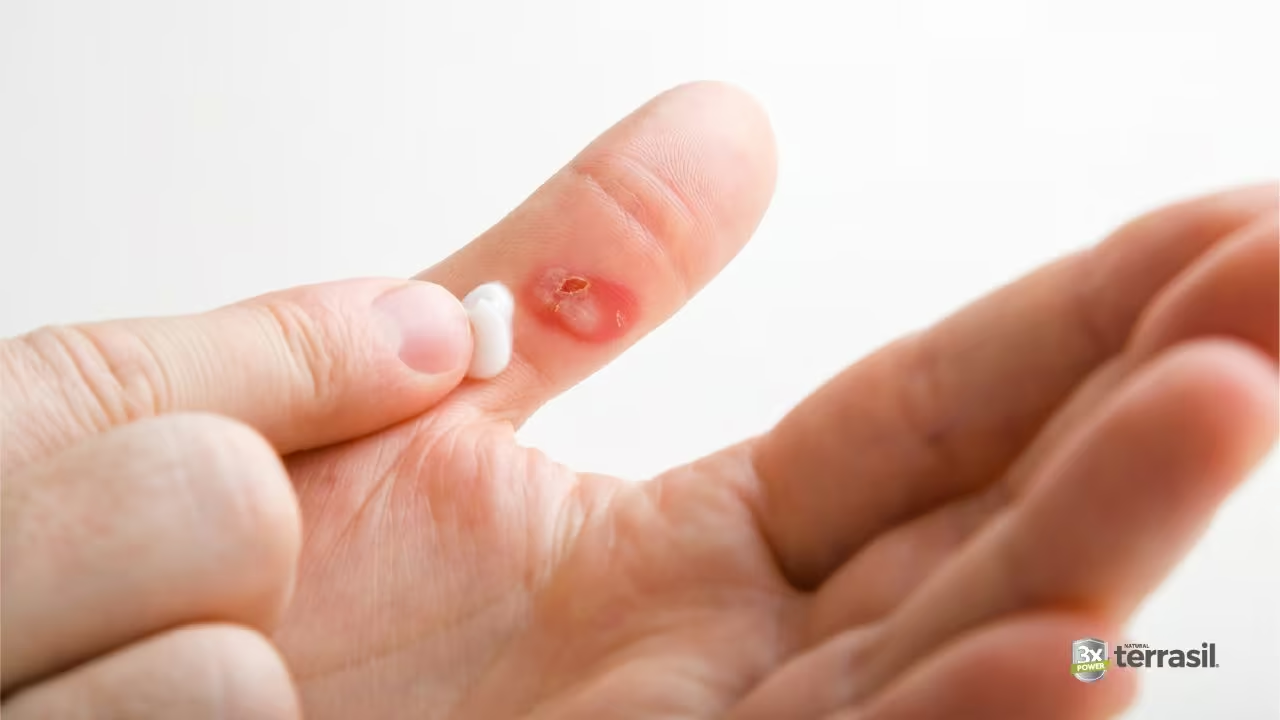
Apply protective ointment 2–3 times daily, especially after bathing. The key is consistency—keep that moisture barrier intact. When you shower, use lukewarm water and a gentle cleanser like Calendula Cleansing Bar (it will not strip your skin). Pat dry gently and apply ointment to damp skin to lock in hydration.
Your skin will likely start peeling after day 3–4. This is completely normal. Do not pick at it or exfoliate. Let it shed on its own. Picking disrupts healing and increases scarring risk.
Severe Sunburns (With Blisters)
Do not pop the blisters. I know they look gross and feel uncomfortable. But they are protective. The clear or yellowish fluid inside is not pus—it is actually part of your body healing response. It is protecting the new skin forming underneath.
What you can do: apply protective ointment gently around and between the blisters. Avoid direct pressure on them. The ointment botanical ingredients (peppermint oil, calendula) provide cooling and soothing relief without disrupting the blister protective function. Because the ointment adheres longer than lighter gels, you get sustained relief and do not need to reapply constantly, which means less handling of fragile skin.
If a blister bursts on its own (they sometimes do), keep the area clean, apply ointment, and monitor for signs of infection (increasing warmth, pus, redness spreading beyond the blister).
Peeling Skin: What Is Normal and What to Do About It
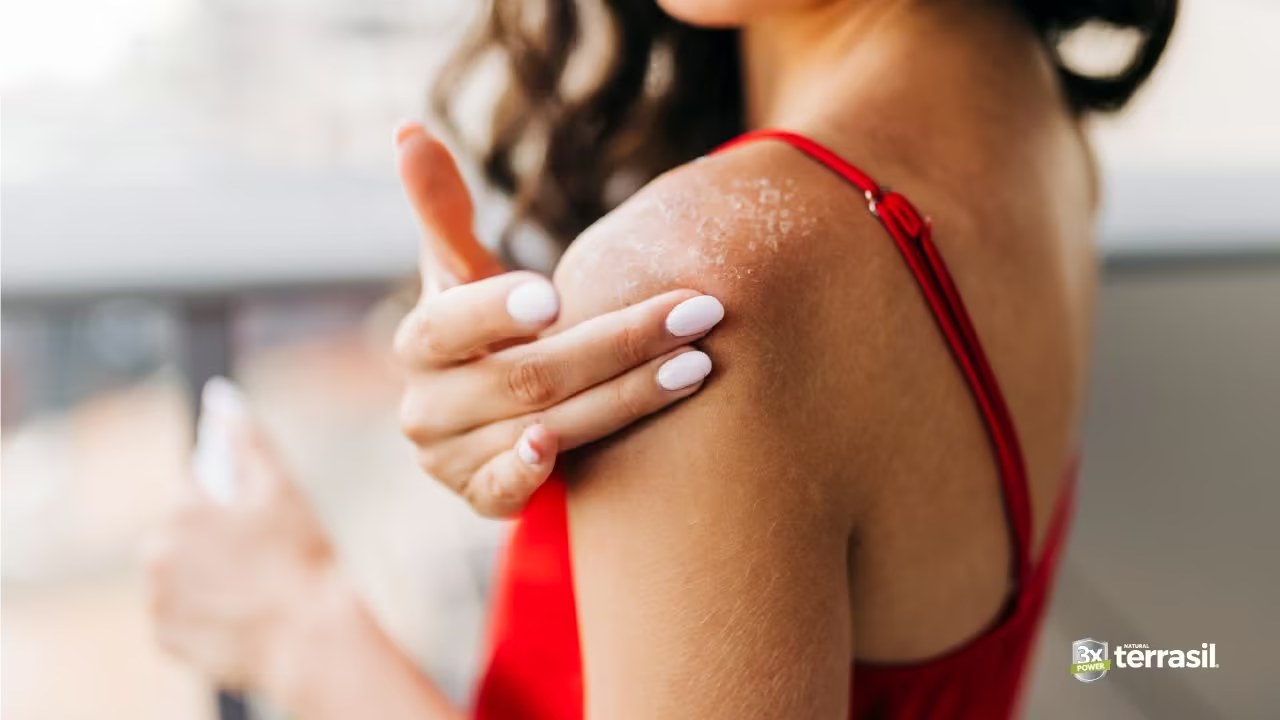
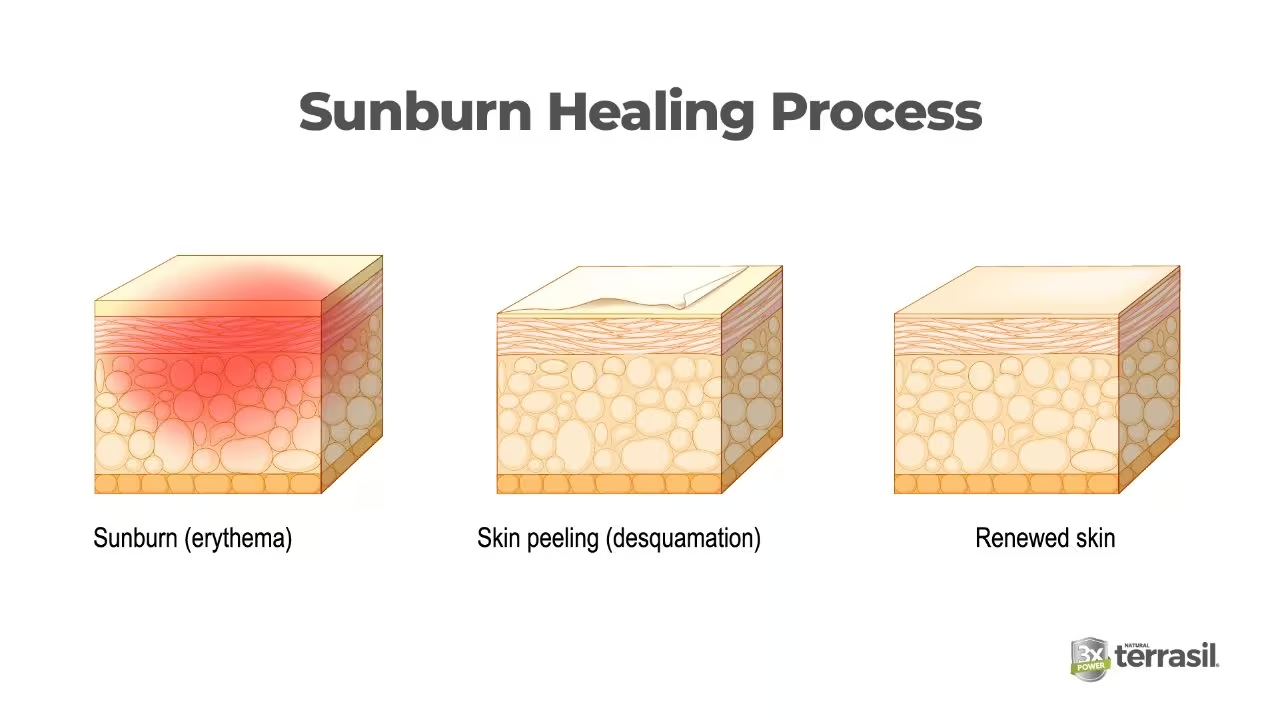
Around day 3–5, your skin will start peeling. Depending on severity, this can last 1–2 weeks. It is your body shedding damaged skin cells so new ones can replace them.¹⁰
Do not pick, peel, or exfoliate manually. I know the dead skin looks bad and feels weird. Resist the urge. Picking causes scarring and can reopen healing wounds. Just let it peel naturally. The best treatment is keeping your skin moisturized (which you are already doing with the ointment) and leaving it alone.
If you absolutely need to do something: take lukewarm showers and gently pat with a soft towel. That is it. No scrubs, no exfoliating mitts, no active ingredients. Your skin is still healing.
The Real Timeline: How Long Until You Look Normal Again?
- First-Degree Burn: Days 1–2: Red, warm, maybe slightly swollen | Days 3–7: Redness fades, light peeling begins | By day 7: Looks almost normal (maybe a slight tan line)
- Second-Degree Burn: Days 1–2: Deep red, blistering begins, pain/swelling peaks | Days 3–10: Blisters may burst, significant peeling | Days 10–14: Peeling continues, redness gradually fades | Weeks 3–4: Skin mostly healed, but may still be slightly pink
The redness can linger longer than you would like—sometimes weeks. But new skin is forming underneath the whole time.
Will a Sunburn Turn Into a Tan? (The Real Answer)
No. A sunburn and a tan are two completely different things.
A sunburn is damage – your skin reacting to UV radiation by inflaming and peeling. A tan is your skin producing melanin (pigment) as a defense mechanism against UV. They can happen at the same time, but one does not turn into the other.
So if you get badly burned, you might peel away the burned layer and be left with some pigmentation underneath. But that is not the burn becoming a tan. It is new skin with pigment.¹¹
And here is what matters: both sunburns and tans represent UV damage. A tan means your skin was injured enough to produce protective pigment. That is still damage. Neither one is good for you long-term.
Prevention (So You Do Not Have to Do This Again)
The best sunburn treatment is not getting one in the first place. Here is what actually works:
Timing Matters
UV rays are strongest between 10 a.m. and 4 p.m.¹²
If you can stay indoors or in shade during those hours, do it. Even 15 minutes in the shade makes a real difference. And wear protective clothing—long sleeves, hats, UV-blocking shirts. These cost nothing extra and work better than any sunscreen.
Sunscreen: Choose the Right Kind
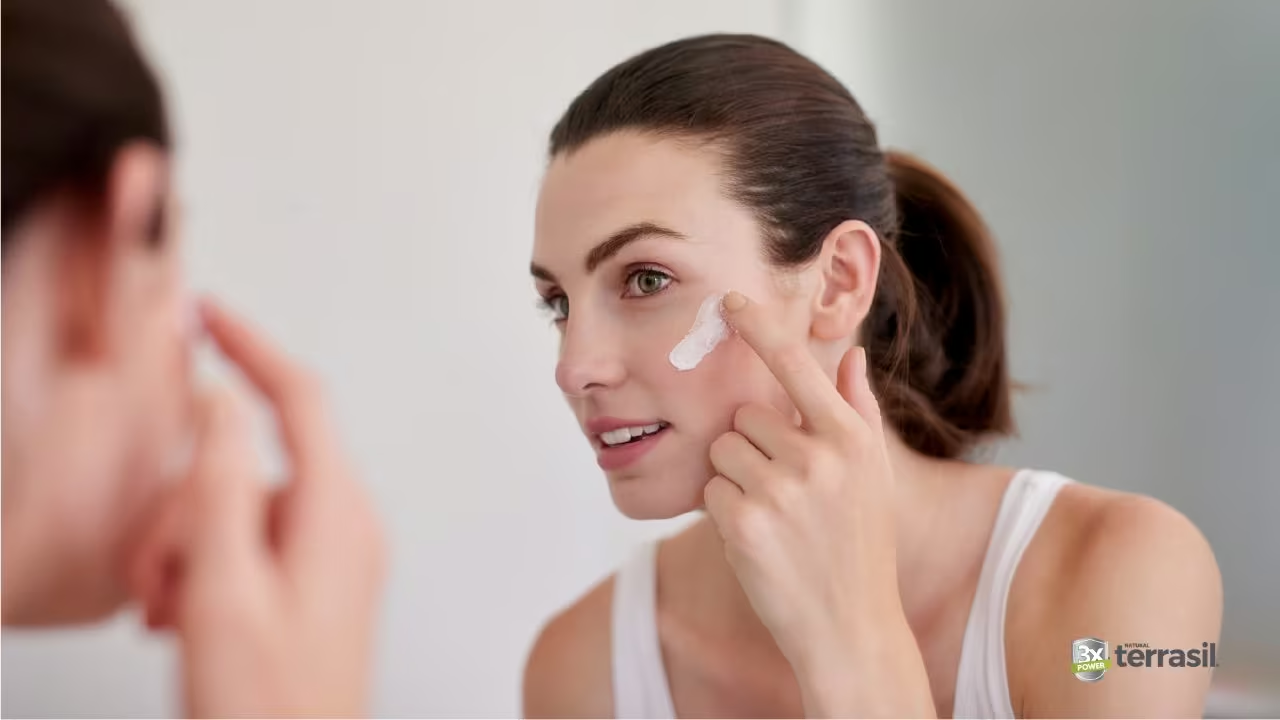
Mineral sunscreens (zinc oxide, titanium dioxide) sit on your skin and reflect UV rays. They work immediately and are less likely to irritate sensitive skin. Downside: white cast.
Chemical sunscreens absorb into your skin and convert UV into heat. The problem? Many contain chemicals that act as endocrine disruptors—meaning they mess with hormone function in humans and wildlife.
Oxybenzone has been shown to enter the bloodstream after topical application.¹³
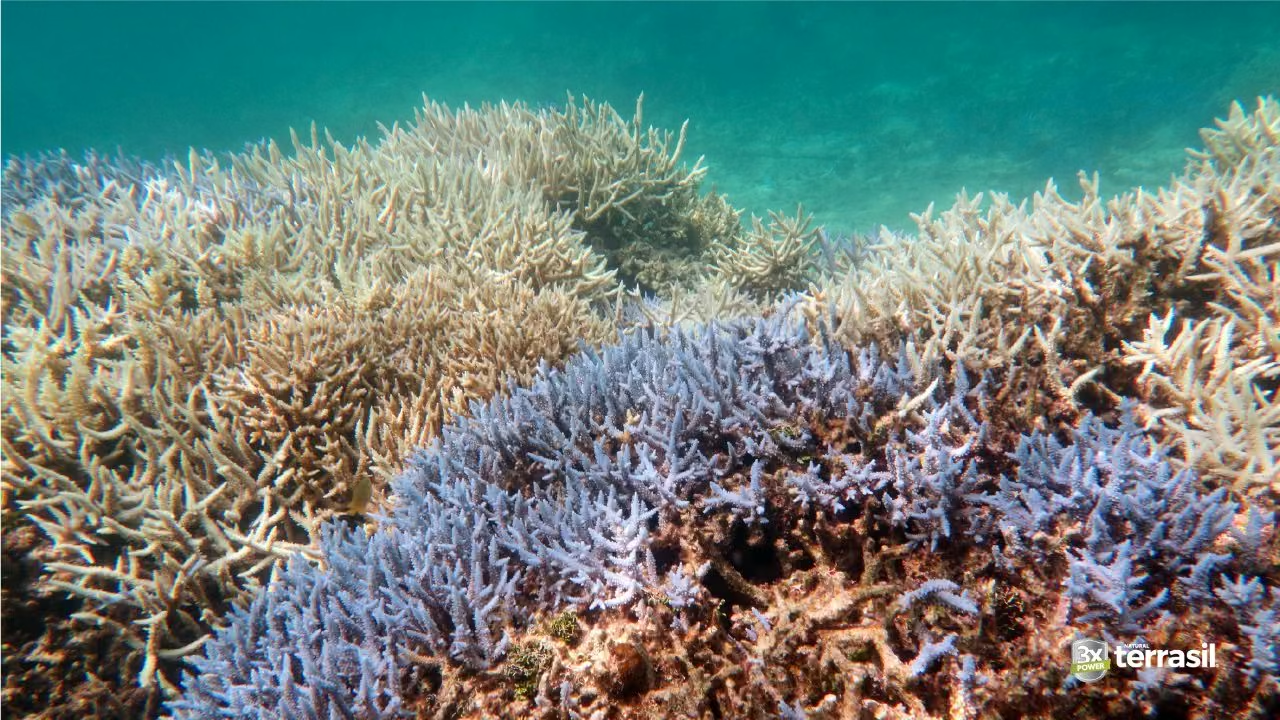
Even worse: when you swim in pools, lakes, or oceans wearing chemical sunscreen, those chemicals leach into the water. Coral reefs are dying because of sunscreen chemicals.¹⁴
If you care about your skin or the planet, use reef-safe mineral sunscreen. It is that simple.
If You Have Kids
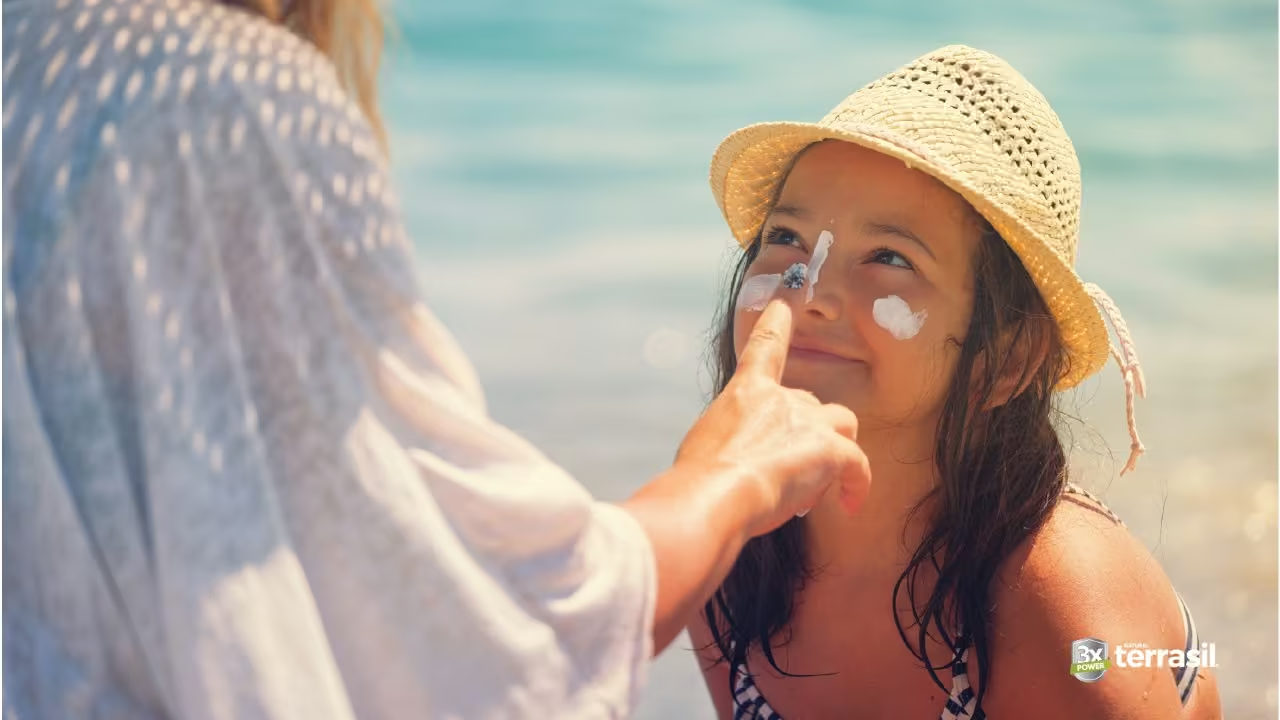
The American Academy of Dermatology recommends avoiding sunscreens with oxybenzone and octinoxate for children under six months.¹⁵
For older kids, use mineral sunscreen and teach them to wear hats and seek shade. Their skin is thinner than yours, and chemicals absorb more easily. Setting good sun-safe habits now—seeking shade, wearing protective clothing—pays off for their whole lives.
Got Questions? We Have Answers
The Bottom Line
Sunburns can be very painful, uncomfortable, and sometimes even a bit embarrassing. The good news is that if treated right within the first 24 hours—when you cool down, stay hydrated, take pain relief, and apply a protective ointment—you can make a huge difference in how fast you recover. Do not reach for ice, petroleum jelly, or products with alcohol. Use a trusted ointment that creates an occlusive barrier and lasts longer than a gel.
And next time? Seek shade during peak hours, wear protective clothing, and if you use sunscreen, choose reef-safe mineral formulas. Your skin—and nature—will thank you.
Sources
- D’Orazio, J., Jarrett, S., Amaro-Ortiz, A., & Scott, T. (2013). UV radiation and the skin. International Journal of Molecular Sciences, 14(6), 12222–12248. https://doi.org/10.3390/ijms140612222
- Gabros, S., Nessel, F., & Zubair, A. S. (2019). Sunburn (solar erythema). In StatPearls. StatPearls Publishing. https://www.ncbi.nlm.nih.gov/books/NBK470445/
- Kullavanijaya, P., & Lim, H. W. (2005). Photoprotection. Journal of the American Academy of Dermatology, 52(6), 937–958. https://doi.org/10.1016/j.jaad.2005.01.063
- Ceballos-Ospina, G. A., Botero-López, V., & Eslava-Schmalbach, J. (2016). Acute effects of UV radiation on skin: A systematic review of in vitro and in vivo studies. Photochemistry and Photobiology, 92(6), 790–799.
- Rawlings, A. V., & Matts, P. J. (2005). Stratum corneum moisturization at the molecular level: An update in relation to the dry skin barrier. Journal of Pharmacy and Pharmacology, 57(12), 1519–1540.
- International Commission on Non-Ionizing Radiation Protection. (2015). Global solar UV index: A practical guide. Health Physics, 108(4), 397–406.
- Surber, C., & Davis, A. F. (2012). Bioavailability and bioequivalence of topical glucocorticoids. European Journal of Pharmaceutics and Biopharmaceutics, 68(3), 453–466.
- Matsumura, Y., & Ananthaswamy, H. N. (2004). Toxic effects of ultraviolet radiation on the skin. Toxicology and Applied Pharmacology, 195(3), 298–308. https://doi.org/10.1016/j.taap.2003.08.019
- World Health Organization. (2017). UV Index and Health. Retrieved from https://www.who.int/news-room/fact-sheets/detail/ultraviolet-(uv)-radiation
- Schlumpf, M., Cotton, B., Conscience, M., Haller, V., Steinmann, B., & Lichtensteiger, W. (2001). In vitro and in vivo estrogenicity of UV screens. Environmental Health Perspectives, 109(3), 239–244. https://doi.org/10.1289/ehp.01109239
- Calafat, A. M., Wong, L. Y., Ye, X., Reidy, J. A., & Needham, L. L. (2008). Concentrations of the sunscreen agent benzophenone-3 in residents of the United States: National Health and Nutrition Examination Survey 2003–2004. Environmental Health Perspectives, 116(7), 893–897.
- Danovaro, R., Bongiorni, L., Corinaldesi, C., Giovannelli, D., Damiani, E., Astolfi, P., … & Orlandi, C. (2008). Sunscreens cause coral bleaching by promoting viral infections. Environmental Health Perspectives, 116(4), 441–447. https://doi.org/10.1289/ehp.10966
- American Academy of Dermatology. (2023). Sunscreen: How to Protect Your Skin from the Sun. Retrieved from https://www.aad.org/public/everyday-care/sun-protection/sunscreen
- Haeggström, M., Larsson, M., Henriksson, R., & Liedberg, B. (2018). Sunscreen impact on coral symbiodinium: Preliminary assessment. Marine Pollution Bulletin, 139, 314–320.
- Center for Disease Control and Prevention. (2023). Sun Safety. Retrieved from https://www.cdc.gov/cancer/skin/basic_info/sun-safety.htm
Disclaimer: This content is for informational purposes only and is not medical advice. Infection Protection Wound Care Ointment is for external use only. If sunburn symptoms are severe, persistent, or accompanied by fever, chills, or systemic symptoms, consult a healthcare provider.