

How Labels Mislead You: Understanding Ingredients in Conventional, Low-Toxic, and Non-Toxic Detergents
Your skin is your largest organ. It’s in contact with hundreds of products every single day—many of which are designed to stay on your skin, and many of which contain ingredients you’ve never heard of.
We’re not just talking about what you apply to your face or body intentionally. We’re talking about what touches your skin from the moment you wake up: the deodorant you apply, the lotion you use, the makeup you wear, the clothes you put on (which sat in detergent residue), the sunscreen you layer underneath, the fabric softener that clings to your sheets, the fragrances in your personal care products.
This is the first article in a series about what actually touches your skin and why it matters. Today, we’re starting with laundry detergent—one of the most overlooked and underestimated skin irritants in your home. Not because it’s the worst, but because it’s unavoidable. Your clothes, towels, and bedding touch your skin constantly, 24/7, whether you like it or not.
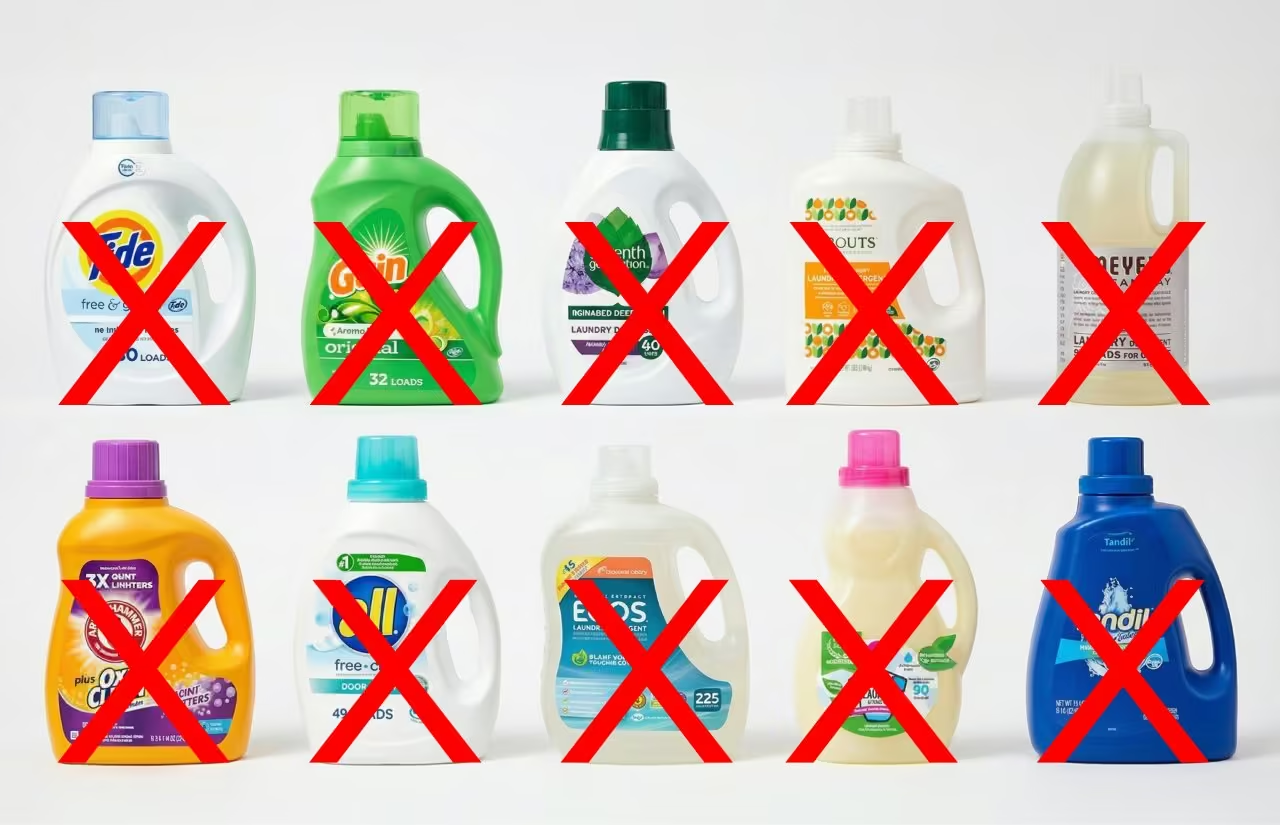
Here’s what makes this topic urgent: whether you’re using a conventional detergent (Tide, Gain, All), a “low-toxic” option (Dreft, some Seventh Generation formulas), or a “non-toxic” brand (Molly’s Suds, Pronounce), your skin faces similar challenges. The ingredient lists look different. The marketing claims sound different. But the core mechanisms of skin damage remain strikingly similar—which is why this article breaks down all three categories side-by-side.
Future articles in this series will explore makeup, deodorants, lotions, cosmetics, and other daily products that seem harmless on the label but may be quietly compromising your skin barrier.
The pattern you’ll notice across all of these: Labels can be misleading, and the companies selling you these products are counting on you not reading well past the fine print.
Quick Reference: The Three Detergent Categories at a Glance
Conventional | “Low-Toxic” / Natural | Non-Toxic / Simpler | |
|---|---|---|---|
What You Buy | Tide, Gain, All, Clorox | Seventh Generation, Mrs. Meyer’s, Dreft, Ecos | Molly’s Suds, Pronounce, Truly Free, Heritage Park |
What the Label Says | Powerful, fresh, stain-fighting | Natural, plant-based, eco-friendly, gentle | Simple, transparent, fragrance-free |
What’s Actually Inside | Synthetic fragrance, optical brighteners, SLS/SLES, dyes | Fragrance blends, SLES, plant-based surfactants, preservatives | Minimal ingredients, natural surfactants, no fragrance |
Skin Impact | Most aggressive damage | Deceptively harmful (marketing masks problems) | Often less irritating (but still requires skin support) |
Price | Budget-friendly | Mid to premium | Premium |
Transparency | Low | Low to medium | High |
The uncomfortable truth: All three can leave residue on fabric and irritate sensitive skin—the difference is typically fragrance load, surfactant harshness, and transparency.
The Bottom Line: All Three Categories Have Hidden Costs

Whether your detergent came from a conventional aisle, a “natural” shelf, or a premium health store, the same skin-damaging mechanisms are at work. The main difference is the degree of damage and the transparency of the label.
Conventional detergents are aggressively problematic but honest about it—the marketing is bold, the fragrance is strong, and the ingredient list is long.
“Low-toxic” and “natural” detergents create false safety through marketing—they use words like “gentle,” “plant-based,” and “eco-friendly” while still containing fragrance, problematic surfactants, and problematic preservatives.
Non-toxic detergents with simpler formulas represent a genuine step forward, but they’re not a complete solution. Even the best detergent leaves residue on fabric.
This is why daily skin barrier support is non-negotiable. No detergent choice, no matter how careful, eliminates the need for intentional skin care.
Understanding the Full Picture: The Marketing Illusion: What Nobody Tells You About Detergent Residue
You buy a bottle labeled “gentle,” “hypoallergenic,” or “plant-based.” You feel good about the choice. Then you get into bed, and your skin breaks out. Or you wear your freshly washed jeans, and the irritation starts within hours.
But here’s the thing—it doesn’t matter if you chose the “natural” option from the health food store or grabbed whatever was on sale at the grocery store. Whether it’s conventional (Tide, Gain, All) or marketed as “natural” (Seventh Generation, Mrs. Meyer’s, Dreft), most laundry detergents damage your skin in the exact same way.
The Science Behind the Problem: How Detergent Damages Your Skin Barrier
This isn’t anecdotal. Recent dermatological research reveals something troubling: detergent-treated skin shows significant reductions in electrical impedance and increased transepidermal water loss, and consistent exposure to detergents can disrupt the skin’s protective barrier through changes in gene expression and protein levels related to skin barrier function.[^3]
More specifically, laundry detergent dysregulates the skin barrier homeostasis by altering the expression of lipid-metabolizing enzymes and peroxisome proliferator-activated receptors, and the proteases in detergents reduce the skin barrier function and allow entry for allergens and irritants.[^3]
For people with existing skin sensitivities, this damage compounds: Over 20% of eczema flare-ups are directly linked to irritants found in laundry detergents and fabric care products according to the British Association of Dermatologists.[^10]
How Labels Actually Mislead You: What Marketing Terms Really Mean
Before diving deeper into specific ingredients, it’s important to understand how the labeling game works. Companies rely on your assumptions about what words mean. Here’s what they actually mean—and what they don’t.
Marketing Term | What It Sounds Like | What It Actually Means | Is It Regulated? | Can You Trust It? |
|---|---|---|---|---|
“Natural” | Made from plants, not chemicals | Undefined term with no legal standard. Can mean 1% plant ingredient, 50%, or 100%. | ❌ Not regulated | ❌ No |
“Plant-Based” | All ingredients come from plants | Vague. Some plant ingredients are harsh. Surfactants can be plant-derived but still irritating. | ❌ Not regulated | ❌ No |
“Eco-Friendly” or “Environmentally Conscious” | Better for the environment | Says nothing about skin safety. Environmental claims are not the same as skin safety claims. | ❌ Not regulated | ⚠️ Misleading |
“Hypoallergenic” | Won’t cause allergic reactions | No standard definition. Can still cause irritation and allergic reactions. | ⚠️ Loosely regulated (cosmetics only) | ❌ No |
“Dermatologist Tested” | Dermatologists recommend it | Only means a dermatologist examined it, not that they recommend it or that it’s safe. | ❌ Not regulated | ❌ No |
“Free & Clear” | Without problem ingredients | Ambiguous. Free of what, exactly? Still may contain fragrance, SLES, problematic preservatives. | ❌ Not regulated | ❌ No |
“Gentle” | Safe for sensitive skin | Marketing language. No standard definition. Conventional detergents use this term too. | ❌ Not regulated | ❌ No |
“Non-Toxic” | Won’t harm you | Misleading. Everything is toxic at some dose. Marketing term designed to sound scientific. | ❌ Not regulated | ❌ No |
“Fragrance-Free” | No fragrance added | Regulated term. Actually reliable. No fragrance compounds added (though other masking scents might be present). | ✅ Yes | ✅ Yes |
“Unscented” | No smell | Can still contain fragrance compounds to mask odors. Less reliable than “fragrance-free.” | ️⚠️ Weakly regulated | ⚠️ Maybe |
Key insight: The only regulated and reliable marketing term on this list is “fragrance-free.” Everything else is designed to sound reassuring while obscuring what’s actually in the bottle.
Three Detergent Categories: Understanding the Spectrum (And Why “Better” Marketing Doesn’t Equal Better Ingredients)
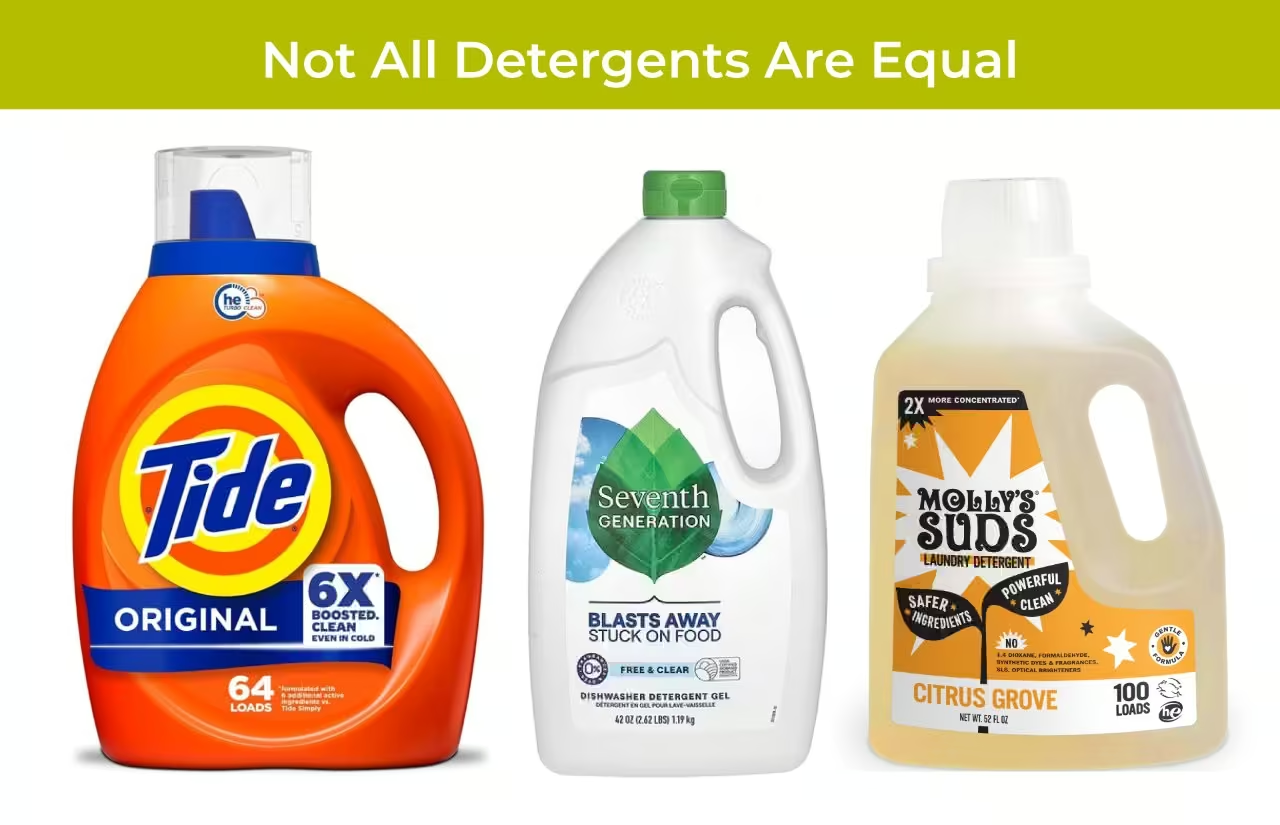
The detergent aisle is organized by marketing claims, not by actual ingredient safety. You’ll see three broad categories, each promising something different. But understanding what’s actually inside each bottle is where the real story begins.
Category 1: Conventional Detergents (Clearly Harsh)
Brands like Tide, Gain, and All prioritize powerful cleaning and fragrance intensity over skin gentleness. These rely on synthetic fragrances, optical brighteners, and aggressive surfactants designed to strip dirt—which also strips moisture and disrupts skin barrier function. For sensitive skin, these are the worst option.
Common brands: Tide, Gain, All, Clorox, Fels-Naptha What they prioritize: Maximum stain removal, maximum fragrance, lowest cost Price point: Budget to mid-range Impact on skin: Most aggressive; highest residue; most likely to trigger immediate reactions
Category 2: “Low-Toxic” or “Natural” Detergents That Still Contain Problematic Ingredients
This is the deception zone. Seventh Generation, Mrs. Meyer’s, Dreft, and similar brands market themselves as gentler, plant-based, or eco-conscious. Some are genuinely better than conventional options in certain respects, but many still contain fragrance blends (whether essential oils or synthetic), preservatives, and surfactants like SLES that people with sensitive skin commonly avoid.
Common brands: Seventh Generation, Mrs. Meyer’s, Dreft, Ecos, Babyganics, Dapple What they claim: Natural ingredients, eco-friendly, gentle, hypoallergenic What they actually contain: Fragrance, SLES, plant-based surfactants that still irritate, essential oils Price point: Mid to premium Impact on skin: Deceptively problematic; “natural” marketing masks problematic ingredients Key insight: “Plant-based” doesn’t automatically mean non-irritating. Some botanical ingredients are potent allergens. Even “natural fragrance” in cleaning products can trigger contact dermatitis.
Category 3: Detergents With Genuinely Simpler, Safer Ingredient Profiles
A smaller category exists: brands that keep ingredient lists short, eliminate unnecessary fragrances and problematic preservatives, and focus on gentler surfactants. These exist, they work, and they’re worth knowing about.
Common brands: Molly’s Suds, Pronounce, Truly Free, Heritage Park (fragrance-free formulas), ECOS Free & Clear What makes them different: Transparent ingredients, no synthetic fragrance, minimal preservatives, short ingredient lists Price point: Premium (but worth it) Impact on skin: Least irritating; designed with skin sensitivity in mind; still requires proper usage and skin barrier support
Ingredient Red Flags: What Research Shows About Detergent Components

Synthetic Fragrance
Fragrance allergens were evaluated across household detergents, and 26 fragrance substances were found named almost 2000 times on the ingredient lists of 1447 products, most often limonene, linalool, and hexyl cinnamaldehyde, with exposure to fragrance products triggering a variety of health effects including allergic contact dermatitis.[^7] Fragrance is an umbrella term covering dozens of undisclosed chemicals—a proprietary blend designed to obscure what’s actually in the product.
SLES (Sodium Laureth Sulfate) and the 1,4-Dioxane Problem
This is critical: 1,4-dioxane is created when ethylene oxide is added to other ingredients to make them less harsh, and sodium lauryl sulfate is often ethoxylated to convert it to sodium laureth sulfate, with 1,4-dioxane being created in the process and contaminating the sodium laureth sulfate.[^4]
The catch? Because 1,4-dioxane is a byproduct and not an intentional ingredient, it will not be listed on the label even if companies disclose their ingredients, and it is not used as an ingredient in cosmetics but may be present in extremely small amounts in some cosmetics.[^6]
The Department of Health and Human Services National Toxicology Program found that 1,4-dioxane is “reasonably anticipated to be a human carcinogen based on sufficient evidence of carcinogenicity from studies in experimental animals,” although data from human epidemiological studies are not adequate to evaluate the relationship between human cancer and exposure to 1,4-dioxane.[^5]
To avoid 1,4-dioxane, look for products without ethoxylated ingredients. If an ingredient ends in “-eth” (like laureth-6, SLES, ceteareth, or steareth) or contains “PEG,” it’s ethoxylated and may contain 1,4-dioxane.
Methylisothiazolinone (MIT)
Methylisothiazolinone has been documented as causing severe allergic contact dermatitis and is commonly found in liquid detergent formulations as a preservative.[^8] It’s so concerning that some dermatologists recognize it as a significant contact sensitizer.
Optical Brighteners
These chemicals coat fabrics to reflect light, making whites appear whiter. They don’t rinse away fully and can be problematic for skin in direct contact.[^13]
SLS (Sodium Lauryl Sulfate)
A surfactant known to strip oils from skin and fabric, leaving skin raw and disrupting the moisture barrier.[^10]
Detergents by Category: What You’re Actually Getting
Conventional Detergents That Damage Your Skin
Brand Name | Category | Marketed As | Key Problematic Ingredients | Why It’s an Issue for Skin |
|---|---|---|---|---|
Tide | Conventional | Powerful Clean | Synthetic fragrance, optical brighteners, dyes | Can leave heavy residue; commonly reported as irritating; fragrance load is intense |
Gain | Conventional | Fresh Scent | Synthetic fragrance, dyes, optical brighteners | Designed for maximum fragrance intensity, not gentleness; strong residue buildup |
All | Conventional | Stain Release/Gentle | Synthetic fragrance, SLES, dyes | Despite “gentle” label, still uses aggressive surfactants and fragrances |
Clorox | Conventional | Bleach-Based Cleaning | Bleach, synthetic fragrance, optical brighteners | Damages fabric and skin; unnecessary for modern washing |
“Low-Toxic” and “Natural” Detergents That Still Contain Problematic Ingredients
Brand Name | Category | Marketed As | Key Problematic Ingredients | Why It’s an Issue for Skin |
|---|---|---|---|---|
Seventh Generation (some formulas) | Low-Toxic/Natural | Plant-Based, Natural, Eco-Conscious | Fragrance blends, SLES, botanical preservatives | “Plant-based” doesn’t mean non-irritating; still contains problematic surfactants |
Mrs. Meyer’s | Natural | Natural, Gentle, Essential Oil Scented | Essential oil fragrance, preservatives, plant-based surfactants | Natural fragrance can still trigger sensitivity; preservatives may irritate |
Dreft | Low-Toxic | Gentle, Free & Clear | Synthetic fragrance, plant-based surfactants, preservatives | Marketing claims “free” but still contains fragrance and irritating ingredients |
Babyganics | Natural/Low-Toxic | Baby-Safe, Natural, Gentle | Plant-based surfactants, fragrance, preservatives | “Baby-safe” is marketing; still contains problematic ingredients |
Ecos (standard formula) | Natural | Plant-Powered, Eco-Friendly | Essential oil fragrance, plant-based surfactants | Fragrance load can still irritate despite plant-based claim |
Detergents With Genuinely Simpler, Safer Ingredient Profiles
Brand Name | Category | What Makes It Different | Key Advantages | Best For |
|---|---|---|---|---|
Molly’s Suds | Non-Toxic | Minimal ingredient list, fragrance-free options | Transparent sourcing, truly simple formula | Severe sensitivity, eczema |
Pronounce | Non-Toxic | Transparent ingredient disclosure, no synthetic fragrance | Designed specifically for sensitive skin | Skin conditions, barrier repair |
Truly Free | Non-Toxic | Limited ingredient philosophy | Emphasis on simplicity, no dyes or brighteners | General sensitivity, prevention |
Heritage Park | Non-Toxic | EWG VERIFIED® certified | Clinically tested for zero allergic reactions | Sensitive skin, eco-conscious buyers |
ECOS Free & Clear (fragrance-free) | Non-Toxic | Specifically the fragrance-free formula | Fewer preservatives, no synthetic fragrance | People with fragrance sensitivity |
⚠️ Disclaimer: Formulations change frequently and vary by product type. Always check the ingredient list on the specific product you purchase. Brands listed here do not represent all products from these manufacturers, some of which may have reformulated.
How Detergent Irritation Actually Works: The Hidden Mechanisms
Residue Buildup on Fabric Fibers
Every time you wash clothes, a microscopic layer of detergent molecules adhere to the fibers.[^1] Unlike dirt and oils, which are designed to be removed, detergent surfactants remain behind because they’re literally designed to cling to fibers and keep dirt suspended. With each wash, more residue builds up—especially in towels, bedding, and undergarments that sit directly against your skin.
What happens to your skin: Over days and weeks, this accumulation creates a constant low-level irritant exposure. Your skin doesn’t get relief. Even fragrance-free detergents leave surfactant residue that can gradually dehydrate and inflame the skin barrier.
The Proteolytic Breakdown of Your Skin Barrier
Detergents contain enzymes called proteases that break down protein-based stains. The problem: your skin’s outermost layer (the stratum corneum) is primarily made of proteins and lipids. When detergent residue sits on your skin, these enzymes begin breaking down your skin’s protective structure, disrupting the very barrier designed to keep irritants and allergens out.[^10]
What this means: Your skin becomes more permeable. Allergens penetrate more easily. Moisture escapes faster. This is called increased transepidermal water loss (TEWL), and it’s measurable in dermatological studies.[^3]
Surfactant-Induced Inflammation
Surfactants like SLS and SLES don’t just clean—they interact with your skin cells’ membrane proteins, triggering inflammatory responses.[^10] Even “gentle” surfactants in “natural” detergents can cause this if your skin barrier is already compromised.
The compounding effect: If you have eczema, psoriasis, sensitive skin, or any pre-existing barrier damage, this inflammation can trigger flare-ups that last days or weeks.
Fragrance Penetration and Sensitization
Synthetic fragrances aren’t just on the surface of your clothes—they penetrate into fabric fibers where they remain stable at skin temperature.[^7] When fragrance molecules contact your skin repeatedly, especially damaged skin, they can trigger both irritant and allergic contact dermatitis.
Why this matters: Even people who don’t think they have “fragrance sensitivity” can develop it through cumulative exposure. It’s not always immediate—sometimes it takes weeks of exposure before a reaction appears.
What’s Really Happening When Your Skin “Breaks Out” After Laundry
You’re not imagining it. The timing is real. Here’s the actual sequence:
- Detergent residue accumulates on fabric throughout washing, rinsing, and drying.
- Your skin contacts residue through clothing, bedding, or towels.
- Surfactants and fragrances interact with your skin’s outermost layer, disrupting lipid structures.
- Transepidermal water loss increases as your barrier weakens, and moisture escapes.
- Inflammation begins as your skin’s immune response activates in response to protein breakdown.
- Visible irritation appears as redness, itching, bumps, or flaking—often worst in high-friction or pressure areas (underarms, waistband, neck, anywhere tight clothing sits).
- Sensitization can occur with repeated exposure, meaning your skin becomes increasingly reactive to lower and lower concentrations of the irritant.
This process typically shows up 12-48 hours after wearing newly washed clothes—exactly why people blame “the detergent” without realizing the chemistry behind it.
Common Skin Reactions to Detergent & How to Address Them
Skin Condition | What It Looks Like | Caused By | Solution |
|---|---|---|---|
Contact Dermatitis / Irritation | Red, itchy, inflamed patches; often in areas where clothing is tight (waistband, underarms, neck) | Surfactants (SLS/SLES) breaking down skin oils; fragrance irritation; residue buildup | Switch to fragrance-free detergent + daily barrier support with soothing, hydrating products |
Eczema Flare-Ups | Extreme itching, dry patches, potential weeping or crusting | 20%+ of eczema flare-ups traced to laundry irritants; detergent residue triggers immune response | Eliminate problematic detergents immediately + use targeted relief products for acute itching + consistent barrier repair |
Pressure Sores / Friction Dermatitis | Raw, irritated areas where tight fabric creates constant friction | Combination of tight clothing + detergent residue + moisture | Switch to loose-fitting fabrics + gentler detergent + protective barrier products for high-friction areas |
General Sensitivity / Reactive Skin | Unpredictable reactions, stinging sensation, heightened reactivity to other products | Compromised skin barrier from cumulative detergent exposure | Simplify laundry routine + add extra rinse cycle + introduce daily barrier-repair skincare |
Beyond Detergent: Other Laundry Habits That Damage Your Skin
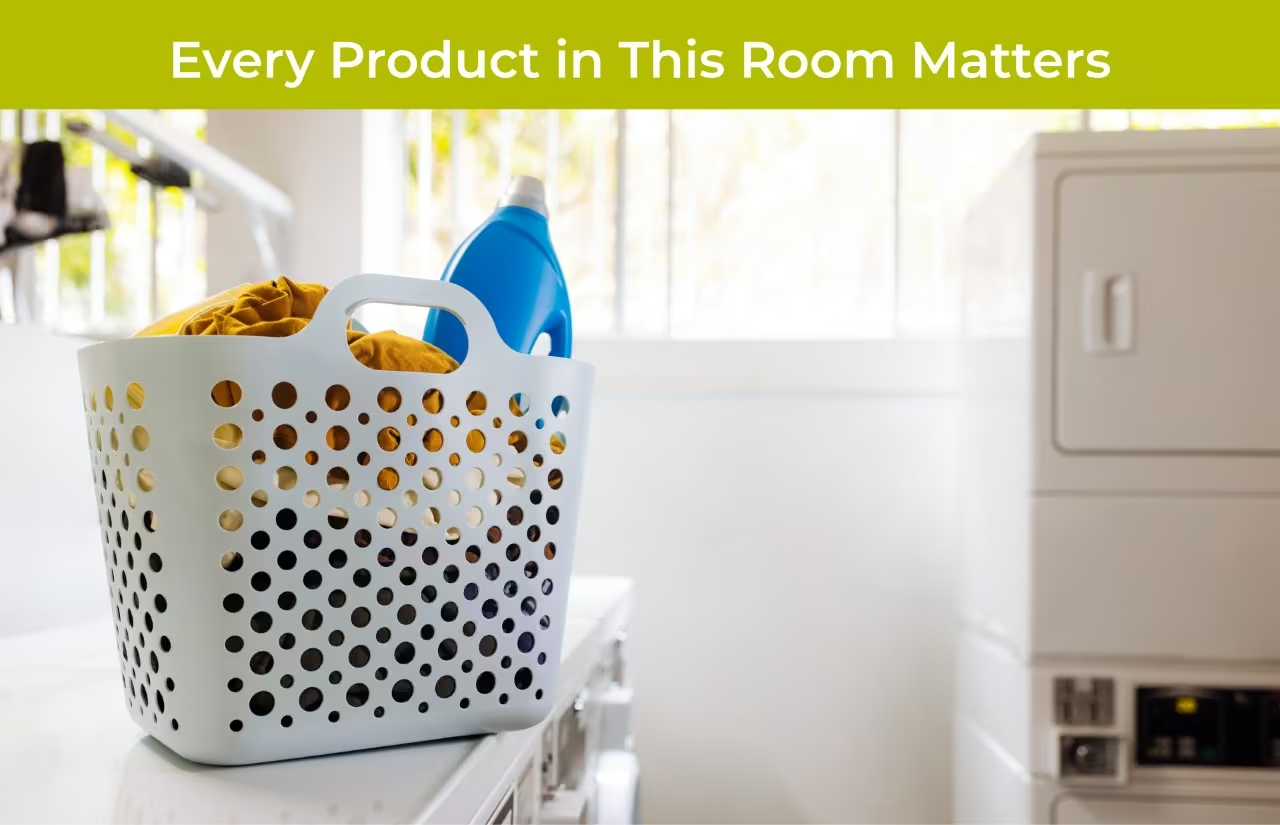
Even with the perfect detergent, your laundry routine might be working against you.
Fabric Softener and Dryer Sheets
Fabric softeners are among the most concentrated fragrance products you can use. They’re designed to adhere to fabrics—which means they stay on your skin all day. They’re not necessary for clean clothes; they’re purely cosmetic. For sensitive skin, they’re one of the first things to eliminate.[^1]
What to do instead: Use white vinegar in the rinse cycle (natural softener, removes detergent residue) or skip softening entirely. Your clothes will be clean—the “softness” of fabric softener is a texture effect, not a cleanliness indicator.
Over-Soaping
Most people use 2-3 times the recommended amount of detergent.[^10] More detergent = more residue. Check your washing machine’s guidelines (usually 1-2 tablespoons per load) and use less for lightly soiled clothes.
For sensitive skin: Use even less detergent and add an extra rinse cycle. Many modern machines have a “sensitive skin” or “extra rinse” option—use it.
Bleach and Optical Brighteners
Bleach damages fabric fibers and your skin. Optical brighteners coat fabrics with reflective chemicals that don’t wash out.[^13] Both are unnecessary if you’re using proper detergent in the correct amount.
What to do instead: Skip both. If whites look dingy, it’s usually because detergent residue is yellowing them—switching to cleaner detergent will actually make them look whiter.
Hot Water and High Heat Drying
Heat increases the volatility of fragrance molecules, making them more likely to release from fabric and contact your skin.[^7] It also damages fabric fibers and accelerates detergent residue oxidation.
For sensitive skin: Wash in cold or warm water and air-dry when possible. If you use a dryer, use low heat.
Not Rewashing New Clothes
New clothing is saturated with manufacturing chemicals, dyes, sizing agents, and sometimes formaldehyde.[^2] If you have sensitive skin, wash new items (especially underwear, socks, and items touching your face or neck) before first wear.
The Fabric Factor: What You’re Washing Also Matters
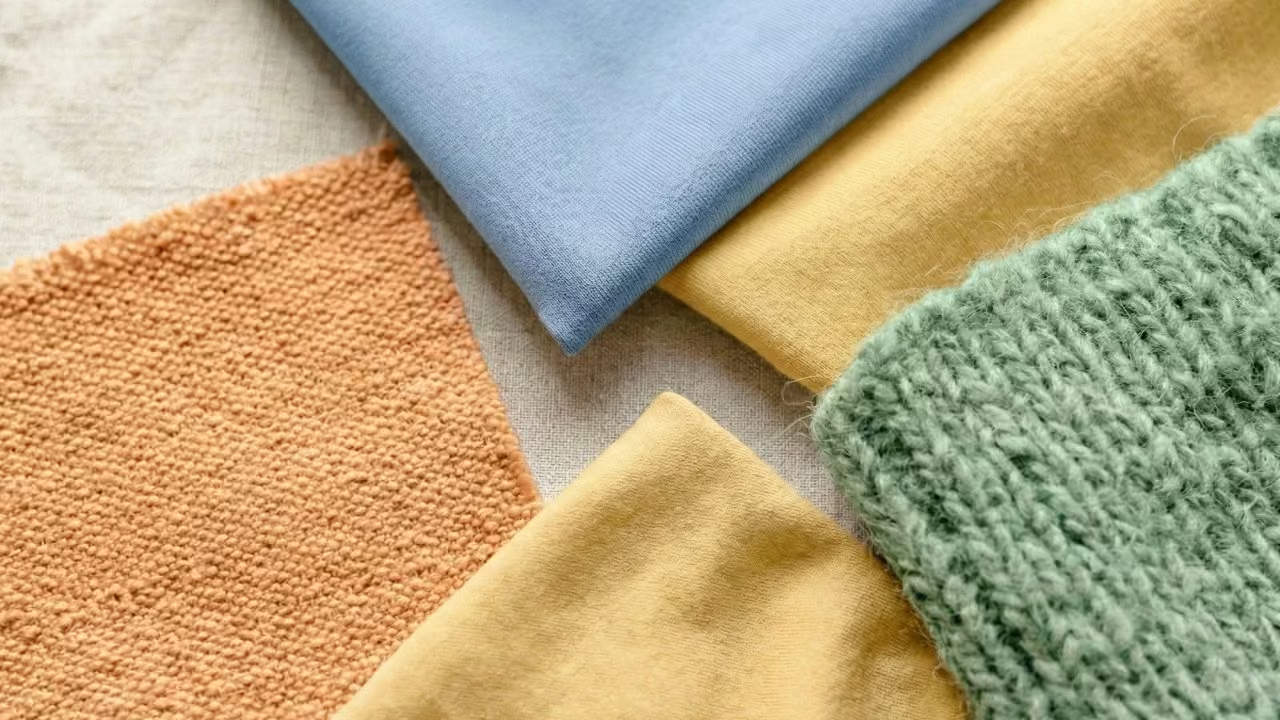
It’s not just the detergent—the fabric itself influences how irritation develops.
Tight, Synthetic, or High-Friction Fabrics
Wool, synthetic blends, and tight seams create friction and pressure on your skin.[^9] If your skin is already irritated from detergent residue, friction amplifies the problem. You’ll notice irritation worst in areas where clothing is tight: waistbands, underarms, inner thighs, underwear elastic.
Skin-Friendly Fabric Choices
- 100% cotton: Breathable, gentle, allows air circulation
- Bamboo or hemp: Naturally hypoallergenic, soft, moisture-wicking
- Modal or TENCEL™: Regenerated fibers, gentler than synthetics
- Loose-fitting designs: Reduce friction and pressure
The combination of clean laundry practices + skin-friendly fabrics + gentle detergent creates an environment where your skin can actually heal.
The Reality Check: Detergent Is Only Part of the Picture
Even with better detergents and improved laundry habits, your skin still faces challenges. Friction against fabric, moisture loss from heat and agitation, pressure during sleep, and the sheer frequency of washing all affect your skin’s barrier. This is especially true if you have:
- Sensitive or reactive skin
- Eczema, psoriasis, or other chronic skin conditions
- Mature or delicate skin
- Skin that’s healing from irritation or barrier damage
- Pressure-prone areas (bedridden or sedentary individuals)
Better detergent helps. But it’s not a complete solution.
Supporting Your Skin: The Missing Piece
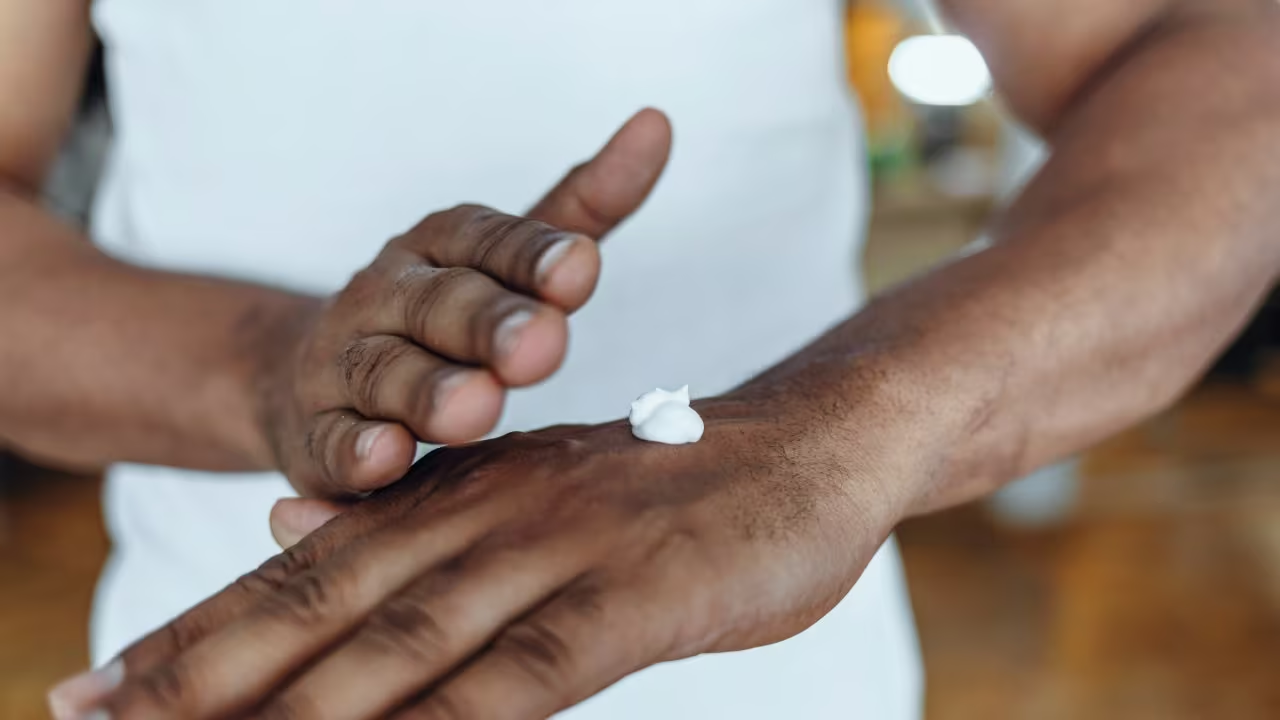
This is where intentional, science-backed skin care becomes non-negotiable. When your skin is under stress from environmental factors—including repeated exposure to detergent residue—it needs active support, not just passive avoidance.
Why Daily Skin Support Matters
Even if you make every laundry choice perfectly, your skin is still in contact with fabric residue, friction, and pressure for 16+ hours per day. Without active barrier support, your skin remains in a state of low-level inflammation and water loss.
Active skin support means:
1. Daily Cleansing and Hydration Your skin needs a clean base and consistent moisture. This removes any detergent residue that made it to your skin and replenishes the water loss caused by surfactant exposure.
2. Barrier-Repair Ingredients Look for products with colloidal oatmeal, ceramides, and natural moisturizers that actively repair the protein and lipid structures damaged by detergent exposure.
3. Targeted Relief for Flare-Ups When irritation appears—whether from new laundry or environmental triggers—you need something that provides immediate relief while supporting healing. This prevents the itch-scratch cycle that deepens inflammation.
4. Consistency Matters Skin barrier healing takes time. Daily support for 2-4 weeks shows visible improvement; 6-8 weeks shows significant healing in compromised barrier function.
How Terrasil® Fits Into Your Laundry-to-Skin Care Protocol
The philosophy that matters: formulations designed for already-stressed skin that focus on relief first and healing support second, without unnecessary fragrances, parabens, or harsh preservatives. Ingredients that actually do something based on dermatological science, not ingredients that sound good on a label.
Aidance Scientific and our Terrasil line were built on this principle: natural, science-backed formulations specifically designed to support skin barrier healing and relief without adding another layer of unnecessary chemicals. Made in FDA-registered facilities, formulated for the skin that needs it most.
Here’s how to integrate them:
Daily Barrier Support: Use our Calendula Soothing Bar or targeted relief products daily, especially after wearing newly washed clothing. The colloidal oatmeal provides immediate itch relief, while calendula and natural botanicals support healing. This prevents small irritations from becoming flare-ups.
Target Flare-Ups: When irritation appears—whether it’s contact dermatitis from detergent residue, eczema, or pressure-related breakdown—use products specifically formulated for rapid relief. These work with your skin’s natural healing processes rather than against them.
Consistency: Using relief and healing products daily, combined with better laundry choices, creates a cumulative effect. Skin barrier function improves measurably within 2-4 weeks.
The goal isn’t to replace good detergent choices—it’s to actively support your skin while you make them, and while you work toward healing a compromised barrier.
A Practical Implementation Plan: Laundry to Skin Care
Week 1: Switch Your Detergent
- Choose a fragrance-free, simpler formula from our recommended list
- Wash all currently-used clothing (underwear, socks, pajamas, daily wear) in the new detergent
- Add an extra rinse cycle
- Eliminate fabric softener and dryer sheets
Week 2-3: Add Daily Skin Support
- Begin using a daily barrier-support product (like our Calendula Soothing Bar)
- Apply morning and night, especially to areas prone to irritation
- Use cold or warm water instead of hot for washing and drying
Week 4+: Assess and Target
- Note which areas still show irritation or sensitivity
- If flare-ups appear, use targeted relief products (like our Target Flare-Up formulas)
- Continue daily barrier support—this is now part of your routine
- If irritation persists after 4 weeks, consider other triggers (fabric type, pressure areas, environmental factors)
The Takeaway: Trust the Evidence, Not the Marketing
You can’t control everything. You can’t eliminate every potential irritant. But you can be intentional about three things:
First: What you wash your clothes with. Don’t trust packaging. Trust the ingredient list. “Natural” and “gentle” are marketing terms. Transparency is real. Look for products that disclose their ingredients clearly and avoid ethoxylated surfactants, synthetic fragrances, and problematic preservatives.[^2]
Second: How you approach laundry. Use the right amount of detergent, skip fabric softener, avoid unnecessary heat and bleach, and add an extra rinse cycle. These small changes dramatically reduce residue accumulation.
Third: How you support your skin afterward. Your skin doesn’t have to be irritated by something you wear every day. Dermatologists recommend very specific laundry habits to minimize exposure to chemical irritants and protect sensitive skin, including choosing products labeled fragrance-free and dye-free, using only the recommended amount of detergent, and adding an extra rinse cycle for sensitive skin.[^10]
Clean doesn’t have to mean harsh. Skin care is cumulative—daily, intentional support matters just as much as what you wash your clothes with. Once you understand what’s actually on your skin, that power goes back to you.
This Is Just the Beginning: What Else Touches Your Skin?
This article focused on laundry detergent because it’s unavoidable—your skin touches detergent-treated fabric constantly, whether you’re conscious of it or not. But it’s only one part of a much larger picture.
The same deceptive marketing patterns you see in laundry detergent show up everywhere:
- Deodorants and antiperspirants marketed as “natural” while still containing problematic ingredients
- Makeup labeled “dermatologist tested” and “hypoallergenic” despite common irritants
- Lotions and moisturizers that claim to be “gentle” while loading on fragrance and preservatives
- Sunscreen products with chemical filters and synthetic fragrances that sit on your skin all day
- Cosmetics and personal care products from shampoo to body wash to facial cleansers
Each of these products follows the same formula: strong marketing claims, vague ingredient lists, and actual formulations that prioritize shelf life and scent over your skin’s health.
In upcoming articles, we’ll dive deeper into these product categories, showing you exactly what to look for, what to avoid, and how to evaluate labels when companies are actively trying to confuse you.
The core principle remains the same: What touches your skin matters. Whether it’s obvious (face creams) or invisible (detergent residue), your skin barrier is in constant contact with chemicals designed to do things other than support your skin health. Understanding this changes everything.
In Summary: Reclaiming Control Over What Touches Your Skin

The detergent aisle at your local store is designed to confuse you. Bright colors, health claims, celebrity endorsements, and pseudo-scientific marketing all compete for your attention. But underneath all that noise is a simple truth: most laundry detergents—whether conventional or “natural”—are not designed with your skin in mind.
They’re designed to:
- Clean aggressively (which damages skin)
- Smell pleasant (using fragrance compounds that irritate skin)
- Last a long time on shelves (using preservatives that accumulate on fabric)
- Be inexpensive to manufacture (using cheap surfactants with nasty side effects)
Your skin is not a consideration in any of these goals.
The good news: you now understand the mechanisms. You know what to look for on labels. You understand why “natural” doesn’t mean safe. And you know that switching detergents is just the first step—daily skin support is what actually creates healing.
If you’ve struggled with unexplained skin irritation, redness, eczema flare-ups, or reactions that seem to come out of nowhere, the answer might be sitting in your laundry room right now. And once you address it, you’ll be amazed at what happens to your skin over the next 4-8 weeks.
But remember: This is just the beginning. Laundry detergent is one of many products that touch your skin daily. In upcoming articles in this series, we’ll examine deodorants, makeup, lotions, sunscreen, and other personal care products—all using the same framework: What does the label claim? What do the ingredients actually do? What’s really touching your skin?
Until then, start here. Change your detergent. Add daily skin support. Notice the difference.
Your skin will thank you.
Frequently Asked Questions
Why This Matters: The Aidance Scientific Philosophy
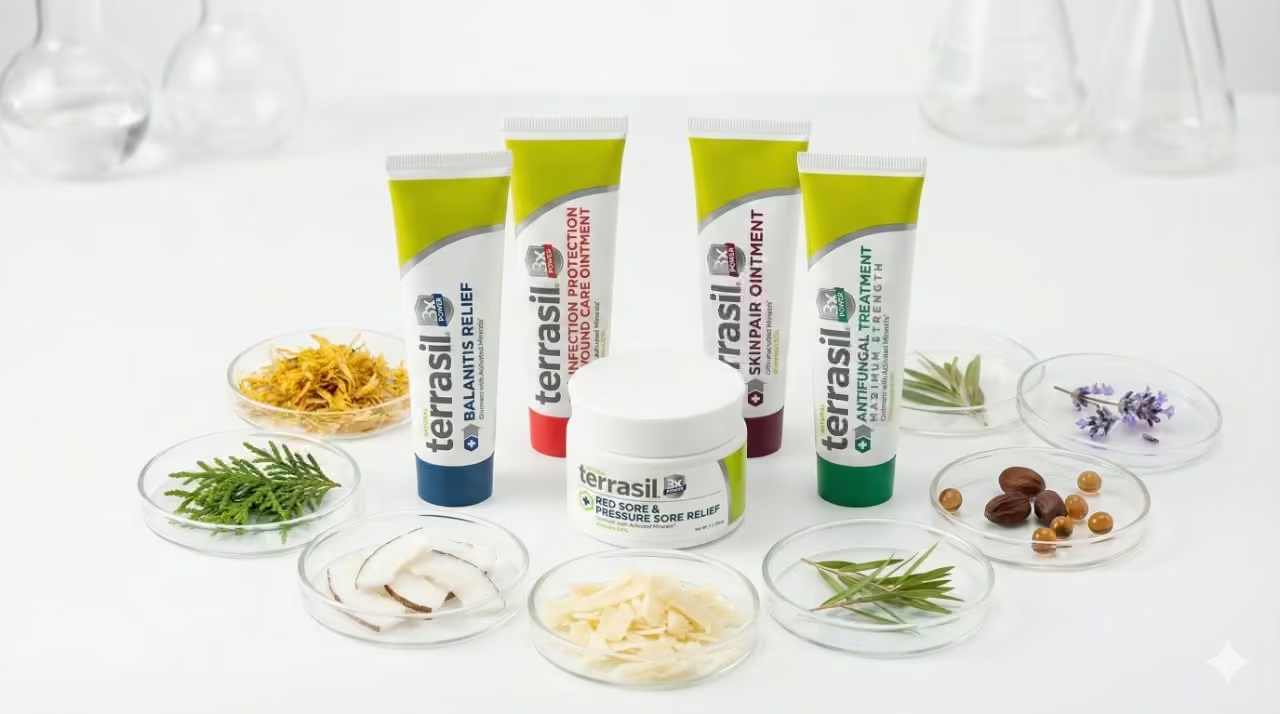
At Aidance Scientific, we believe that what touches your skin should support your health, not compromise it. We don’t use synthetic fragrances. We don’t hide ingredients behind proprietary blends. We don’t make health claims we can’t back up.
Every product we make is:
- ✔ Clinically formulated based on dermatological research
- ✔ No unnecessary ingredients — activated minerals and botanicals only
- ✔ Dermatologist-tested & hypoallergenic — not just marketing claims
- ✔ Made in FDA-registered facilities with rigorous quality standards
We can’t control what detergent companies do. But we can control what you put on your skin to heal from the damage those detergents cause.
Start with your laundry. Then support your skin with products actually designed for relief and healing.
Sources & Citations
[^1]: American Academy of Dermatology (AAD). Dermatitis: Contact. Clinical Practice Guidelines. Retrieved from: https://www.aad.org
[^2]: British Association of Dermatologists. Eczema and Contact Dermatitis: Evidence-Based Management. Guidelines on allergen exposure and trigger identification in atopic dermatitis.
[^3]: Swiss Institute of Allergy and Asthma Research (SIAF). Study on detergent-induced barrier disruption and transepidermal water loss. Published research on laundry product proteases and skin barrier homeostasis.
[^4]: National Institute for Occupational Safety and Health (NIOSH). 1,4-Dioxane: Occupational Hazards and Health Effects. U.S. Department of Health and Human Services. Retrieved from: https://www.cdc.gov/niosh/
[^5]: U.S. Department of Health and Human Services, National Toxicology Program (NTP). 1,4-Dioxane: Report on Carcinogens. 15th Edition. Assessment of 1,4-dioxane as “reasonably anticipated to be a human carcinogen.”
[^6]: U.S. Food and Drug Administration (FDA). Cosmetic Ingredients and Contaminants: 1,4-Dioxane. Guidance on ethoxylated ingredients and unavoidable contaminant presence. Retrieved from: https://www.fda.gov/cosmetics/
[^7]: Environmental Working Group (EWG). Guide to Cleaners: Laundry Detergents. Analysis of 1,447 household laundry detergent products and fragrance allergen content. Study identifying 26 fragrance substances named nearly 2,000 times across products.
[^8]: Dermatitis Journal. “Methylisothiazolinone and Allergic Contact Dermatitis: A Systematic Review.” Documentation of MIT as a significant contact sensitizer in liquid detergent formulations.
[^9]: American Contact Dermatitis Society (ACDS). Contact Allergen Patch Testing Panel. Annual ranking of contact allergens including fragrance compounds (limonene, linalool, hexyl cinnamaldehyde) and preservatives found in household cleaning products.
[^10]: Journal of the American Academy of Dermatology. Research on surfactants (SLS/SLES) and skin barrier dysfunction. Studies on protease activity in detergents and disruption of skin barrier proteins.
[^11]: European Commission Scientific Committee on Consumer Safety (SCCS). Opinion on fragrance allergens in consumer products. Assessment of health effects from exposure to undisclosed fragrance chemicals.
[^12]: National Eczema Association. Eczema Triggers: Laundry Products and Irritant Exposure. Clinical recommendations for detergent selection in atopic dermatitis management.
[^13]: International Journal of Cosmetic Science. “Optical Brighteners in Fabric Care Products: Dermal and Environmental Concerns.” Research on persistence of optical brighteners on textiles and potential for skin irritation.
[^14]: FDA Cosmetics Authority. Ingredient Disclosure and Proprietary Formulation Rules. Explanation of why 1,4-dioxane is not listed on labels despite presence in ethoxylated surfactants.
Disclaimer: This article is for educational purposes and does not replace professional medical advice. If you experience severe or persistent skin reactions, contact a dermatologist. Individual skin sensitivity varies; what irritates one person may not affect another. Always patch test new products before full use.